Seven in 10 Americans, regardless of party affiliation, want to be able to vote on an abortion measure on their state ballot, according to a new Ipsos/USA Today poll released Wednesday.
Driving the news: The poll was conducted after Kansas became the first state in the post-Roe era in which U.S. voters cast a ballot on abortion — they decided last week to reject an amendment that would have gotten rid of abortion protections in the state's Constitution.
Children in London were offered booster doses of the polio vaccine Wednesday after British health authorities discovered more virus samples throughout the city.
The big picture: Poliovirus has been recently detected in multiple countries , prompting health officials to act in order to curb the spread.
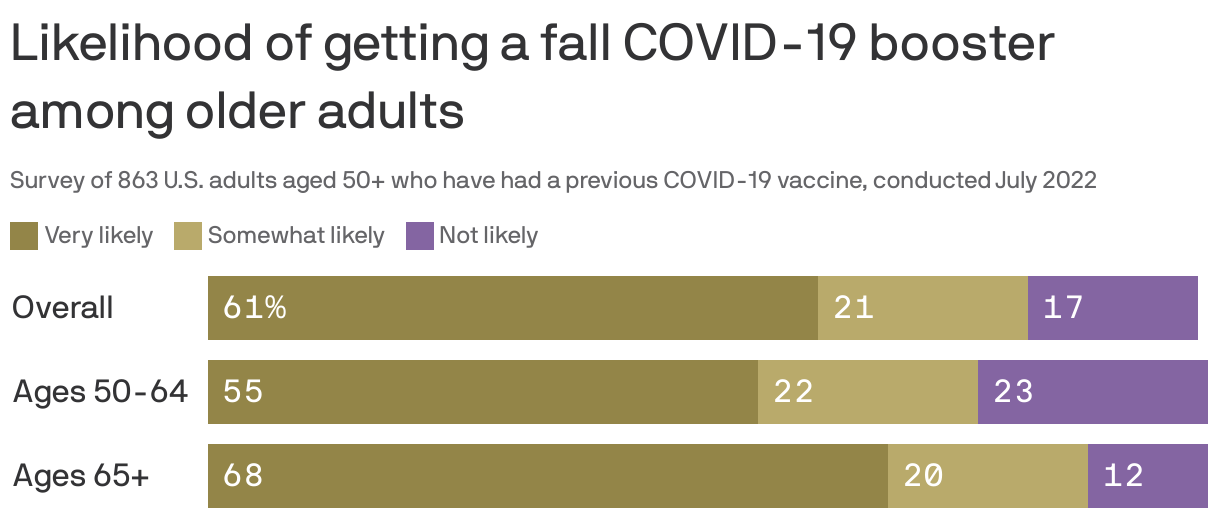
Data: University of Michigan; Chart: Kavya Beheraj/Axios
Most people older than 50 who've already gotten at least one COVID shot plan to get an updated booster if they're released as expected this fall, according to the latest University of Michigan National Poll on Healthy Aging.
Why it matters: The findings offer a hint at the potential uptake for reformulated shots that better protect against the Omicron variant — at least among older adults.
There are 26 clinical trials underway to find an effective treatment for long COVID, but many of them are too small or lack the necessary control groups to give clear results, according to Nature.
What they're saying: "If you look at long COVID at this moment in time, I'd paint a slightly 'Wild West' and desperate picture really," says immunologist Danny Altmann at Imperial College London, per Nature.
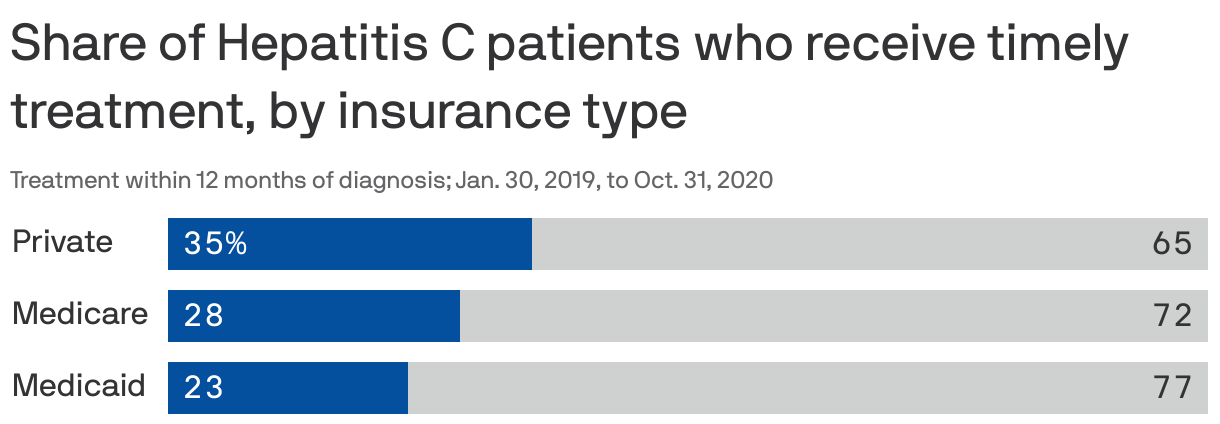
Only a fraction of the more than 2 million American adults with Hepatitis C are getting antiviral treatments, even when their insurance will pay for it, the Centers for Disease Control said in a report out Tuesday.
Why it matters: Hepatitis contributes to about 14,000 U.S. deaths a year, and the opioid crisis and the unsanitary use of needles by drug users has driven a spike in cases.
Doctors are weighing the legal risks of turning over ultrasounds and other personal health records if prosecutors or law enforcement demand the information to enforce state abortion bans.
Why it matters: The new post-Roe landscape is testing the suitability of the Health Insurance Portability and Accountability Act, or HIPAA.
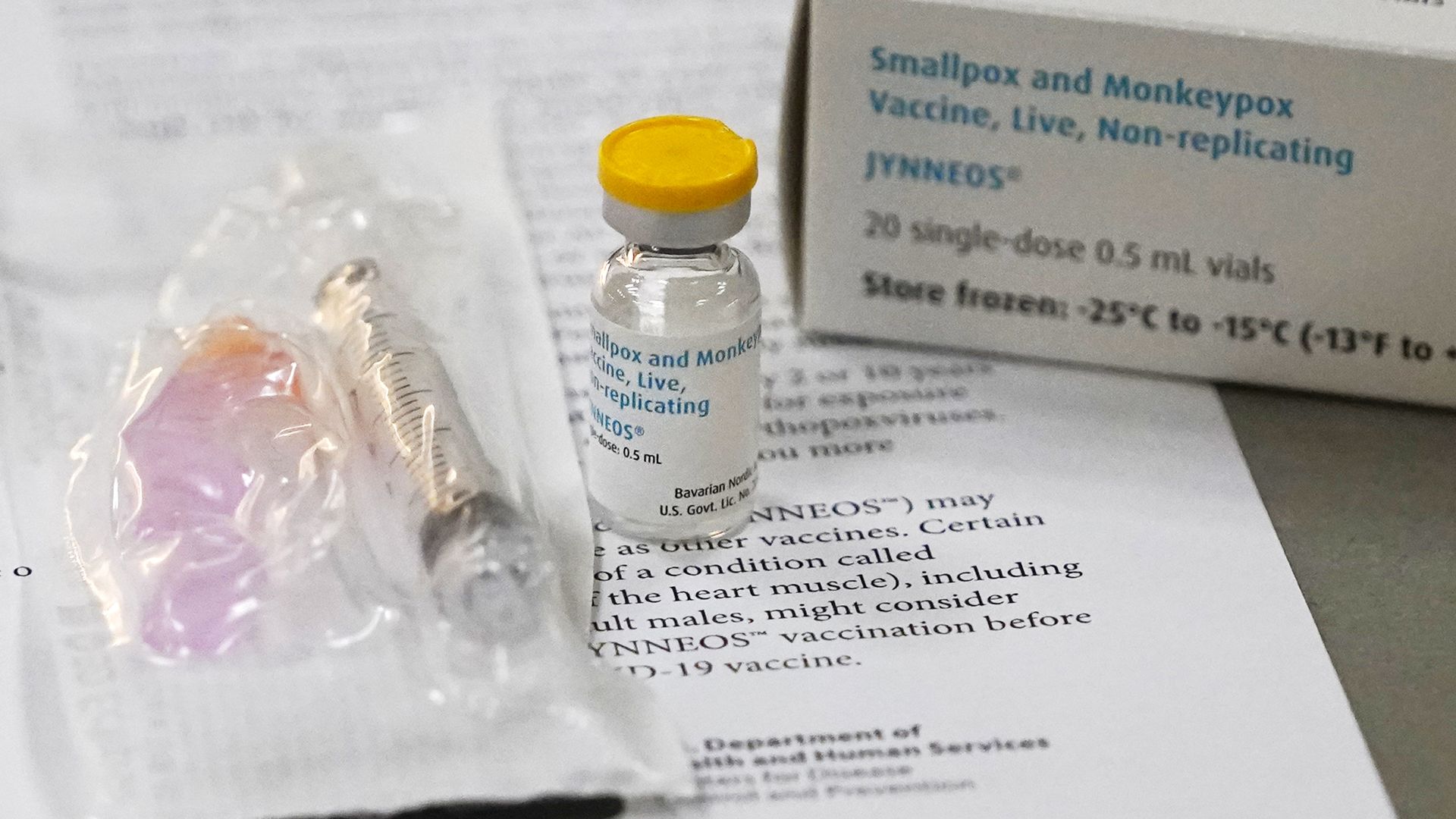
The Food and Drug Administration (FDA) issued an emergency use authorization on Tuesday for the Jynneos monkeypox vaccine to allow intradermal injection for people 18 years and older who are at high risk for infection.
Why it matters: The alternative approach lets health care providers stretch out vaccine supplies, by administering one-fifth of the Jynneos shot into the skin rather than injecting a full dose into underlying fat.
As California Gov. Gavin Newsompositioned himself as the "national Democratic Party pit bull" over the last couple of years, no set of issues has been more important than health care, according to California Healthline's Angela Hart.
Why it matters: Newsom hasn't spelled out his national aspirations, but this all appears to be pointing toward a presidential campaign.
More Americans personally know someone who's died from COVID-19 or has "long COVID" but are rapidly shunning masks and returning to their pre-pandemic lives, according to new data from the Annenberg Public Policy Center.
What they found: The survey of 1,580 adults, conducted as the BA.5 omicron subvariant surged and monkeypox cases multiplied, found 54% of respondents personally knew at least one person who died of the virus.
As cities race to amp up their heat mitigation efforts, some are replacing bare-bones cooling centers with full-service "climate resilience hubs" — offering everything from comfy A/C and phone charging to social services and emergency training.
Why it matters: While "resilience hubs" are meant for everyone and all kinds of climate disasters, they're particularly aimed at low-inc0me residents and people of color, who tend to suffer disproportionatelyas temperatures rise.
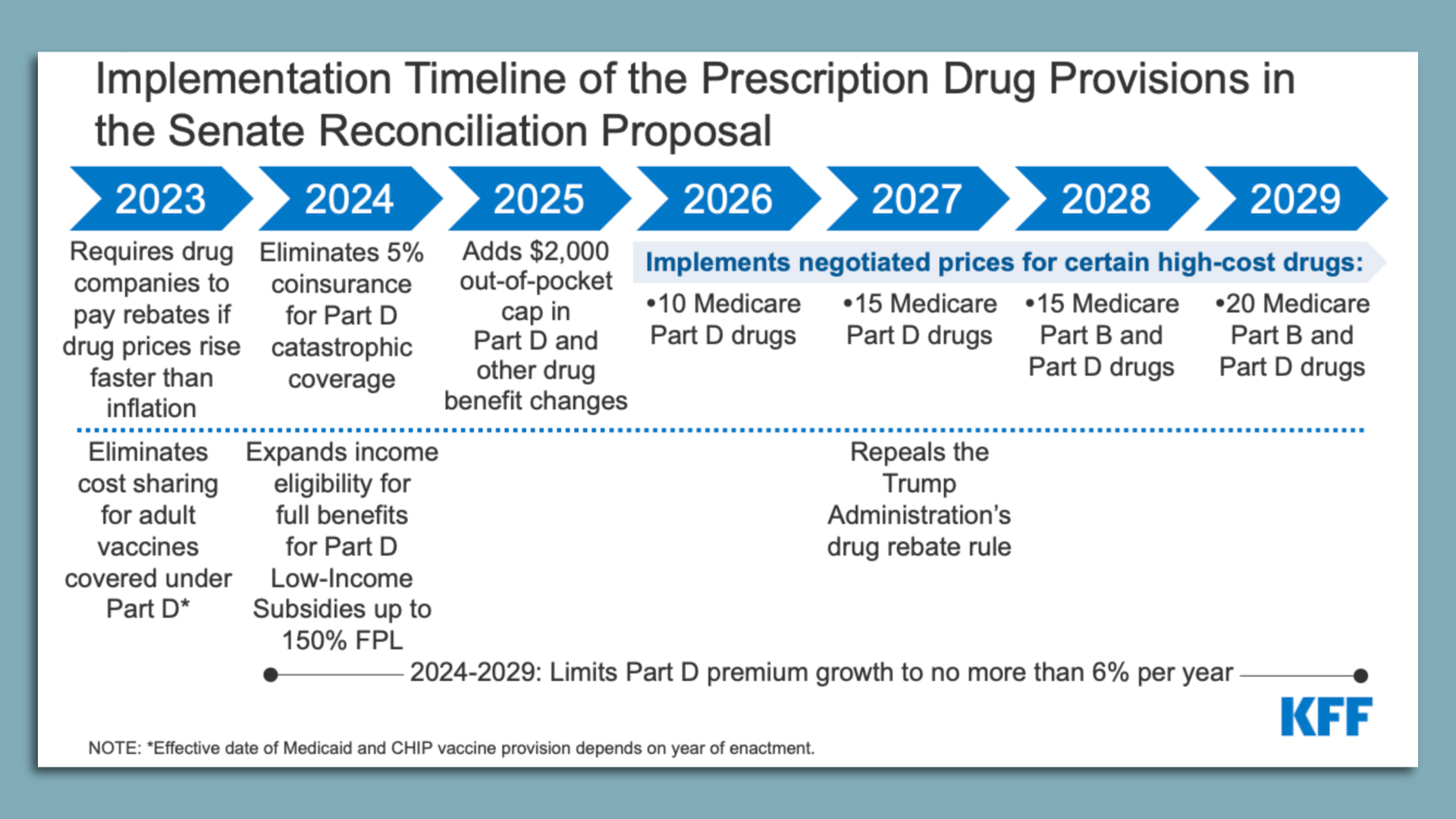
Democrats are on the cusp of making the most significant changes to Medicare in more than a decade, which would bring lower drug prices and out-of-pocket costs for some of the program's 64 million enrollees.
Why it matters: New limits on how much patients will have to pay for medicines annually could offer a lifeline to seniors with conditions like cancer or multiple sclerosis who face thousands of dollars in drug bills, and lower overall prices would provide relief to even more enrollees.







/2022/08/08/1659993209503.gif?w=3840)