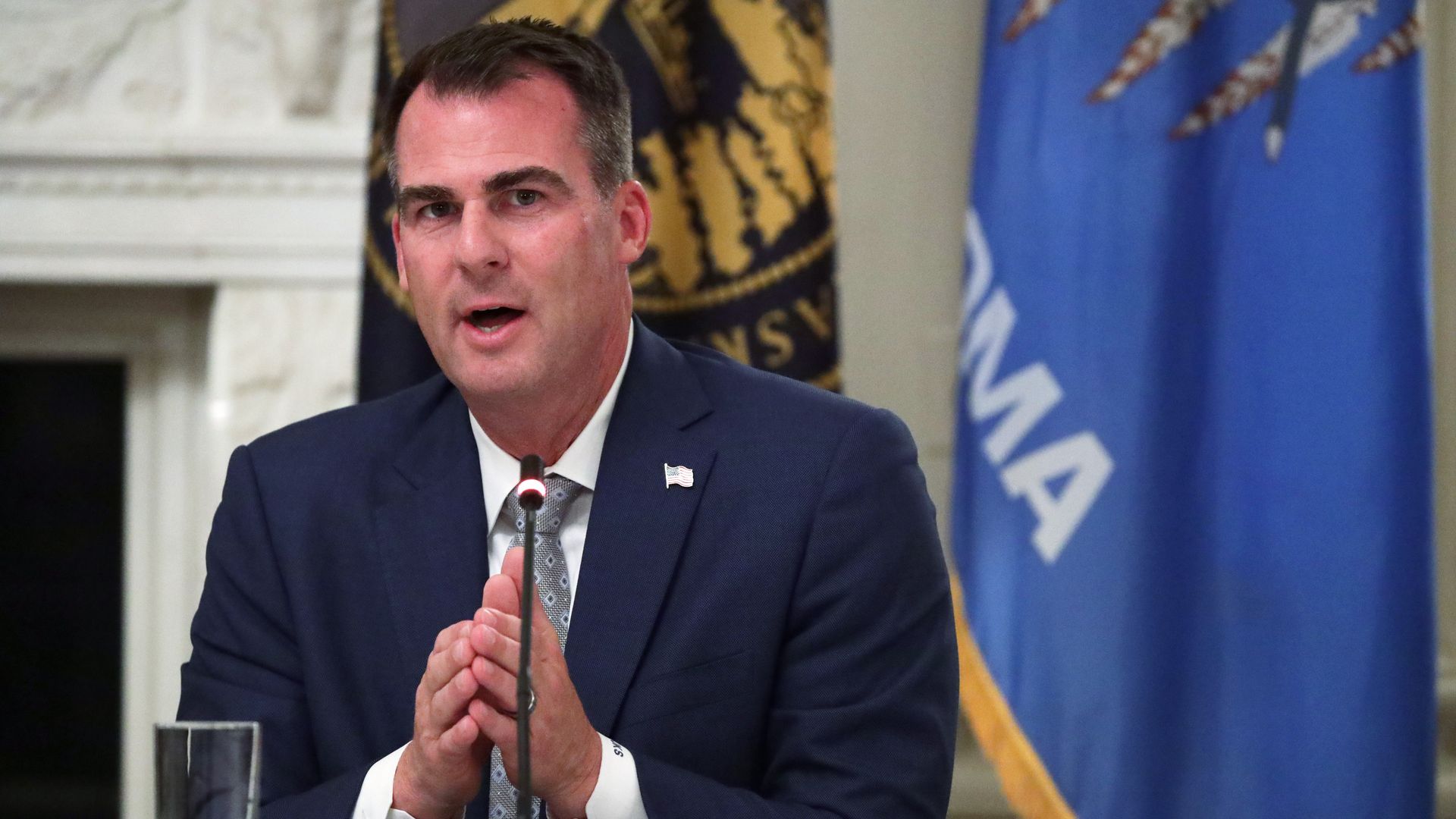
Oklahoma Gov. Kevin Stitt (R) on Tuesday signed into law a bill that makes providing an abortion a felony.
Driving the news: The legislation bans all abortions unless they're necessary to save a pregnant person's life. A person found guilty of providing an abortion would face up to 10 years in prison and a fine up to $100,000.
The U.S. saw an increase in gonorrhea and syphilis cases during the first year of the pandemic, according to new data released Tuesday by the Centers for Disease Control and Prevention (CDC).
Why it matters: The new data gives the "clearest picture yet" of the impact of COVID-19 on the spread of sexually transmitted diseases in the U.S., the CDC noted in a press release.
Shanghai officials eased their two-week COVID-19 shutdown by letting some city residents leave their homes, following videos that went viral showing how people were running out of food.
State of play: Officials said some pharmacies and markets would be allowed to open, and approximately 6.6 million people — of the 25 million city residents — would be allowed out of their homes, AP reports.
One of the top food trends, according to the Specialty Food Association? Hemp.
What's happening: Hemp seeds "have become a popular health food for their protein, fiber, omega-3 and omega-6 fatty acids, and other nutrients," Allrecipes tells us — and reminds us that while hemp comes from the same species of plant as cannabis, it won't get you high.
Hemp seeds "taste similar to sunflower seeds, somewhat like pine nuts, and a little like walnuts too."
Driving the news: The Specialty Food Association (SFA) identified hemp as a standout at its Winter Fancy Food Show, where hemp cropped up in alternative burgers, dressings and as an ingredient in chocolate.
"Hemp emerged as a star ingredient rich in protein, healthy fats, and essential fatty acids, as well as a sustainable crop," the trade group wrote.
Other trends the SFA spotted: Dates are proliferating as snacks and as sweeteners, and peppers of all heat levels are cropping up as well.
"Snacks with benefits" are a thing, "from nutrient-rich chocolate bars to pizza crust made from carrots."
So are "alternative comfort foods," like chickpea butter and cream cheese made from sunflower seeds.
The Biden administration took new steps yesterday to reduce the burden of medical debt — but the moves don't address its underlying causes, and may have unintended consequences.
Why it matters: The vast amount of medical debt in the U.S. is a direct reflection of the fact that many Americans can't afford deductibles and other out-of-pocket costs, but also can't forgo needed care.
The FDA has started discussions with states over creating a way to importdrugs from Canada — a policy the Biden and Trump administrations both embraced to bring down health costs but which experts regard as having limited impact.
The big picture: With President Biden's drug pricing agenda stalled, importation could allow states to take advantage of lower drug prices abroad without the need for direct action to limit prices in the U.S.
Under one pathway, states, wholesalers and pharmacies submit importation proposals to HHS, which would be subject to safety and cost conditions.
Driving the news: The FDA last week held its first meeting with five states — Florida, Colorado, Vermont, Maine and New Mexico — that have submitted reimportation plans or are thinking about doing so, Politico first reported.
Biden's executive order on promoting competition directed the FDA to work with states and Native American tribes on safely importing prescription drugs from Canada.
"The FDA is committed to working with states and Indian tribes that propose to develop ... importation programs to reduce the cost of products to the American consumer while still protecting public health and safety," an agency spokesman told Axios.
Yes, but: The Pharmaceutical Research and Manufacturers of America sued to block a 2020 federal rule that would facilitate importation, citing patient safety and other concerns.
Canada also said it has no plans to participate and has told drugmakers not to take steps that could lead to drug shortages there.
Cowen analyst Rick Weissenstein notes the Biden administration has been inconsistent on reimportation, supporting the idea in theory while arguing that it won't work in legal briefs filed in response to the drug industry trade group's legal challenge.
Our thought bubble: With Canadians officials adamant they won't participate in the process, any importation plan is unlikely to actually bring down drug prices. The issue still could be politically appealing as the campaign season heats up.
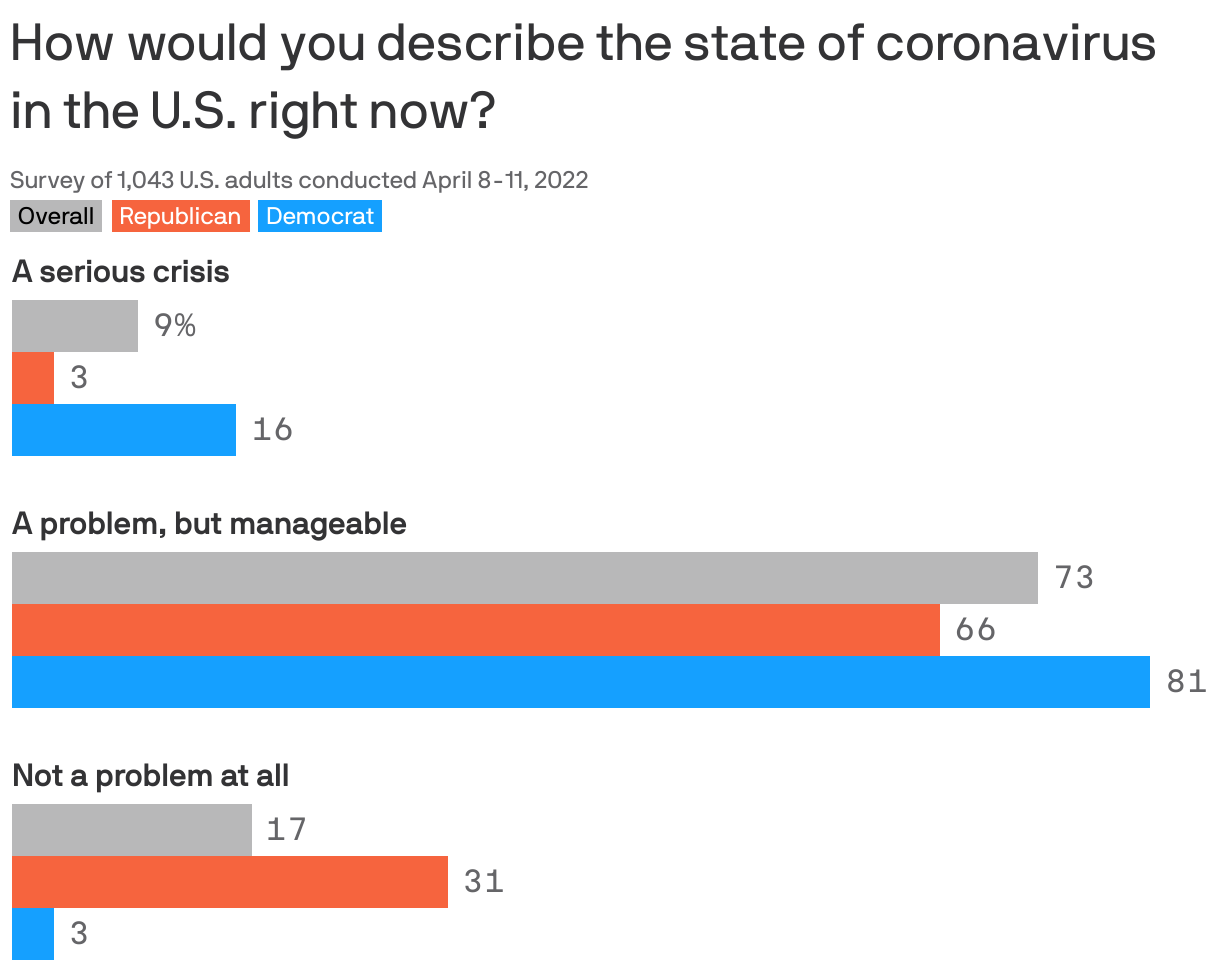
Less than one in 10 Americans now describe COVID-19 as a crisis — with about three in four calling it a manageable problem and one in six saying it's no problem at all — according to the latest installment of the Axios/Ipsos Coronavirus Index.
Why it matters: These sentiments — and the public's growing desire to be done with mask mandates and other restrictions — raise significant challenges for public health officials in managing new surges, and could create real political headwinds ahead of the midterms.
The U.S. Department of State ordered all non-emergency government staff in Shanghai to leave on Monday, in response to surging COVID-19 cases and China's tightening pandemic restrictions.
What they're saying: The department's advisory also urged American citizens to reconsider travel to China "due to arbitrary enforcement of local laws" and pandemic-related restrictions.
Extending the federal transportation mask mandate that applies to airplanes, buses and trains is "absolutely on the table," Ashish Jha, the White House's new COVID-19 response coordinator, said Monday on the Today Show.
Why it matters: The transportation mask mandate was extended last month but is currently set to expire on April 18.
A pair of senators is prodding the FDA to issue a final rule to allow a new category of hearing aids to be sold over the counter without a medical exam or audiologist fitting.
Why it matters: The change could give some of the estimated 38 million Americans with hearing loss more affordable choices and allow consumer electronics companies to enter the market.
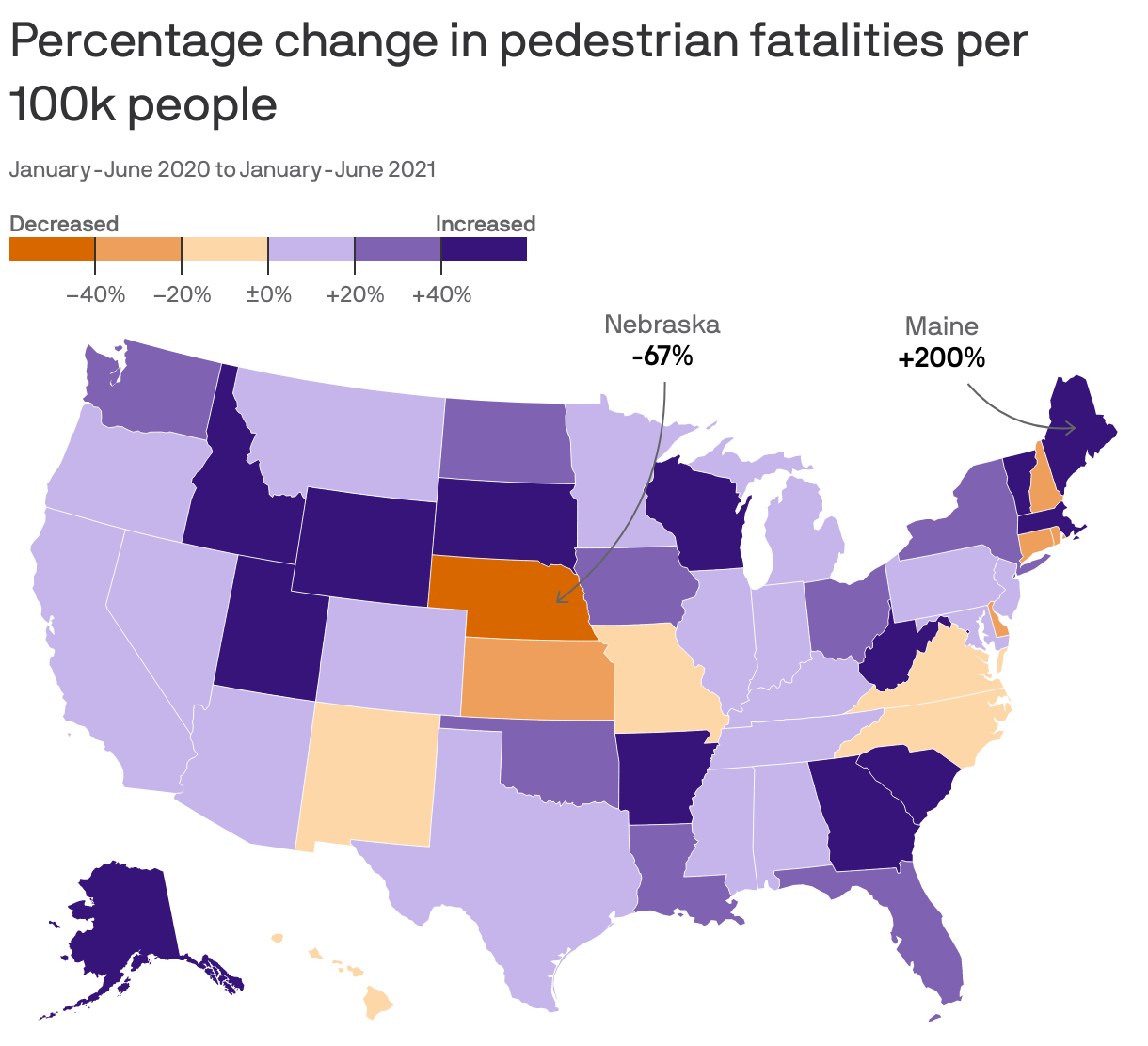
Pedestrian deaths rose precipitously in almost every state in the first 15 months of the pandemic, according to preliminary Governors Highway Safety Association data.
GHSA projects 3,441 pedestrians were killed in collisions with vehicles in the U.S., a 17% increase from 2020.
Zoom in: South Carolina had the highest rates of pedestrian deaths, with 2.95 fatalities per 100,000 people in the first half of 2021 — up 30% from 1.44 fatalities per 100,000 people in the first half of 2020.
Guangzhou, a major manufacturing city in China, has closed itself off to arrivals amidst a surge in COVID-19 cases in the country's big eastern cities, the Associated Press reported on Monday.
Driving the news: Guangzhou has not been put under a lockdown like the one in Shanghai, where many citizens are confined to their homes, but it is a major city with top companies and China's busiest airport, per AP.
The White House Correspondents Association will require those attending its annual dinner to be vaccinated against the coronavirus.
State of play: The association was already requiring attendees to provide proof of a same-day negative COVID test. It is now also encouraging guests to get a second booster shot if they are eligible as soon as this week for "maximum protection."
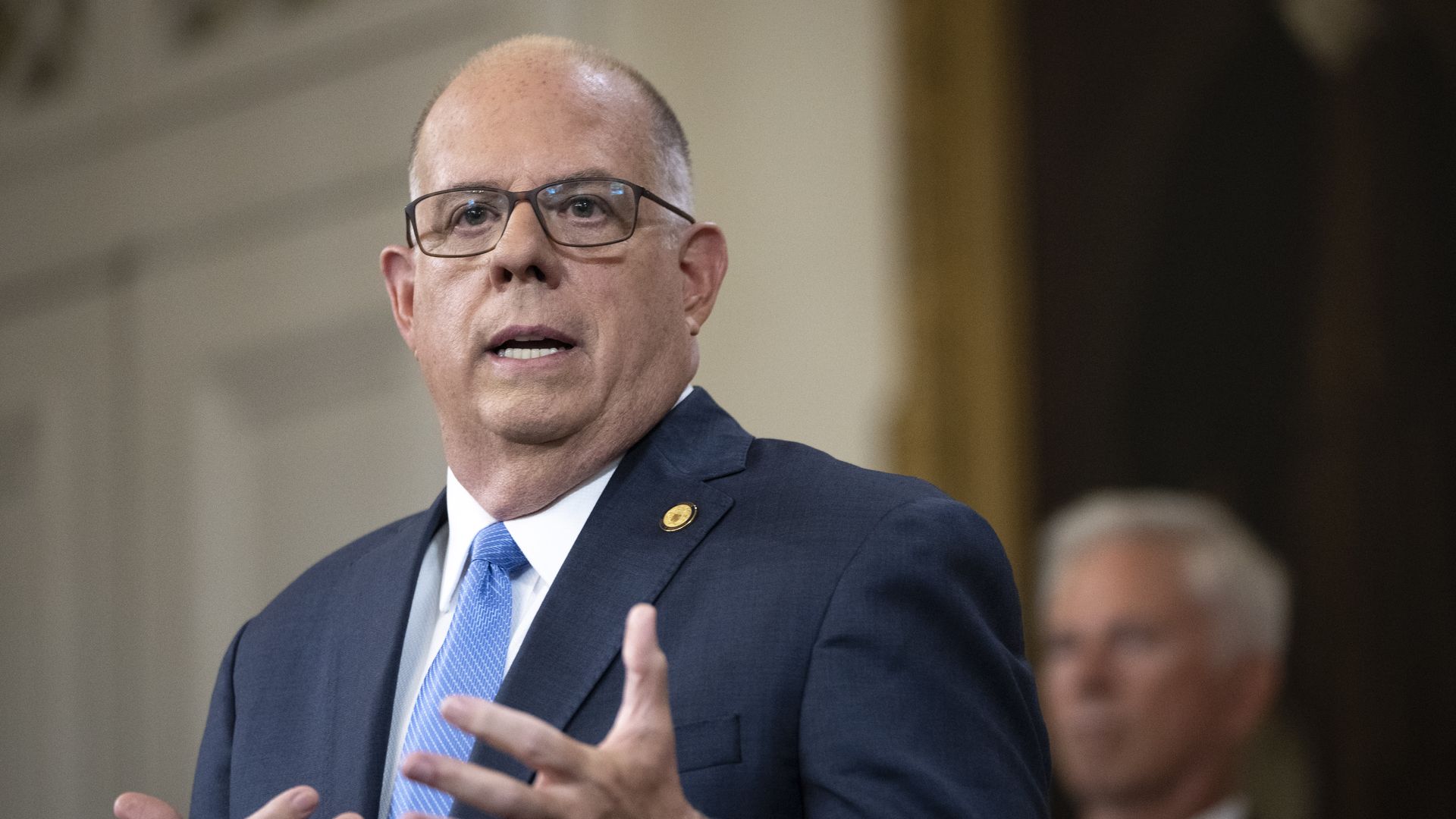
Maryland lawmakers voted over the weekend to override Gov. Larry Hogan's veto of a bill that would expand abortion access and direct health insurers to cover the cost of getting the procedure.
Americans were more vulnerable to serious illness and death from COVID in part because of our poor health status heading into the pandemic.
Now, preparations for future public health emergencies have to include chronic diet-related illnesses, including those stemming from the obesity crisis, health experts say.
Why it matters: Obesity and related diseases like diabetes were closely linked with a far higher risk of serious illness and death from COVID.
That was particularly true among older adults, communities of color, and disadvantaged communities, Anand Parekh, chief medical adviser at the Bipartisan Policy Center, told Axios.