The goal of reaching an era of individualized precision medicine will first require a closer look at the broader population.
The big picture: Large clinical trials and massive databases of de-identified genetic and other health information — sometimes from generations of populations — are offering scientists and doctors data to decipher why certain individuals have a higher risk of disease or different responses to treatments.
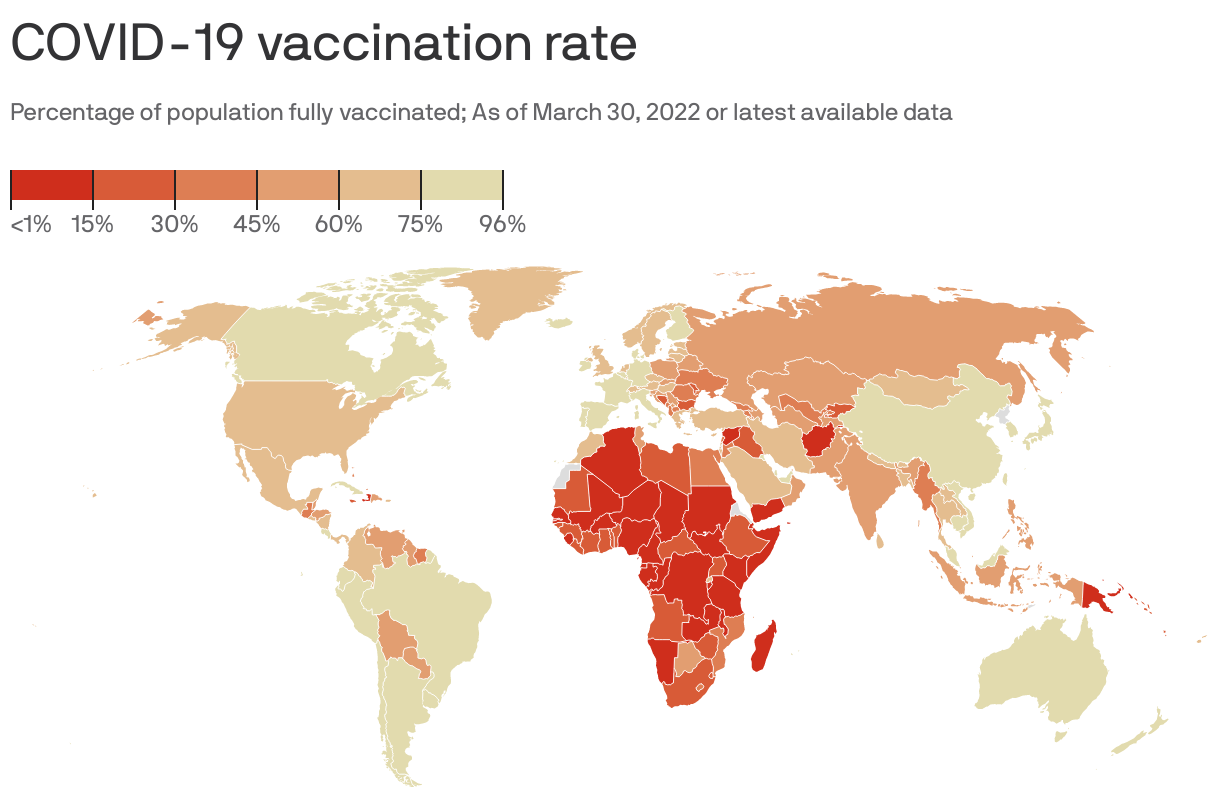
Data: Our World in Data; Chart: Jared Whalen/Axios
COVID vaccine supply struggles are easing, but in 44 countries — most of them in Africa — less than 20% of the population is fully vaccinated. In 19, the rate is under 10%.
The big picture: Those countries "have doses now, and they know that there are more doses available," says Seth Berkley, CEO of the Gavi vaccine alliance and point person for the global COVAX initiative. After a year of waiting for vaccine doses, the primary concern is now delivery.
Congress is pressing ahead with plans to limit the cost of insulin to $35 a month — an effort that could be the closest Democrats get to making good on campaign pledges to rein in drug costs.
Why it matters: But while capping out-of-pocket costs for insulin might be a political winner in an election year, it could wind up costing the government billions in lost revenue and swelling the deficit.
Pregnancy nearly doubles the chances a person will have a breakthrough COVID-19 infection, according to new study released Thursday.
Why it matters: The findings, from Wisconsin-based company Epic, analyzed millions of patient records to home in on what comorbidities increase a person's risk of contracting the coronavirus while fully vaccinated. Pregnancy topped the list, according to the findings first reported by the Washington Post.
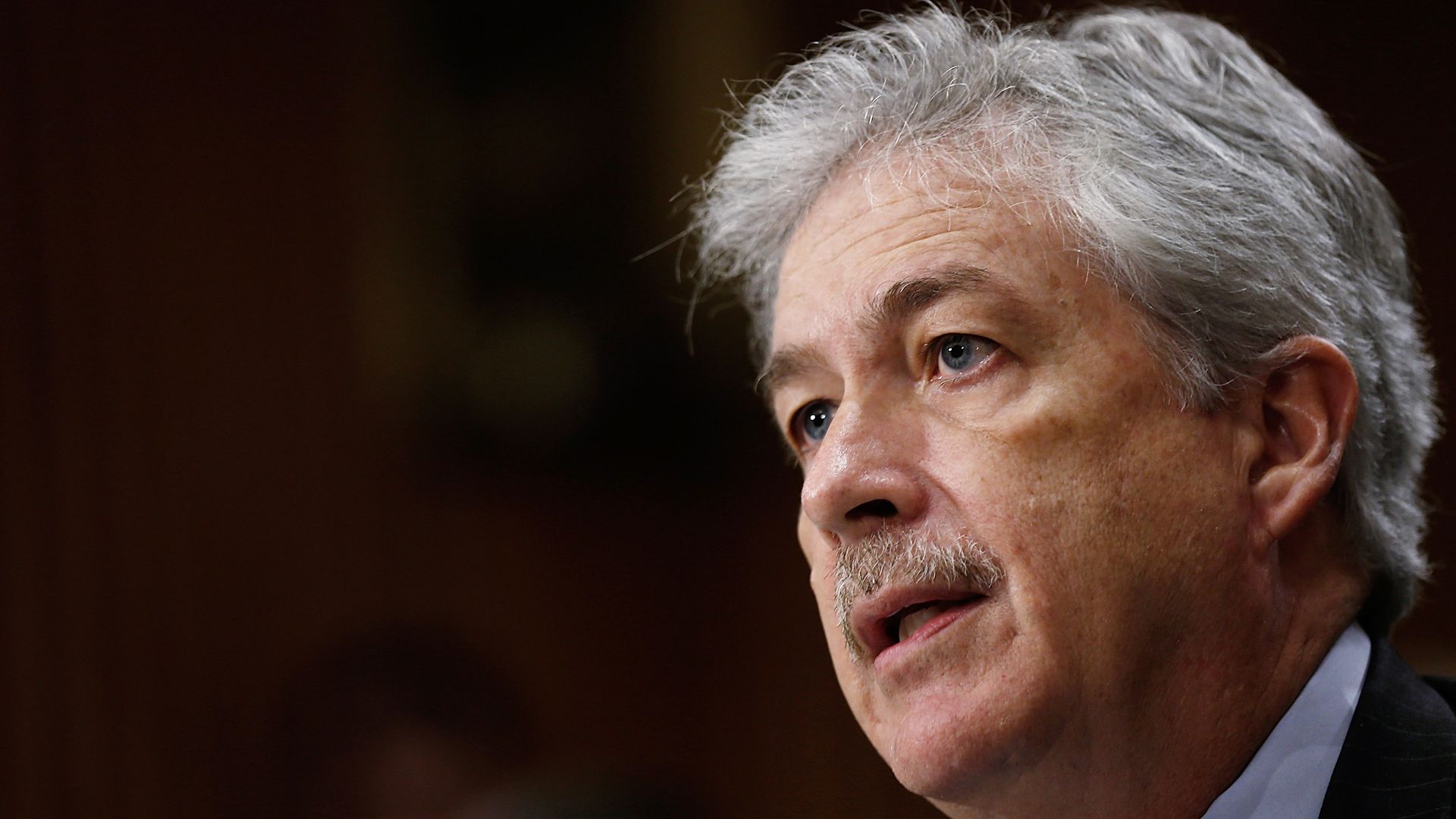
CIA Director William Burns, 65, tested positive for COVID-19 from a routine PCR test, the agency said Thursday.
Driving the news: Burns last saw President Biden Wednesday morning "in a socially distanced meeting, and was wearing an N-95 mask. Their interaction is not considered close contact as defined by CDC guidance," the CIA said in a news release.
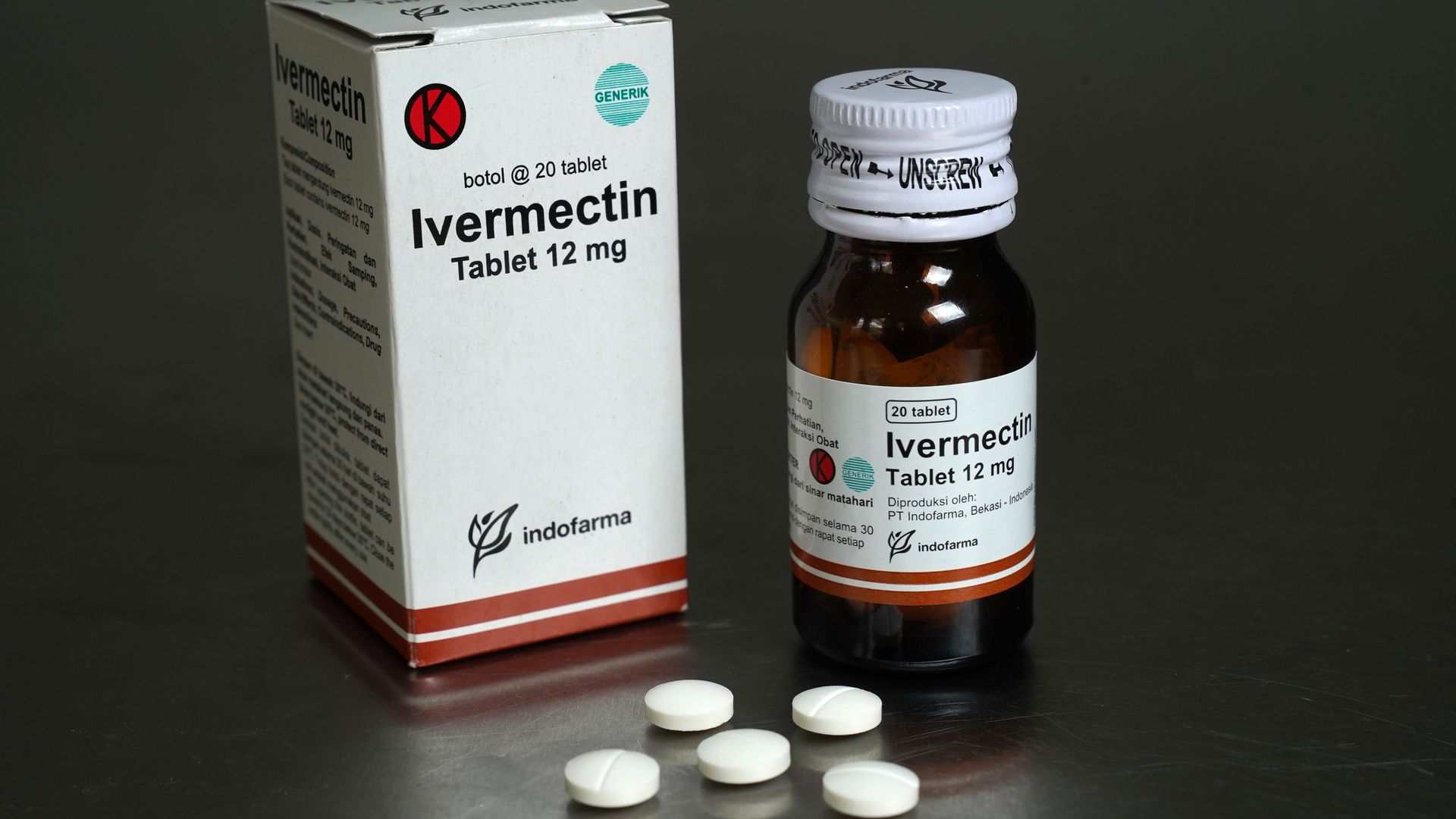
The anti-parasitic ivermectin does not reduce the risk of COVID-19 hospitalization, according to a new study published Wednesday.
Driving the news: "Treatment with ivermectin did not result in a lower incidence of medical admission to a hospital due to progression of Covid-19 or of prolonged emergency department observation among outpatients with an early diagnosis of COVID-19," the study's authors wrote in the New England Journal of Medicine.
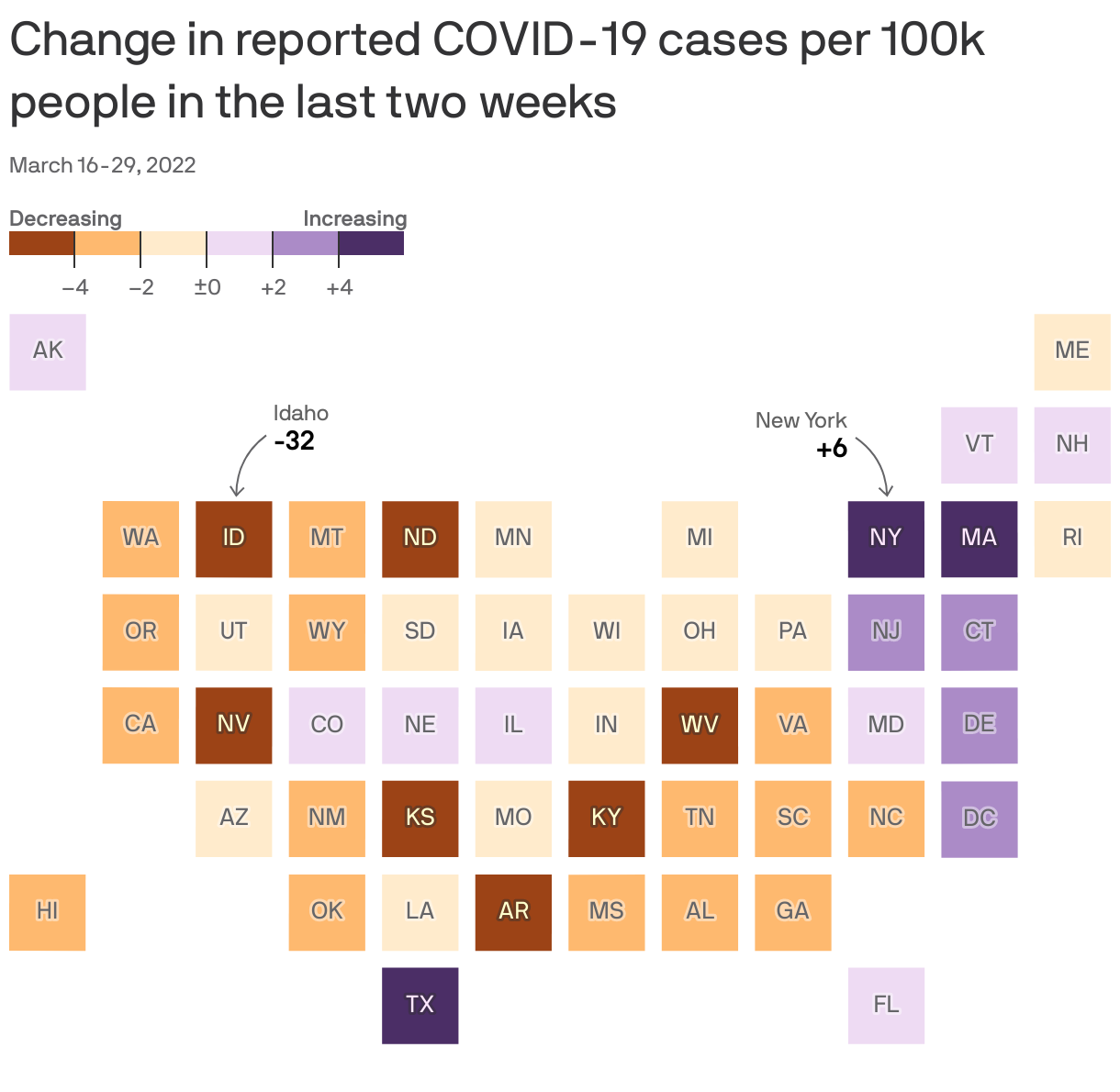
After plummeting for several weeks, the number of new COVID cases in the U.S. has largely leveled off.
Driving the news: The CDC confirmed this week the Omicron subvariant BA.2, which has been driving surges of COVID elsewhere around the world, has become the dominant strain circulating in the U.S.
The decades-long debate over whether the federal government can and should use its legal muscle to lower prescription drug prices may be reaching an inflection point, especially with President Biden's drug pricing agenda stalled on Capitol Hill.
Why it matters: Democrats would love to be able to show voters they've acted to lower drug prices before the November midterms, and progressive groups are urging them to so both legislatively and administratively. But taking on pharma through executive action risks uncertain legal outcomes, and opponents say that it could have a chilling effect on innovation.
Surgical supplies for chest drainage, fluids required for dialysis and even old-fashioned hot and cold packs are among a list of items in shortage across health care, group purchasing organization Premier told Axios.
Why it matters: Sustained, high-level supply chain shortages have stretched across all areas of health care. And they are expected to continue through the end of 2022, David Hargraves, senior vice president of Premier said.
The choose-your-own-adventure vibe of the pandemic response is spreading to booster shots, with Americans 50 and older now having the option to get a fourth dose — without explicitly being encouraged to do so.
Why it matters: Many experts say yesterday's FDA authorization makes sense as a precautionary measure, but the policy could create more confusion around the long-term vaccination strategy.
The big picture: Officials say thousands of people remain trapped in the besieged city, with food, water and medicine in short supply. U.S. State Department spokesperson Ned Price has said "some of the most egregious accounts of what could constitute war crimes" by Putin's forces "have emanated from Mariupol."












/2022/03/30/1648650218320.gif?w=3840)
/2022/03/29/1648585499297.gif?w=3840)