Surgical supplies for chest drainage, fluids required for dialysis and even old-fashioned hot and cold packs are among a list of items in shortage across health care, group purchasing organization Premier told Axios.
Why it matters: Sustained, high-level supply chain shortages have stretched across all areas of health care. And they are expected to continue through the end of 2022, David Hargraves, senior vice president of Premier said.
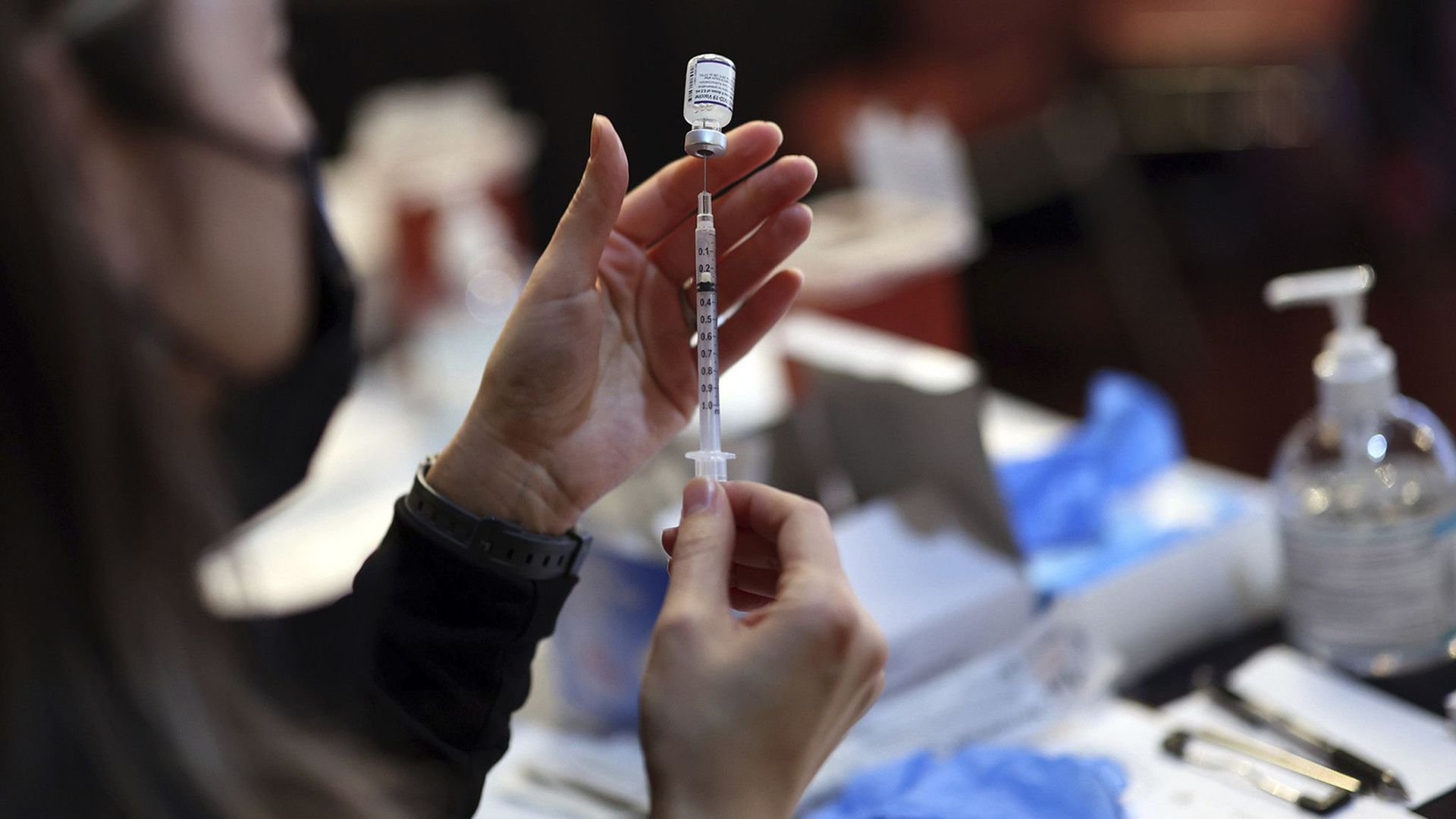
The choose-your-own-adventure vibe of the pandemic response is spreading to booster shots, with Americans 50 and older now having the option to get a fourth dose — without explicitly being encouraged to do so.
Why it matters: Many experts say yesterday's FDA authorization makes sense as a precautionary measure, but the policy could create more confusion around the long-term vaccination strategy.
The big picture: Officials say thousands of people remain trapped in the besieged city, with food, water and medicine in short supply. U.S. State Department spokesperson Ned Price has said "some of the most egregious accounts of what could constitute war crimes" by Putin's forces "have emanated from Mariupol."
The Omicron subvariant BA.2 accounts for a little over half of all new COVID cases in the U.S. as of Saturday, according to new estimates published by the Centers for Disease Control and Prevention (CDC).
The big picture: BA.2 is now the dominant global variant, the World Health Organization (WHO) said last week. CDC Director Rochelle Walensky previously warned it would only be a matter of time before BA.2 became dominant in the U.S. as well.
Centers for Disease Control and Prevention Director Rochelle Walensky on Tuesday expanded eligibility for a second COVID-19 booster shot to all Americans age 50 or older in addition to some with compromised immune systems, the agency announced in a statement.
Driving the news: "This is especially important for those 65 and older and those 50 and older with underlying medical conditions that increase their risk for severe disease from COVID-19 as they are the most likely to benefit from receiving an additional booster dose at this time," Walensky said.
The discontinuation of the federal program that makes free COVID care available to uninsured Americans means that they're likely to have a lot more difficulty accessing pandemic care, according to a new KFF brief.
Higher costs for many covered Americans are likely right around the corner, too.
President Biden's fiscal 2023 budget blueprint is light on specifics for key items on his health care agenda, but makes major spending commitments on mental health and preparing for future crises.
Why it matters: The budget released Monday amounts to little more than a wish list to Congress but offers clues about what Biden is prioritizing.
London's Metropolitan Police confirmed to Axios Tuesday 20 fines will be issued for people who attended lockdown-defying parties at Downing Street and Whitehall government offices in the United Kingdom, but it won't identify who will receive them.
Why it matters: British Prime Minister Boris Johnson apologized for attending at least one party during a strict lockdown in May 2020 and faced calls to resign, even from members of his ruling Conservative Party, over the gatherings.
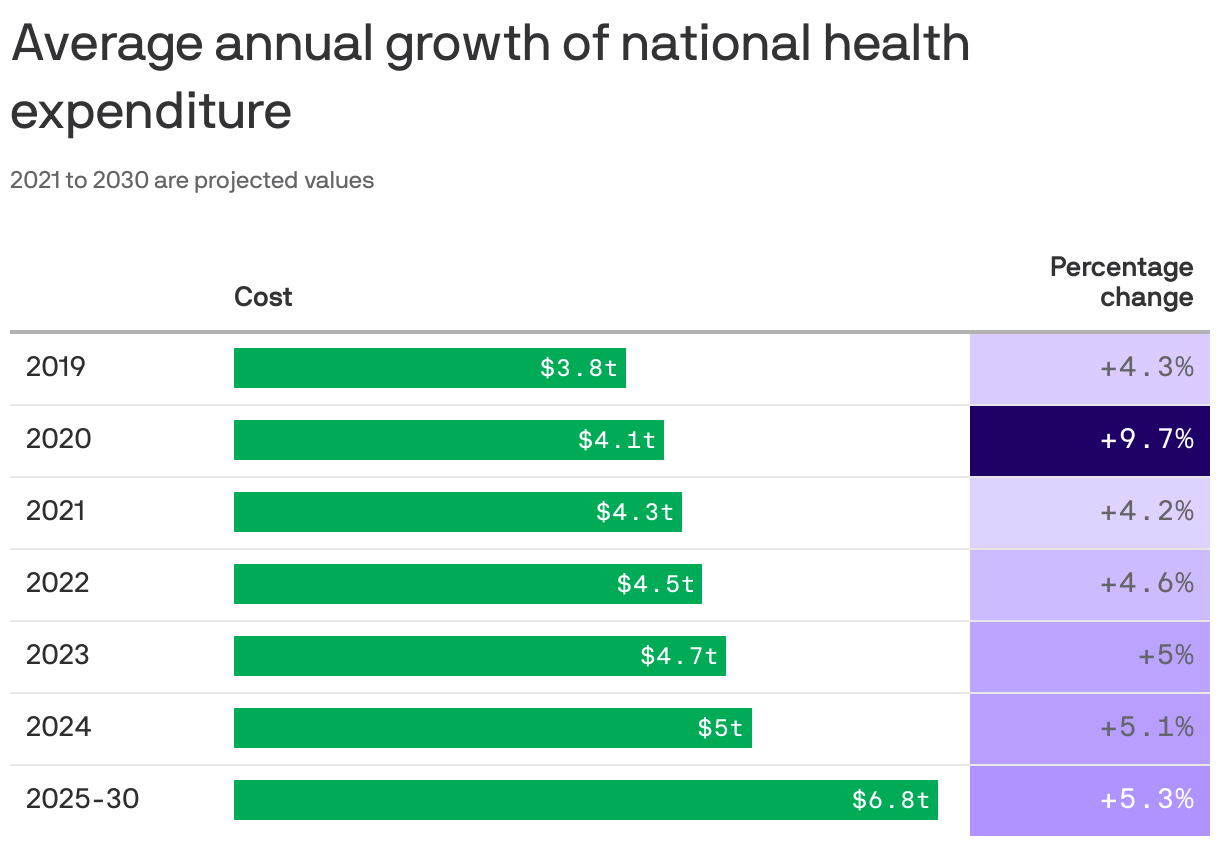
Data: "National Health Expenditure Projections, 2021–30: Growth To Moderate As COVID-19 Impacts Wane," Poisal et al., 2022; Table: Will Chase/Axios
U.S. health care spending is likely to grow at about the rate of inflation over the rest of the decade after the pandemic fueled a nearly 10% jump between 2019 and 2020, federal experts said Monday.
The big picture: The CMS actuaries' projections in Health Affairs came with plenty of caveats. But if trends hold, out-of-pocket spending is going up, as is spending on private coverage, Medicare and Medicaid.

/2022/03/30/1648650218320.gif?w=3840)

/2022/03/29/1648585499297.gif?w=3840)