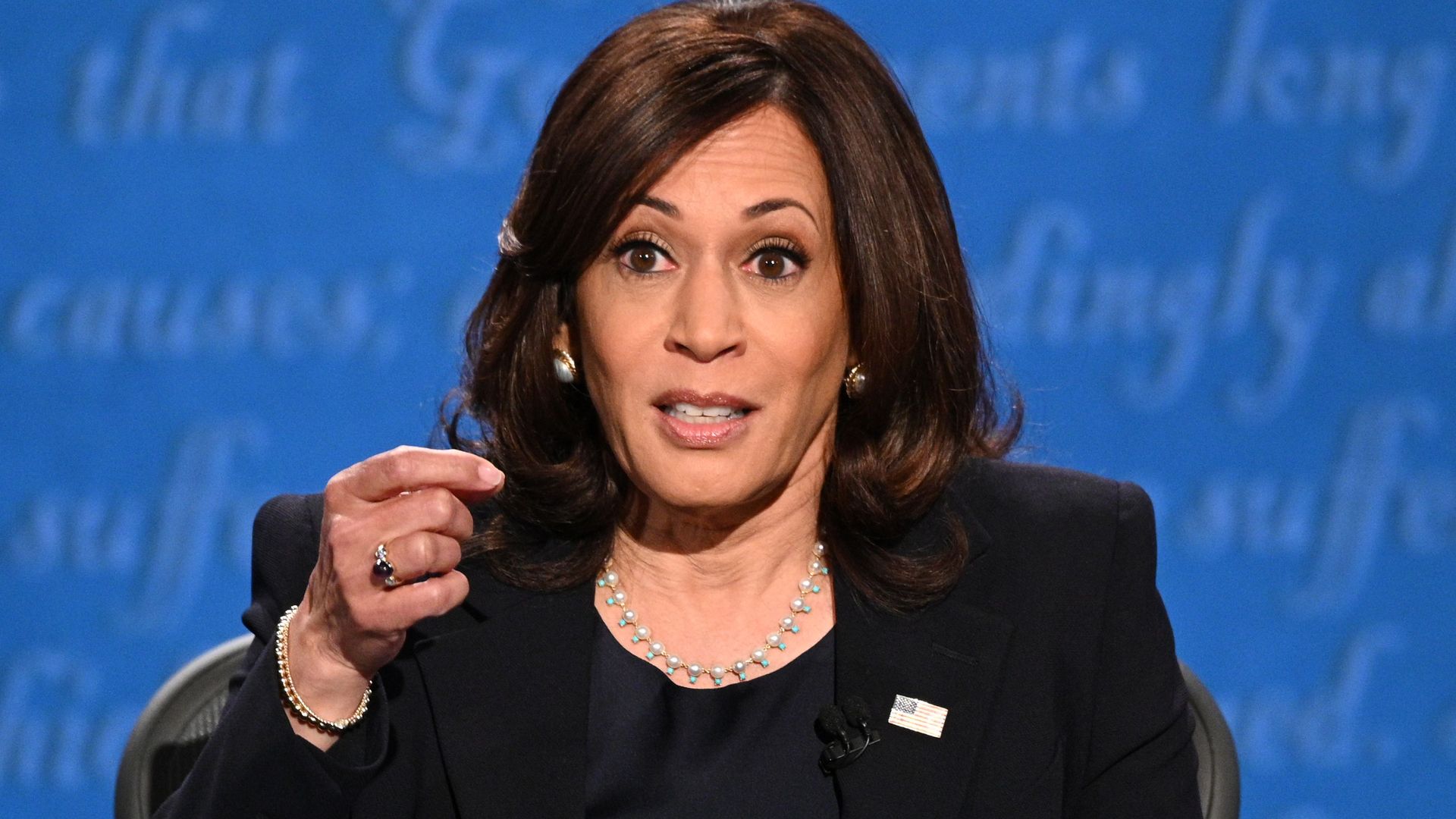
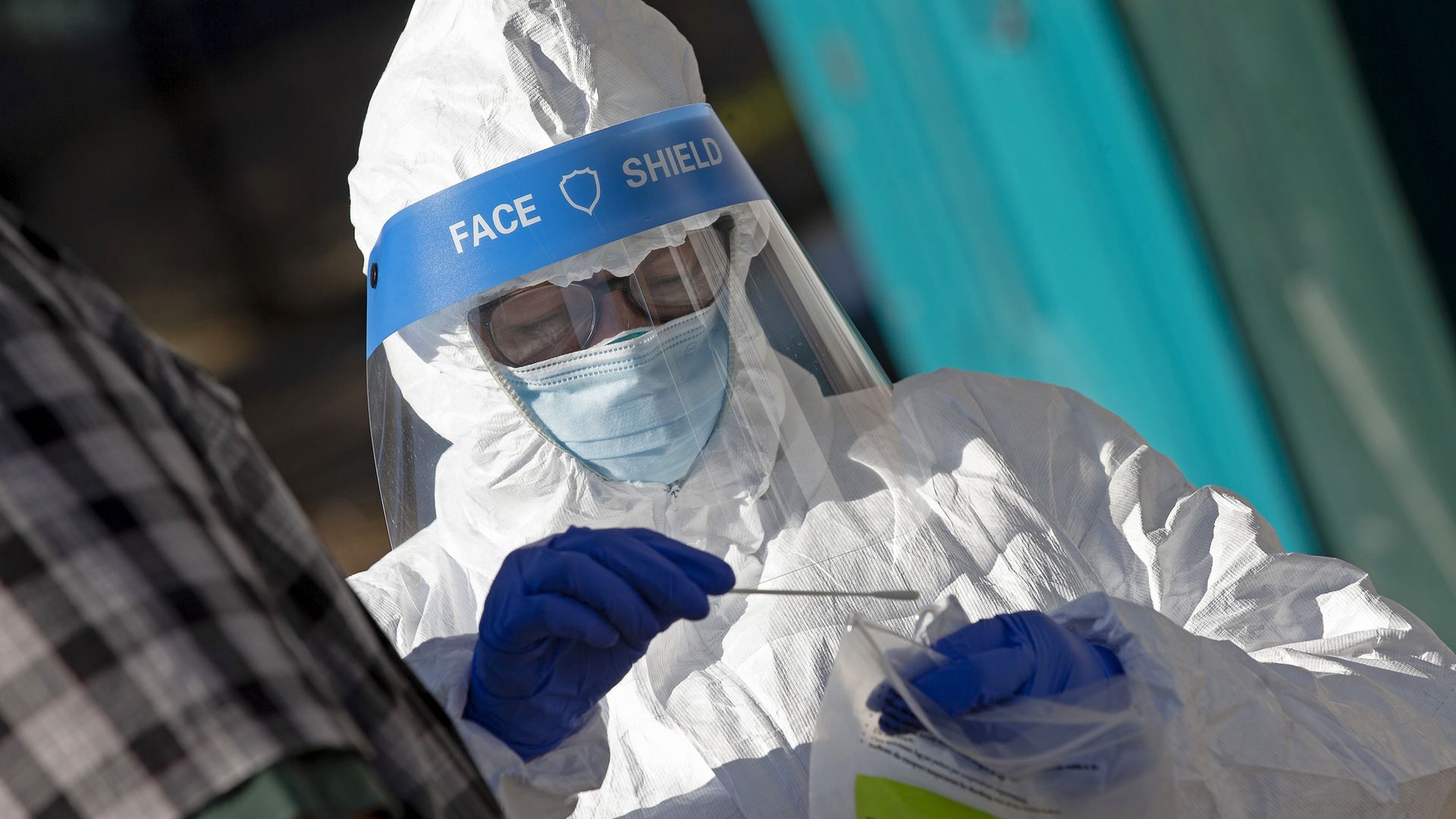
Sen. Kamala Harris (D-Calif.) took a COVID-19 test on Saturday and the virus was not detected, according to a campaign aide.
Driving the news: The Democratic vice presidential nominee paused her campaign travel through Sunday after her communications director tested positive for the coronavirus.
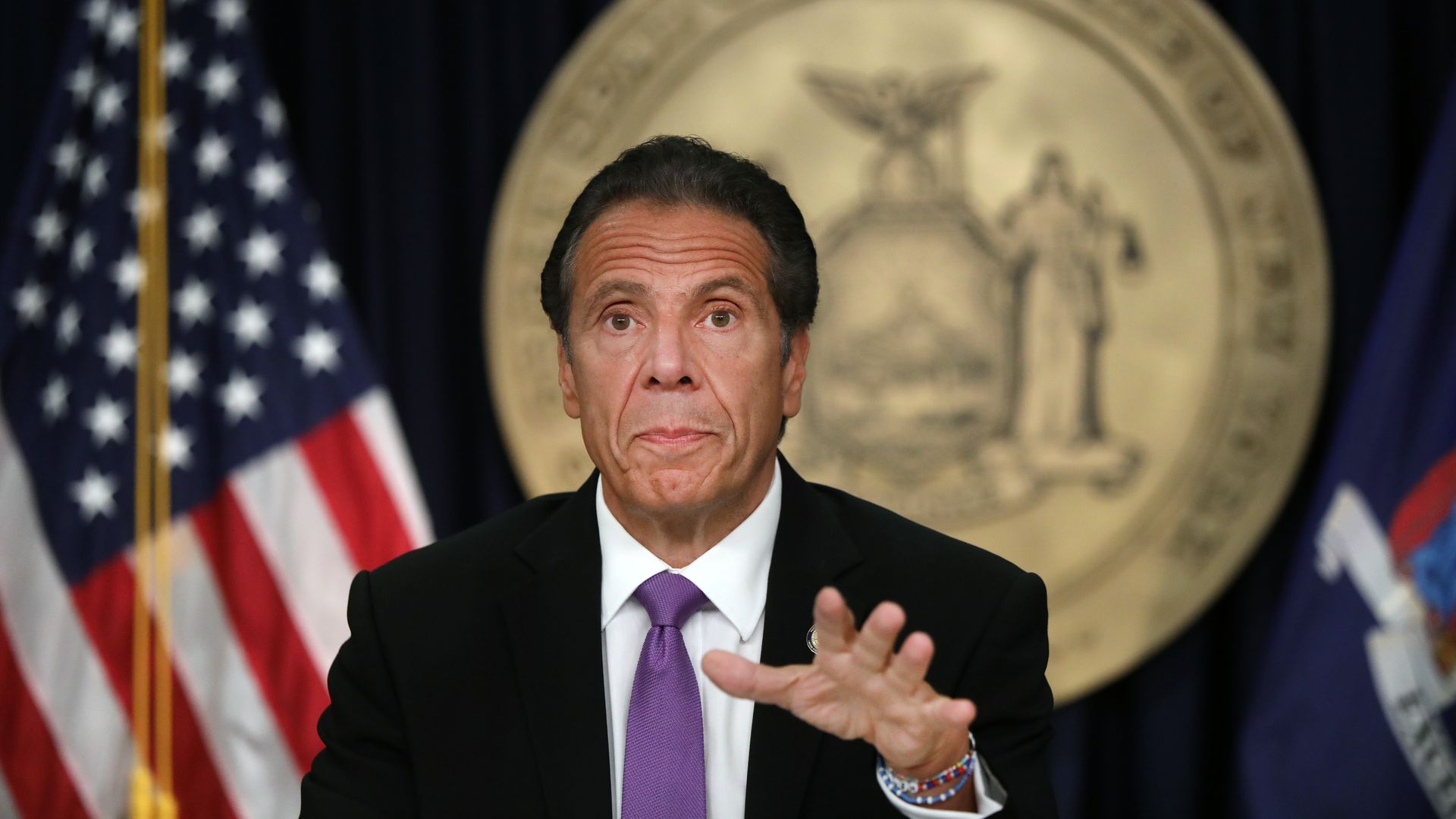
New York Gov. Andrew Cuomo on Saturday announced the state will deploy a "micro-cluster strategy" to target the coronavirus "block-by-block" instead of at the statewide or regional levels.
Why it matters: Cuomo said that while New York's infection rate has remained relatively low — at an average of 1.1% average as of Saturday — “the fall is a new phase."
Industries that were once expected to recover after the initial coronavirus lockdowns lifted are now unlikely to bounce back until a vaccine arrives.
Why it matters: In the absence of a widely-adopted vaccine, businesses in the entertainment, travel, restaurant and other industries are struggling to overcome consumer skepticism around indoor activities — even with new safety protocols in place.
As a new wave of coronavirus cases hits the U.S. and Europe, governments are shifting away from total shutdowns toward more geographically targeted lockdowns to stifle the virus' spread.
Why it matters: Precision shutdowns can slow emerging outbreaks while lessening the overall economic impact of the response. But they risk a backlash from those who are targeted, and may not be strong enough to keep a highly contagious virus under control.
More than 1,000 current and former Centers for Disease Control and Prevention epidemic intelligence officers have signed an open letter, decrying "the ominous politicization" of the agency throughout the coronavirus pandemic.
Why it matters: The CDC is typically at the forefront of the U.S. response to public health crises, but the agency has largely been sidelined during the COVID-19 outbreak, with the White House attempting to control messaging, which, at times, contradicts scientific evidence.
Davidson, the private college in North Carolina, will freeze tuition and fees next year in response to the coronavirus pandemic, President Carol Quillen told students via email.
Why it matters: It's the school's first freeze in 25 years. Davidson has need-blind admission and costs just over $70,000 a year (the school's average financial aid package is roughly $49,000 a year).
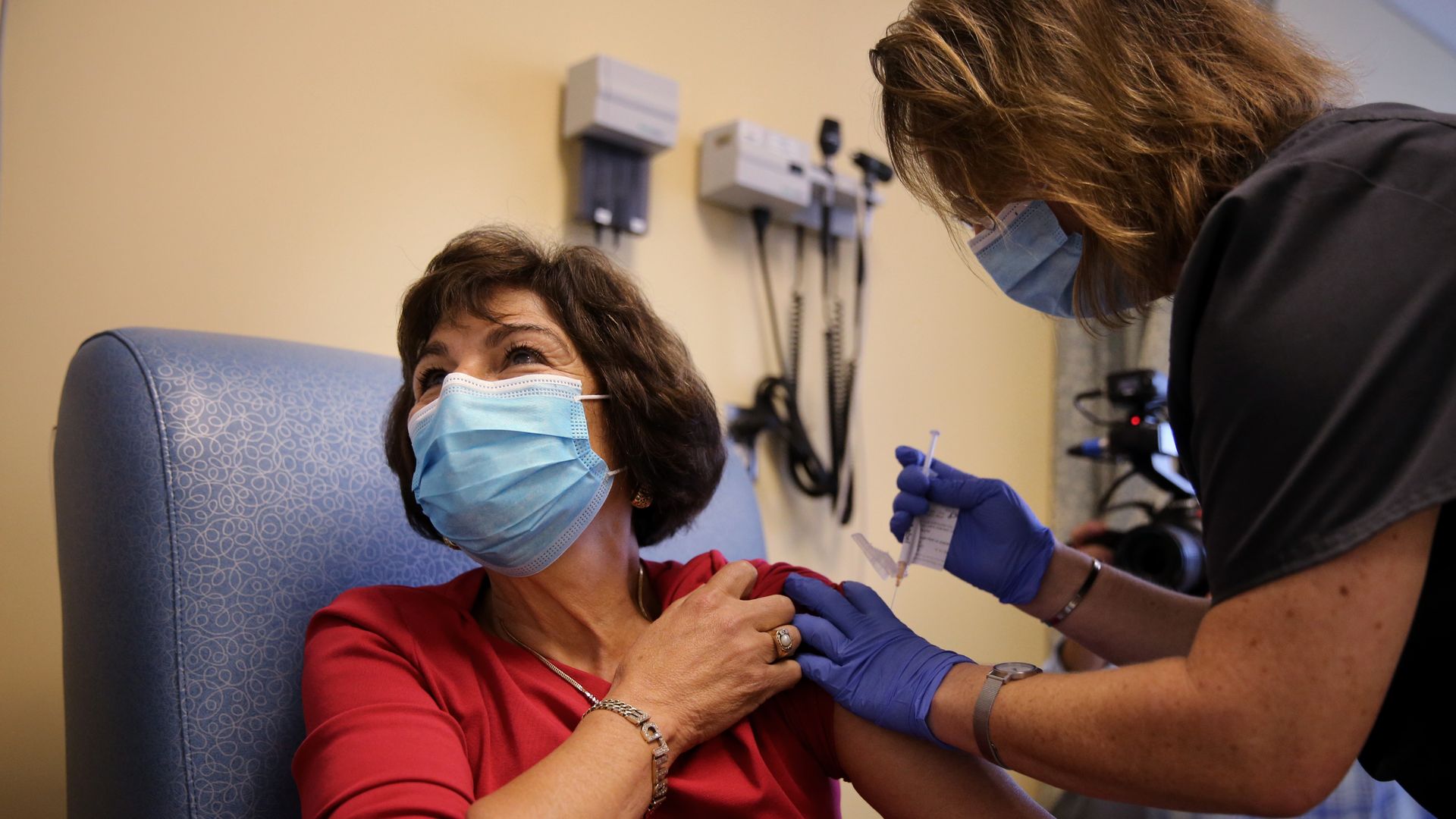
The Trump administration announced an agreement on Friday with CVS and Walgreens to distribute coronavirus vaccines to seniors and staff in long-term care facilities for free.
Why it matters: The move could help the president move up in the polls with elderly voters. Seniors, who have been significantly impacted by the virus, helped Trump get elected in 2016, but recent polls have indicated that the group swung sharply against him and toward Joe Biden.
The U.S. surpassed 8 million coronavirus cases on Friday, per Johns Hopkins data.
The big picture: Coronavirus infections jumped by almost 17% over the past week as the number of new cases across the country increased in 38 states and Washington, D.C., according to a seven-day average tracked by Axios.
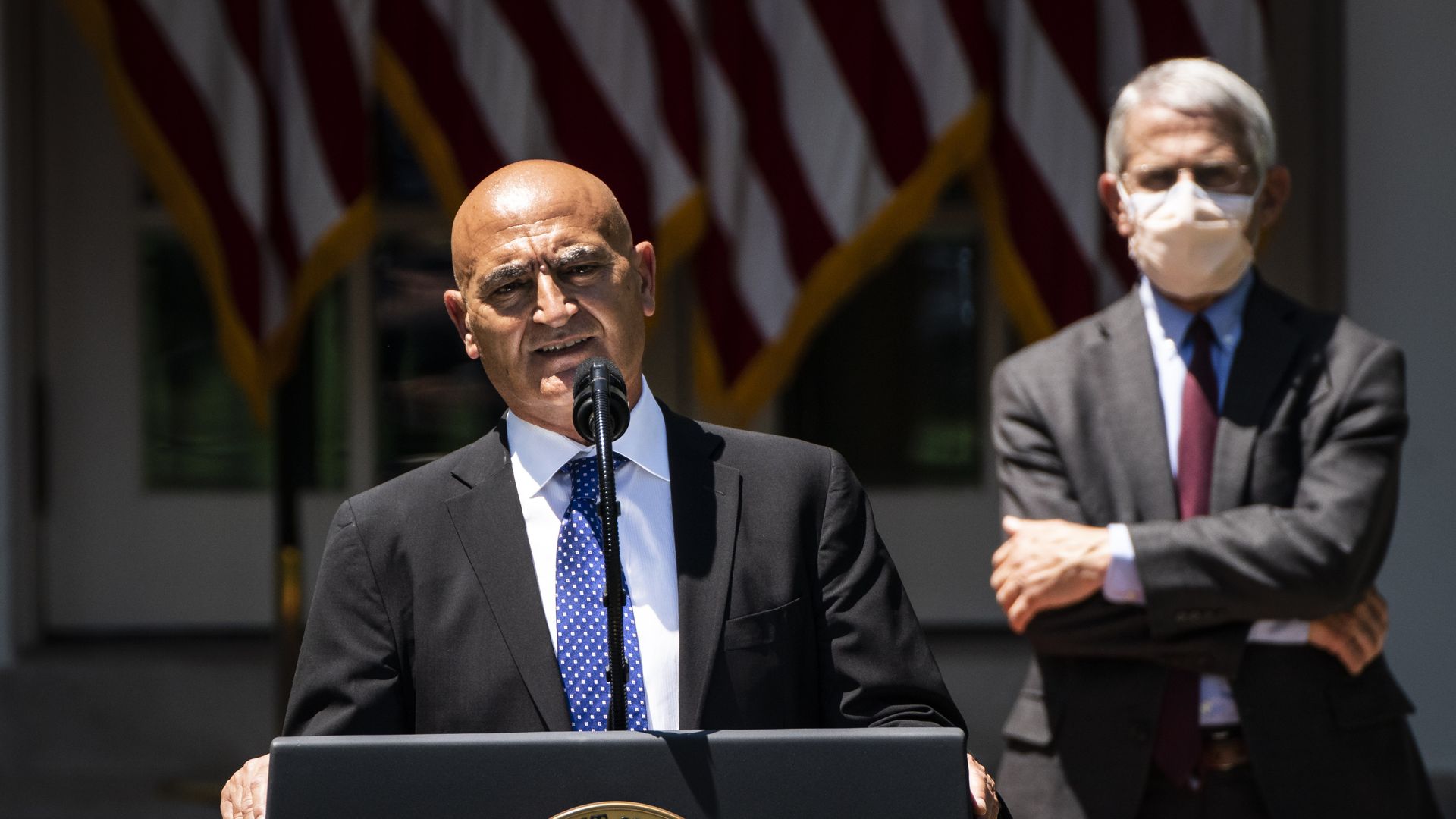
Moncef Slaoui knows his job helping lead Operation Warp Speed may not be over by inauguration day, but tells the Axios Re:Cap podcast that hasn't yet spoken with anyone on Team Biden about vaccine development or deployment.
Why it matters: It could behoove the country for an incoming Biden administration to hit the ground running on the inherited pandemic crisis, much like both Barrack Obama and John McCain were invited into financial crisis talks by George W. Bush in the closing months of the 2008 presidential campaign.
Pfizer today said it won't apply for an emergency use authorization for its COVID-19 vaccine until late November, all but guaranteeing that the FDA won't be asked to consider approval until after the election.
Axios Re:Capgoes deeper with Moncef Slaoui, the White House's top scientific advisor to Operation Warp Speed, the public-private partnership created to get a coronavirus vaccine deployed and developed.
The vast majority — nearly eight in 10 — of Americans don't want to the Supreme Court to overturn the Affordable Care Act's pre-existing conditions protections, according to a KFF poll.
Yes, but: Only 58% of Americans say the same about the law in its entirety, with the gap between the two positions largest among Republicans.
Some colleges are creating a blueprint for how to safely remain open during the coronavirus pandemic, relying heavily on regular testing and doing what they can to curb parties and other large gatherings.
Why it matters: College reopenings were tied to several big outbreaks, and young adults will likely be among the last to receive a coronavirus vaccine. So colleges and students need figure out how to live amid the virus.
The U.S. reported 63,172 new coronavirus cases on Thursday, the nation's highest daily count since July 31 when it saw more than 66,000 new cases in a single day, according to data from the COVID Tracking Project.
Why it matters: Over 37,000 people are currently being hospitalized due to the virus in the U.S., while the country reported 951 new deaths from the virus. COVID-19 infections jumped by almost 17% over the past week as the number of new cases increased in 38 states and Washington, D.C.