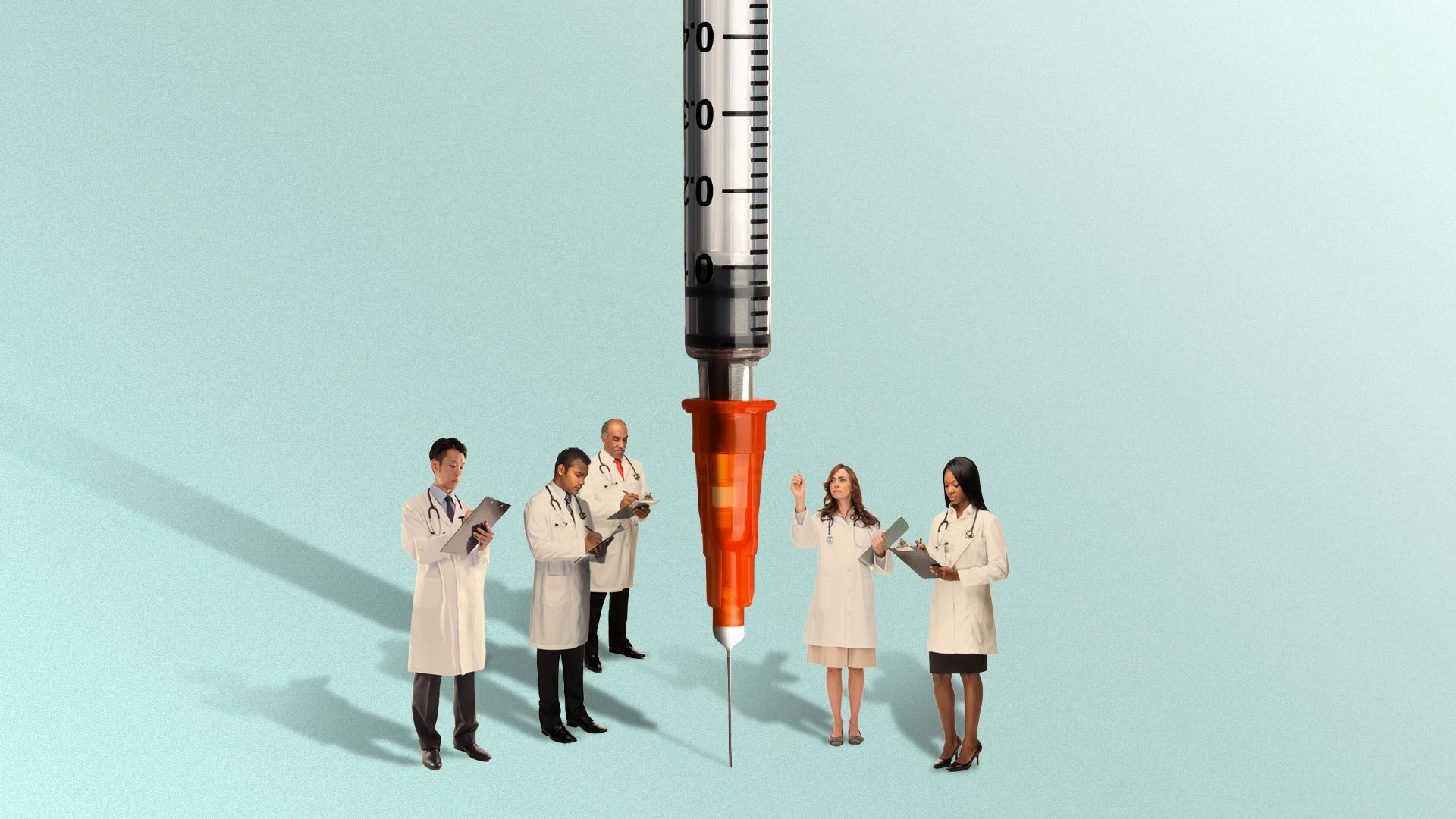
Johnson & Johnson has paused Phase 3 trials for its COVID-19 vaccine candidate, after one patient reported an “unexplained illness.” This comes after AstraZeneca paused its Phase 3 trials due to an adverse event, and Moderna slowed its trial because of enrollment difficulties.
Axios Re:Cap goes deeper with Tom Frieden, who led the Centers for Disease Control and Prevention between 2009 and 2017.
Facebook will ban anti-vaccine ads in an effort to combat misinformation and support public health experts, the social media platform announced in a statement on Tuesday.
Why it matters: The company now says it doesn't want these ads on its platform, but the policy does not apply to influencers who experts say drive a significant amount of organic misinformation about vaccines.
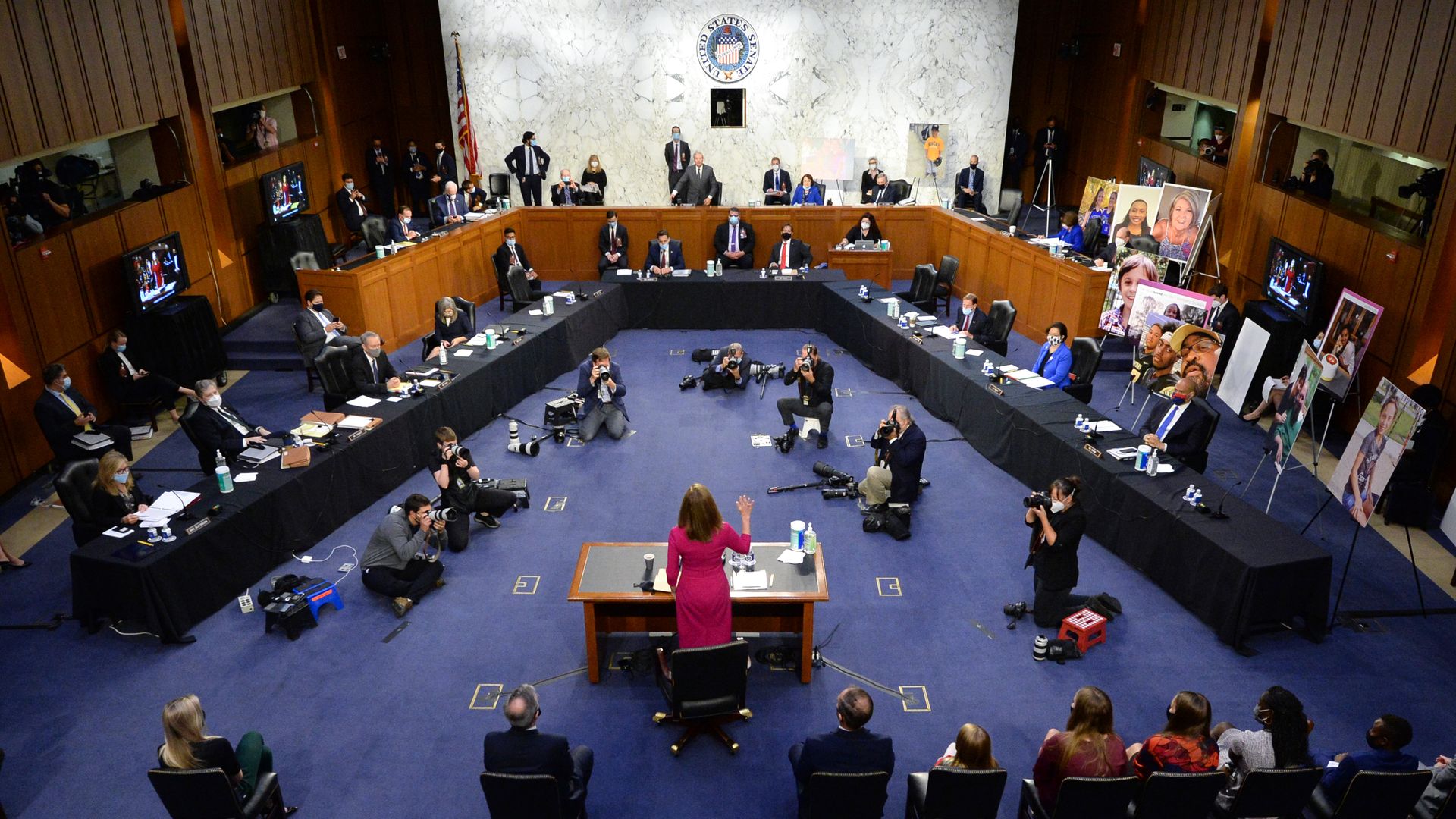
Judge Amy Coney Barrett's Supreme Court confirmation process began this week, with Tuesday's hearing giving the Senate Judiciary Committee the opportunity to ask President Trump's nominee questions.
Supreme Court nominee Judge Amy Coney Barrett told the Senate Judiciary Committee on Tuesday that she's not "hostile" toward the Affordable Care Act or any statute passed by Congress, defending a past writing in which she criticized Chief Justice John Roberts' opinion upholding the law.
Why it matters: Democrats' central message throughout the confirmation fight has been that Barrett was nominated in order to help President Trump and conservatives dismantle the ACA when the Supreme Court hears a lawsuit against it on Nov. 10.
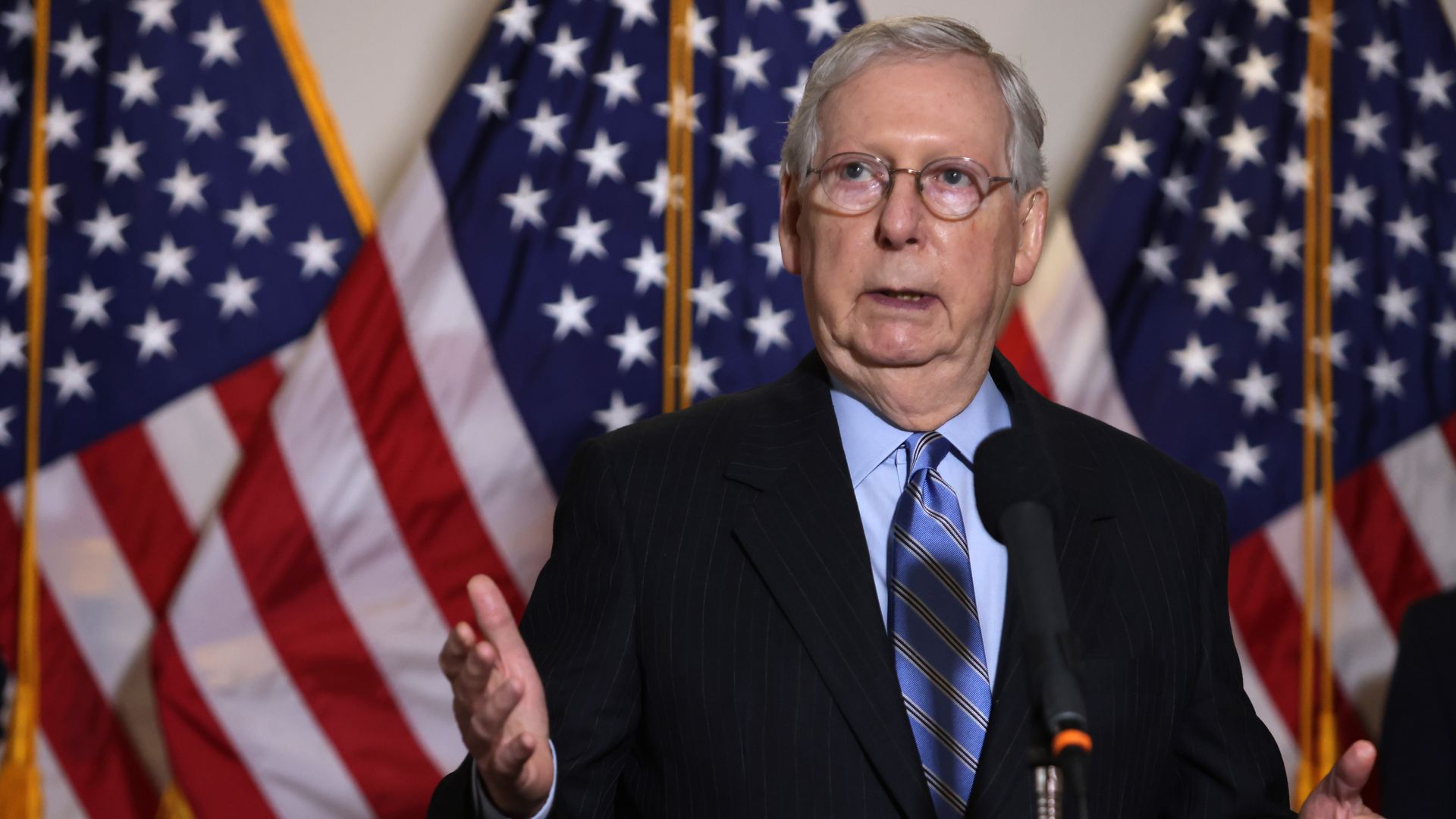
Senate Majority Leader Mitch McConnell (R-Ky.) issued a statement on Tuesday saying that the Senate's "first order of business" when it returns on Oct. 19 will be to vote on "targeted relief for American workers," including new funding for the small business Paycheck Protection Program (PPP).
Why it matters: House Democrats, Senate Republicans and the Trump administration are still very far apart on key elements of a relief deal, and any push for smaller, more targeted legislation is more of a political maneuver than any thing else.
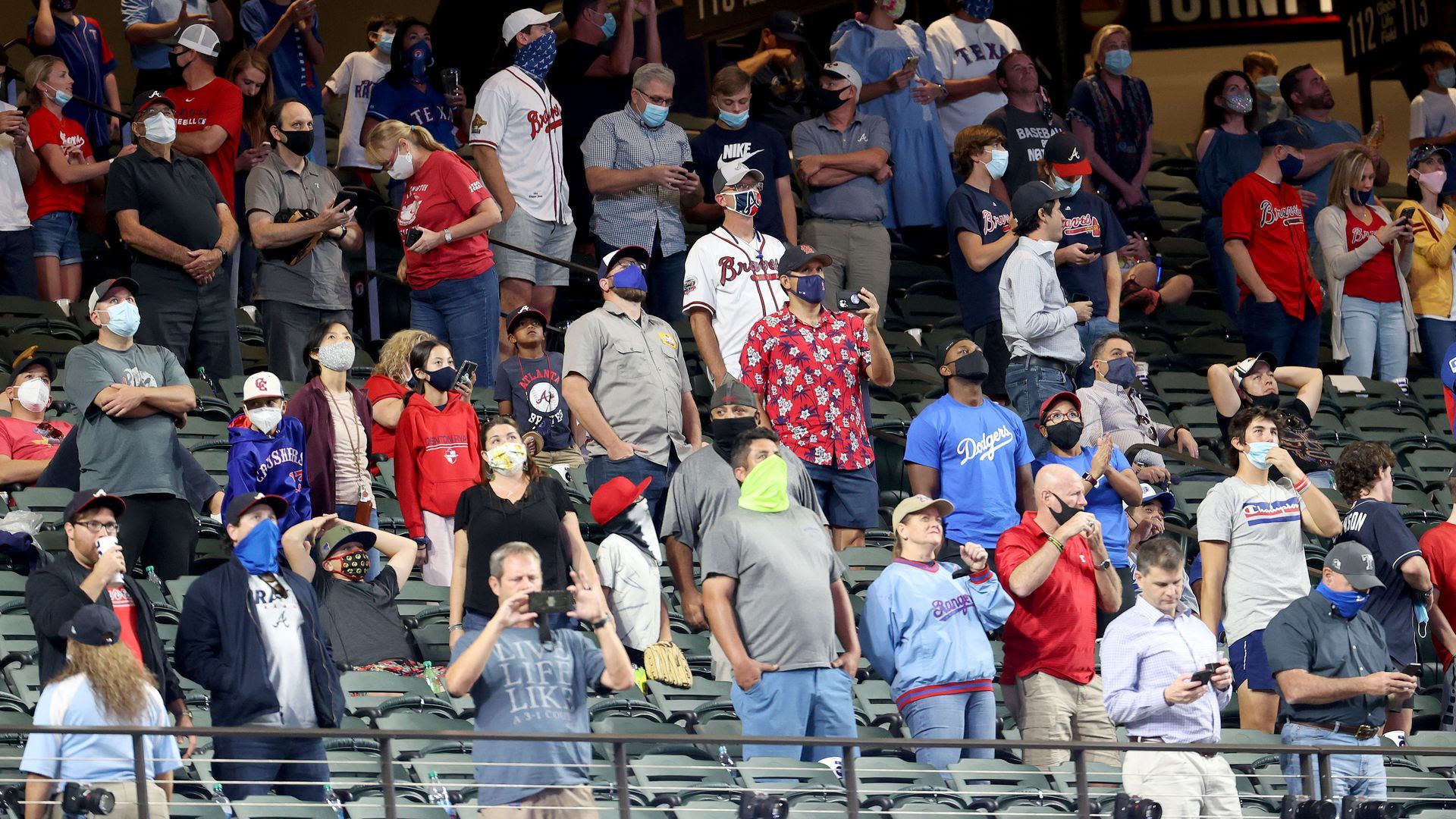
Globe Life Field hosted 10,700 fans for Game 1 of the NLCS Monday night, and will do the same for the rest of the series, as well as next week's World Series.
Why it matters: These are the first baseball games all year with fans that aren't made of cardboard, and the operation's success — or failure — will dictate MLB's 2021 attendance policy.
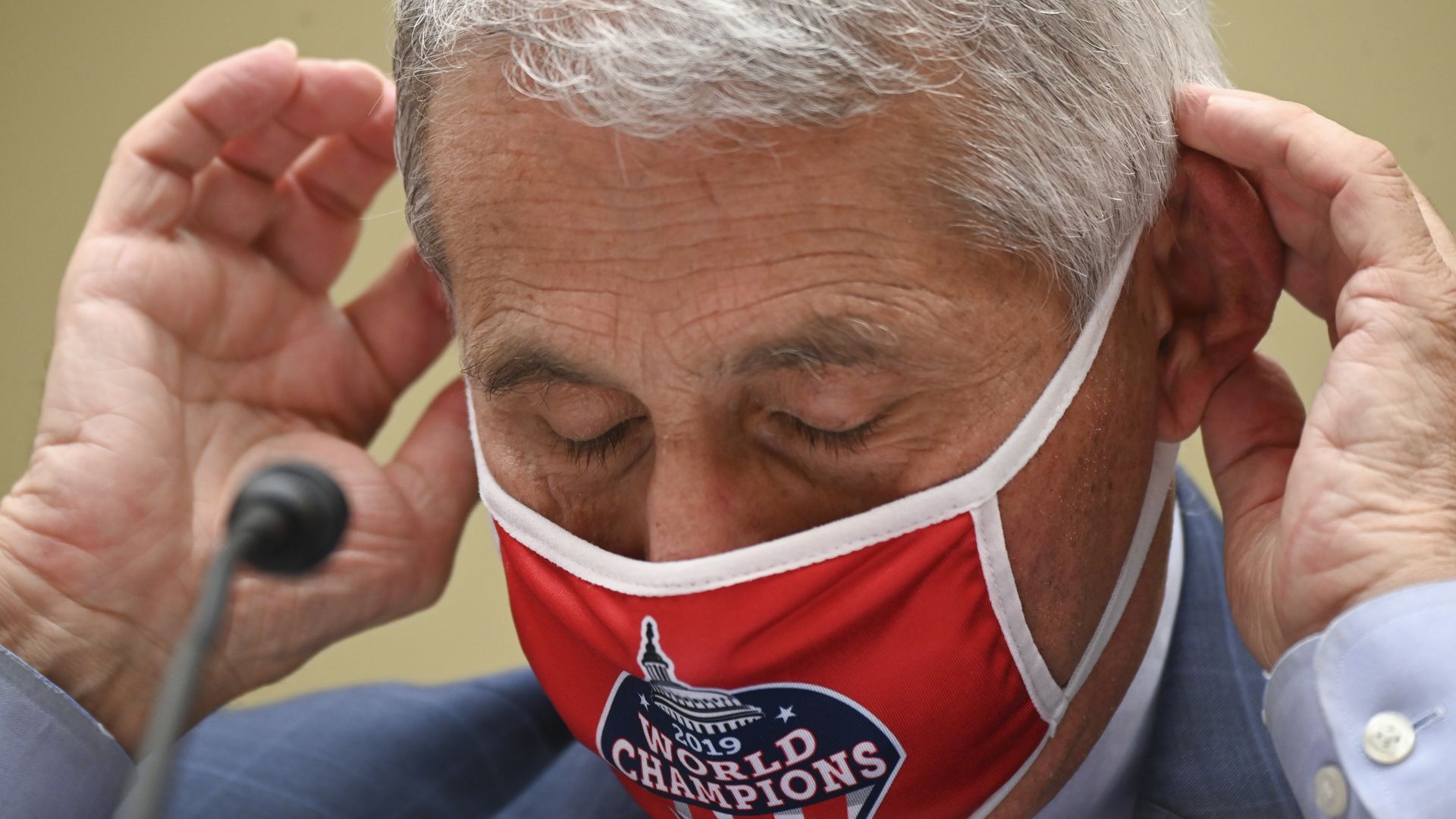
President Trump blasted Dr. Anthony Fauci's coronavirus response in a Tuesday tweet, saying that the doctor's "pitching arm is far more accurate than his prognostications."
The state of play: The president's criticism comes after Fauci balked over the weekend at a clip of him being used in a Trump campaign ad touting the president's actions during the pandemic.
The first coronavirus vaccine will likely get authorized within months, but that will only be the beginning of what's likely to be a long, chaotic vaccination process, the New York Times reports.
The big picture: The first vaccines probably will offer only moderate protection against the virus, meaning we can't ditch our masks even if we get one. And we probably won't have a good way to choose between these vaccines once several of them are on the market.
There was a 20% increase over expected deaths in the U.S. between March 1 and Aug. 1., per a study published in JAMA on Monday.
Why it matters: Experts say that excess deaths are the best way to measure the true impact of the pandemic, as the number accounts for people who died of the virus itself without being counted and those who died of causes that could have been prevented in non-pandemic times.
Although other wealthy countries have higher overall coronavirus mortality rates than the United States, the U.S. death rate since May is unrivaled among its peers, according to a new study published in JAMA.
Between the lines: After the first brutal wave of outbreaks, other countries did much better than the U.S. at learning from their mistakes and preventing more of their population from dying.
Sen. Kevin Cramer (R-N.D.), one of President Trump's most loyal Senate allies, told "Axios on HBO" it was a sign of "respect" from the president to not push for nationwide face mask adoption.
Why it matters: Face masks are a key part of controlling the spread of coronavirus, and many state and local officials clashed over implementing mask mandates.
Johnson & Johnson announced Monday has paused a study of its COVID-19 vaccine due to an "unexplained illness in a study participant.
Situational awareness: "This is the normal process. This doesn't mean the illness is related to the vaccine. But these things need to get investigated by an independent committee. Happens in many Phase III trials," Florian Krammer, a professor atSchool of Medicine at Mount Sinai, noted on Twitter.
A 25-year-old man in Nevada has been identified as the first person in the U.S. to get COVID-19 twice, according to a study published in the medical journal The Lancet on Monday.
Why it matters: The finding indicates that being infected with the virus "might not guarantee total immunity in all cases," the study's researchers write. It also calls into question the value of any potential source or indicator of immunity — whether that's antibody testing, the use of blood plasma as a treatment, or perhaps even a vaccine, per Axios' Sam Baker.
China's entry into the COVAX initiative means the list of non-participants in the global effort to develop and distribute coronavirus vaccines has dwindled down to Belarus, Kazakhstan, Malaysia, Russia, the U.S. and five small island countries or micro-states.
Breaking it down: 183 countries with a combined 93% of the world's population are either eligible for subsidized access or have said they intend to participate, though some have yet to sign formal agreements.