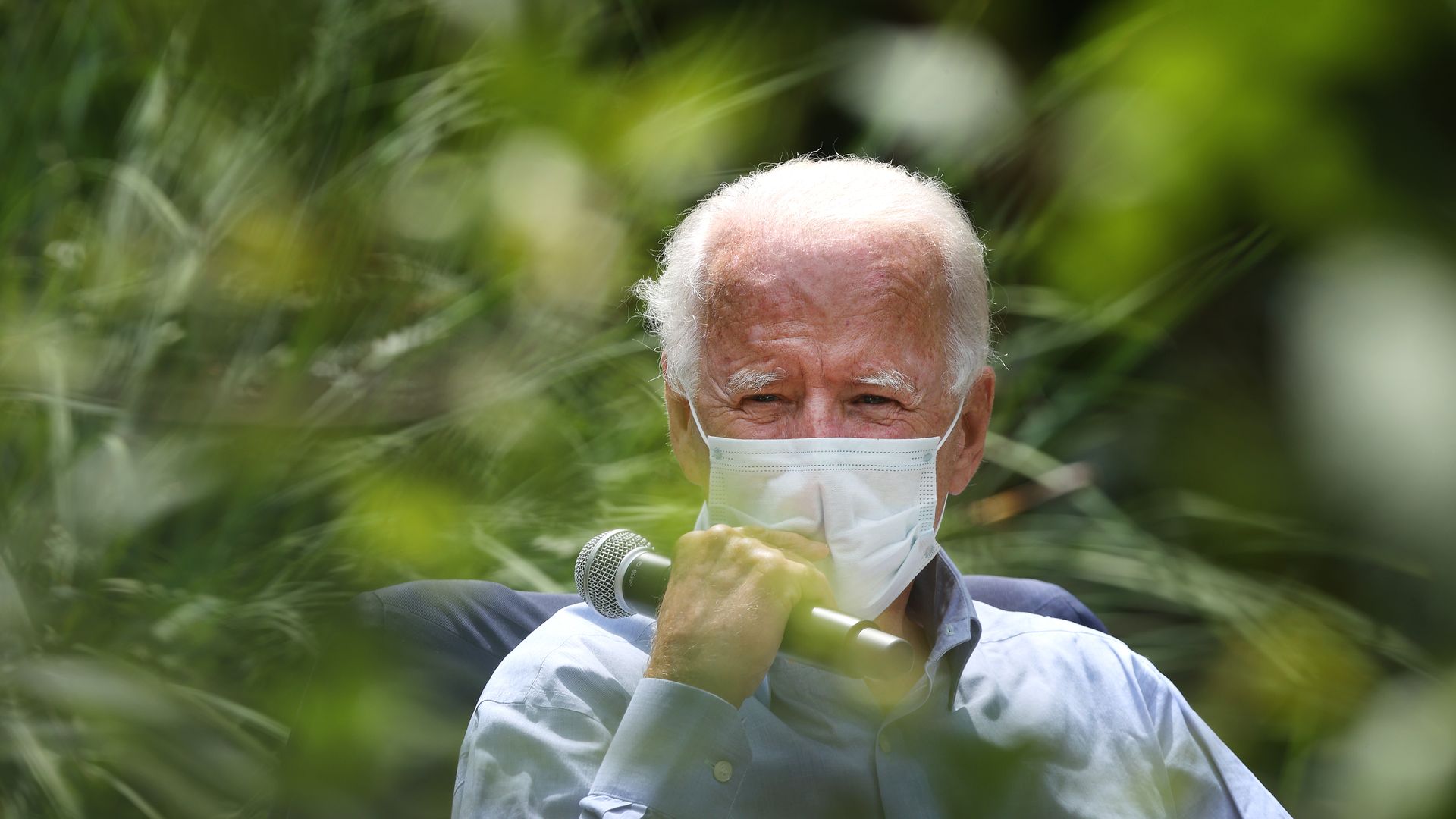
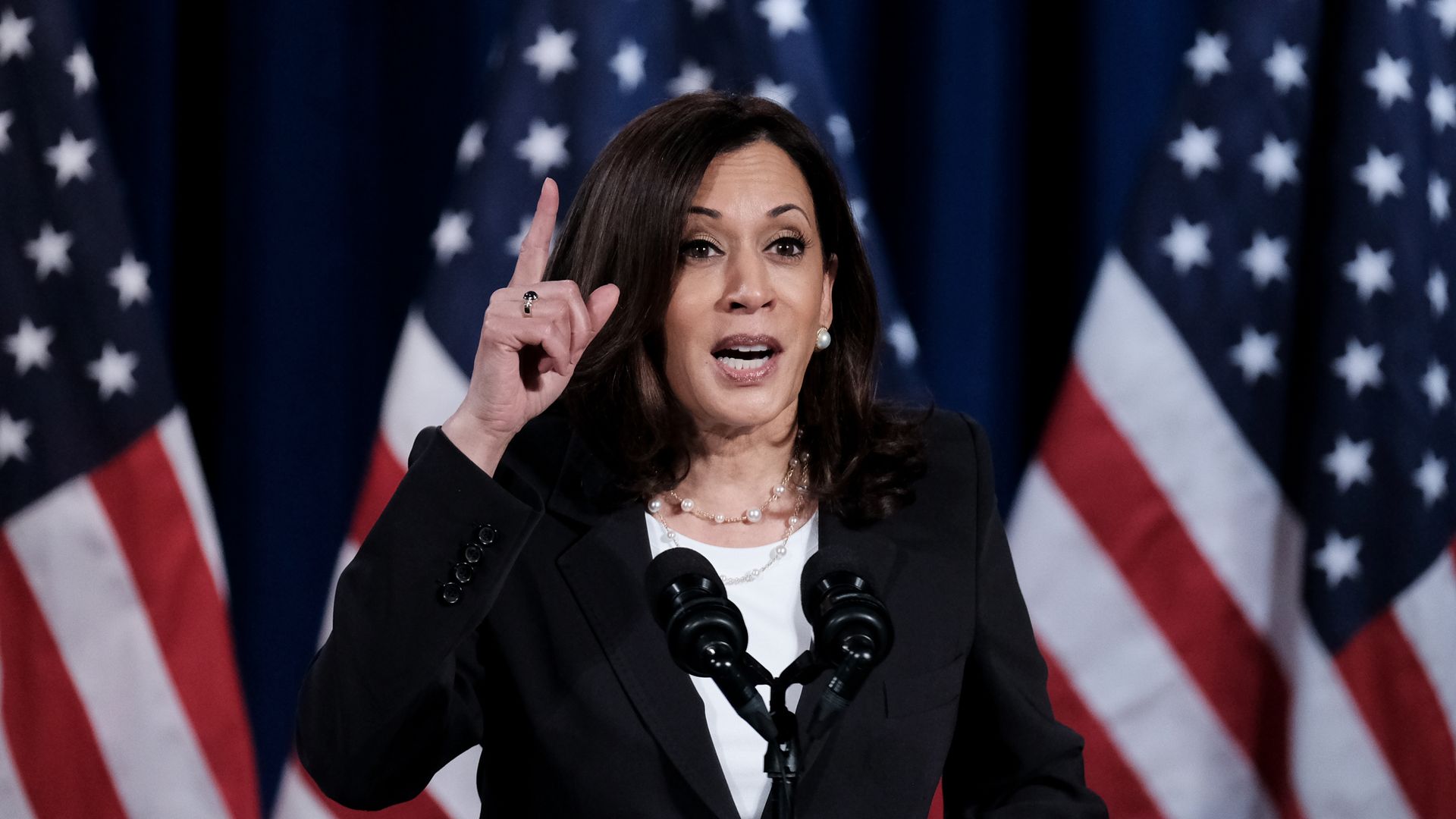
Joe Biden and Kamala Harris both warned Americans this holiday weekend to be skeptical of anything Trump says about a potential coronavirus vaccine, saying they’ll take their cues from scientists and not the president.
Why it matters: The Democratic ticket is trying to strike the right balance — they want to warn that Trump may be making premature claims for political gain, but they don’t want t0 dissuade Americans from actually using a vaccine once one is safe and available.
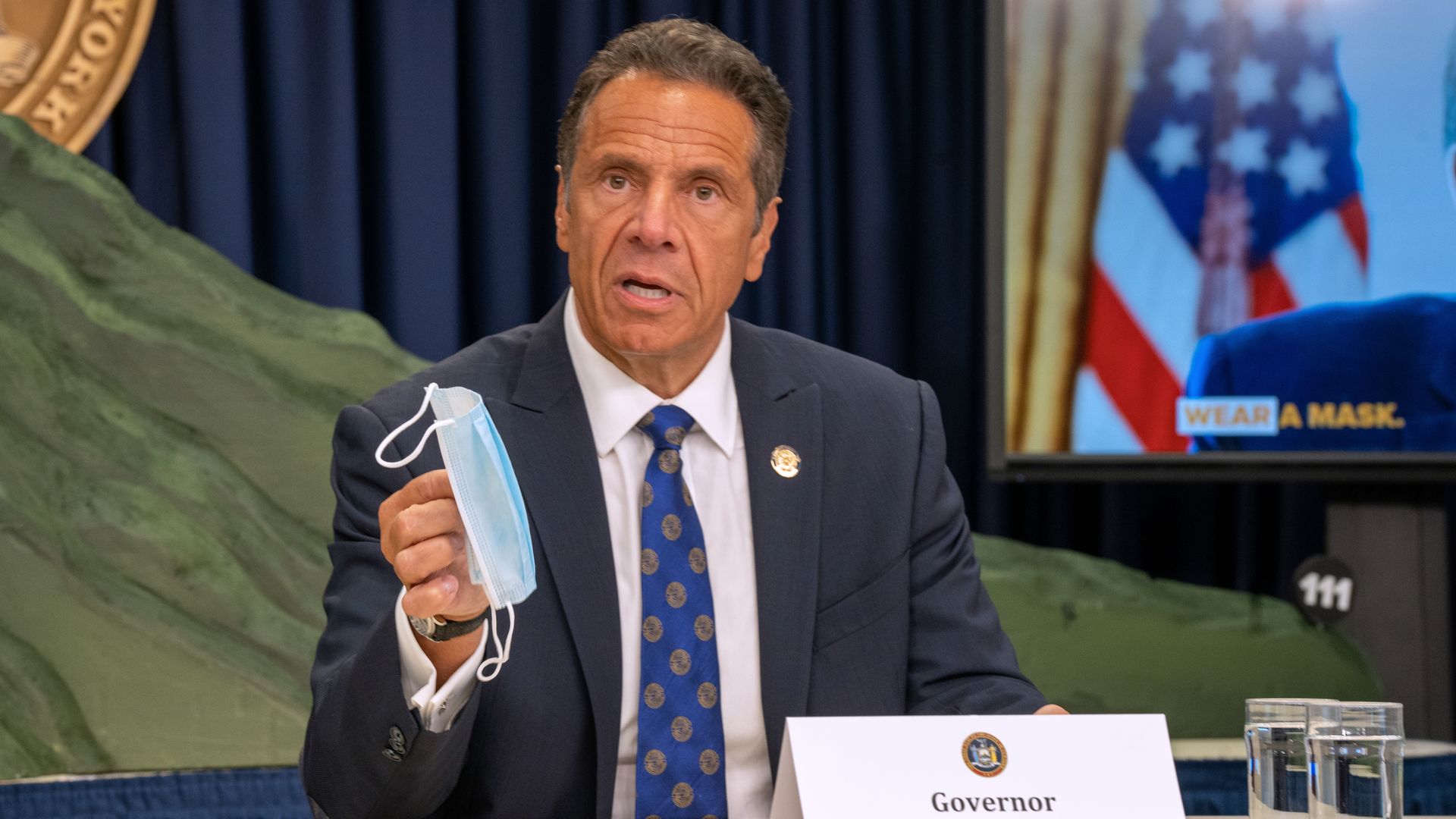
New York Gov. Andrew Cuomo (D) announced Sunday that the state's coronavirus infection rate has remained below 1% for 30 days and COVID-19 hospitalizations have dropped to 410 — the lowest since March 16.
Why it matters: The milestones indicate the state that was once a global coronavirus epicenter is curbing the spread of the virus, even as restrictions ease. "Our actions today determine the rate of infection tomorrow," said Cuomo, imploring New Yorkers to continue to take precautions against COVID-19. "I urge everyone to be smart so we don't see a spike." New York reported nine more deaths from the coronavirus and 729 new cases Sunday.
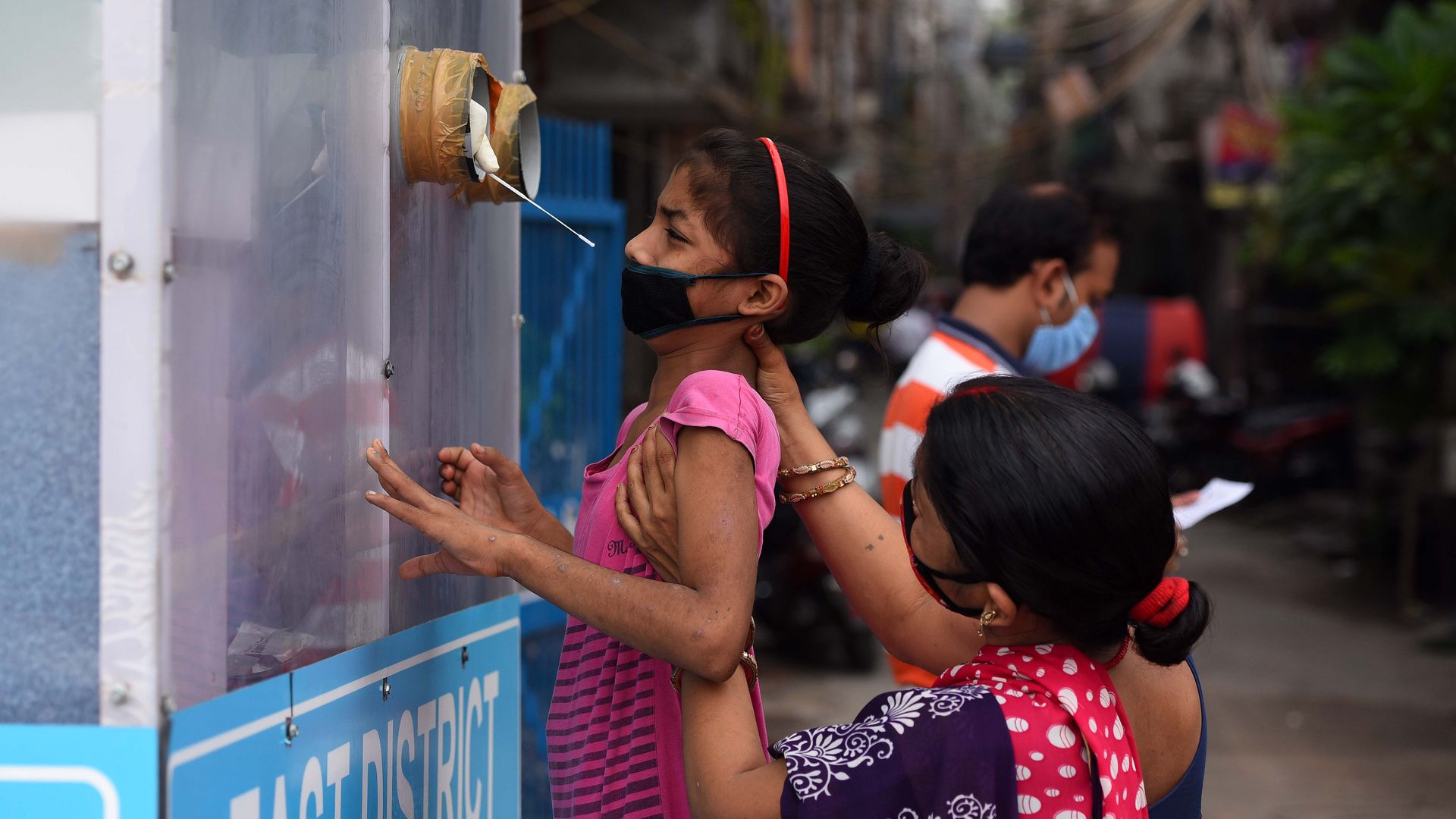
India is now second only to the U.S. for coronavirus cases after surpassing Brazil for infections on Monday morning.
By the numbers: India has reported more than 4.2 million COVID-19 infections and Brazil has confirmed over 4.1 million cases, per Johns Hopkins data. However, Brazil has the world's second-highest death toll, with the virus claiming the lives of 126,650 Brazilians.
Voters are growing skeptical of a potential coronavirus vaccine, with the majority saying they would feel it was rushed without enough testing if one becomes available this year, according to a CBS News poll out Sunday.
By the numbers: About21% of U.S. voters said they would get a vaccine as soon as possible if one became available at no cost, down from 32% in the same poll in July. 58% say they would consider it, but they'd wait to see what happens to others before getting one.
The coronavirus may "spread more aggressively" in the winter, leading to a spike in cases in those months, former FDA commissioner Scott Gottlieb told CBS News' "Face the Nation" on Sunday.
What he's saying: "In the wintertime, you see respiratory pathogens spread more aggressively, in part because people are indoors more, they're in congregate settings," Gottlieb said.
The coronavirus pandemic has caused hardship and sorrow around the world, but it has also forced innovations that might stick around after the pandemic is under control.
Why it matters: Some of those changes have proven to be popular and may improve people's lives if they become permanent.
Democratic vice presidential nominee Sen. Kamala Harris told CNN in an interview airing Sunday she "would not trust" President Trump "about the efficacy and the reliability" of a coronavirus vaccine if approved before November's election.
Driving the news: The CDC has requested governors "urgently" speed up their permit applications so vaccine distribution sites are operational by early November. The Trump administration has this week pushed back on questions of political interference in vaccine development.