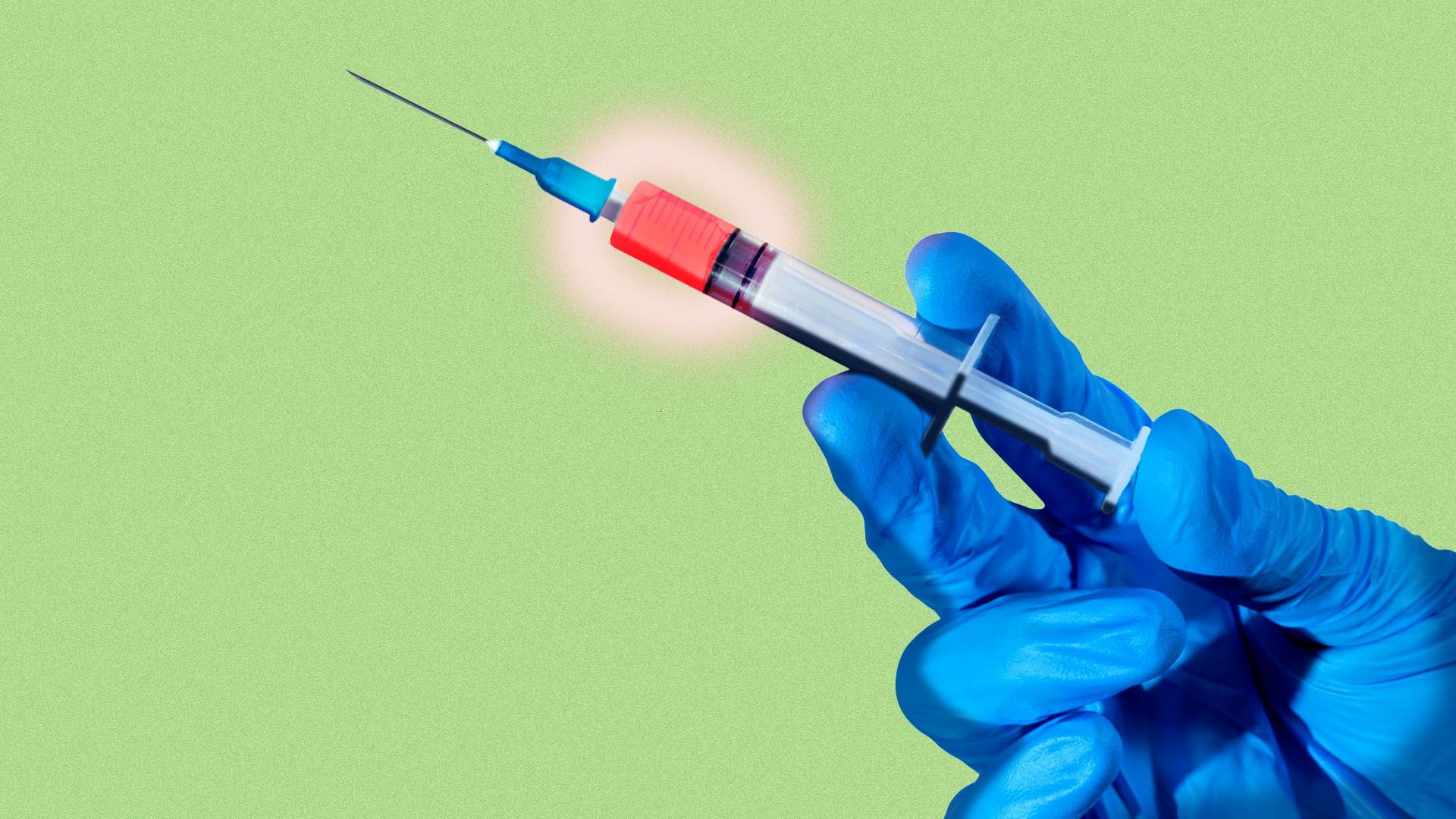
Voters are growing skeptical of a potential coronavirus vaccine, with the majority saying they would feel it was rushed without enough testing if one becomes available this year, according to a CBS News poll out Sunday.
By the numbers: About21% of U.S. voters said they would get a vaccine as soon as possible if one became available at no cost, down from 32% in the same poll in July. 58% say they would consider it, but they'd wait to see what happens to others before getting one.
The coronavirus may "spread more aggressively" in the winter, leading to a spike in cases in those months, former FDA commissioner Scott Gottlieb told CBS News' "Face the Nation" on Sunday.
What he's saying: "In the wintertime, you see respiratory pathogens spread more aggressively, in part because people are indoors more, they're in congregate settings," Gottlieb said.
The coronavirus pandemic has caused hardship and sorrow around the world, but it has also forced innovations that might stick around after the pandemic is under control.
Why it matters: Some of those changes have proven to be popular and may improve people's lives if they become permanent.
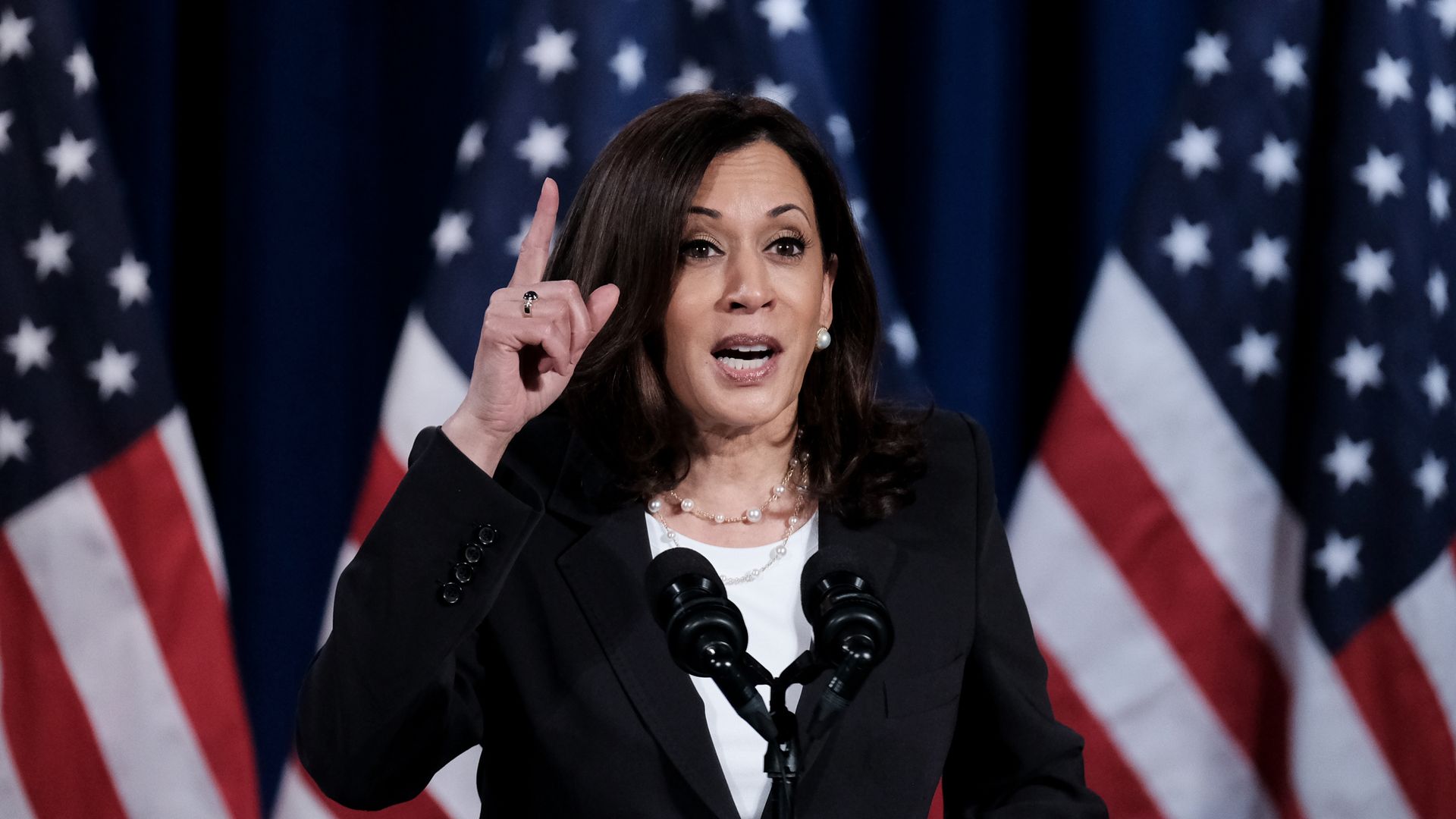
Democratic vice presidential nominee Sen. Kamala Harris told CNN in an interview airing Sunday she "would not trust" President Trump "about the efficacy and the reliability" of a coronavirus vaccine if approved before November's election.
Driving the news: The CDC has requested governors "urgently" speed up their permit applications so vaccine distribution sites are operational by early November. The Trump administration has this week pushed back on questions of political interference in vaccine development.
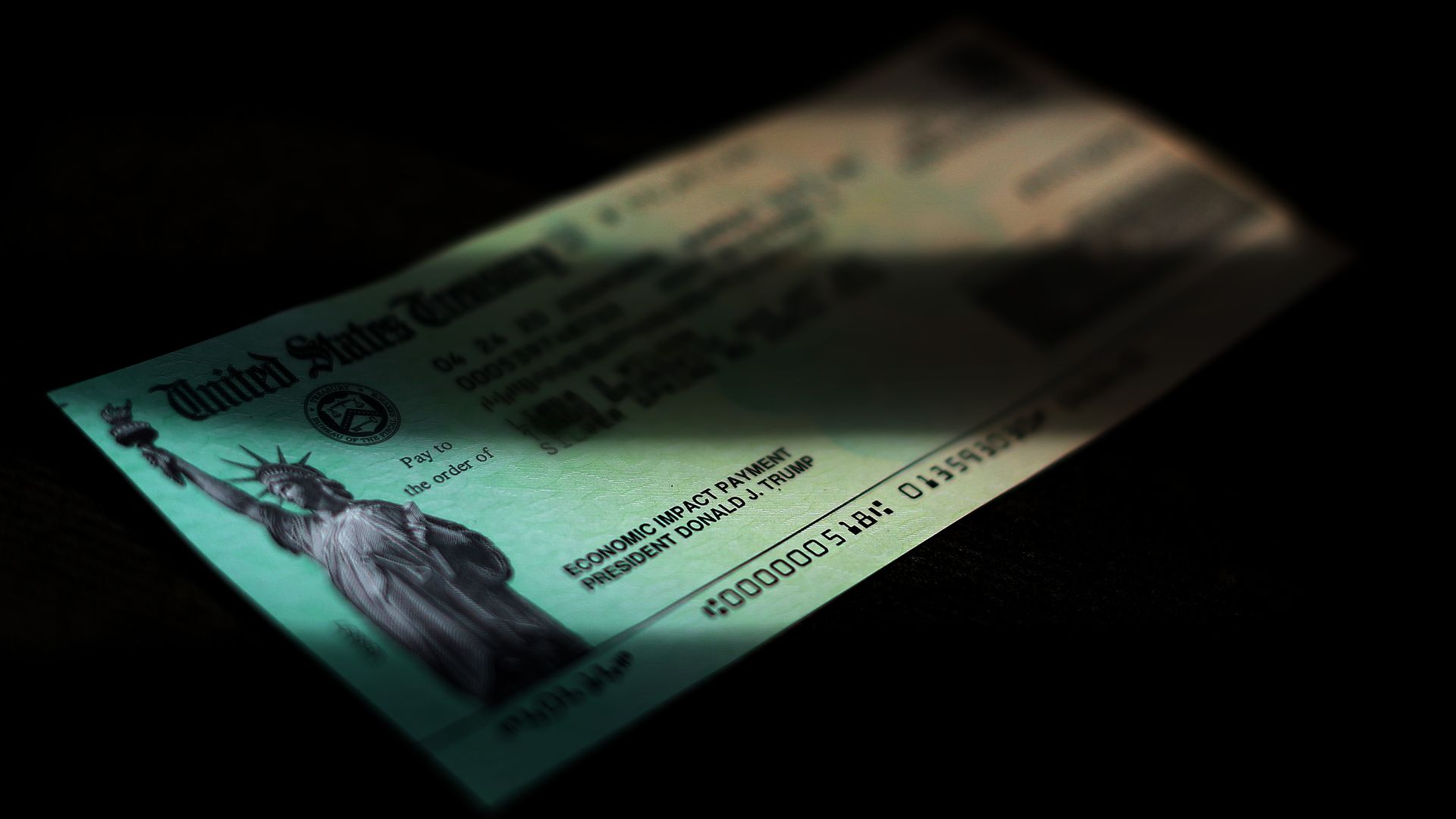
Over 100,000 Americans have collectively reported roughly $132 million in fraud losses from scams related to the coronavirus and government stimulus checks since the March start of the pandemic, according to the Federal Trade Commission.
Why it matters: Coronavirus-related fraud complaints peaked in May when the IRS began sending its first round of stimulus checks. Congress recently proposed a second round of stimulus.
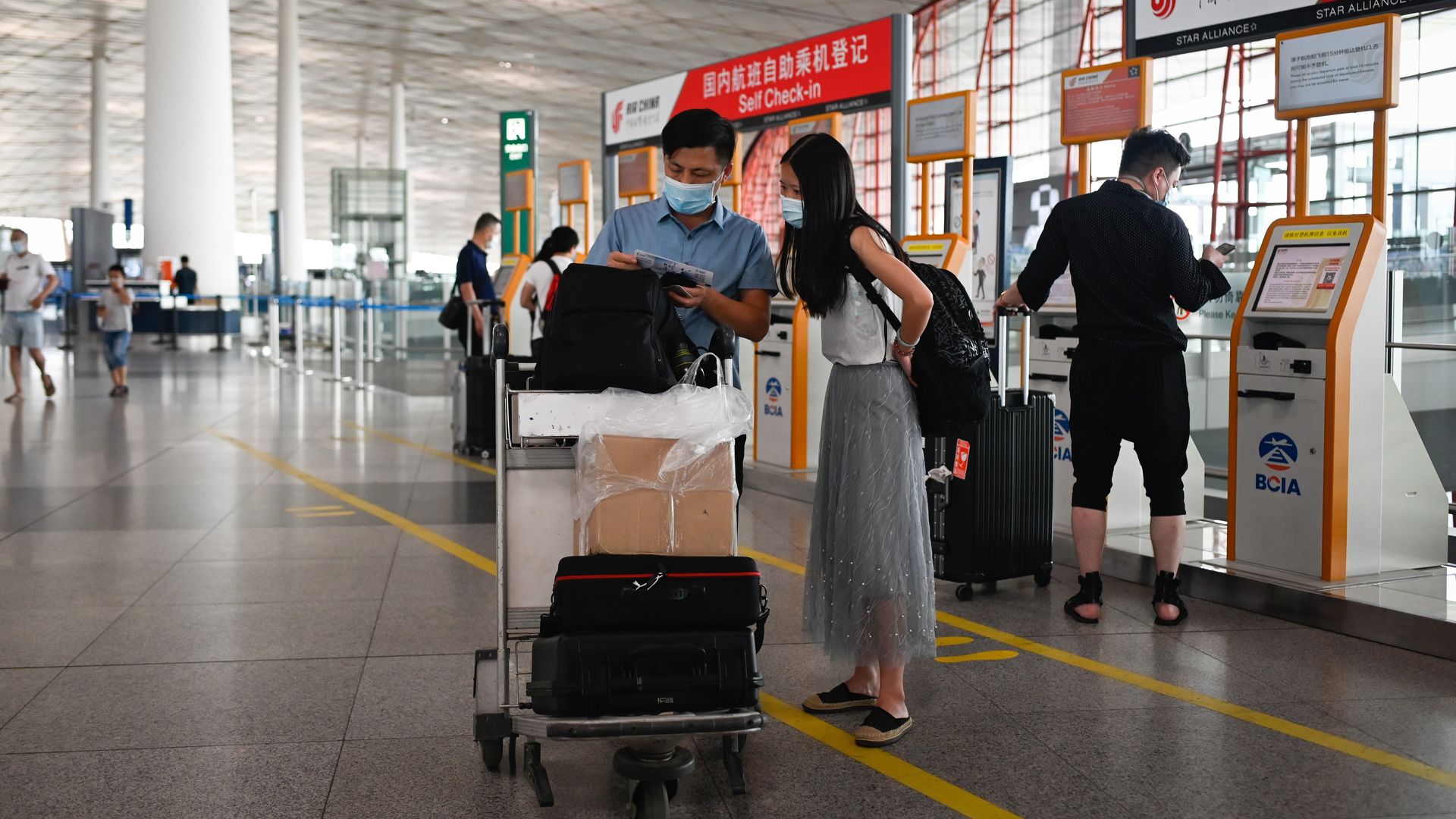
China will demand that passengers taking direct flights from the U.S. provide negative coronavirus test results within 72 hours before takeoff starting Sept. 15, China’s U.S. embassy said in a statement.
Why it matters: The requirement is among the latest restrictions Beijing has imposed on the U.S. The Chinese government prevented U.S. airlines from resuming flights to China in June, and the Trump administration banned Chinese passenger airlines from flying to the U.S. in retaliation.
Within a mere eight months, COVID-19 has damaged years of global progress in children's health and otherareas by disrupting essential health services in many countries.
Why it matters: These disrupted services will result in a myriad of near- and long-term health problems. The global health organization PATH points to a projected increase in deaths in children under the age of 5 that could erase up to a decade of progress, according to preliminary findings shared first with Axios.