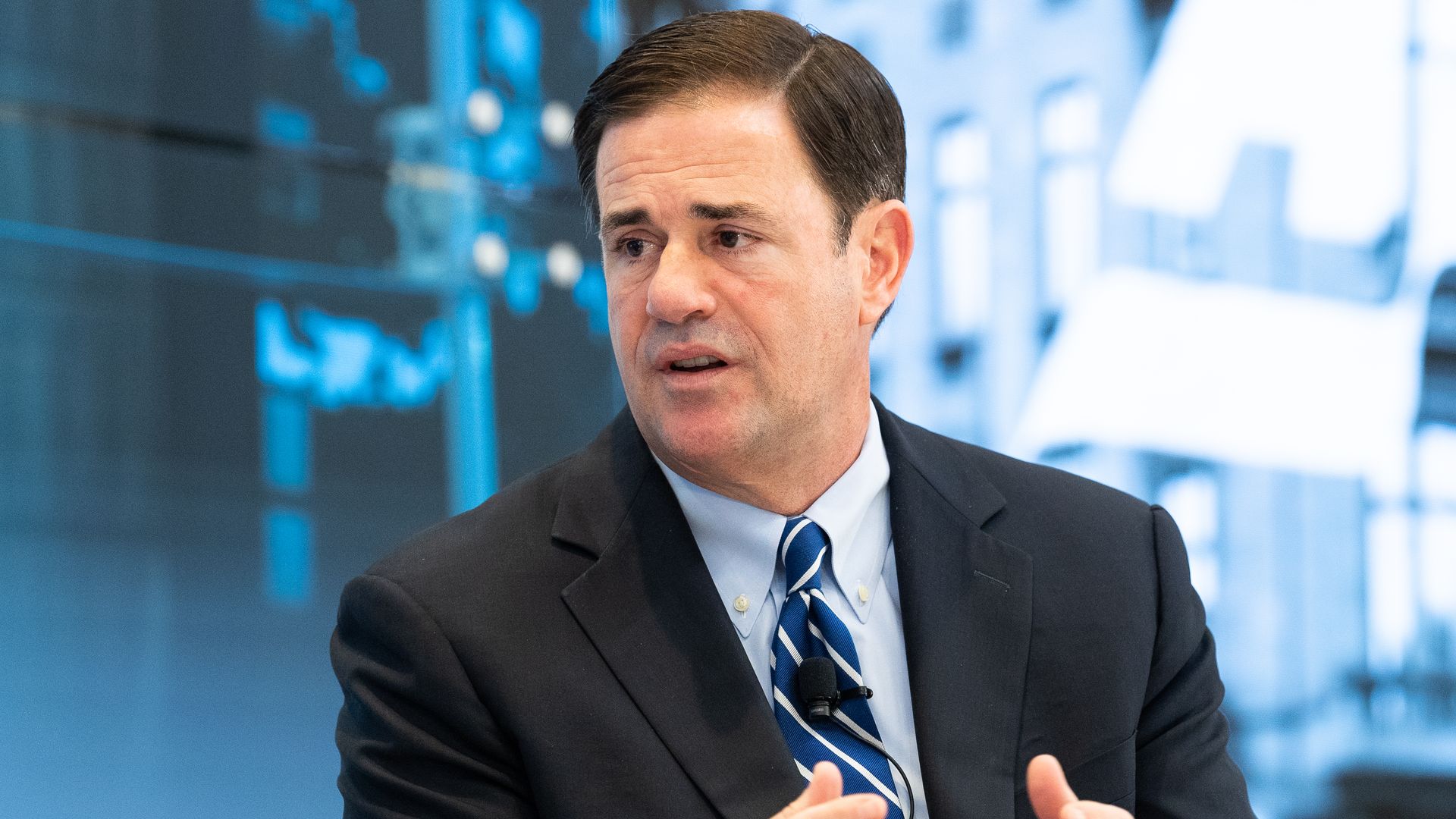
Arizona Gov. Doug Ducey (R) announced at a press conference Monday that he is ordering bars, clubs, movie theaters, waterparks and gyms to close for 30 days in order to curb the spread of the coronavirus.
Why it matters: Arizona, which has reported more than 3,000 new cases in five of the last seven days, is one of several states that has been forced to put its reopening plans on pause as the outbreak has accelerated across the Sun Belt.
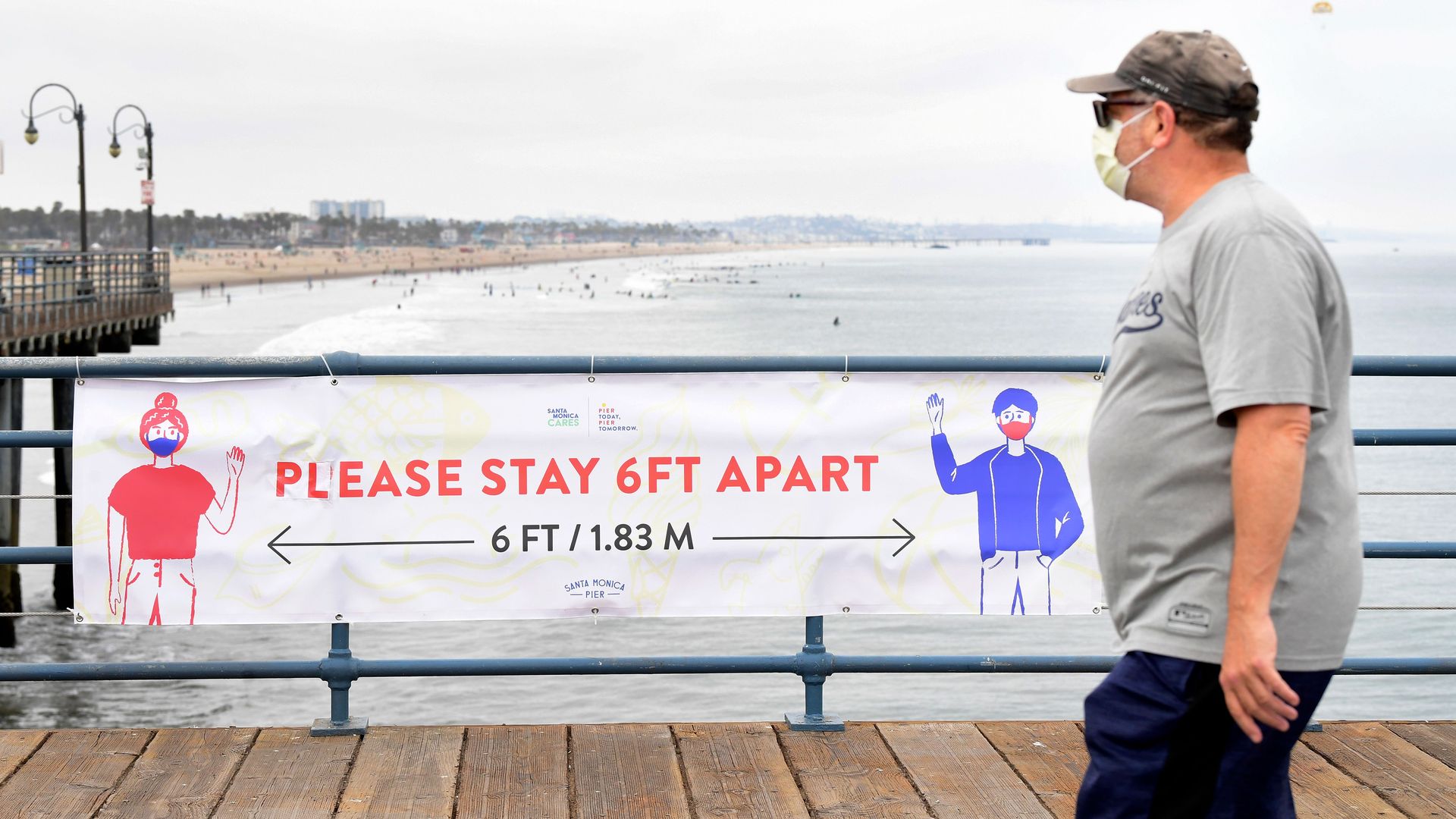
Health officials in Los Angeles County are sounding the alarm over a sudden and rapid surge in new coronavirus cases and hospitalizations, the LA Times reports.
Why it matters: The uptick has the potential to overwhelm the area's medical system, with health officials now projecting that LA County could run out of hospital beds in two to three weeks, according to the Times. Intensive care unit beds could reach their capacity sometime in July.
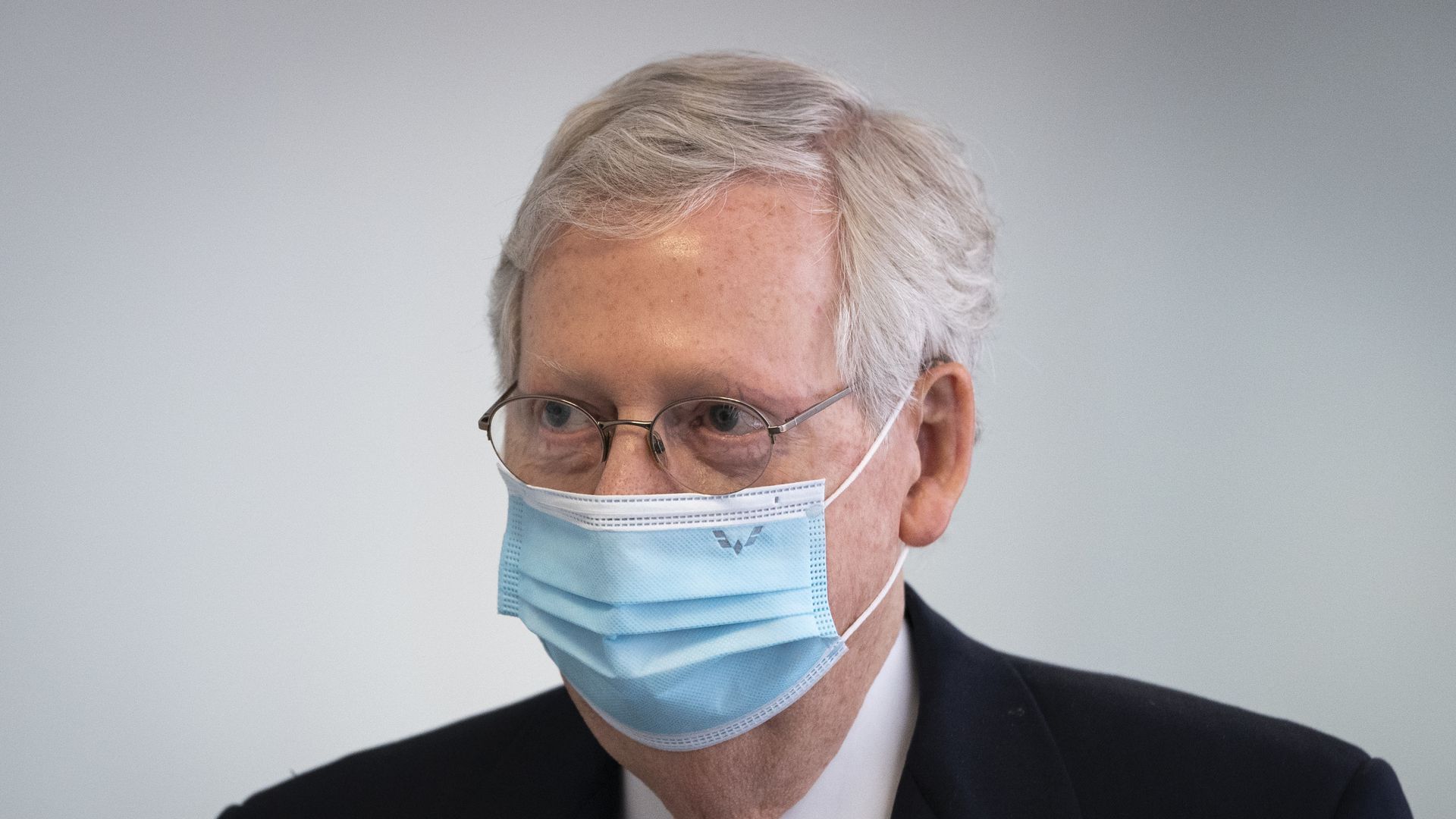
Senate Majority Leader Mitch McConnell (R-Ky.) said in a floor speech on Monday that Americans must have "no stigma — none — about wearing masks when we leave our homes and come near other people."
Why it matters: Results from months of Axios-Ipsos coronavirus polling revealed a stark partisan divide when it comes to wearing masks. In surveys conducted between May 8 and June 22, 65% of Democrats reported wearing a mask every time they leave home, compared to just 35% of Republicans.
Broadway's 41 theaters will remain closed through Jan. 3, 2021, as the industry tries to hammer out its next steps amid the coronavirus pandemic, trade group the Broadway League announced Monday.
Why it matters, per Axios' Sara Fischer: It's the biggest economic crisis to hit Broadway in decades. Even during past recessions, Broadway has rallied. But with theaters physically shut, the theater community must rally around digital alternatives to survive.
30% of Americans say they trust President Trump and his administration to "get the facts right" on the coronavirus — a lower mark than respondents gave the Centers for Disease Control and Prevention (64%), their state governments (53%), local news (50%) and the news media in general (44%), according to a Pew Research Center poll released Monday.
Why it matters: As the coronavirus surges in states across the country, the largely mistrusted White House has been forced to step back into the spotlight. Vice President Mike Pence hosted his first coronavirus press briefing in weeks on Friday and appeared on CBS News' Face the Nation on Sunday, where he disputed that the new surge is a result of states reopening too quickly.
New Jersey Gov. Phil Murphy announced Monday that the state will indefinitely postpone indoor dining — originally set to resume Thursday — as coronavirus cases surge in states that moved quickly to reopen their economies.
What he's saying: "We have been cautious throughout every step of our restart," Murphy said. "We’ve always said that we would not hesitate to hit pause if needed to safeguard public health. This is one of those times."
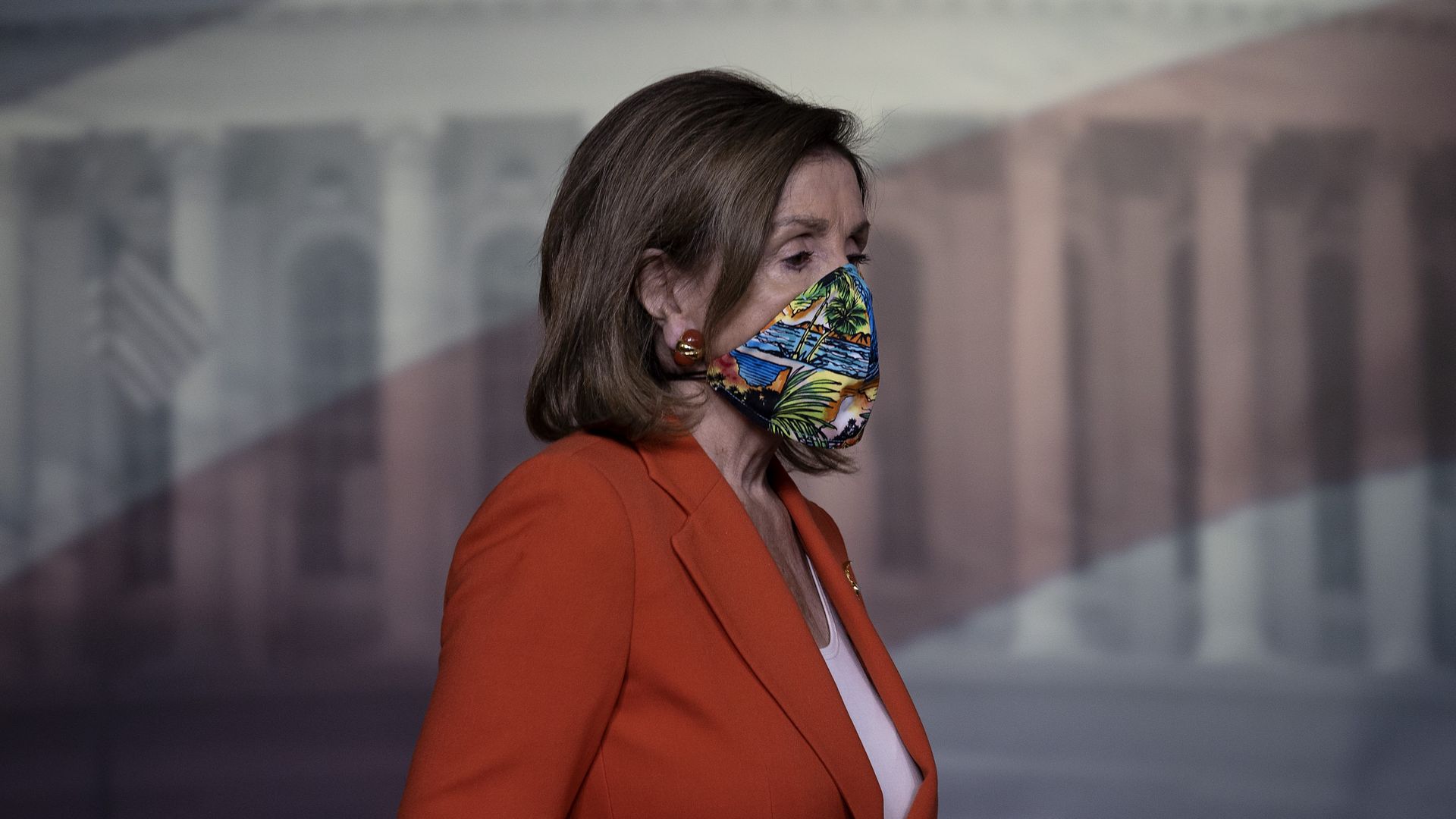
Speaker Nancy Pelosi announced Monday that she is extending the House's historic remote voting period until Aug. 18 due to the ongoing public health emergency caused by the coronavirus pandemic.
Why it matters: The designated period, which began on May 20, marks the first time in history that congressional members have been able to vote remotely — in this instance, by directing another member to vote on their behalf. House Republicans have attacked the system as unconstitutional and sought to have it struck down in court in May.
Jacksonville, Florida, announced Monday that it would require the use of face masks indoors and in public to help curb the spread of coronavirus.
Why it matters: The Republican National Committee relocated the main events of its August convention, including President Trump's acceptance speech, to the city after a battle with North Carolina's government about restrictions on the event in Charlotte.
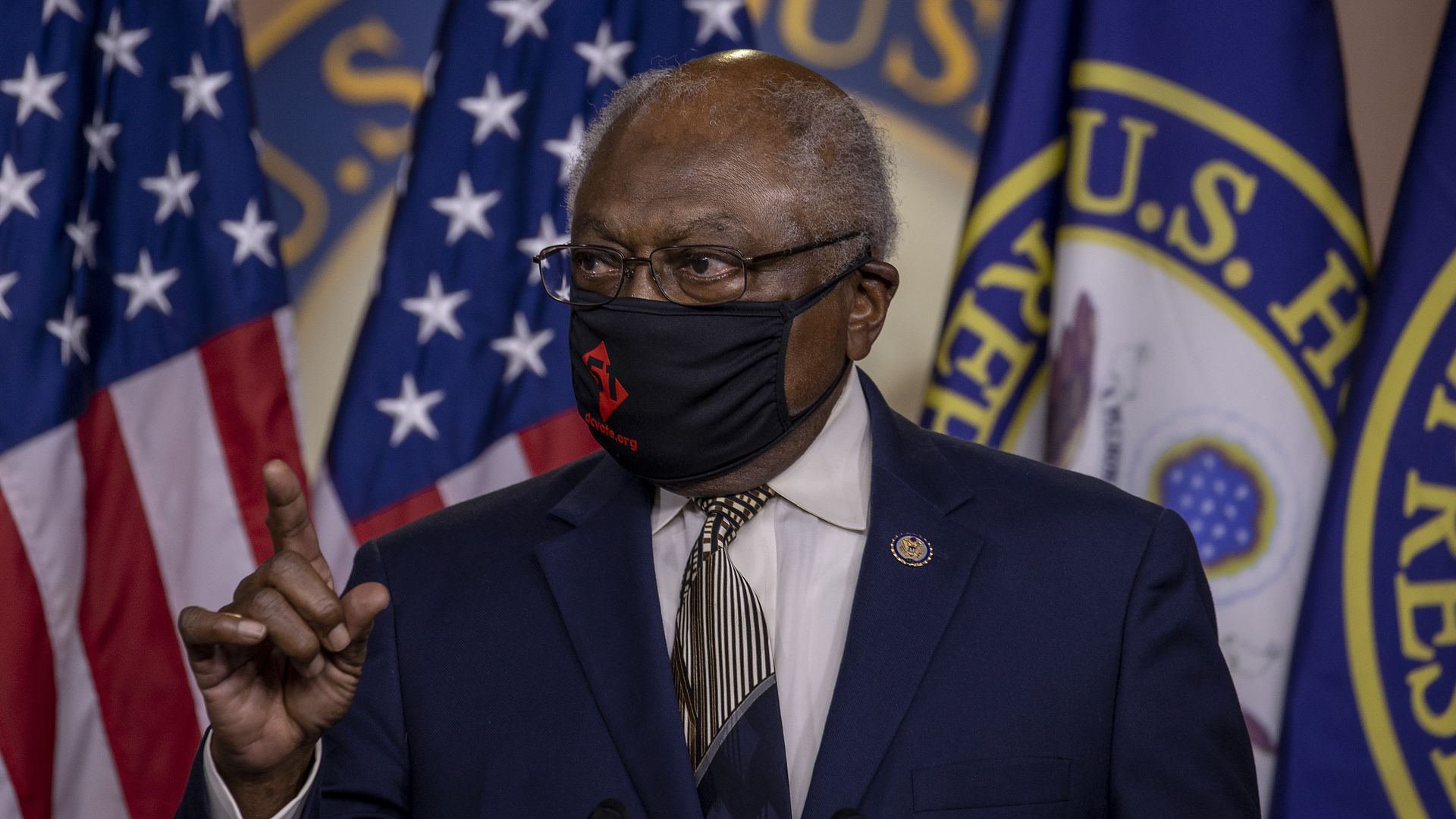
The House's select committee on the coronavirus crisis will not recognize members who do not wear a mask while in session, Chair James Clyburn (D-S.C.) told his Republican colleagues in a letter sent Monday.
The big picture: The move comes after every Republican in the committee did not wear a mask at last Friday's hearing, despite being warned to do so prior to the meeting, according to Clyburn.
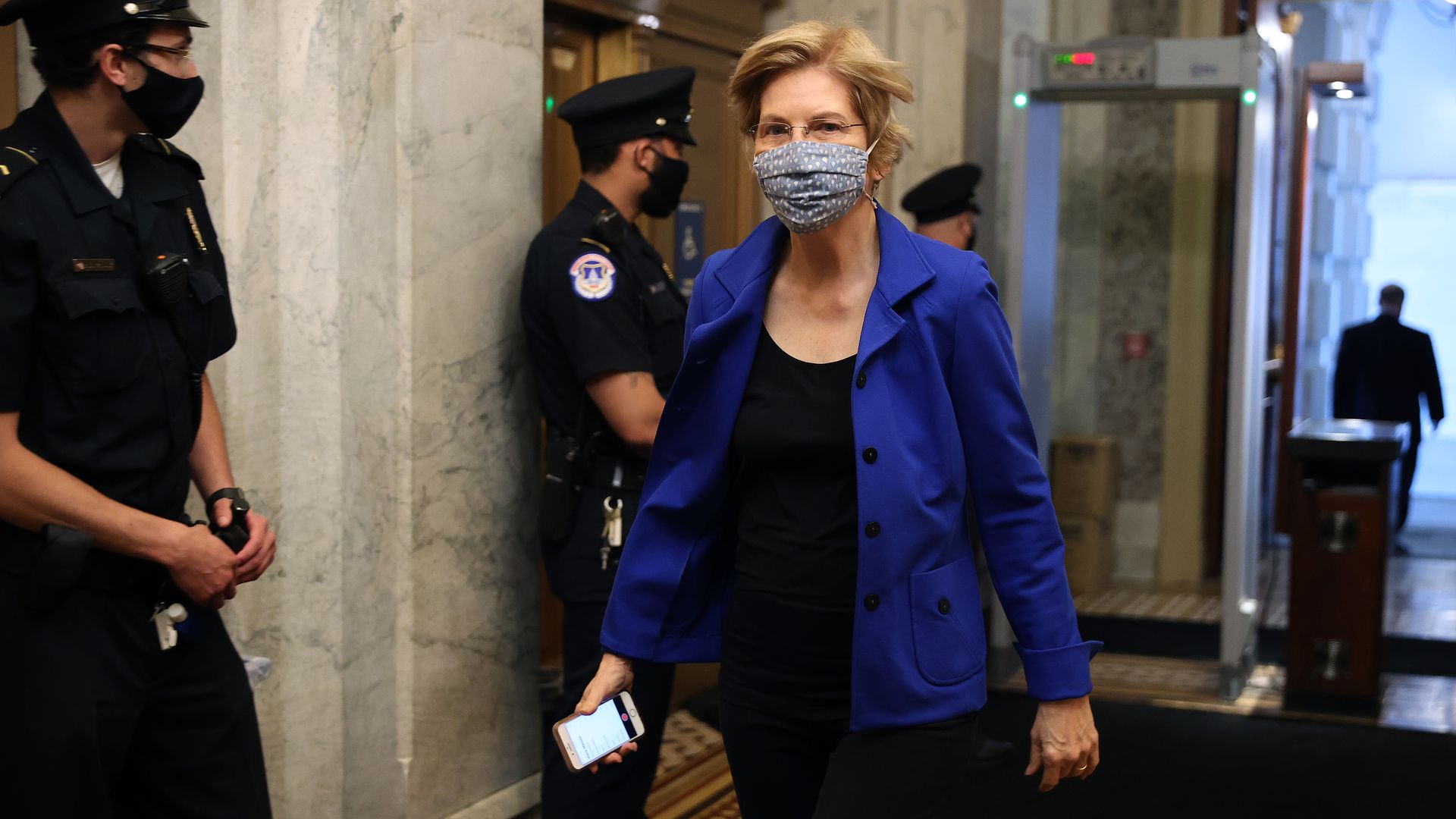
Sen. Elizabeth Warren (D-Mass.) introduced legislation Monday to extend and expand a nationwide eviction moratorium to protect tenants who may be struggling to pay rent during the coronavirus pandemic, Vox reports.
The big picture: The economic fallout has made it difficult for low-income renters to make timely payments, adding new burdens to the country's longstanding housing problems.
The Trump administration has secured 500,000 doses of remdesivir, the first drug shown to be effective at treating hospitalized coronavirus patients, ensuring these doses will be for U.S. use.
Between the lines: The administration is not directly purchasing the drug, but it will use coronavirus hospitalization data to determine how to allocate it by state, and state health departments will decide which hospitals will get the drug.
Gilead will charge U.S. hospitals $3,120 for the shortest treatment course of its coronavirus drug remdesivir for typical patients with private insurance, according to an open letter from CEO Daniel O’Day.
Why it matters: It is the first antiviral drug shown to effectively treat coronavirus in a major clinical trial, and Gilead's pricing decision may set the bar for how future treatments will be priced.
The economic progress made by the U.S. over the last month is slowly falling apart. Three of the four most populous states in the country are seeing notable increases in confirmed cases of COVID-19, business activity is contracting, consumer confidence is retreating, bankruptcy filings are rising, and the stock market is falling.
Why it matters: Even before governors in various states announced new bar and restaurant restrictions on Friday, "high frequency data on service sector activity suggests businesses and consumers may already be responding to the surge in new cases," economists at asset manager Nomura wrote in a note to clients.
Pharmaceutical companies raised the price of 245 drugs between January 20 and June 20, according to a new analysis by Patients for Affordable Drugs.
Between the lines: Some of these drugs are directly related to the pandemic. And the hikes occurred against the backdrop of economic calamity hitting many American families.
Most of the states facing large coronavirus outbreaks today didn't build up their public health systems enough ahead of time.
Why it matters: States like Arizona, Florida and Texas had months to learn from the mistakes of New York and other early hotspots, yet find themselves now in similar situations.
The Texas Medical Center stopped publishing information on intensive care unit capacities, after an earlier update showed its hospitals reaching 100% base capacity due to the coronavirus pandemic, the Houston Chronicle first reported on Sunday.
Why it matters: Gov. Greg Abbott (R) this week paused plans to reopen the economy and suspended elective surgeries in several areas, including Houston as COVID-19 cases surge. The Houston-based TMC states on its website that its hospital system in Houston represents the "largest medical city in the world."
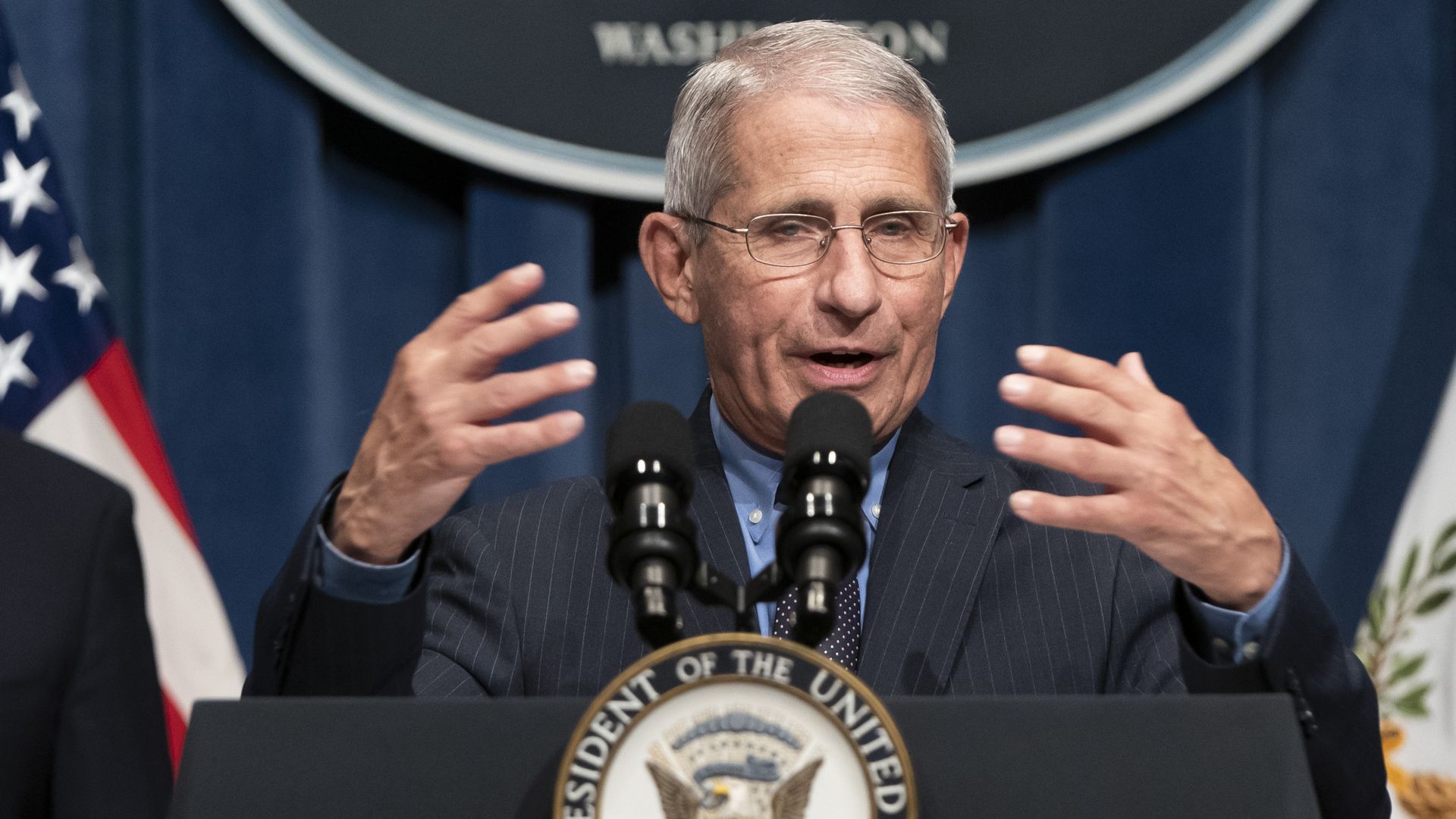
NIAID director Anthony Fauci said during an interview at the Aspen Ideas Festival broadcast Sunday night he'd settle for a "70, 75% effective vaccine" against the novel coronavirus.
But such resistance, along with some Americans' opposition to vaccinations, means the U.S. is "unlikely" to achieve herd immunity, the White House coronavirus task force member said during his interview with CNN's Elizabeth Cohen.