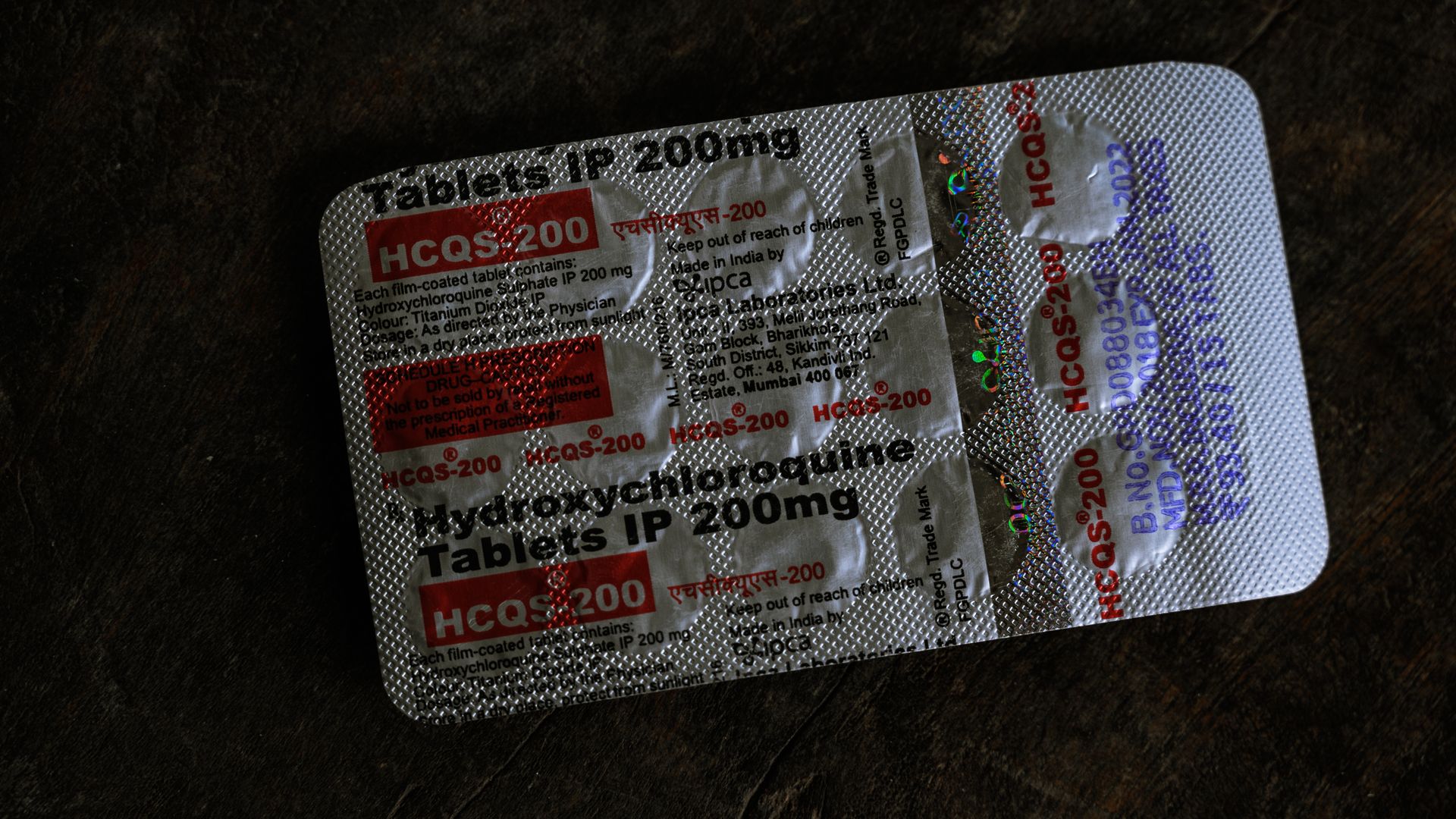
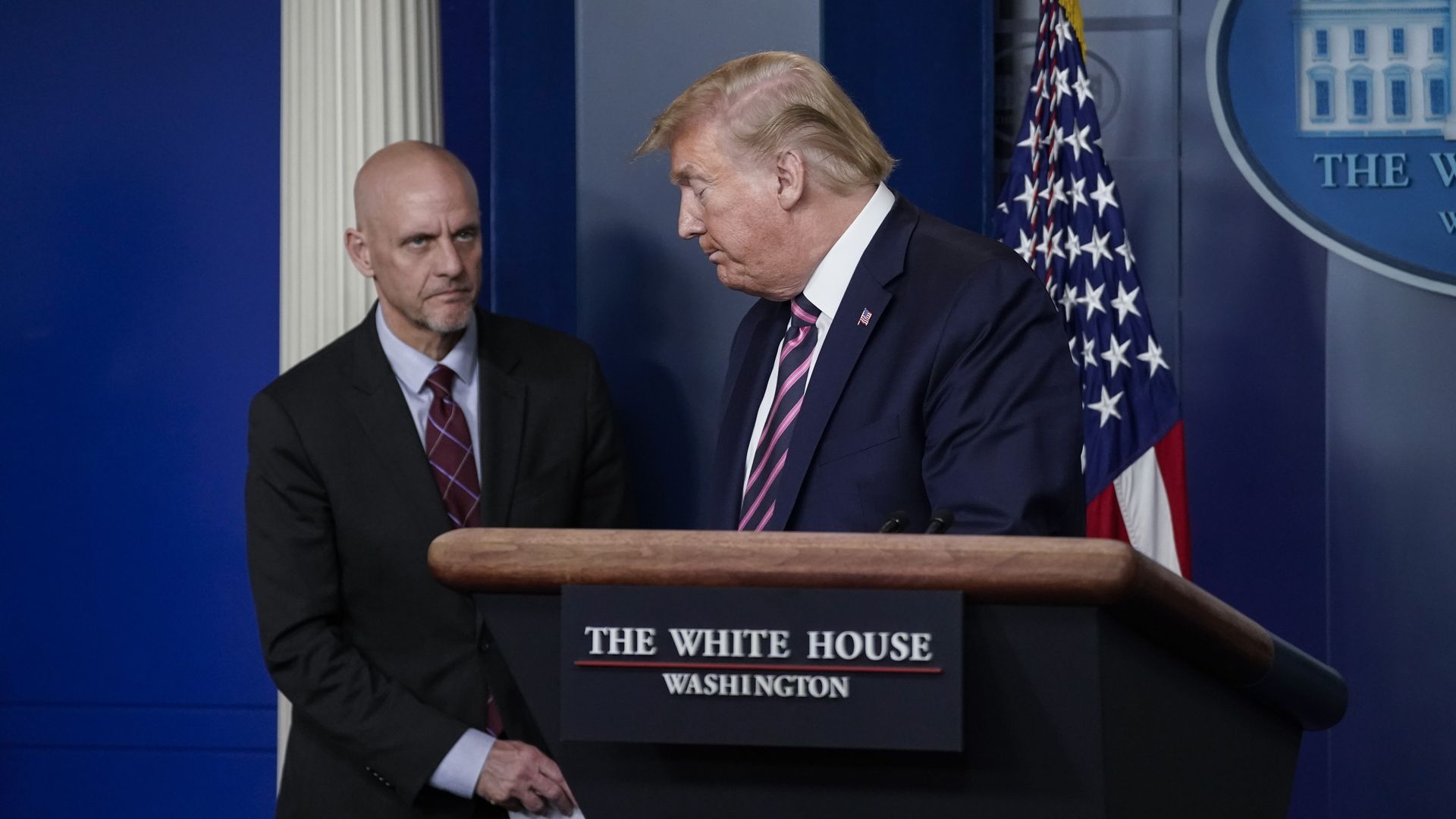
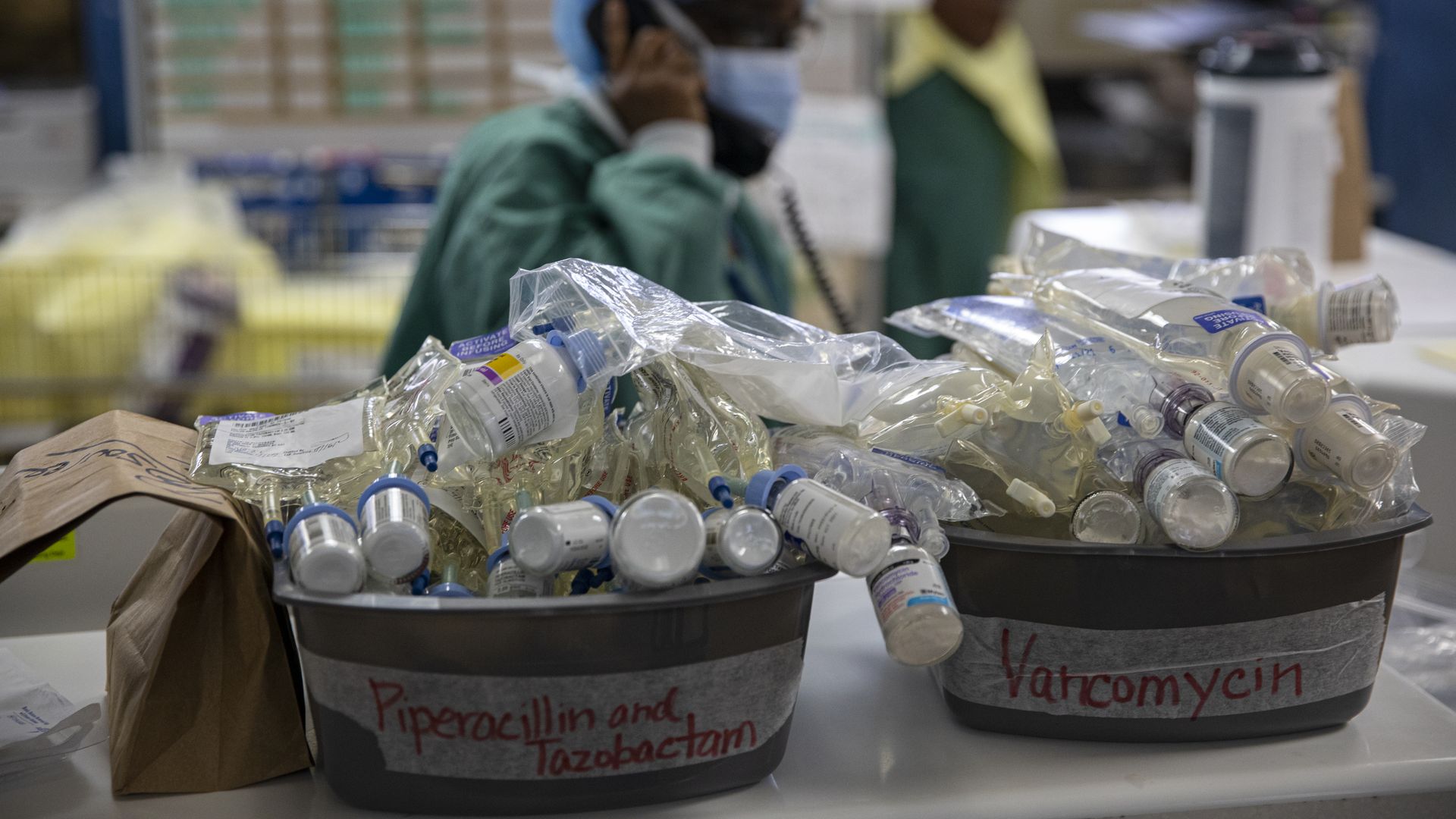
At least 22 states and Washington, D.C., are building up stores of the anti-malarial drug President Trump previously touted as a possible solution for the novel coronavirus, AP reports.
Why it matters: The Food and Drug Administration advised doctors Friday against prescribing hydroxychloroquine or the related drug chloroquine to coronavirus patients as it appears to be causing some serious and potentially life-threatening side effects.
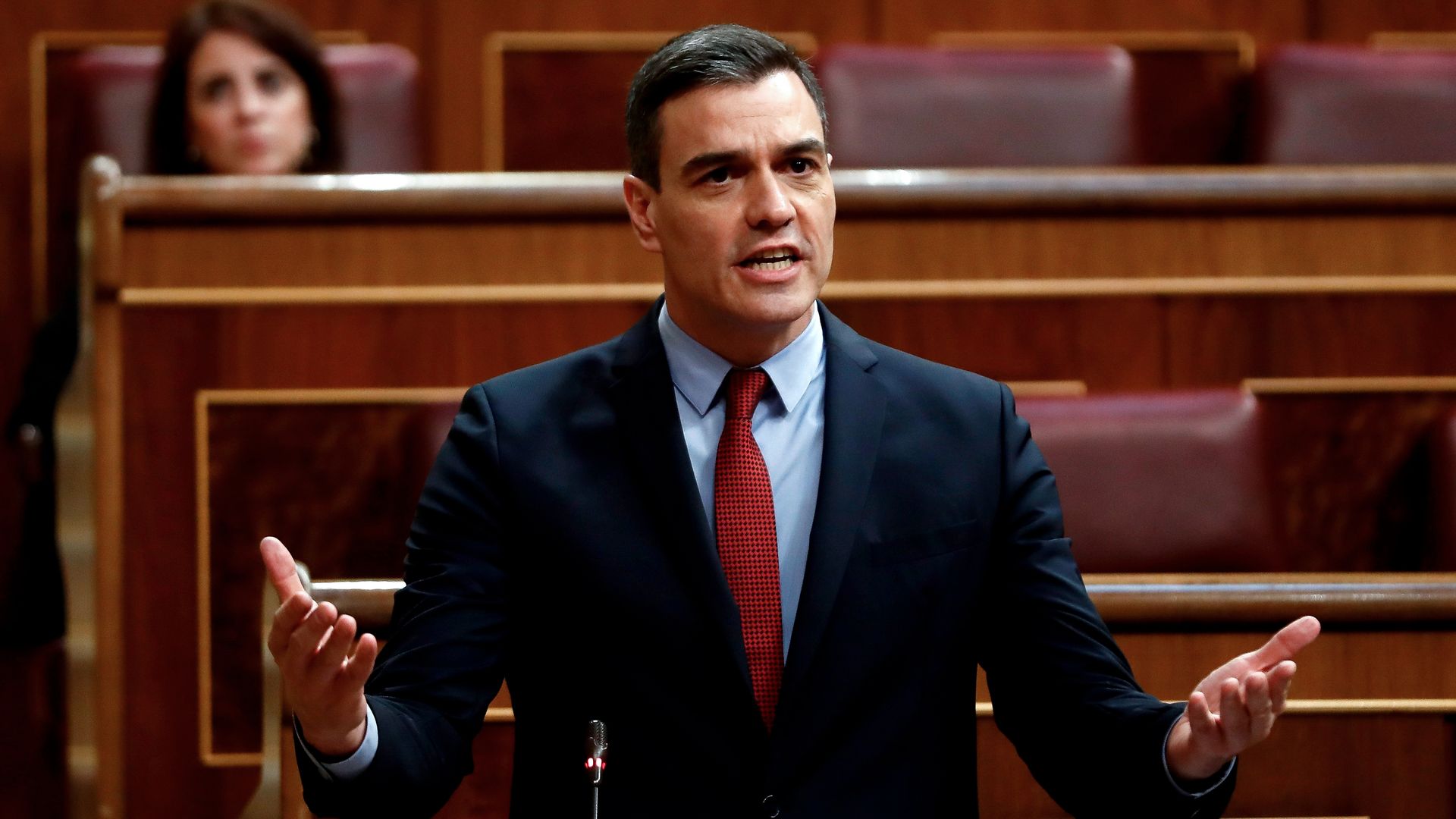
Spain will begin gradually easing stay-at-home restrictions on May 2 if the evolution of novel coronavirus cases look positive, Prime Minister Pedro Sánchez said on Saturday.
Why it matters: Spain has reported the most COVID-19 cases outside of the U.S. (almost 224,000), although it has recorded nearly 4,000 fewer deaths than Italy — the second most-affected country in Europe, per Johns Hopkins. Sánchez said the country's reopening, or its "new normal," would continue until a vaccine is found.
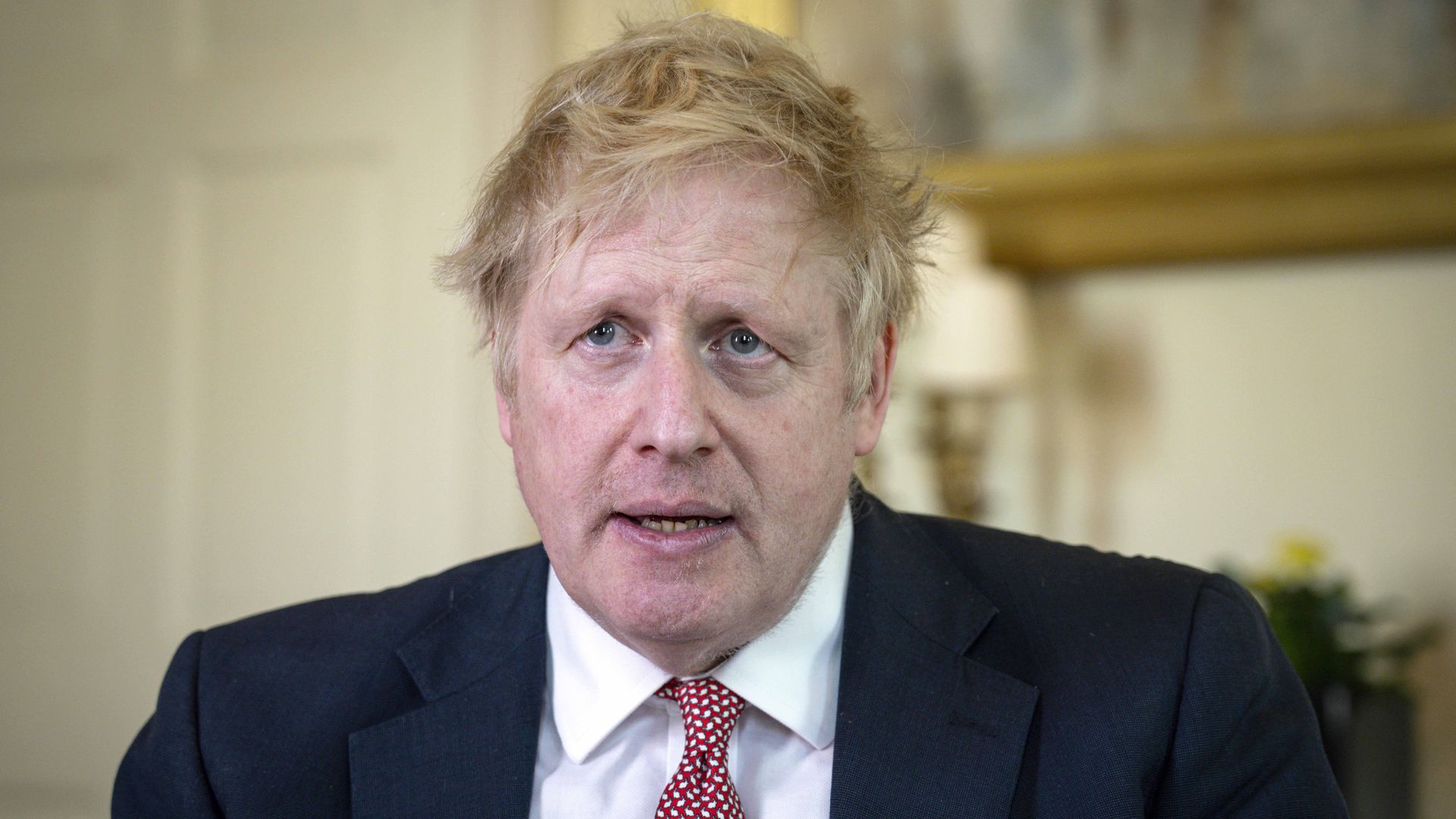
British Prime Minister Boris Johnson plans to return to work on Monday after being being treated for the novel coronavirus this month, the BBC reports.
The big picture: 813 people who had tested positive for COVID-19 in the United Kingdom died in the last 24 hours, the country's Department of Health and Social Care said in a briefing on Saturday.
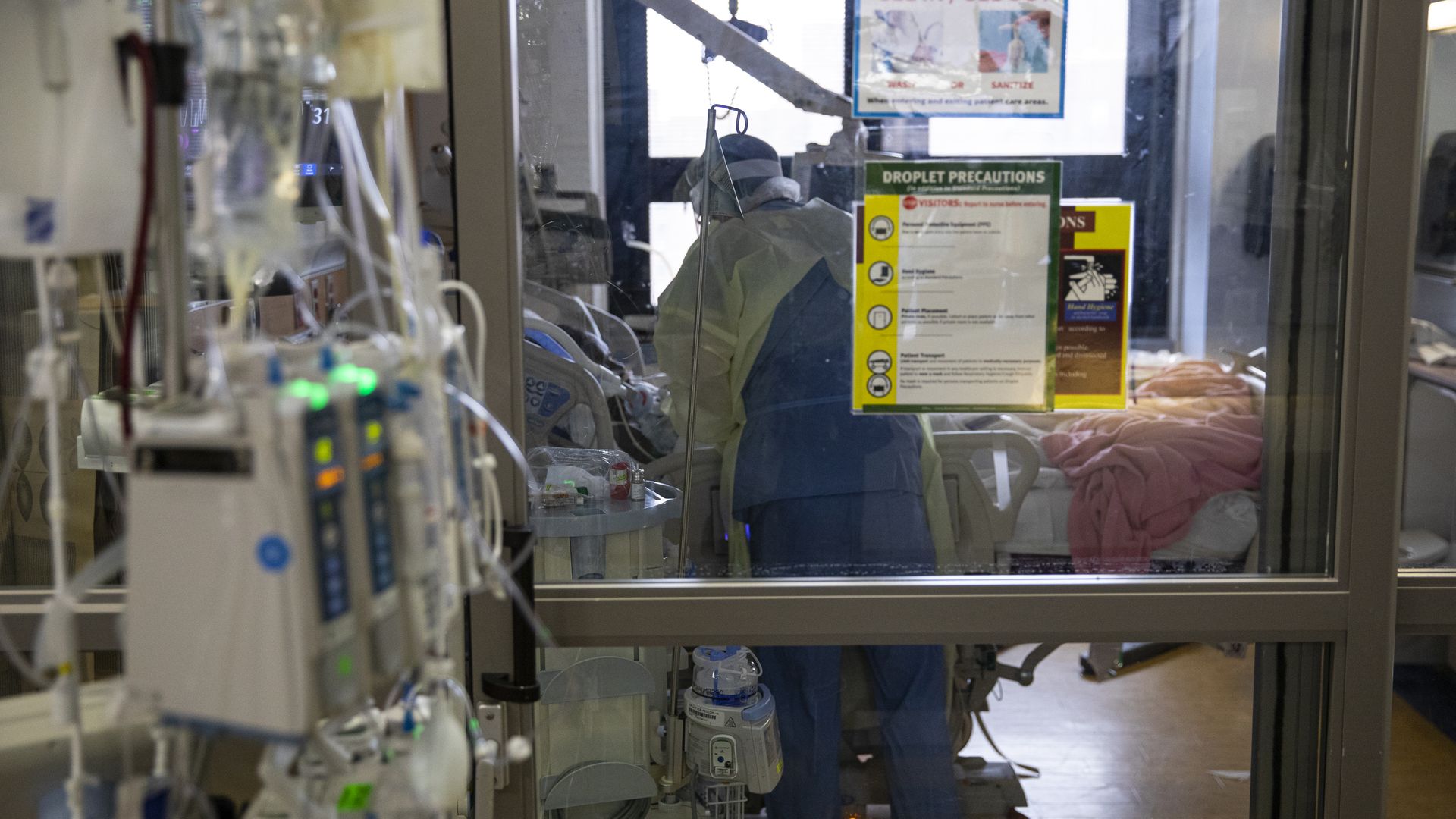
A small number of young and middle-aged Americans have experienced strokes after testing positive for the novel coronavirus, the Washington Post reports.
What's happening: The link between COVID-19 and strokes is being studied by researchers at Philadelphia's Thomas Jefferson University Hospitals, New York City's NYU Langone Health and the Mount Sinai Beth Israel Hospital in Manhattan.
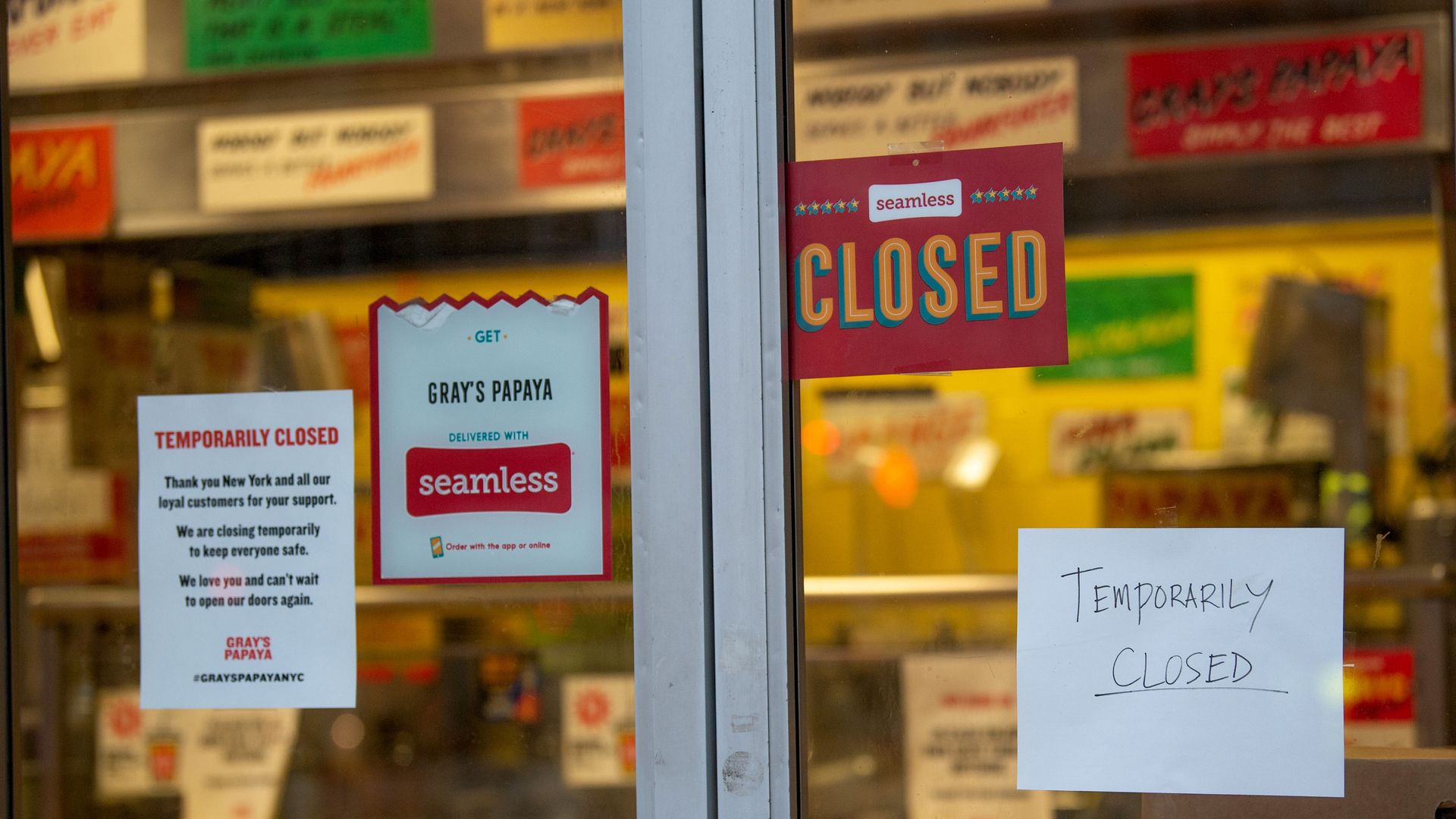
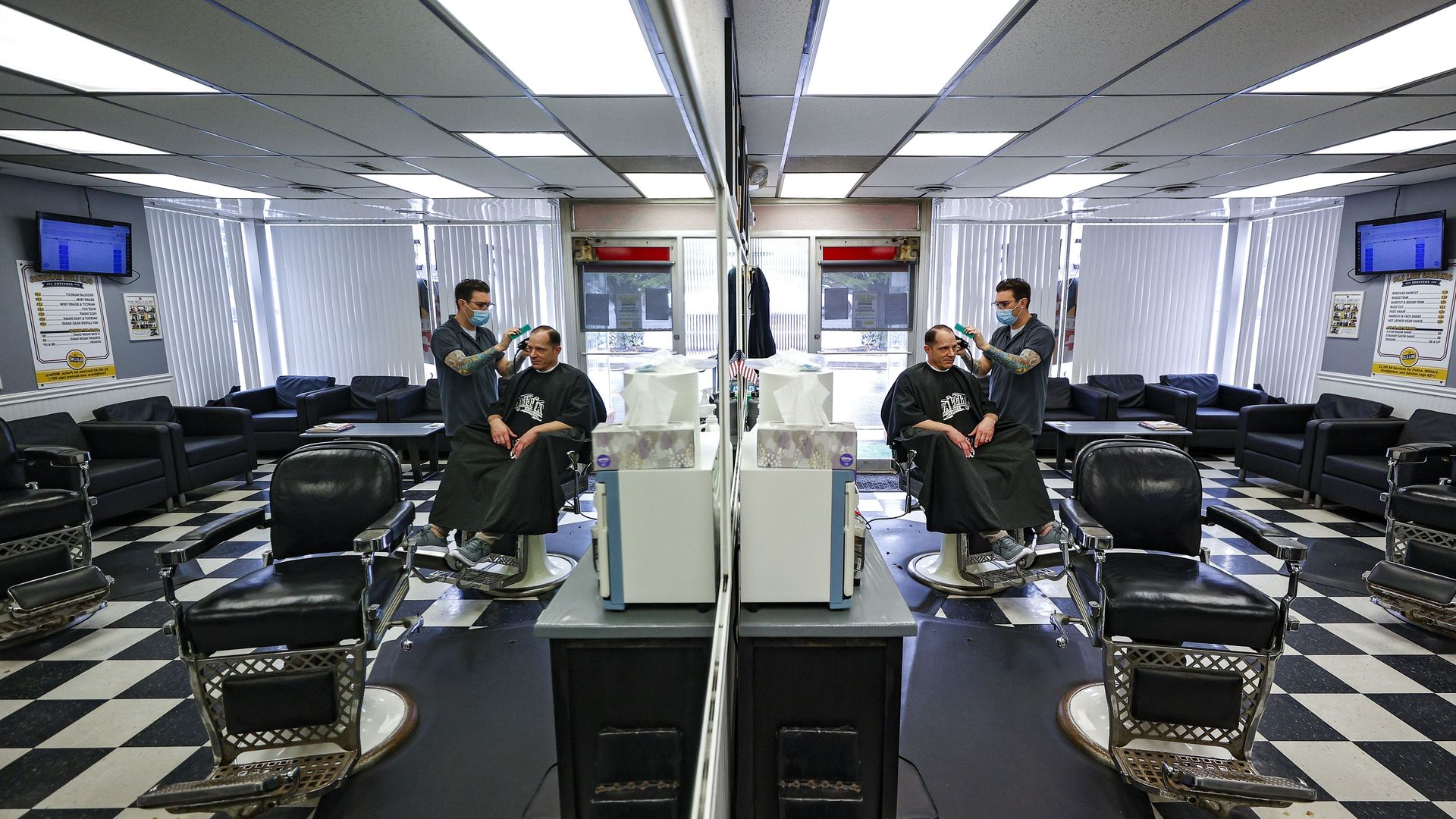
Restaurants, casinos and barbershops are suing insurers in an attempt to regain losses caused by staying closed through stay-at-home orders, AP reports.
Why it matters: The survival of thousands of businesses are on the line if insurers refuse to pay — and big-name insurance companies risk massive financial hits if they accept the millions of claims.
Millions of Americans are skipping credit card payments in the face of mass unemployment caused by the coronavirus pandemic, the Wall Street Journal reports.
What's happening: Card issuers including Capital One, Discover and Synchrony are letting borrowers miss payments for a month or more, waiving late fees and forgiving some of their balances — but delinquencies are still expected to soar this year, WSJ reports.
A financial analyst at the Swiss banking giant UBS advised Monday that Disney will likely wait until January 2021 to reopen its parks and resorts, the Los Angeles Times reports.
As the coronavirus continues to spread throughout the U.S., Axios is answering readers' questions about the pandemic — how it spreads, who's at risk and what you can do to stay safe.
What's new: This week, we answer four questions on vulnerability for those with asthma, traveling across state lines, being contagious, safely washing dishes and alternatives to Lysol and Clorox.
The IRS will begin mailing paper stimulus checks to Americans in early May, MarketWatch reports, citing the House Ways and Means Committee.
What's happening: Low-income households will receive checks first as the IRS mails 5 million per week. But the committee's timetable shows that all checks will not be mailed until the week of September 7.
An Italian-based artificial intelligence company is regularly analyzing social media posts about the coronavirus for their emotional content.
Why it matters: Classifying tens of thousands of posts by their emotional tone provides a snapshot of how people feel about the pandemic. Spoiler alert: not great!
New York Gov. Andrew Cuomo told reporters on Saturday that New York is going to authorize the use of independent pharmacists to be collection sites for coronavirus testing as the state expands capacity in labs.
What he's saying; "We're going to authorize all the independent pharmacists in the state to be collection sites for testing. I assume ... my educated guess is that independent pharmacists will take us up on this, and there are 5,000 pharmacies in New York state.
A recent report by Deloitte posits four potential scenarios for how the coronavirus pandemic could affect the economy and society.
Why it matters: It's almost impossible to predict how an event as unprecedented as the pandemic will play out. But scenario planning allows business leaders to identify the most important questions a crisis poses, and prepare for a number of possible outcomes, rather than being locked into one future.
The U.S. Chamber of Commerce will send a letter next week urging President Trump, governors, mayors and county officials to work together on consistent rules for a staged reopening, Neil Bradley, the chamber's executive vice president and chief policy officer, told me in a phone interview.
What Bradley is saying: "As much as possible, we want them to mirror each other, and not have needless differences" on such matters as temperature checks, Bradley said.
It's deflating,but it would be derelict to ignore: The hope of anything approximating normal in the coming months — and probably well beyond — is gone.
Why it matters: It's great and normal to cheer for a miracle cure or sudden coronavirus retreat. But the experts who study the virus closest seem unanimous in their verdict that our health, economic and social pain will persist for many months to come.
The executive in charge of the Veterans Health Administration acknowledged in an interview with the Washington Post that the system faces a shortage of masks and personal protective equipment after VA officials initially denied the insufficiencies.
Why it matters: "The shortages, and the agency’s claims that they did not exist, have been a low point in what observers say is an otherwise commendable response by VA to the pandemic," the Post writes.
Americans are divided by their religious beliefs over who should be given priority if hospitals do not have enough ventilators for all patients who need help breathing in the face of supply shortages during the coronavirus crisis, according to the Pew Research Center.
Why it matters: Pew's findings are consistent with other research indicating that people who aren't religious "tend to prefer utilitarian solutions in a variety of moral dilemmas," and often rely on personal philosophies. Meanwhile, more religious individuals often depend on deeply ingrained moral rules and guidance from religious leaders and texts.