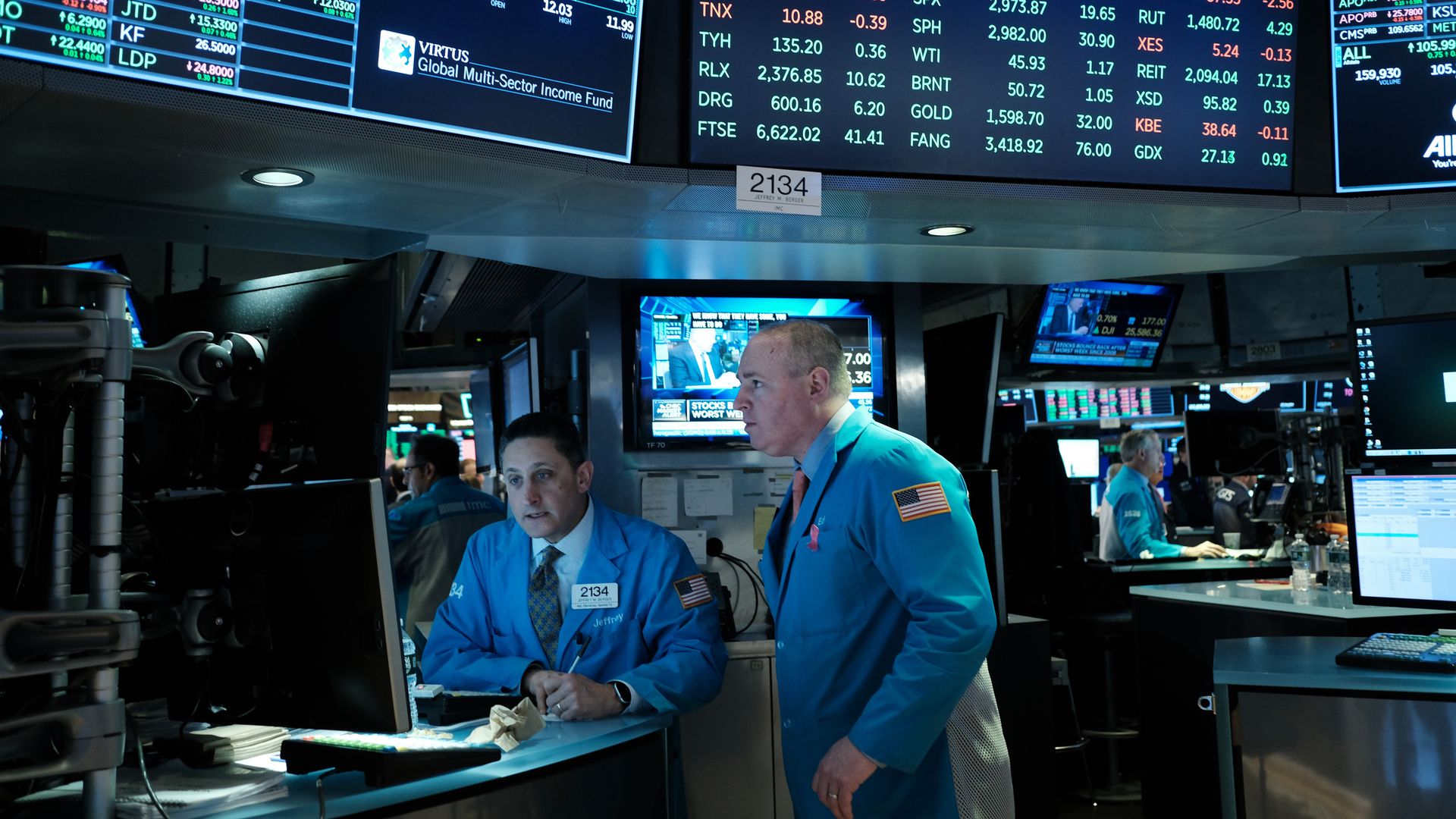
The yield on the U.S. 10-year Treasury fell below 1% for the first time ever after the Fed unexpectedly cut rates to shield the economy from any coronavirus impact.
Why it matters: Yields on the benchmark 10-year note have fallen by more than 90 basis points in just the first two months or so of 2020. That's a huge move in a short amount of time — and reflects investors' appetite for safe-haven assets and pessimism about the global economy.
The NBA advised players in a Monday memo to use fist-bumps instead of high-fives when interacting with fans to decrease their chances of contracting the coronavirus, ESPN reports.
Why it matters: Many NBA front offices are worried that a severe outbreak in the U.S. could scuttle games and disrupt pre-draft combines and on-site workouts, limiting the league's recruitment efforts.
Tech companies are taking fresh action in hopes of preventing employees from getting exposed to the novel coronavirus.
The big picture: It's not clear what course the virus will take, but companies are trying to do what they can to keep running their businesses while minimizing risk for employees.
Thermo Fisher is acquiring Qiagen, a company that makes lab equipment and diagnostic tests, for $10.1 billion plus the assumption of $1.4 billion of debt.
Why it matters: This is the largest health care transaction so far in 2020. It's also especially relevant because Qiagen makes a testing kit that detects the new coronavirus strain.
Portfolio flows to emerging market assets fell to $3.4 billion last month, as equity flows were negative and debt flows fell by 60% from their January level, data from the Institute of International Finance showed.
Details: Investment in the less developed nations' securities saw a "dramatic collapse of flows in the last one-and-a-half weeks, when the increasing spread of the coronavirus rattled global financial markets," analysts said in a report.
The global manufacturing industry fell into contraction in February, largely as a result of the coronavirus outbreak, with activity in China shrinking at a record pace, dragging down the world's index.
The state of play: It was the steepest contraction since 2009, JPMorgan reported, "as demand, international trade and supply chains were severely disrupted by the COVID-19 outbreak."
News about the coronavirus outbreak got worse on Monday, but stock traders saw a stimulus bat-signal in the sky and sent the Dow to its biggest points gain on record — 1,294 points.
Why it happened: Stock prices jumped after it was confirmed that finance ministers and central bank governors from each of the G7 countries would hold a conference call Tuesday morning, presumably to announce coordinated stimulus measures to deal with the coronavirus outbreak.
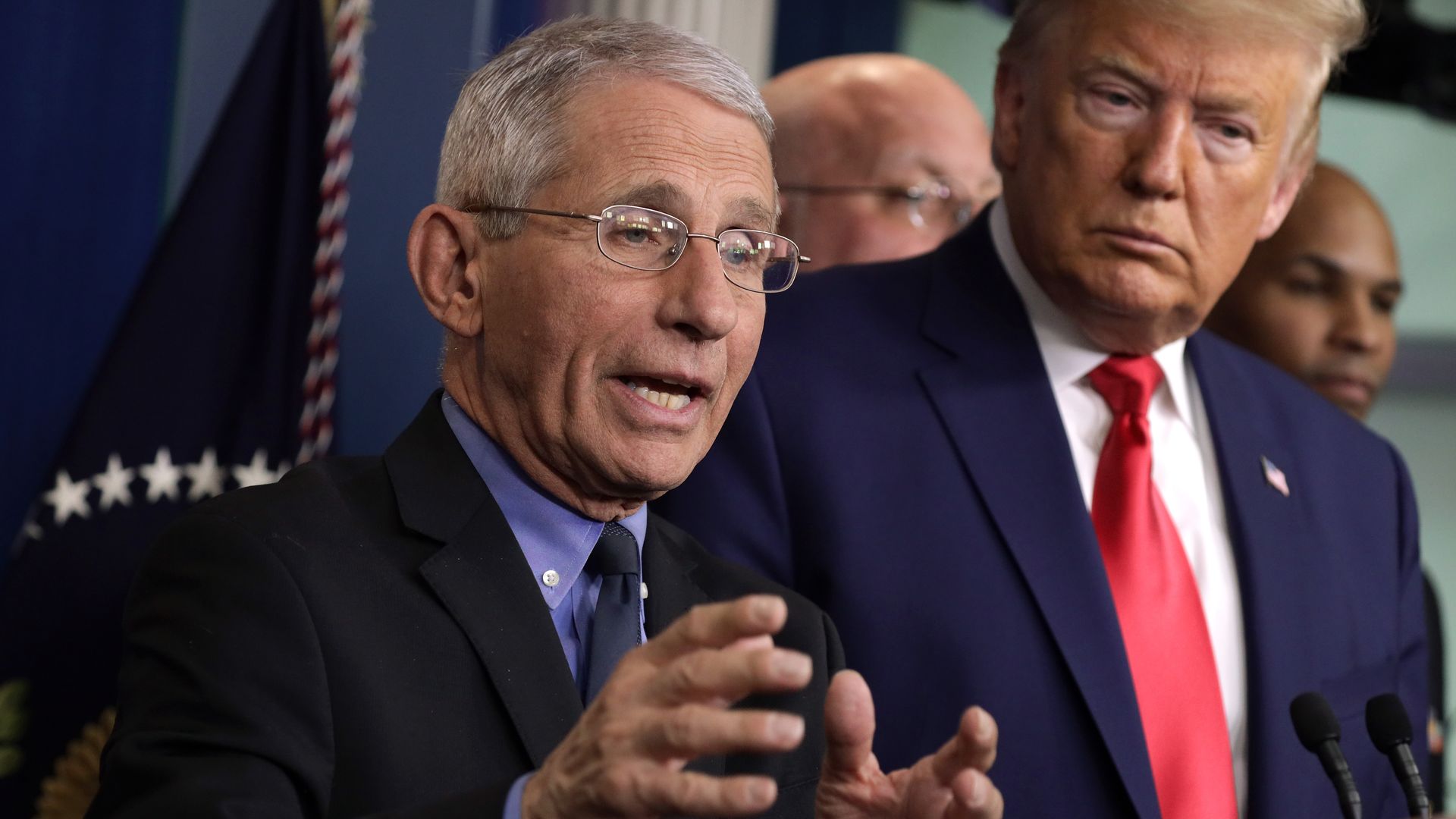
Dr. Anthony Fauci, the director of the NIH's National Institute of Allergy and Infectious Diseases, told Politico that the nation's political polarization is forcing him to "walk the fine balance" of informing the public about the ongoing novel coronavirus outbreak and combating misinformation — which can sometimes come from President Trump.
What he's saying: "You should never destroy your own credibility. And you don't want to go to war with a president. ... But you got to walk the fine balance of making sure you continue to tell the truth."
Between the lines: Viruses don't care about someone's income, but money can certainly buy extra precautions and assurances, as Bloomberg reports, and the rich often have access to scientists and health experts that the rest of us don't have.
Now that the coronavirus diagnostic test works, the next issue to grapple with is whether it's affordable.
Why it matters: People worried about getting hit with large medical bills if they get tested for the novel coronavirus may delay going to the doctor, or not go at all — the opposite of what needs to happen as public health officials seek to contain the virus' spread.
The Supreme Court’s next big Affordable Care Act case could be a huge political problem for President Trump.
Why it matters: The Trump administration will spend the next several months urging the court to strip away some 20 million people’s health insurance and to throw out protections for pre-existing conditions. And it may all come to a head just before Election Day.
Washington Gov. Jay Inslee (D) told a news conference Monday he directed officials to ask the state legislature to designate $100 million from this year's budget to help fight the novel coronavirus.
Why it matters: The state is at the center of the U.S. outbreak. All six of the deaths from COVID-19 in the U.S. have occurred in Washington state. Four of those who died were residents of the Life Care Center in the Seattle suburb of Kirkland in King County. Several of the 18 coronavirus infections in the state are residents of the nursing home.
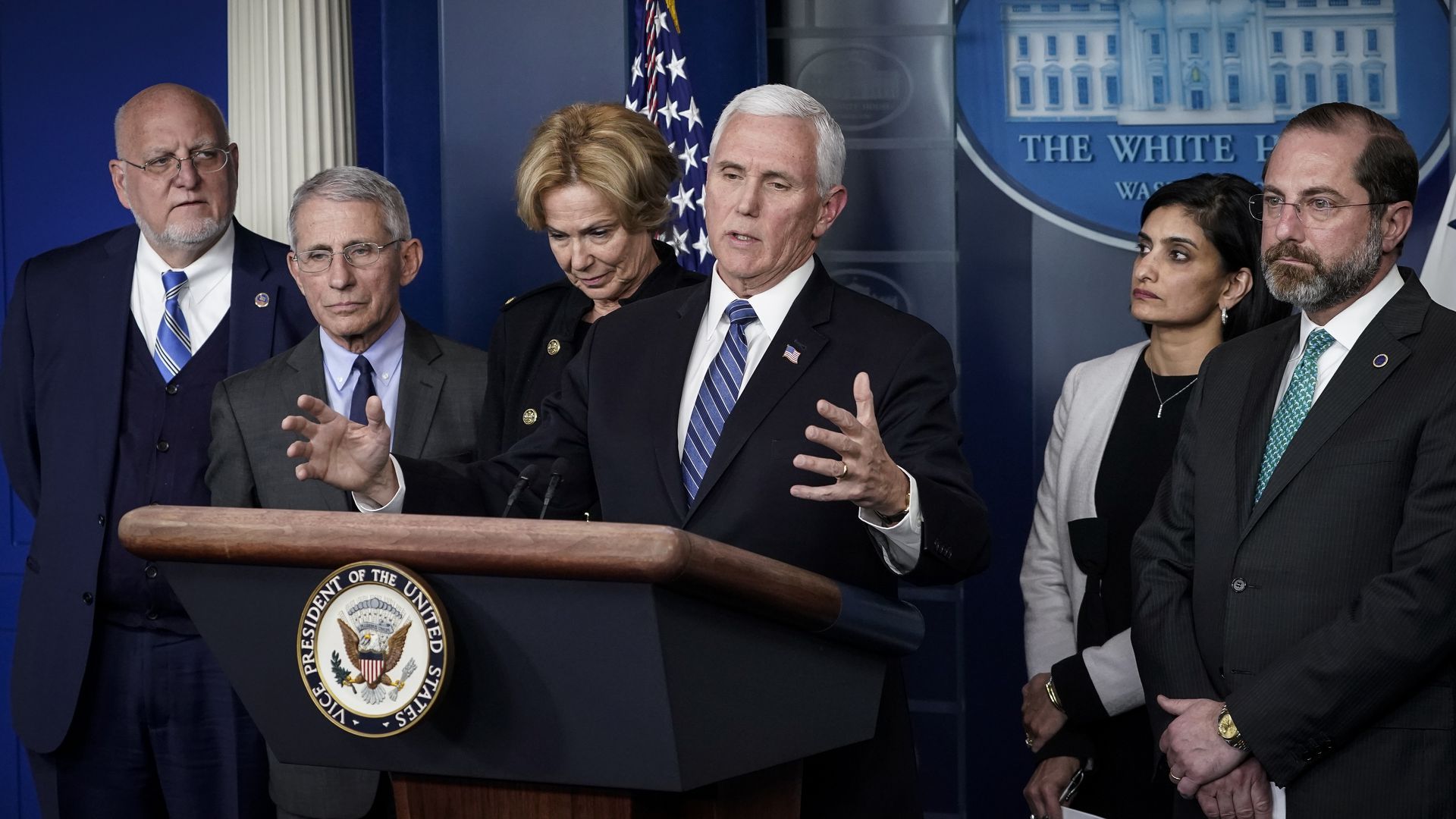
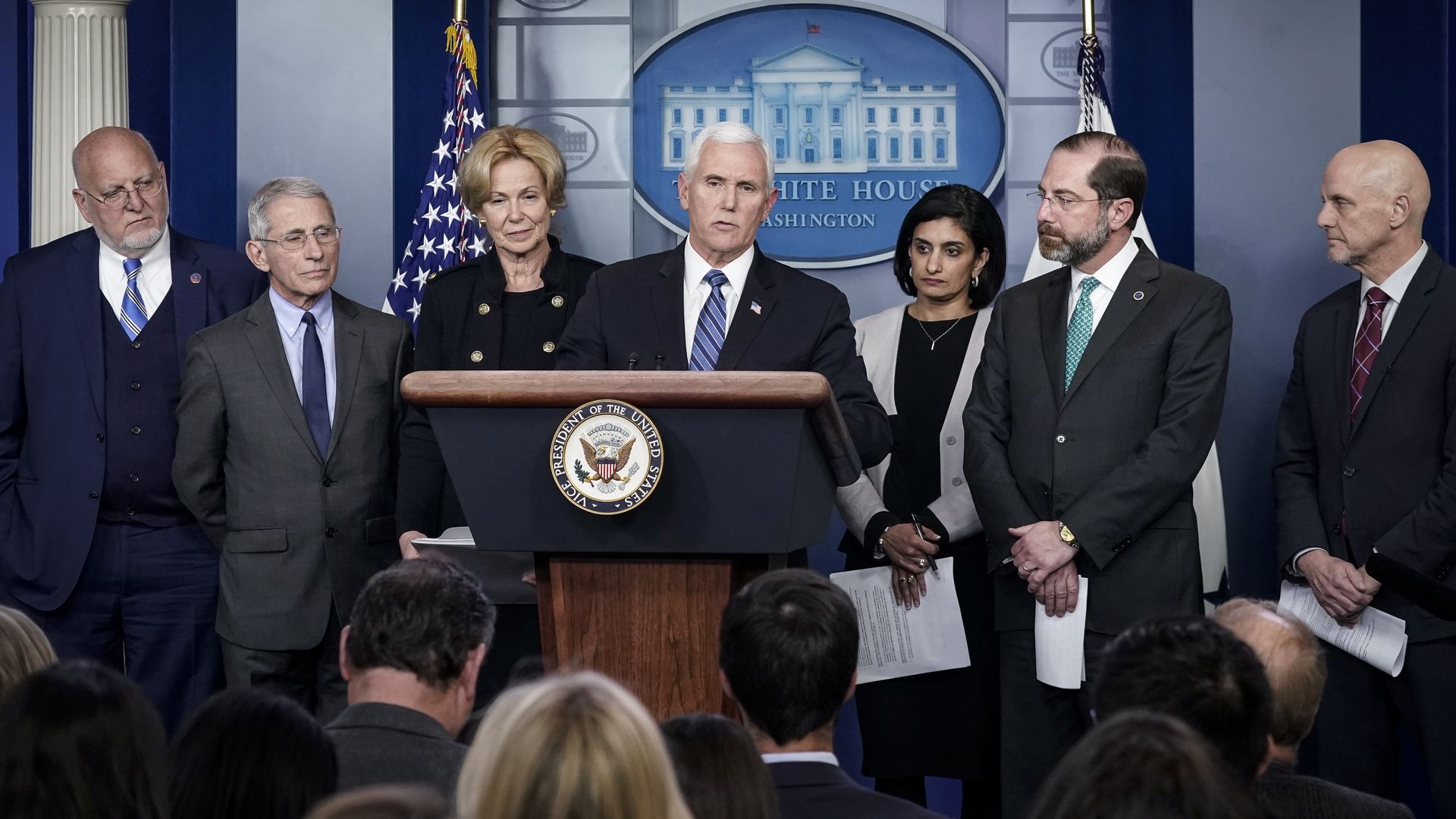
Food and Drug Administration commissioner Stephen Hahn told a news conference Monday that health officials should be able to perform nearly 1 million tests for the novel coronavirus by the end of the week.
Why it matters: Officials in the U.S. and around the world are scrambling to combat a rise in cases of COVID-19.