The Trump administration will soon make it easier for federally funded adoption agencies to reject same-sex couples, Axios' Sam Baker and Jonathan Swan reported on Friday.
The big picture: In just 2 years, the Trump administration has worked to undo a major chunk of the protections the LGBTQ community secured under President Obama.
The FDA has approved Zolgensma, a gene replacement therapy from pharmaceutical company Novartis that treats spinal muscular atrophy, for use in children younger than 2.
Why it matters: The treatment attacks a debilitating genetic disease that often kills infants, and it will come with a price tag of more than $2.1 million, making Zolgensma the most expensive drug on the planet.
The Department of Health and Human Services proposed rolling back protections for transgender people established under the Affordable Care Act on Friday.
Why it matters: It would reverse Obama-era protections that added "gender identity" to the definition of discrimination "on the basis of sex." These rollbacks could make it easier for doctors, hospitals and insurance companies to deny transgender people health coverage.
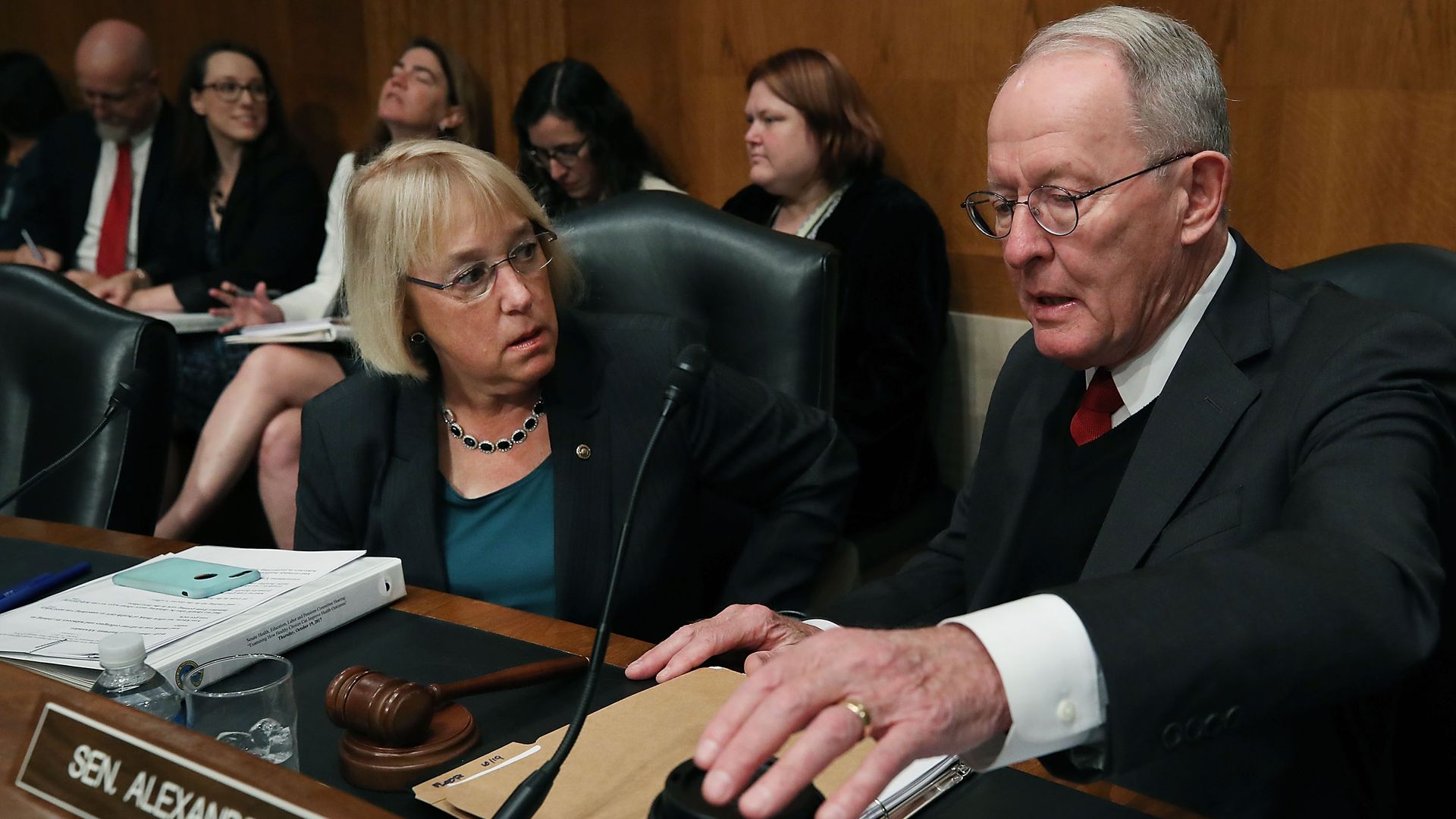
A new Senate bill would tackle an array of health industry tactics that are costing patients a lot of money, but have largely fallen under politicians' radar until now.
The big picture: This is one of the most ambitious bipartisan health care bills in a long time.
Using technology with real-time viewing, a team of scientists say in Science Thursday they can now show how quickly E. coli becomes resistant to tetracycline — finding that bacteria can pass genes with resistance to each other and then use a pump to keep most of the antibiotic out for the 2 hours it takes to render the previously sensitive bacteria resistant to the drug.
Why it matters: Antibiotic resistance is a growing threat that's projected to kill 10 million people every year by 2050. The discovery of how it occurs, at least in a lab setting, could help scientists develop an inhibitor that could be combined with an antibiotic to boost its effectiveness, study co-author Christian Lesterlin tells Axios.
A new draft health care bill, released today in the Senate, would aim to build a better database of real-world records about health care costs.
Details: The federal government would pay a nonprofit $95 million over 6 years to build a database of medical claims, showing how much employers and insurers actually paid for care. Employers' claims data has long been considered a black box.
Dan speaks with former FDA Commissioner Scott Gottlieb about e-cigarettes, including a new bipartisan bill to raise the federal tobacco purchasing age from 18 to 21.
Men are paying highly inflated prices for erectile-dysfunction and hair-loss drugs sold on the internet by startups like Hims Inc. and Roman Health Medical, Bloomberg reports.
What's happening: The generic drugs are sold at a premium in exchange for cool packaging and the convenience of an online doctor visit to obtain the prescription.
The pharmaceutical industry is very worried about the Trump administration's plans to cut drug costs, according to a PwC survey of industry executives.
The bottom line: The industry is most worried about the administration's plan to tie Medicare payments for certain drugs to the prices other countries pay.
Our recent analysis of hospital finances showed many of the largest tax-exempt hospitals are faring quite well even as they care for more people with government insurance.
The big picture: Hospitals have long argued they have to charge patients with commercial insurance more to make up for the lower payments they receive from Medicare and Medicaid, a theory known as "cost-shifting." But evidencesuggests that theory doesn't hold any weight.