Public health officials in the Democratic Republic of the Congo say they will coordinate disease surveillance activities around polling stations for the December 23 presidential election but do not expect the Ebola outbreak to "obstruct" election activity in the affected areas.
Why it matters: DRC's history is full of political, economic and social turmoil, and the country's previously scheduled November 2016 elections were postponed until December this year. But worries persist about the impact from Ebola, as periodic violence and pockets of public distrust have stymied efforts to contain what's now the 5th largest Ebola outbreak ever.
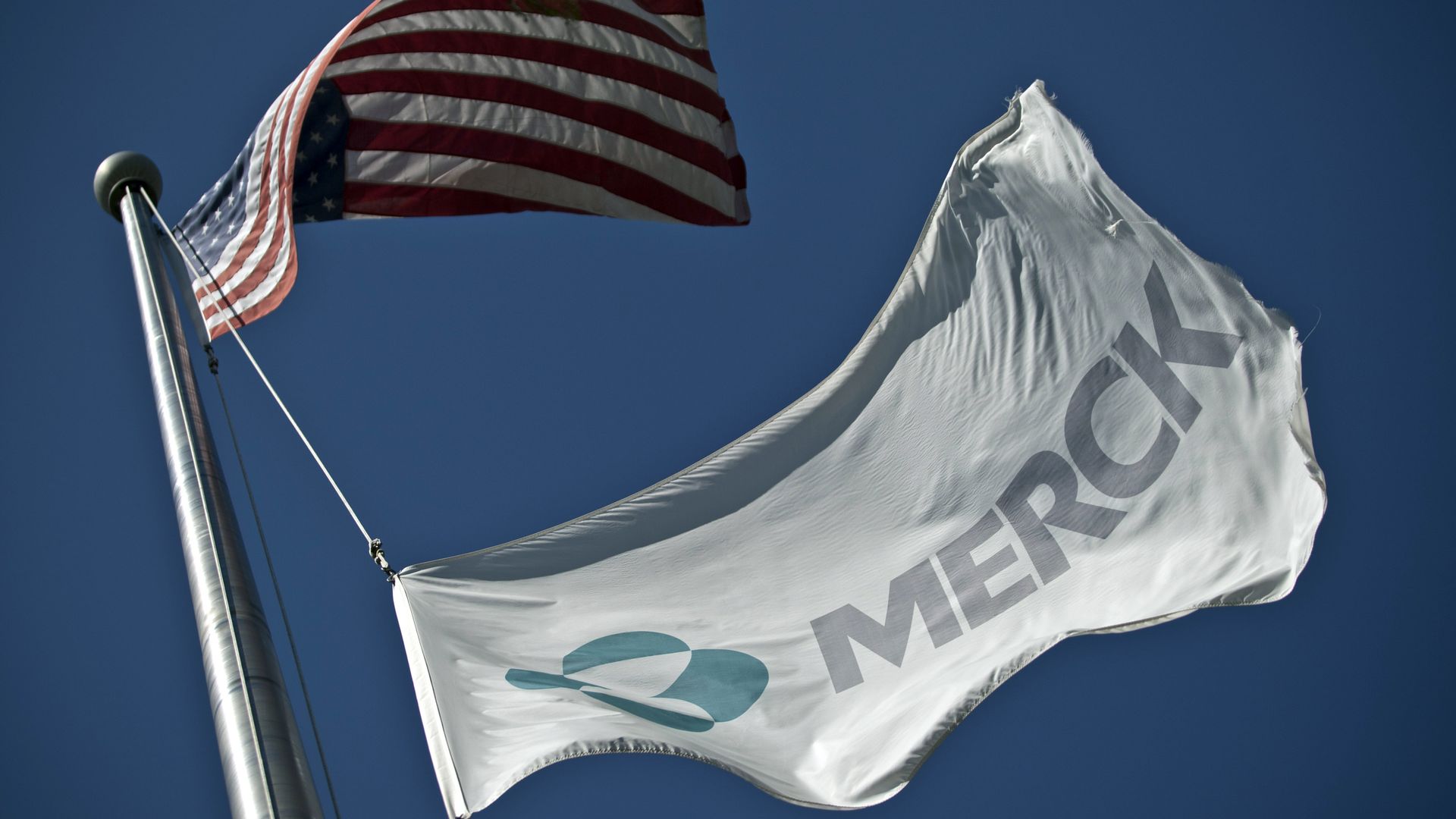
Merck “is ending a long-term agreement to supply a lifesaving vaccine for children in West Africa,” NPR reports. “At the same time, the company has started sending the vaccine to China, where it will likely be sold for a much higher price.”
Merck has been supplying a vaccine for rotavirus, which kills about 200,000 children per year, as part of a long-term agreement with UNICEF and Gavi, a public-private partnership that provides vaccines in low-income countries.
The Trump administration’s latest move on drug prices is designed in part to raise prices in Europe. And that’s not the first time the White House has focused on raising prices abroad — the recent trade deal with Canada and Mexico could as well.
"Both could, at least plausibly, address the president’s stated goal of increasing how much other countries pay for drugs," says Benedic Ippolito of the American Enterprise Institute.
Physicians were furious earlier this year when Medicare proposed consolidating most billing codes for routine office visits into a single code next year. Medicare now says it won’t go that far or that quickly, but it will move forward with the general idea.
Why it matters: This affects billions of dollars in physicians' pay.
Biosimilar versions of Humira, AbbVie's blockbuster rheumatoid arthritis drug, are now available in Europe. To stave off that cheaper competition, AbbVie has slashed Humira's European price tag by 80% — but the company is "not losing money" at that level, according to a new report from Ronny Gal, a pharmaceutical analyst at stock research firm Bernstein.
Why it matters: Because cheaper biosimilars of Humira can't enter the U.S. until 2023, Americans over the next 5 years will be paying 80% more than Europeans for the same exact drug. AbbVie executives recently boasted about extending Humira's U.S. monopoly.
People in many parts of the country will have more insurance plans to choose from this time than they did during the last ACA enrollment window.
That's good, but there's a catch. People who already have ACA coverage, and who renew their policies automatically without going back through HealthCare.gov, could see their costs rise.
Today is the beginning of the second Affordable Care Act enrollment season under President Trump. And things are … surprisingly normal.
The big picture: The ACA has been in a state of upheaval since Trump’s inauguration. Some of the changes Republicans made during that upheaval will likely weaken the law. At this moment, though, the watchword for insurers is stability. Things may not be ideal, but at least they’re largely settled.
The pharmaceutical industry is still pushing Congress to reverse a Medicare change that caught drugmakers flat-footed earlier this year. They're now targeting the lame-duck session after the midterms.
Where it stands: Some Republicans also want this "donut hole fix," and are still talking about tying it to a bill that would increase generic drug competition, two GOP Hill sources said. But getting Democrats on board will be tough.





/2018/10/31/1541019410416.gif?w=3840)