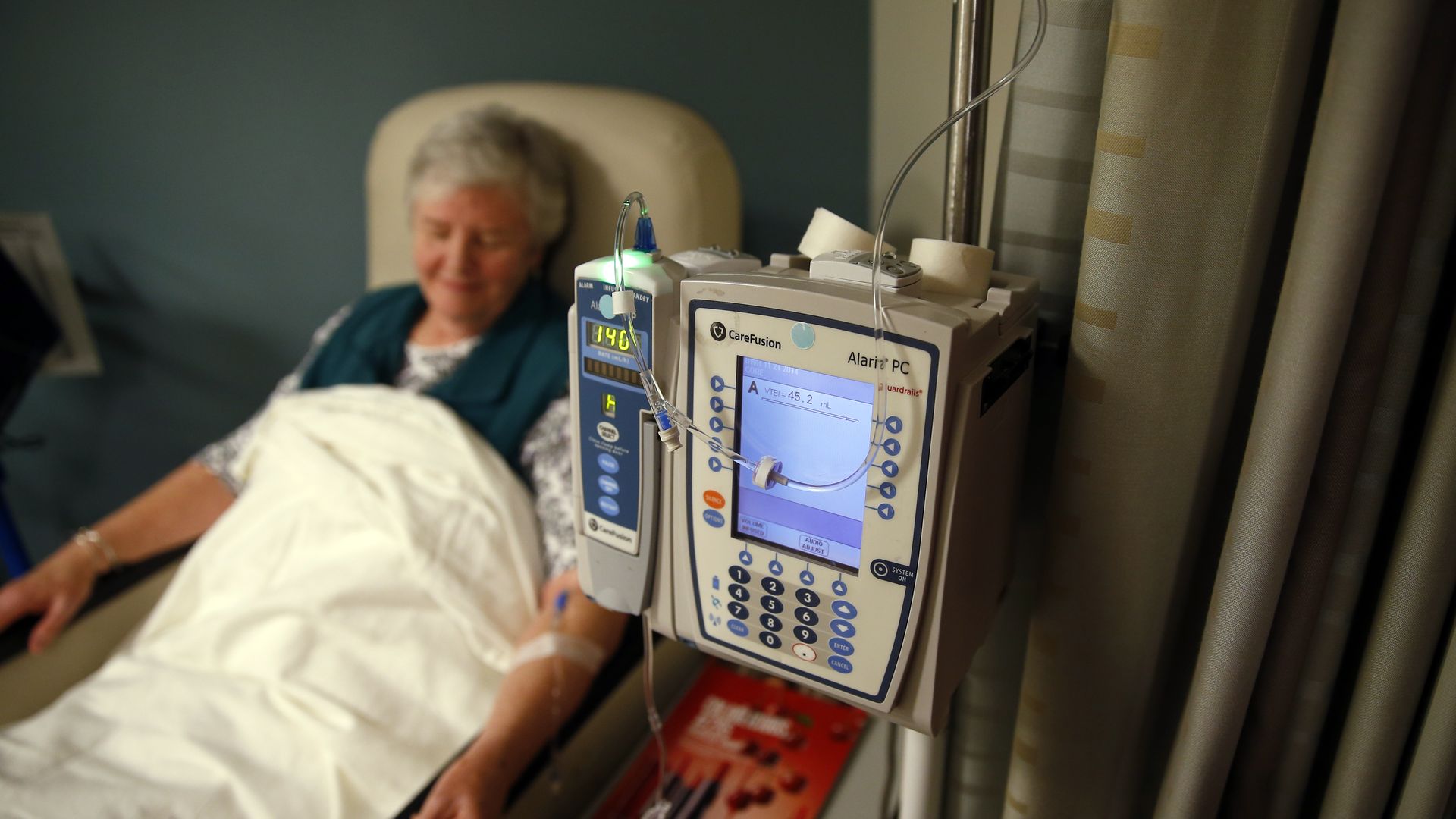
DaVita recently disclosed a new investigation from federal attorneys in Florida, who are questioning whether the dialysis conglomerate submitted federal claims for blood, urine and fecal lab tests without ensuring the tests were accurate.
The big picture: This marks DaVita's sixth federal investigation. The other probes include alleged overbilling of Medicare Advantage patients and the company's relationships to a charity that helps dialysis patients sign up for generous-paying insurance. DaVita said it "is cooperating with the government."
The Department of Health and Human Services is pushing for a one-year delay of an Affordable Care Act policy that would fine drug companies for "knowingly and intentionally" overcharging hospitals for drugs within the federal discount program known as 340B.
The bottom line: This would be the fifth delay of the policy, which wouldn't go into effect until July 1, 2019. It's a clear victory for pharmaceutical companies wanting to avoid penalties for not offering mandated drug discounts.
Synthetic opioids, some of the most potent drugs, were involved in close to half of all opioid deaths in 2016 and 30% of overdose deaths overall, according to a new study published in the Journal of the American Medical Association.
Between the lines: Prescription drugs had been the primary cause of overdose deaths — in 2011, only 6% of overdose deaths involved synthetic opioids. But now these more dangerous, often illicit drugs, primarily fentanyl, are driving the ever-rising overdose death toll.

Searching for the source: The Food and Drug Administration identified Harrison Farms of Yuma, Ariz., as the source of the whole-head romaine lettuce that sickened several Alaskans but has not yet determined where in the supply chain the contamination occurred. FDA says it's continuing to investigate since "most of the illnesses ... are not linked to romaine lettuce from this farm, and are associated with chopped romaine lettuce."
FDA Commissioner Scott Gottlieb said at an industry conference Thursday that the government could re-examine the federal law that says prescription drug rebates aren't considered kickbacks.
Why it matters: Gottlieb said the nation's rising drug prices are due in part to "the system of rebates between payers and manufacturers." Making rebates illegal would take a hatchet to companies like pharmacy benefit managers, but it's unclear how it would affect what the country ultimately pays for drugs.
More health care CEO pay packages from 2017 are in — with some earning hundreds of times more than the median employee at their companies.
A reminder: The CEO numbers are calculated using actual realized stock gains instead of the estimates that are displayed in company filings. (Employee figures are the only numbers listed in filings and may only include estimated stock.)
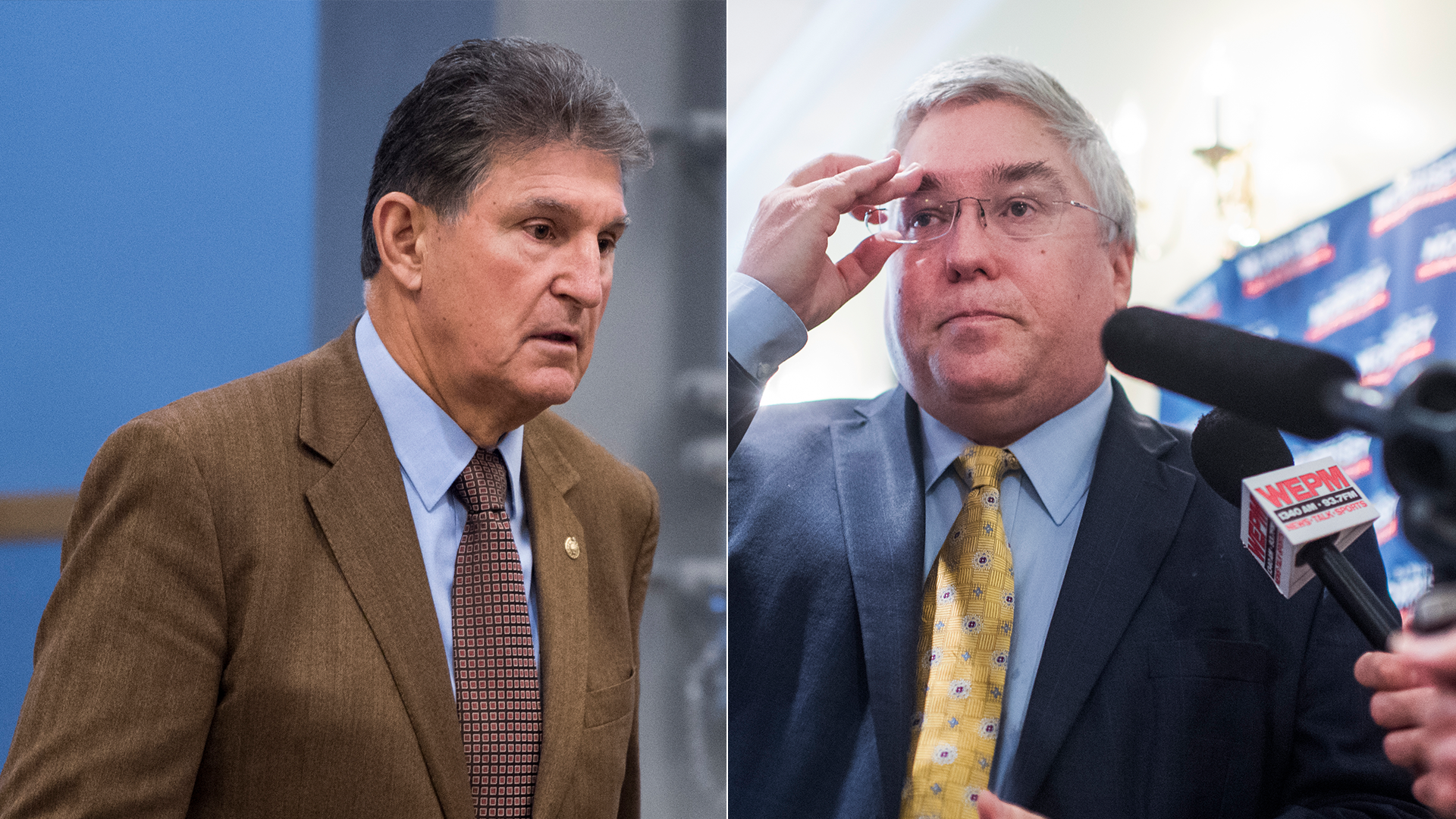
Ties to the opioid industry have emerged as a liability in West Virginia's contentious Senate race — for both Democratic incumbent Joe Manchin and state Attorney General Patrick Morrisey, one of the contenders in the GOP primary.
Why it matters: West Virginia has the highest opioid death rate in the U.S., making the opioid crisis deeply personal to many voters. It's also a Senate seat Republicans are hopeful about picking up. But if Morrisey is their candidate, his own opioid ties could weaken the GOP attack against Manchin.