Carbon removal is hardlya sure thing, and a useful new Substack post explores what might cause a failure to launch.
Driving the news: Nan Ransohoff of Frontier — a group of huge corporations building market demand — published highlights of their "red team" exercise to identify and overcome problems.
Why it matters: Carbon removal could complement clean energy and industrial tech and even help bring temperatures back down if the world misses Paris goals.
Demand is rising but remains far below what's needed to achieve the multiple gigaton-scale per year envisioned to make removal a viable solution.
The big picture: Getting on track for science-based 2050 targets means (back of the envelope) around 50-100 million tons of removal by 2030. At an average cost of $200/ton (or lower), that's $20 billion annually, vastly more than today's trajectory.
State of play: Among other challenges, "there still probably aren't enough ideas being tried, and there isn't enough redundancy [with] the best ones," Ransohoff writes.
Other risks include local backlash to projects and a market that "ends up fraudy/scammy and undifferentiated from low-quality offsets today," she adds.
Zoom out: The European Commission and Parliament unveiled a tentative deal on a system for certifying carbon removals and other CO2 management.
Confidence that removal companies are achieving what they claim is important for creating a viable long-term industry.
What they're saying:Via S&P Global, European parliament member Lídia Pereira, a key architect, "said this deal will help prevent greenwashing and foster private investment in carbon removals and develop voluntary carbon markets."
A dozen teams nationwide are getting millions in Department of Energy funding to develop batteries for electric regional aircraft, trains and ships.
Why it matters: If any such moonshot is successful and scaleable, it could help curb the massive amounts of carbon emitted from heavy-duty transportation.
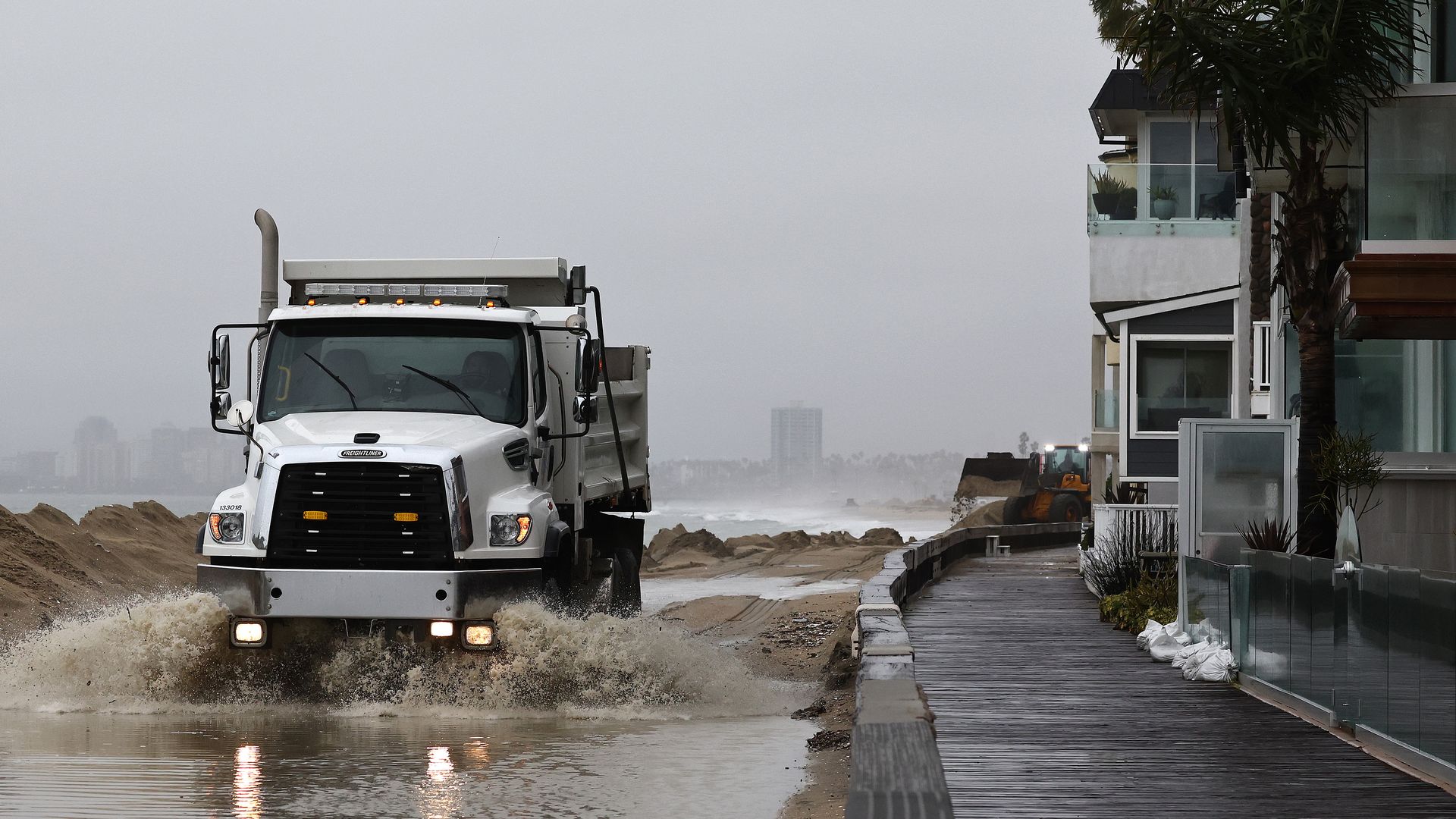
The latest ongoing atmospheric river was unleashing heavy rain and thunderstorms, mountain snow and gusty winds over much of the West Coast and parts of the Intermountain West into Wednesday.
The big picture: "Southern California is once again 'under the gun' for numerous instances of flash flooding as the main band of atmospheric river rainfall focuses through the overnight hours there," per a Wednesday morning National Weather Service forecast discussion.
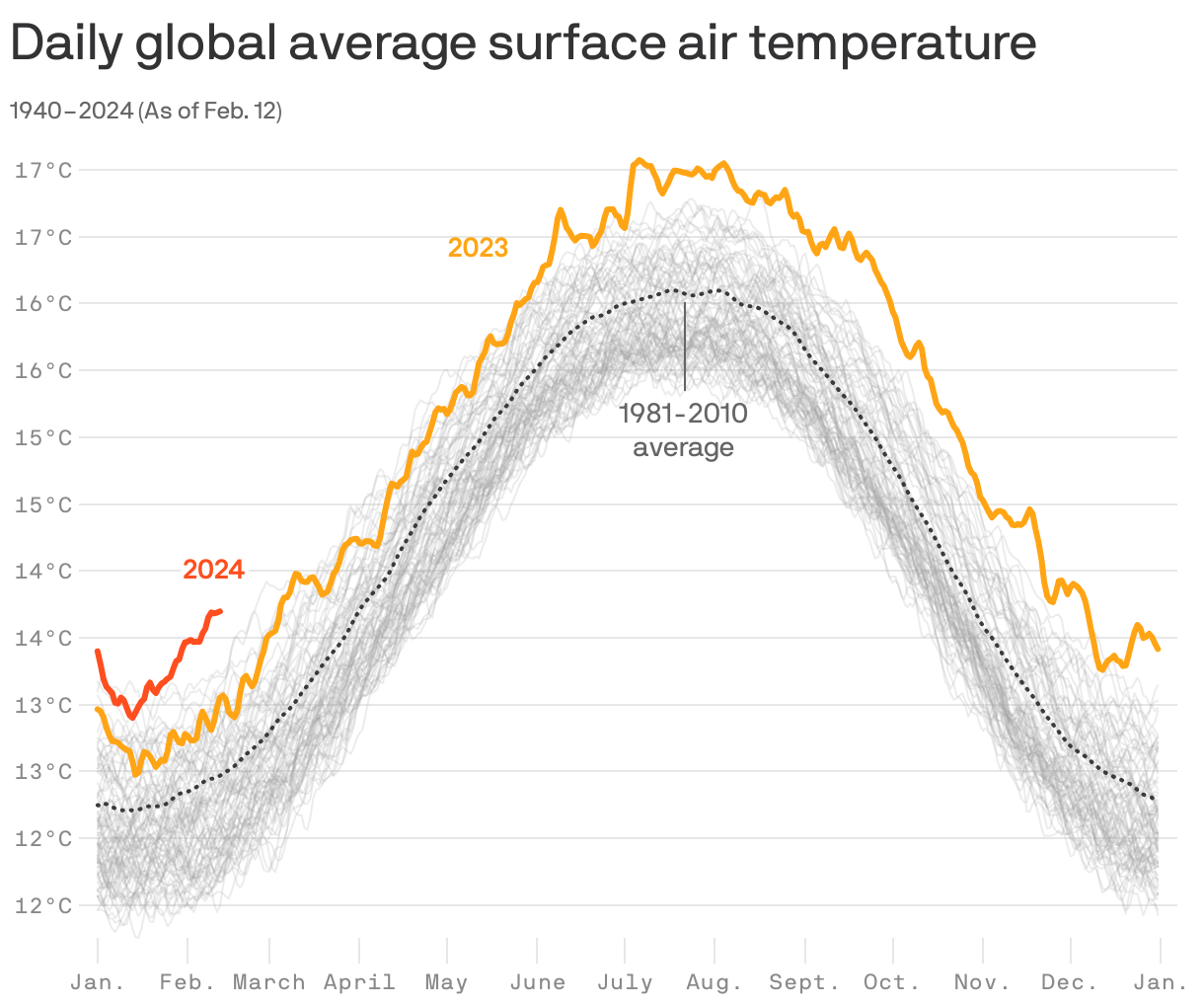
The big picture: It is clear that 2024 is starting off right where 2023 ended: in all-time record territory, with global average surface air and ocean temperatures staying higher than they were 2023.