February is continuing Earth's record warm streak

Add Axios as your preferred source to
see more of our stories on Google.
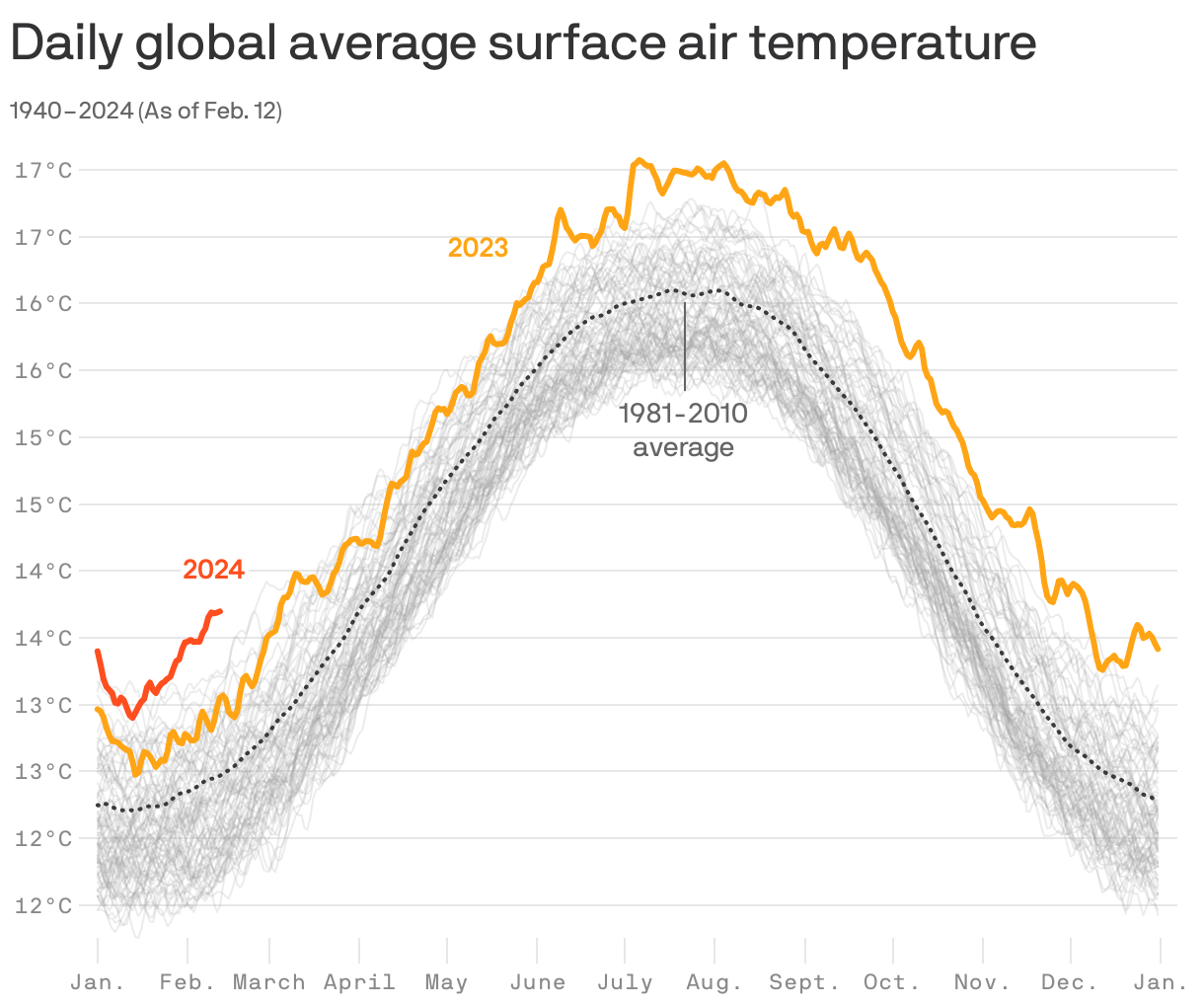
Record warm global average surface temperatures have continued through mid-February, with no indications of a cooldown that might prevent the month from setting a record.
The big picture: It is clear that 2024 is starting off right where 2023 ended: in all-time record territory, with global average surface air and ocean temperatures staying higher than they were 2023.
- Global average surface air temperatures have reached or exceeded 2°C above preindustrial levels during several days in February, matching spikes first seen in November of last year.
- In the waters of the North Atlantic, including the Main Development Region where most hurricanes form, temperatures have climbed to near levels typically seen during July.
- In short, the ocean temperatures there are bathtub warm, due to a combination of human-caused climate change and natural variability.
Threat level: If these water temperatures don't lessen by the time hurricane season kicks into gear, the 2024 Atlantic season could be a memorable one.
Zoom in: The Atlantic temperature spike is especially concerning to hurricane forecasters because an ongoing strong El Niño event is transitioning into a likely La Niña in the tropical Pacific Ocean.
- This La Niña could emerge by the mid-to-end of the hurricane season, and these events tend to make the overall environment in the tropical Atlantic more favorable for hurricane formation and intensification.
- By themselves, the presence of warmer-than-average waters now, and a coming La Niña, are no guarantee of a severe hurricane season, let alone of increased landfalls in the U.S.
- But they do skew the odds in favor of a more active season — particularly if the La Niña begins earlier, rather than later, in the Atlantic hurricane season. The season begins June 1 and lasts through Nov. 30.
- Seasonal forecasters will look at these factors, among others when making their projections during the next couple of months.
Between the lines: Last year brought record global air and ocean temperatures, with milestone after milestone falling with each passing month.
- The majority of this was due to human-caused climate change, per recent analyses, with a boost from natural climate variability in the form of El Niño.
- It remains to be seen, however, when the extra warming push from El Niño will lessen, allowing temperatures to ebb sometime in the coming six to 12 months.
