Shark attacks appear to be on a steady rise in recent years, according to data from the International Shark Attack File.
What's happening: People are interacting with sharks more frequently than ever before. More people are living near oceans, and improvements to transportation systems have made it easier to access coastlines, according to Danielle Haulsee, the Chief Science Officer at Hubbs SeaWorld Research Institute.
Alert systems have become more accessible too. Drones are being used to alert beachgoers when a shark is close to shore.
Why it matters: Although human and shark interactions are on the rise, shark populations are still very much suppressed.
"Many shark species have been overfished, in fact on average we are killing 11,000 sharks per hour," Haulsee said. And that's a bad thing—"Healthy ocean ecosystems depend on healthy shark populations."
The bottom line: Humans will always share the ocean with sharks. "We should respect them for the role they play in maintaining ecosystem balance and for their incredible adaptations to live in all oceans and many different environmental conditions! They were here first after all."
Why it matters: The world is falling short of meeting Paris climate targets, particularly the 1.5-degree Celsius goal that small island nations view as essential to their survival.
The White House is floating plans to speed reviews of infrastructure proposals — including transmission to help integrate renewables onto power grids.
Driving the news: The Council on Environmental Quality is releasing draft regulations that implement provisions in the recent debt ceiling deal aimed at accelerating permitting.
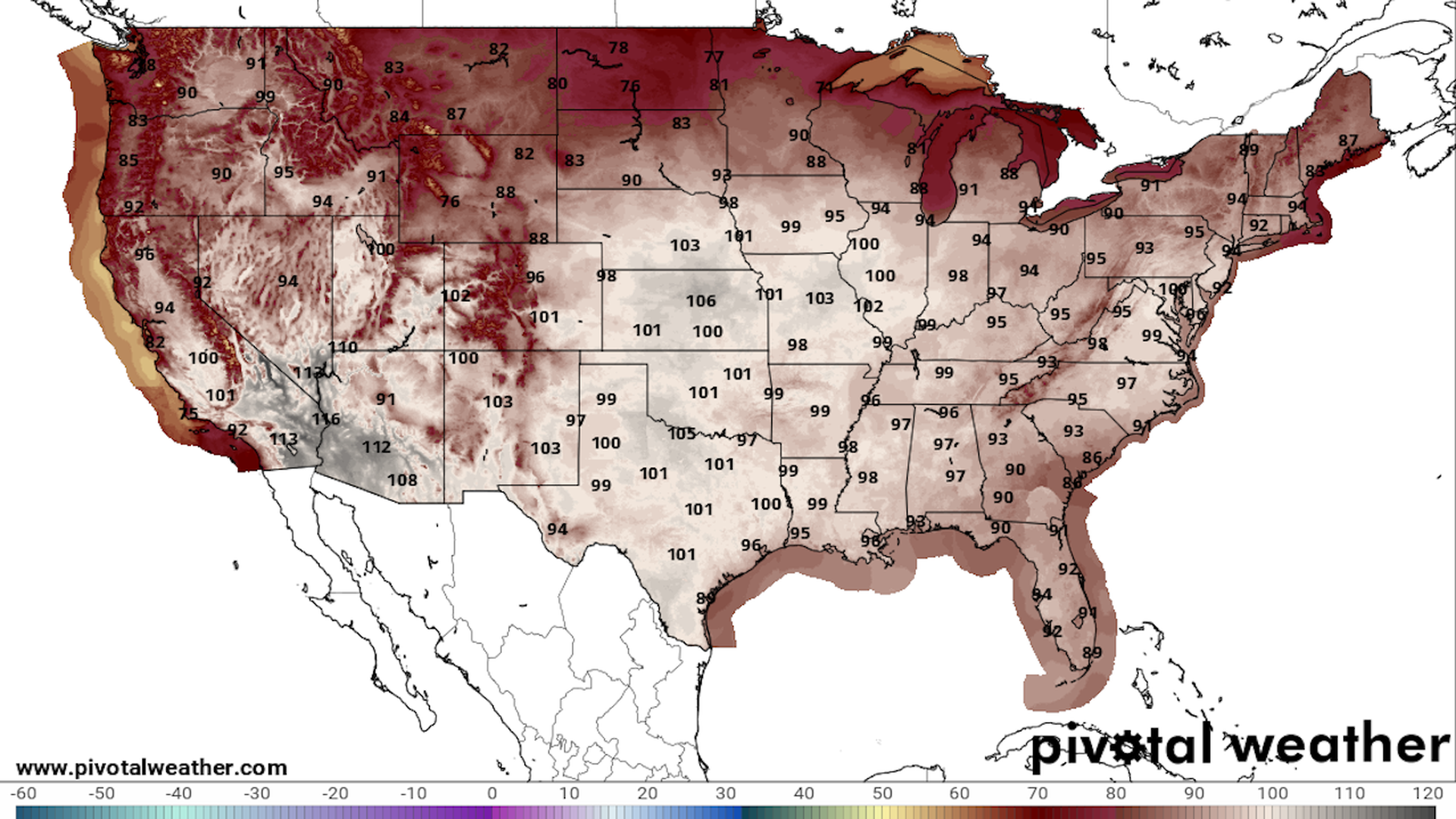
A heat wave that has stifled the southern tier of the U.S. for weeks has expanded into the Plains, Midwest and now the Mid-Atlantic and Northeast on Friday, triggering heat alerts for over 190 million people, according to the National Weather Service.
Why it matters: The extreme heat is expected to persist over a massive swath of the country through Saturday, all the while posing an immediate risk to public health.
Exxon reported $7.9 billion in second-quarter profits, the company announced this morning, the latest giant to report a sharp decrease amid lower commodity prices.
Driving the news: The oil giant's net earnings tumbled by nearly $10B from the comparable year-ago quarter — which was a record for Exxon — and well below the $11.4B recorded during Q1.
Why it matters: Big Oil's Q2 earnings season mirrors wider changes in energy markets, which have been under pressure in 2023.
Public awareness campaigns, mobile cooling stations, subsidized air conditioners: Cities are taking lots of steps to address this summer's record-breaking heat, but they're largely short-term Band-Aids.
Why it matters: Conventional heat remedies aren't enough to outrun the quickening pace of swelling, unlivable temperatures caused by climate change.