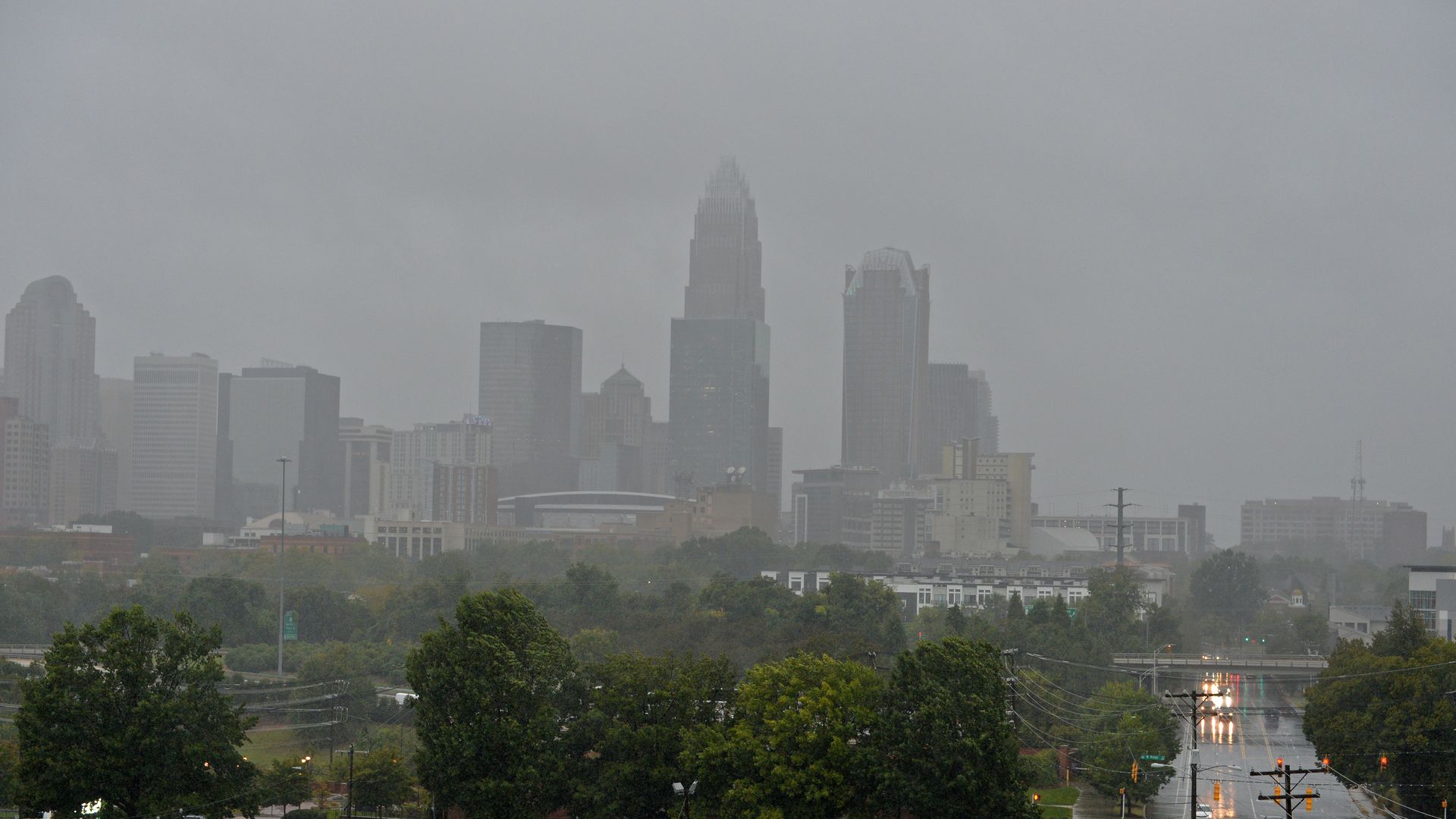
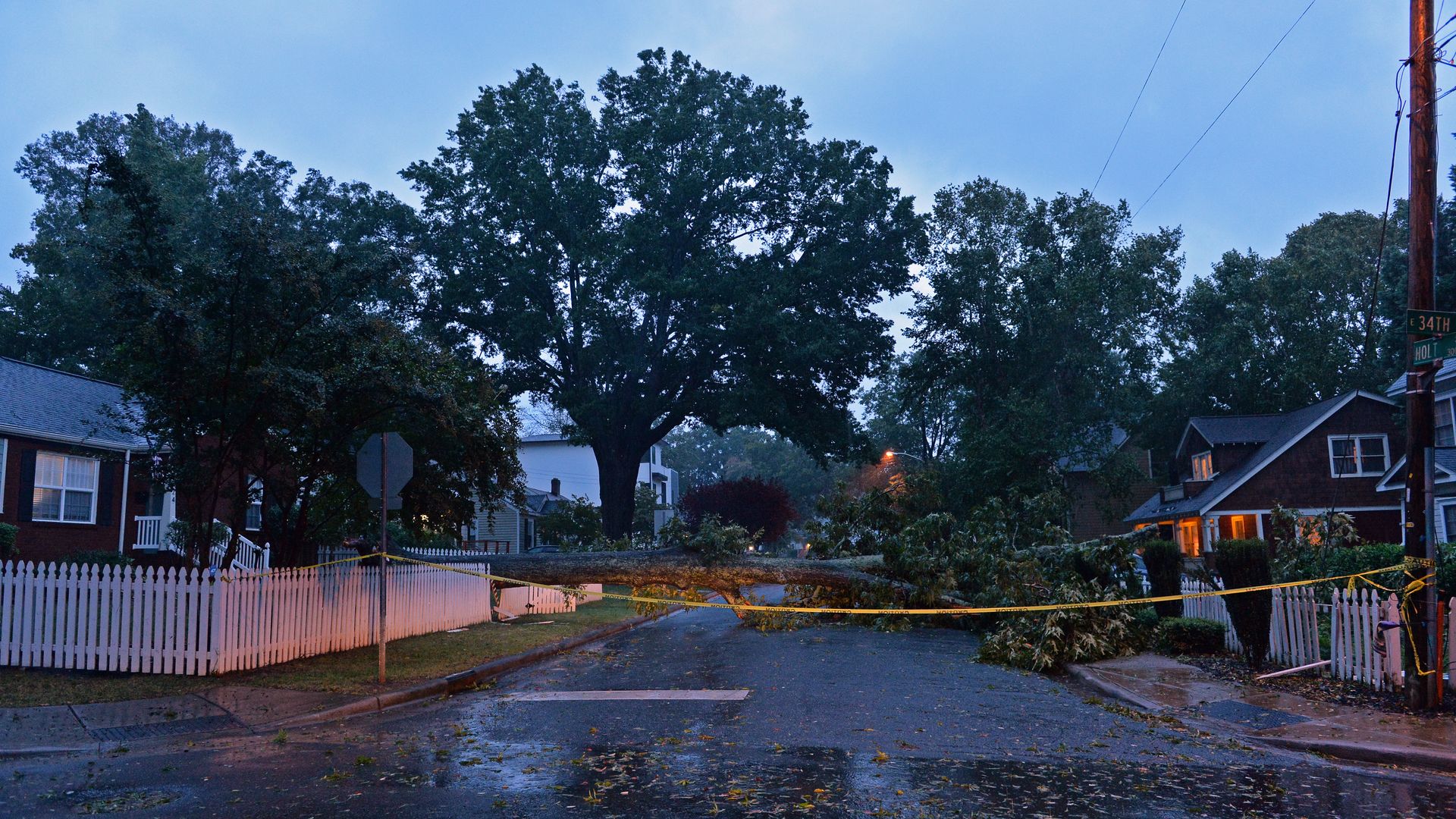
North Carolina has had a “front-row seat when it comes to the effects of climate change," Gov. Roy Cooper (D) said Sunday on "Meet the Press," in the aftermath of one of the strongest hurricanes to hit the U.S.
Driving the news: The White House approved an emergency declaration for North Carolina after massive storm Ian, which hit Cuba, Puerto Rico, Florida and South Carolina, ripped through the state late Friday and early Saturday.
The White House has approved a state of emergency for North Carolina as the remnants of Hurricane Ian approach the state on Saturday.
The big picture: Ian, now considered a post-tropical cyclone, will continue to weaken, but heavy rain and gusty winds will still impact the Mid-Atlantic region and New England coast, according to the National Hurricane Center.
Driving the news: Ian hit South Carolina as a Category 1 hurricane and brought heavy winds and "life-threatening" storm surge along the North and South Carolina coasts on Friday.
Florida Sens. Marco Rubio and Rick Scott called on Senate leaders Friday to provide more funding to help Florida rebuild after the devastating Hurricane Ian wiped out buildings, roads and power for millions of people.
Why it matters: Several members of Congress from Florida previously voted against a short-term spending bill that includes aid for disaster relief.