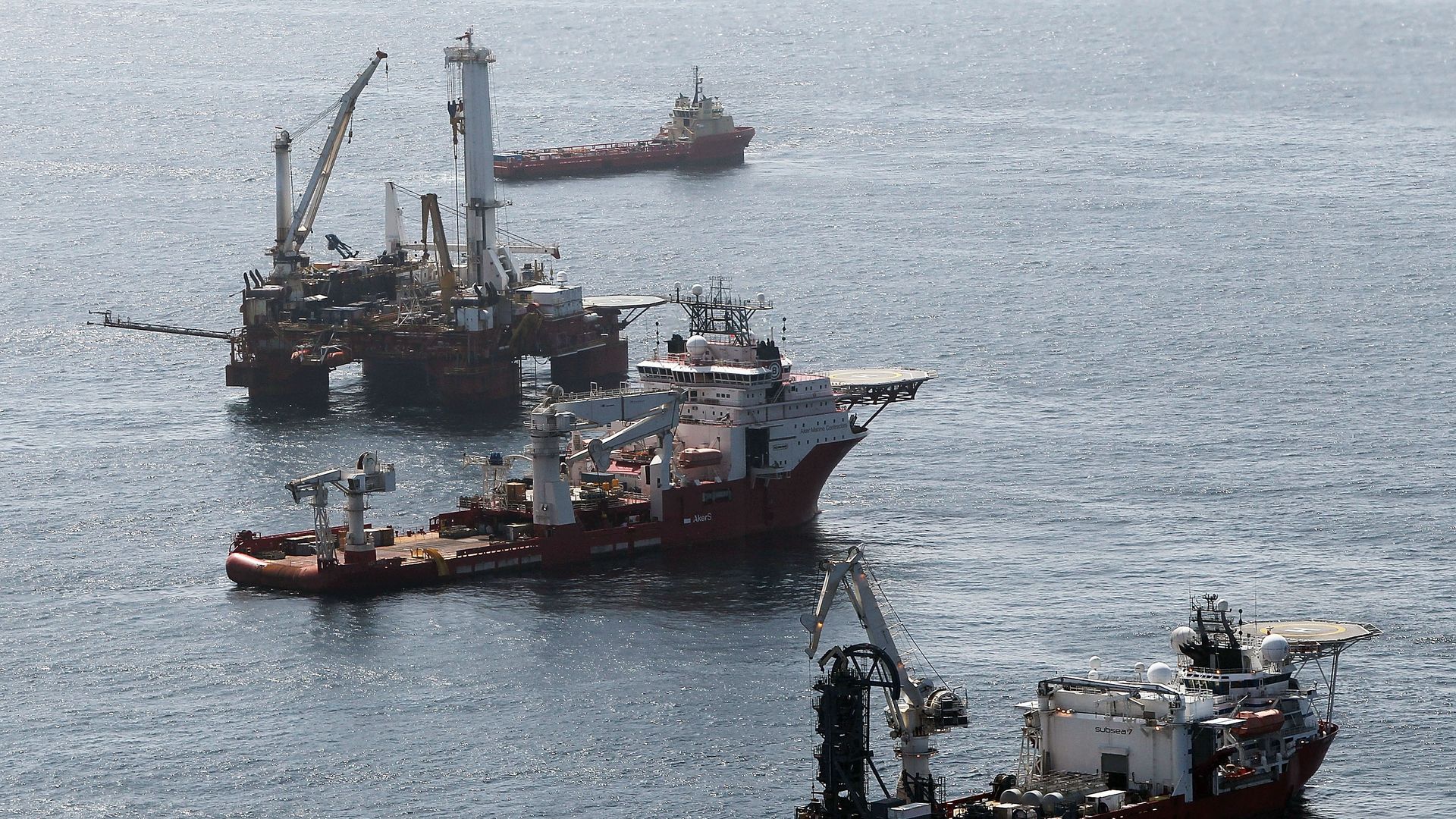
Oil-and-gas companies including giants like Exxon and Shell offered $192 million in winning bids for Gulf of Mexico drilling leases in auction results the Interior Department unveiled yesterday.
Driving the news: The sale took place under unusual circumstances. The administration didn't want to hold it at all and had previously paused new sales.
A new analysis finds good news and challenges for a growing movement to better align corporate and government energy procurement with carbon-free power.
The big picture: Princeton researchers sized up the effects of commercial and industrial buyers ensuring their facilities' demand is met around-the-clock with zero-carbon resources.
The upcoming Netflix film, “Don’t Look Up,” starring Leonardo DiCaprio and Jennifer Lawrence, is ostensibly about the discovery of a “planet killer” comet hurtling toward Earth. But the film is clearly an allegory about climate change, as the climate world instantly realized when the Netflix trailer dropped Tuesday.
Why it matters: This is the most prominent climate change movie to be released since Al Gore's "An Inconvenient Truth" in 2006, and it has the best cast ever assembled around this topic.
The rental fashion market continues to explode, as people emerge from COVID hibernation eager to socialize and try fresh looks — and avoid the frustration of retail store shortages.
Why it matters: Some factors driving the trend include millennials and Gen Zers feeling comfortable wearing "used" clothes, sustainability concerns around new threads, and the nascent revival of holiday parties.
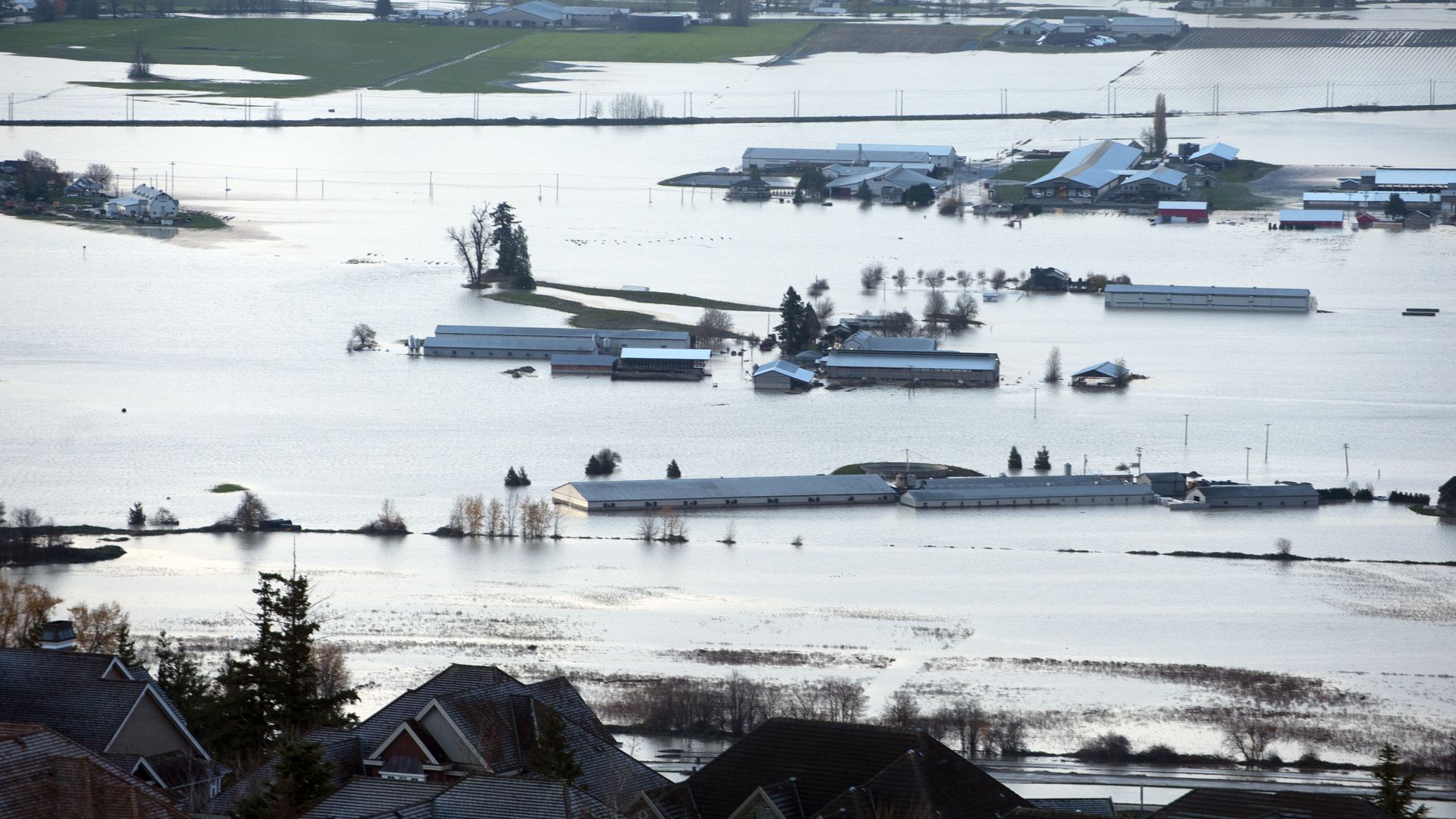
The premier of British Columbia, Canada, declared a state of emergency Wednesday following the "atmospheric river event" that brought record rainfall, flooding and mudslides to the Pacific Northwest.
The big picture: A woman died in a mudslide that swept away a B.C. highway Tuesday, and B.C. Premier John Horgan told reporters he expected more storm-related fatalities to be confirmed in the coming days. Canadian Prime Minister Justin Trudeau deployed the country's military personnel to assist with rescue efforts on Wednesday.
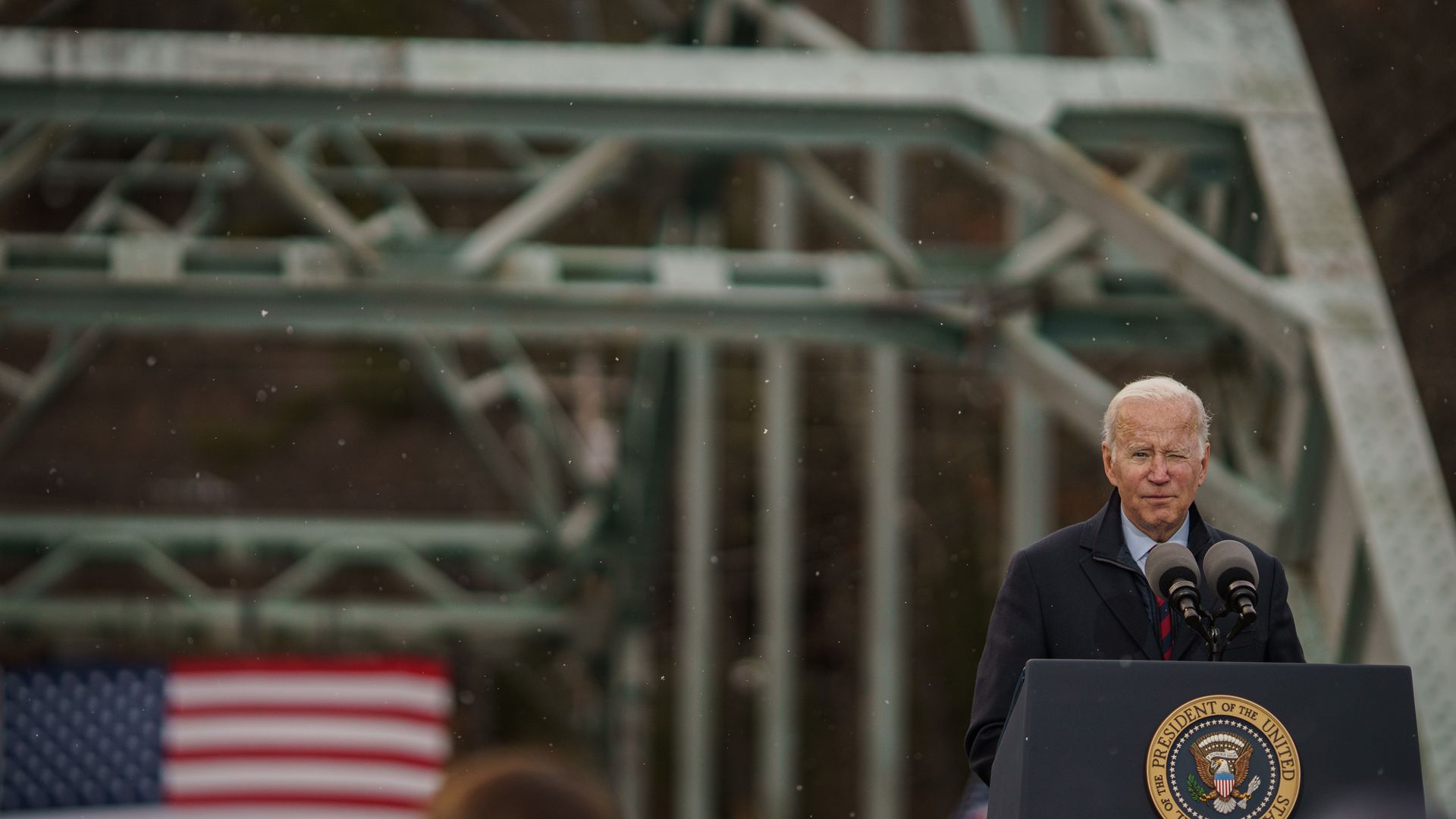
President Biden sent a letter to Federal Trade Commission chair Lina Khan Wednesday asking the agency to determine whether “illegal conduct” by large oil and gas companies is pushing up gasoline prices.
Why it matters: It's unlikely that the letter will bring down gas prices anytime soon, though an FTC investigation could clarify how such companies determine prices.
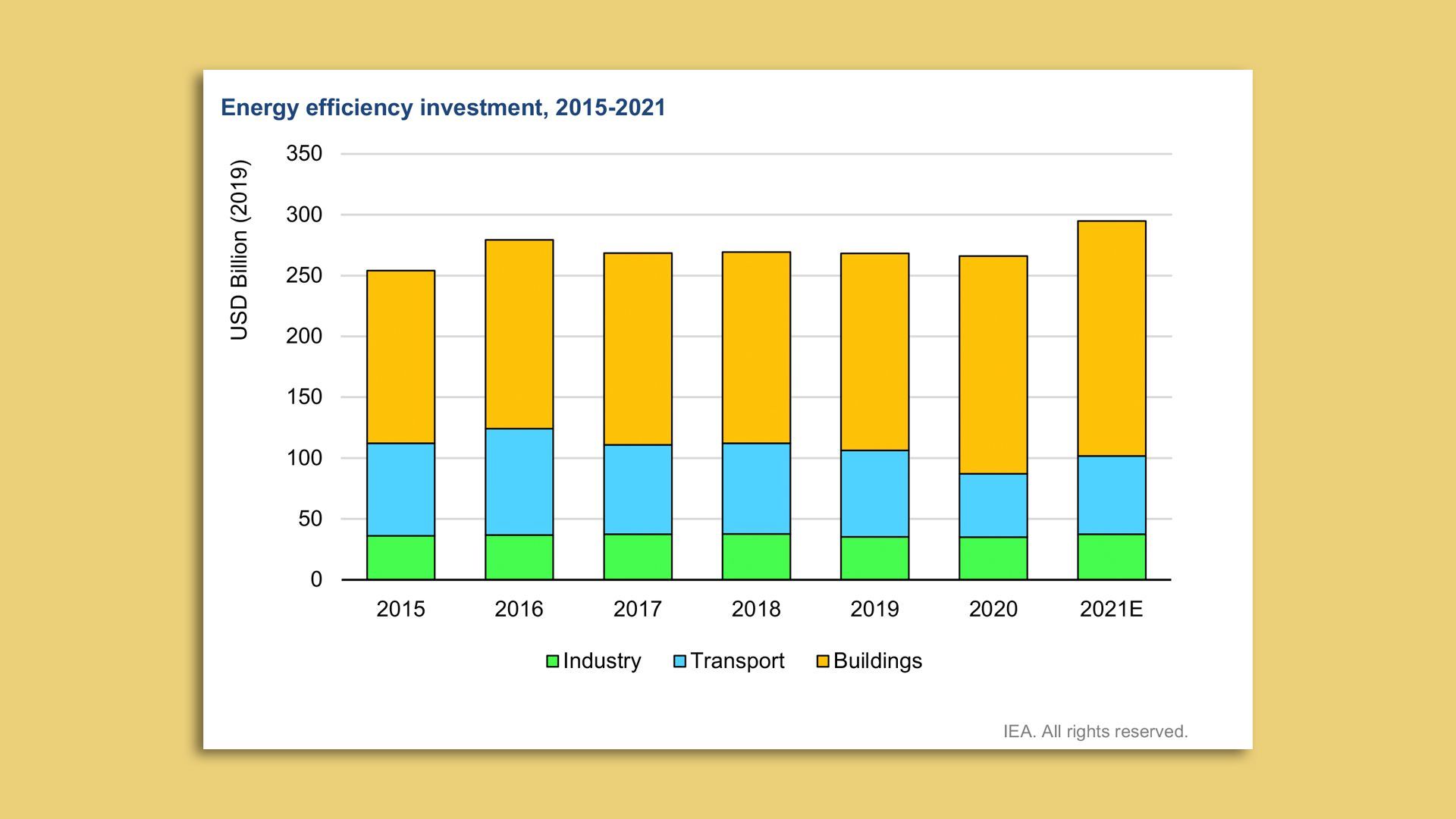
A new International Energy Agency report shows rising investment in energy efficiency and gains in the efficiency of the global economy, but both lag levels needed for a sustainable climate path.
Why it matters: Boosting efficiency is vital to meeting climate goals.
Axios has removed the article published here on Nov. 17, 2021, because it fell short of our editorial standards. Axios incorrectly stated that we contacted Global Plasma Solutions for comment before publication. We wrongly relied upon a source who is a former employee of a competitor of GPS and is now an adviser to that same competitor. We apologize to GPS and to our readers.
The pace and severity of climate change are simply outrunning humans' efforts to contain it.
The big picture: Severe flooding hit Canada and the Pacific Northwest before the ink was even dry on the climate agreements reached last week at the COP26 summit. And the extreme weather caused by climate change will continue to worsen, even if every one of those new commitments is met.
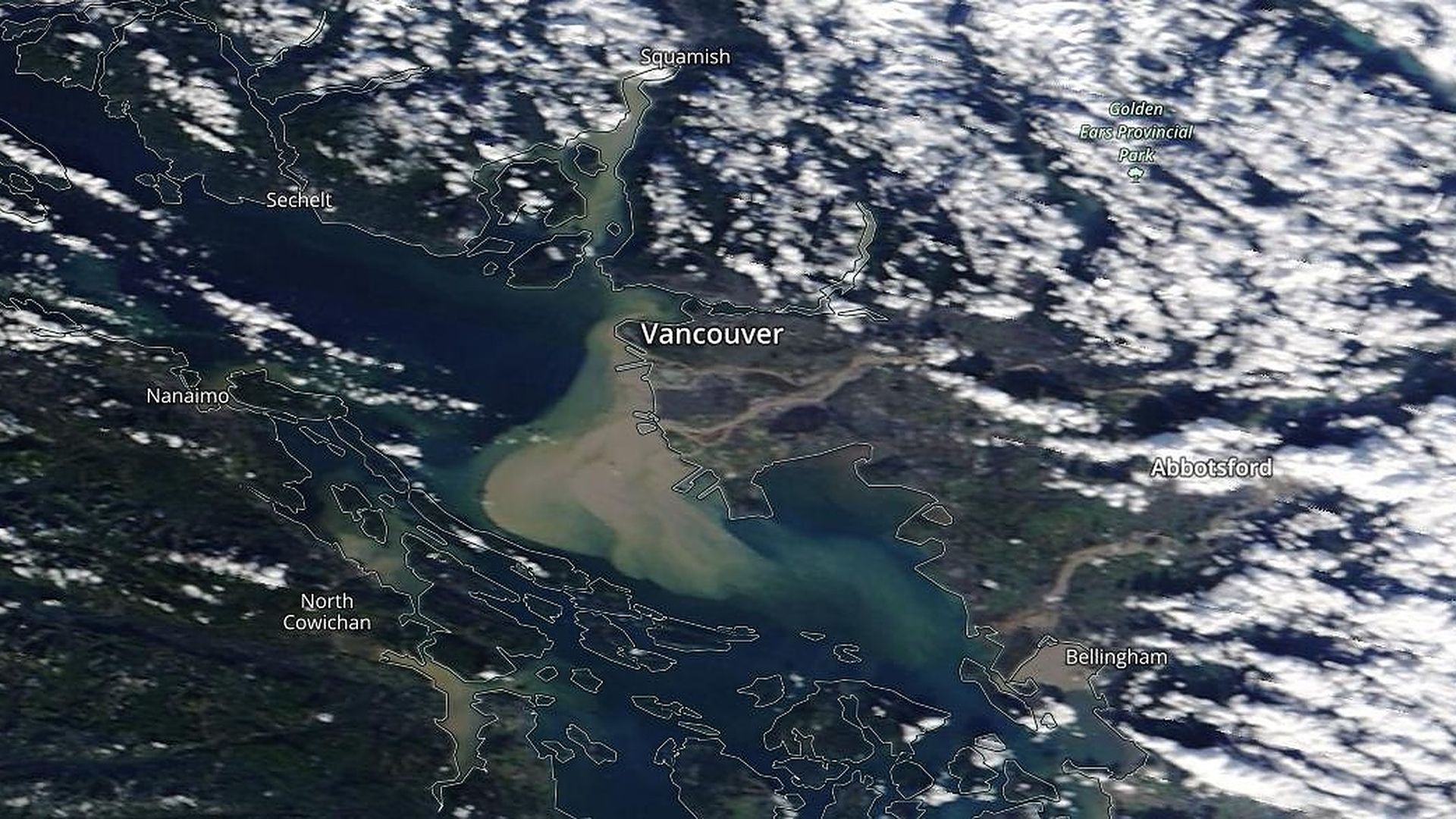
Flooding from the deadly Pacific Northwest storm is so severe, it can be seen from space, according to images captured by NASA on Tuesday.
The big picture: At least one person has died and Canada's largest port was cut off by flood waters after the intense "atmospheric river event" slammed the region, bringing with it record-shattering rainfall and damaging winds, and triggering evacuations. Thousands of people were still without power on Wednesday morning.
TerraPower, the Bill Gates-founded nuclear power venture, announced Tuesday plans to replace a Wyoming coal-fired power station with a $4 billion advanced reactor demonstration project.
Why it matters: Roughly half of the project's funding will come from the U.S. government, including $1.5 billion from the infrastructure bill that President Biden signed into law this week, per an emailed statement from Energy Secretary Jennifer Granholm.