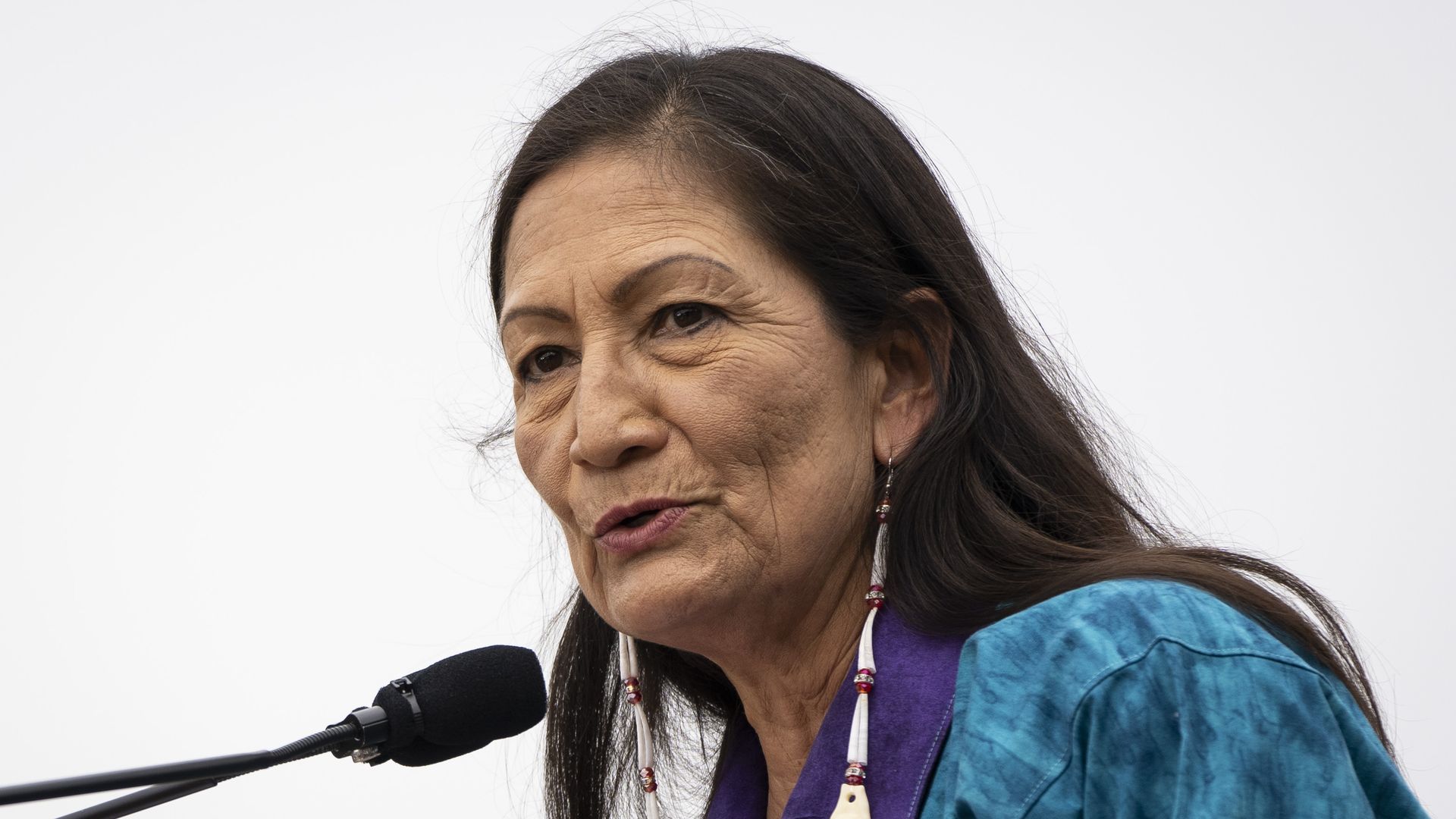
The Interior Department will review, remove and replace derogatory names, including "squaw," from U.S. geographic landmarks, Secretary Deb Haaland announced Friday.
The big picture: Haaland's order formally declares the term as derogatory and creates a task force to rename the federal lands that bear it. A separate committee will review proposed name changes related to other derogatory terms.
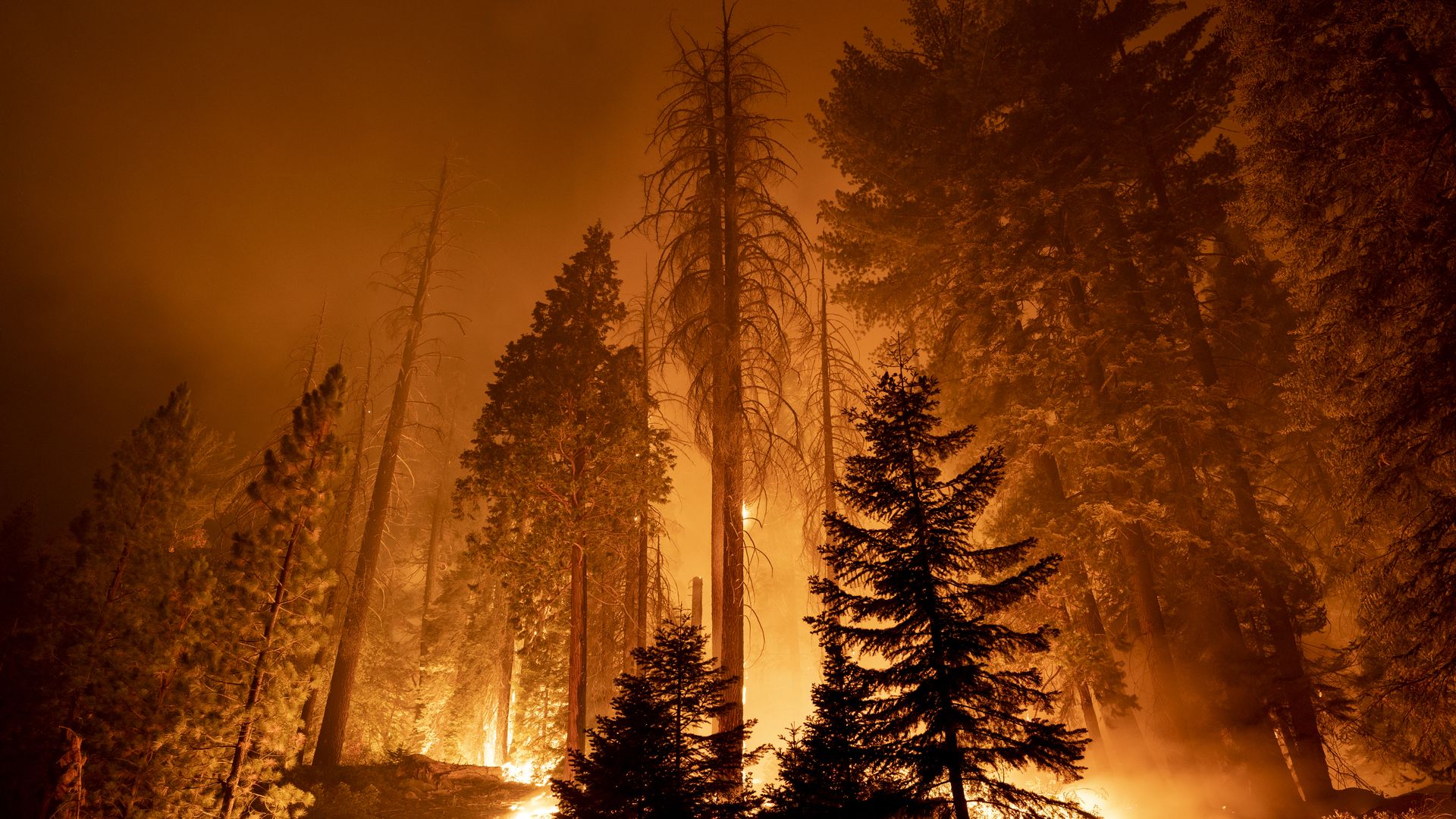
California wildfires killed between 3% and 5% of all giant sequoias this year, the National Park Service announced in new estimates on Friday.
Why it matters: The service said this level of devastation increases the risk of regeneration failure occurring in parts of Sequoia National Park, meaning the sequoias will be unable to naturally regrow.
Crude oil prices are heading sharply downward this morning as traders react to fresh signs of the pandemic's persistence.
Driving the news: Prices fell by over $2.50 per barrel, before regaining a little ground, in the latest declines that have pushed crude to its lowest level in roughly six weeks.
The Bipartisan infrastructure bill (BIF) includes large sums for improving the accuracy of weather and climate forecasts from the National Oceanic and Atmospheric Administration (NOAA).
Why it matters: Making wildfire detections and forecasting more accurate, as well as honing weather and climate projections, are increasingly vital tasks as the weather grows more extreme due to human-induced climate change.
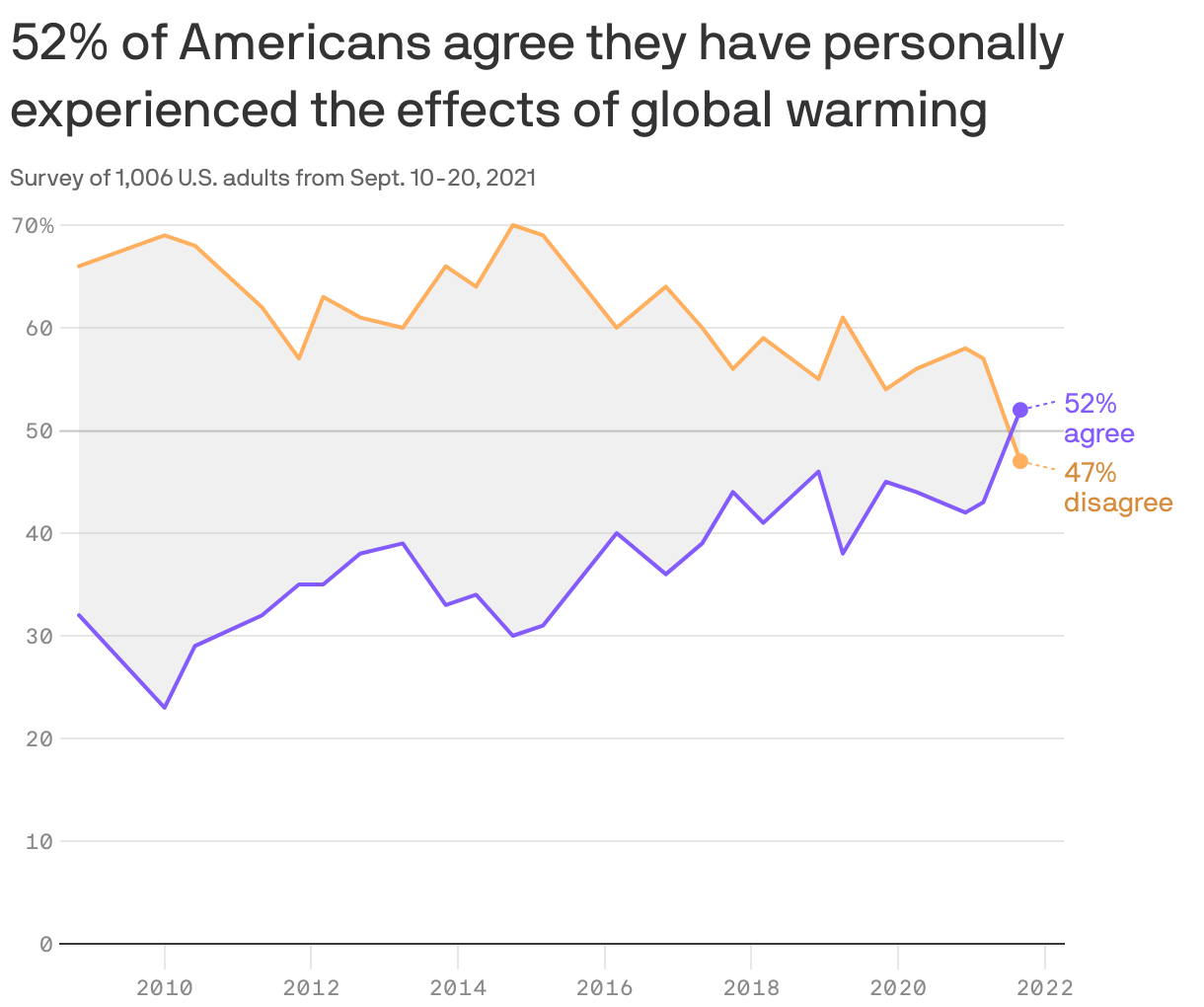
Data: "Climate Change in the American Mind;" Chart: Jacque Schrag/Axios
According to new results from a national poll from the Yale Program on Climate Change Communication, a record high of seven-in-10 Americans said they are at least "somewhat worried" about global warming. This beats out the findings from the same question dating back to 2008.
Why it matters: Americans are increasingly perceiving climate change as a current danger affecting them personally, a development that could shift attitudes toward federal policy.
A new paper finds that words used in news stories to label climate change are less consequential than whether stories emphasize harm or solutions.
Driving the news: Researchers tested engagement with "climate crisis" and "climate emergency" — phrasing that has gained media traction — and "climate change."