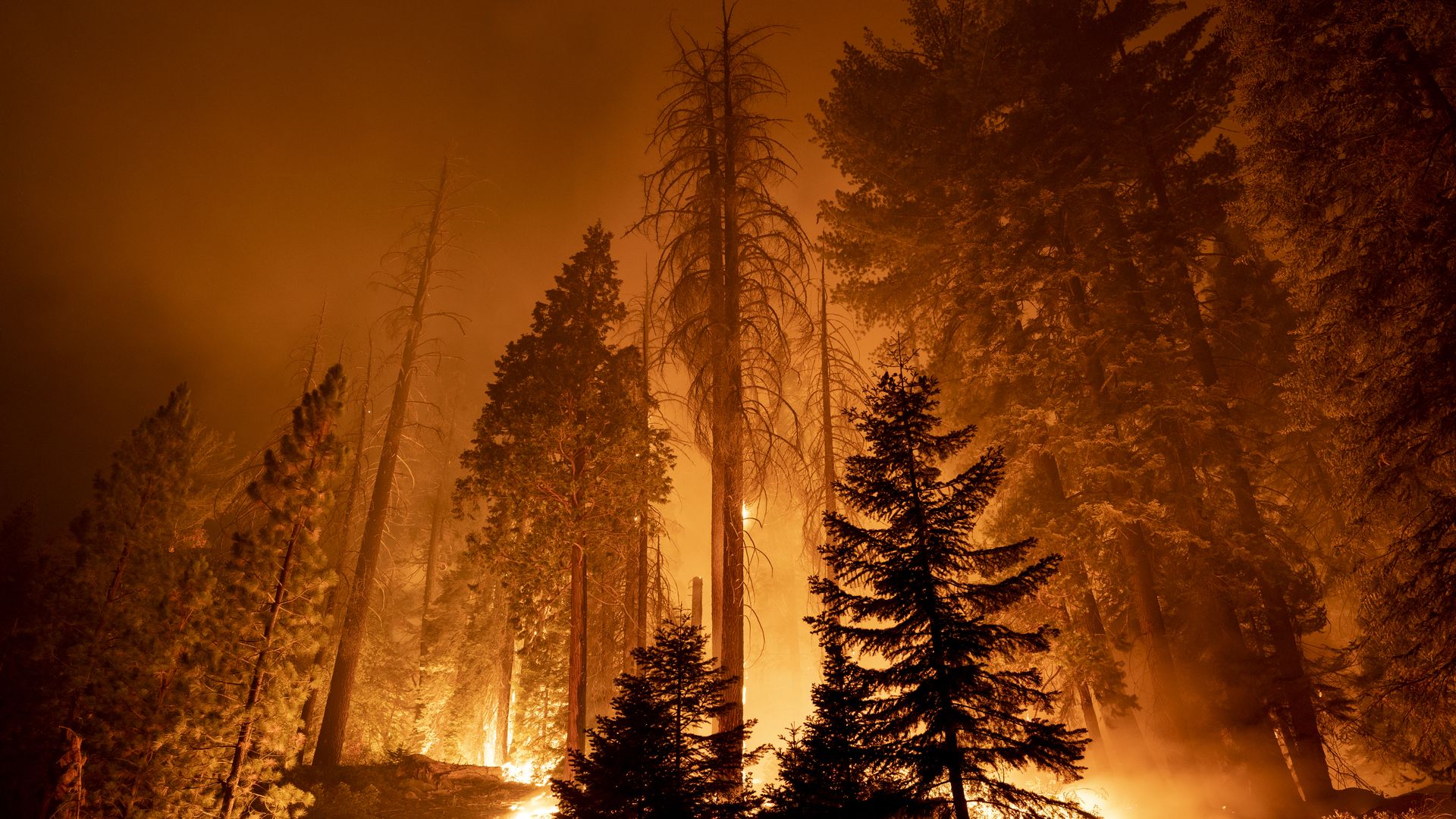
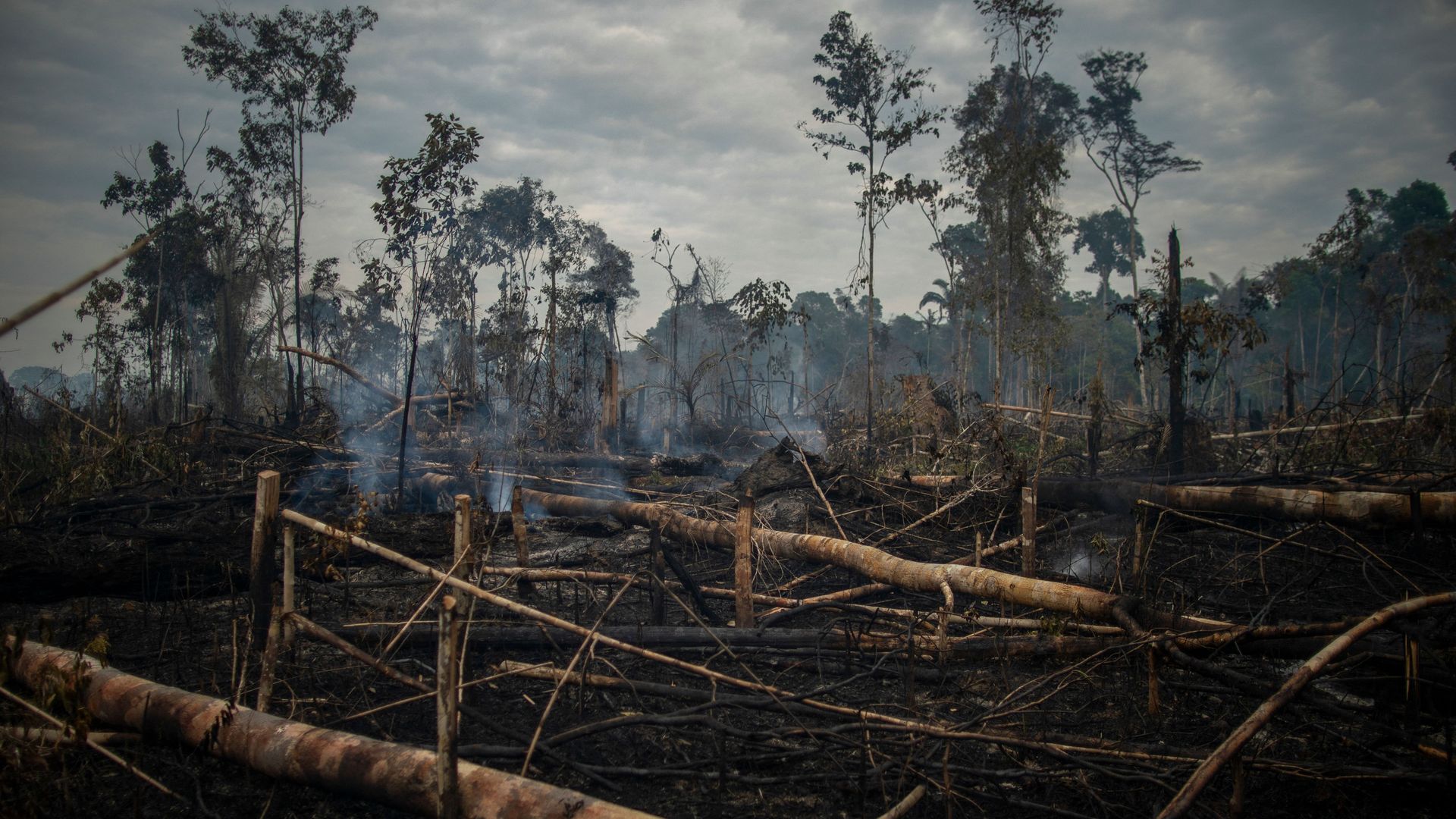
California wildfires killed between 3% and 5% of all giant sequoias this year, the National Park Service announced in new estimates on Friday.
Why it matters: The service said this level of devastation increases the risk of regeneration failure occurring in parts of Sequoia National Park, meaning the sequoias will be unable to naturally regrow.
Crude oil prices are heading sharply downward this morning as traders react to fresh signs of the pandemic's persistence.
Driving the news: Prices fell by over $2.50 per barrel, before regaining a little ground, in the latest declines that have pushed crude to its lowest level in roughly six weeks.
The Bipartisan infrastructure bill (BIF) includes large sums for improving the accuracy of weather and climate forecasts from the National Oceanic and Atmospheric Administration (NOAA).
Why it matters: Making wildfire detections and forecasting more accurate, as well as honing weather and climate projections, are increasingly vital tasks as the weather grows more extreme due to human-induced climate change.
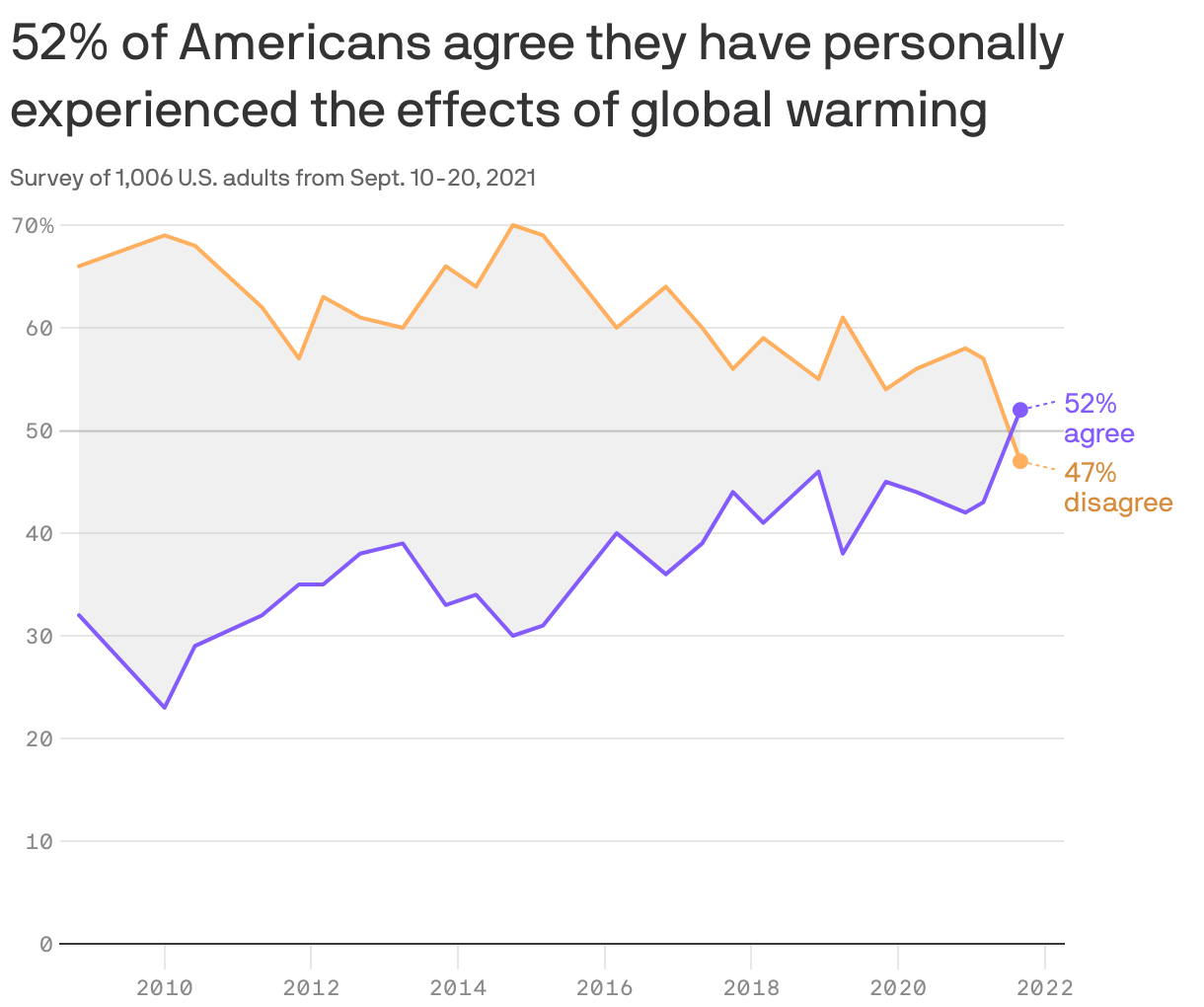
Data: "Climate Change in the American Mind;" Chart: Jacque Schrag/Axios
According to new results from a national poll from the Yale Program on Climate Change Communication, a record high of seven-in-10 Americans said they are at least "somewhat worried" about global warming. This beats out the findings from the same question dating back to 2008.
Why it matters: Americans are increasingly perceiving climate change as a current danger affecting them personally, a development that could shift attitudes toward federal policy.
A new paper finds that words used in news stories to label climate change are less consequential than whether stories emphasize harm or solutions.
Driving the news: Researchers tested engagement with "climate crisis" and "climate emergency" — phrasing that has gained media traction — and "climate change."
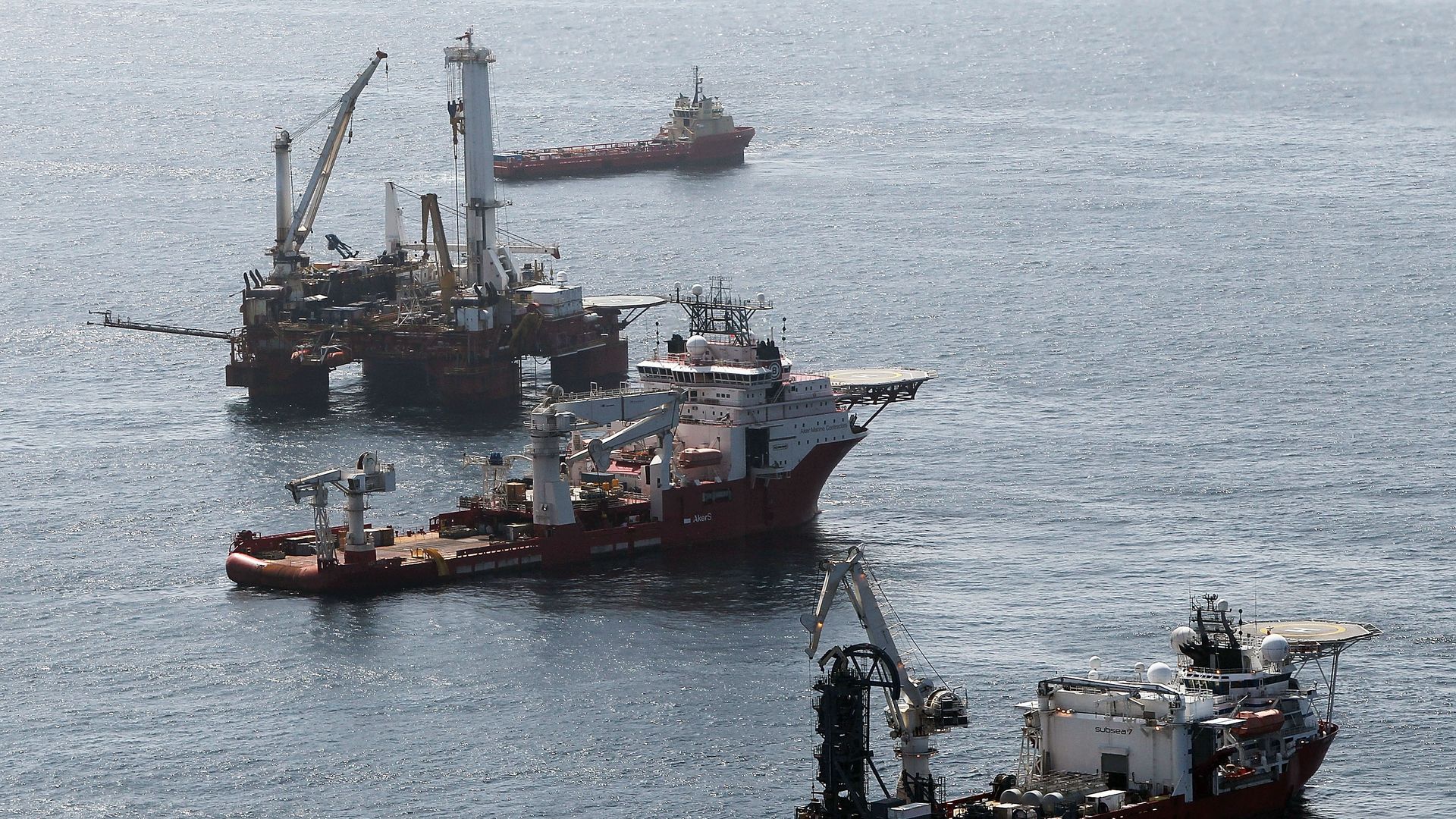
Oil-and-gas companies including giants like Exxon and Shell offered $192 million in winning bids for Gulf of Mexico drilling leases in auction results the Interior Department unveiled yesterday.
Driving the news: The sale took place under unusual circumstances. The administration didn't want to hold it at all and had previously paused new sales.
A new analysis finds good news and challenges for a growing movement to better align corporate and government energy procurement with carbon-free power.
The big picture: Princeton researchers sized up the effects of commercial and industrial buyers ensuring their facilities' demand is met around-the-clock with zero-carbon resources.
The upcoming Netflix film, “Don’t Look Up,” starring Leonardo DiCaprio and Jennifer Lawrence, is ostensibly about the discovery of a “planet killer” comet hurtling toward Earth. But the film is clearly an allegory about climate change, as the climate world instantly realized when the Netflix trailer dropped Tuesday.
Why it matters: This is the most prominent climate change movie to be released since Al Gore's "An Inconvenient Truth" in 2006, and it has the best cast ever assembled around this topic.
The rental fashion market continues to explode, as people emerge from COVID hibernation eager to socialize and try fresh looks — and avoid the frustration of retail store shortages.
Why it matters: Some factors driving the trend include millennials and Gen Zers feeling comfortable wearing "used" clothes, sustainability concerns around new threads, and the nascent revival of holiday parties.
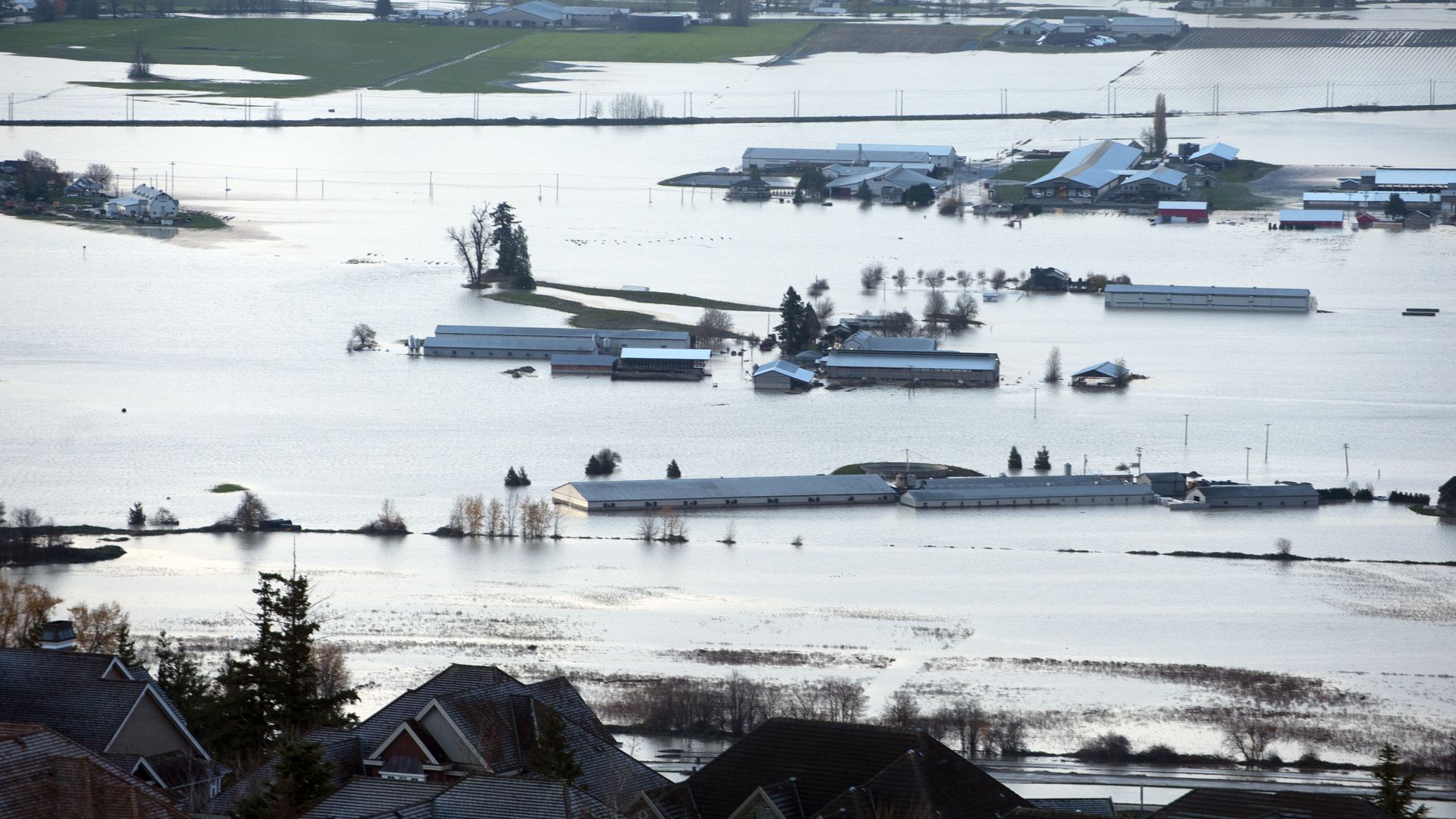
The premier of British Columbia, Canada, declared a state of emergency Wednesday following the "atmospheric river event" that brought record rainfall, flooding and mudslides to the Pacific Northwest.
The big picture: A woman died in a mudslide that swept away a B.C. highway Tuesday, and B.C. Premier John Horgan told reporters he expected more storm-related fatalities to be confirmed in the coming days. Canadian Prime Minister Justin Trudeau deployed the country's military personnel to assist with rescue efforts on Wednesday.