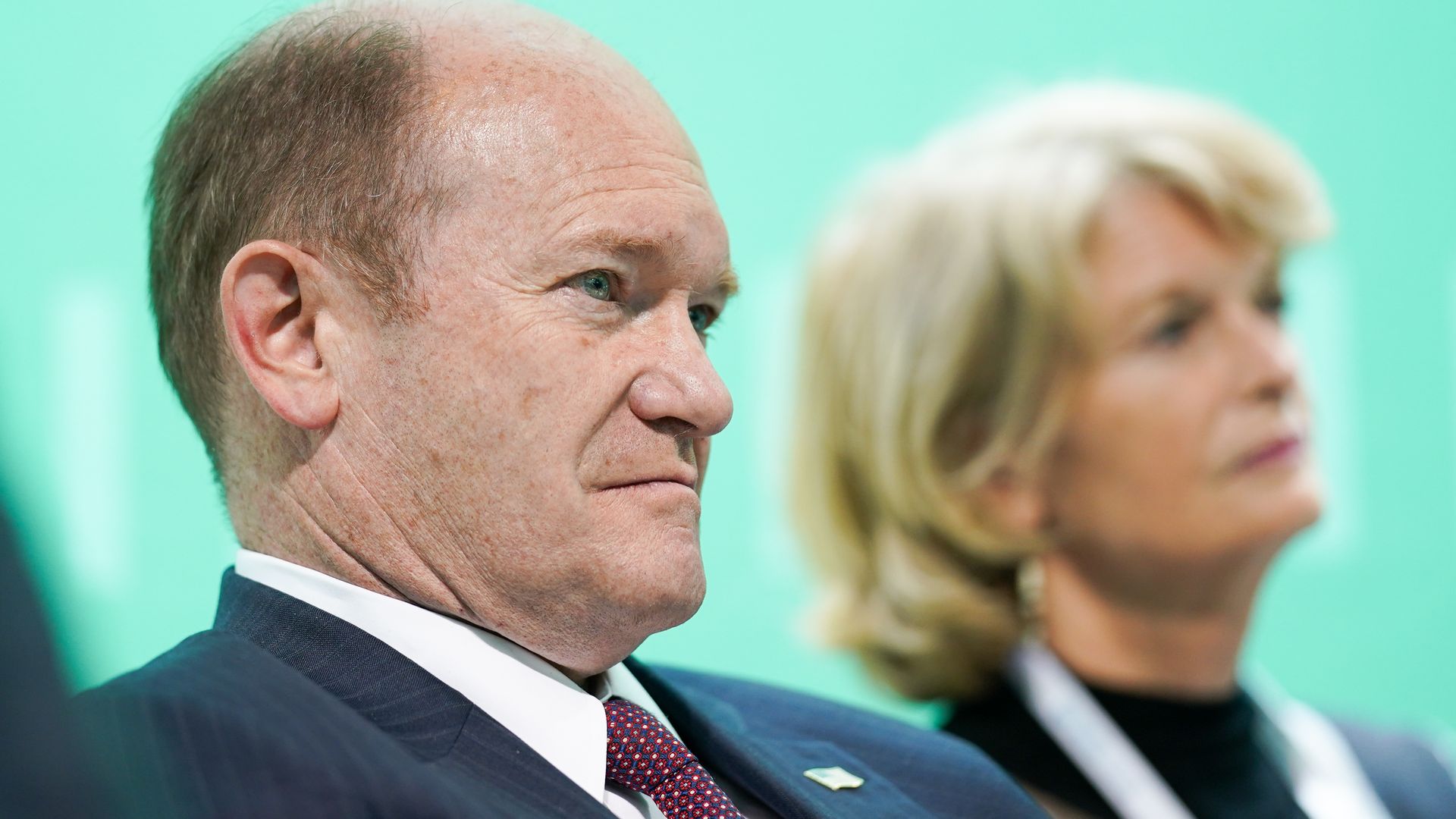
Driving the news: The delegation includes more than half a dozen Republican and Democratic lawmakers who intend to hold bilateral meetings with international counterparts as well as connect with President Biden’s climate envoy, former Secretary of State John Kerry.
More than 100 world leaders — as well as thousands of diplomats and business leaders — converged on Glasgow, Scotland, on Oct. 31 to try to set new emissions reduction goals at the COP26 climate summit.
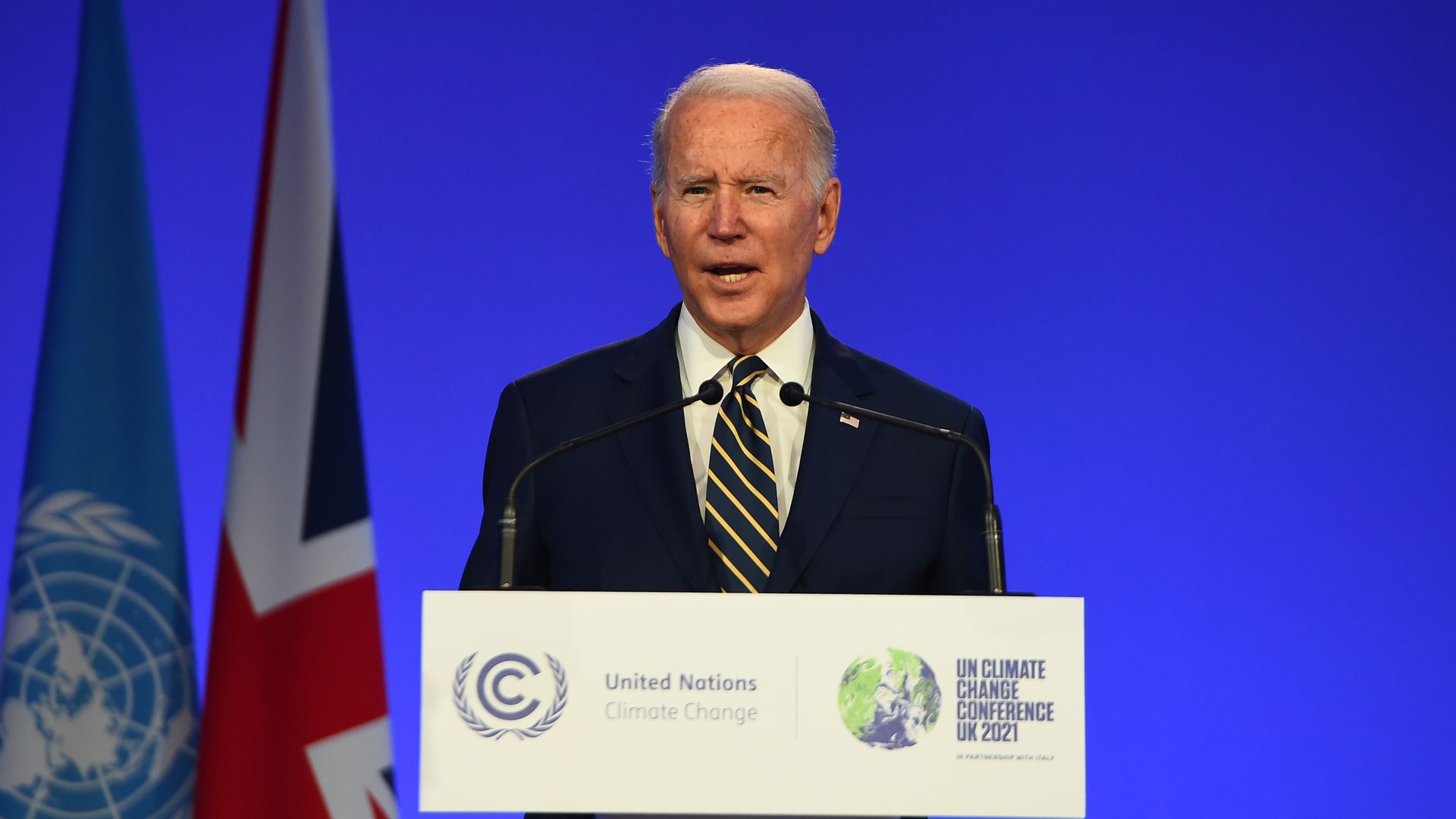
The latest: President Biden on Tuesday said that China made a "big mistake" by not showing up to the UN climate summit, adding that Beijing has "lost an ability to influence" other countries as a result.
COP26 is morphing into a climate conference, filled mainly with experts, journalists and bureaucrats who specialize in the subject.
For the opening days, CEO and celebrity sightings had lent a "Davos meets the UN General Assembly" vibe. Heads of state were popping up everywhere — identifiable because they don’t wear ID (they don lapel pins rather than badges).
Averting catastrophic climate change — while ensuringeconomic growth for the world — will require renewable energy and carbon removal projects on a massive scale.
Why it matters: There's strongingrained public resistance to big infrastructureprojects, including among many environmentalists.
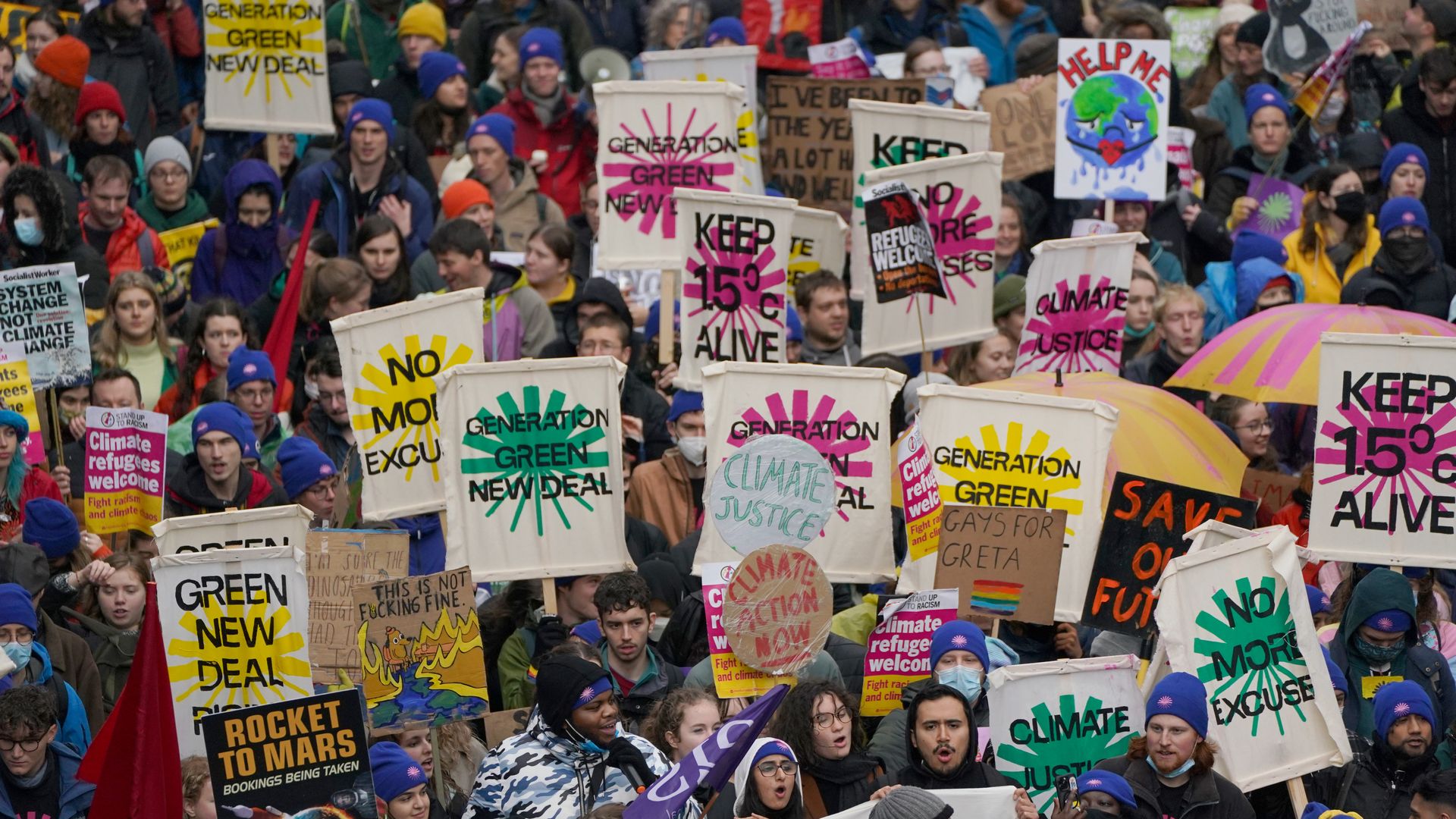
Climate activist Greta Thunberg said COP26 "has turned into a PR event" during a climate rally in Glasgow on Friday during which she accused world leaders of "greenwashing."
What they're saying: "It is not a secret that COP26 is a failure," Thunberg said at the rally. "It should be obvious that we cannot solve a crisis with the same methods that got us into it in the first place."
Helion, an Everett, Wash.-based nuclear fusion startup, raised $500 million in Series E funding at a $3 billion post-money valuation led by former Y Combinator president Sam Altman.
Why it matters: Nuclear fusion is the holy grail of clean power tech, as it could eliminate both supply constraints and carbon emissions.
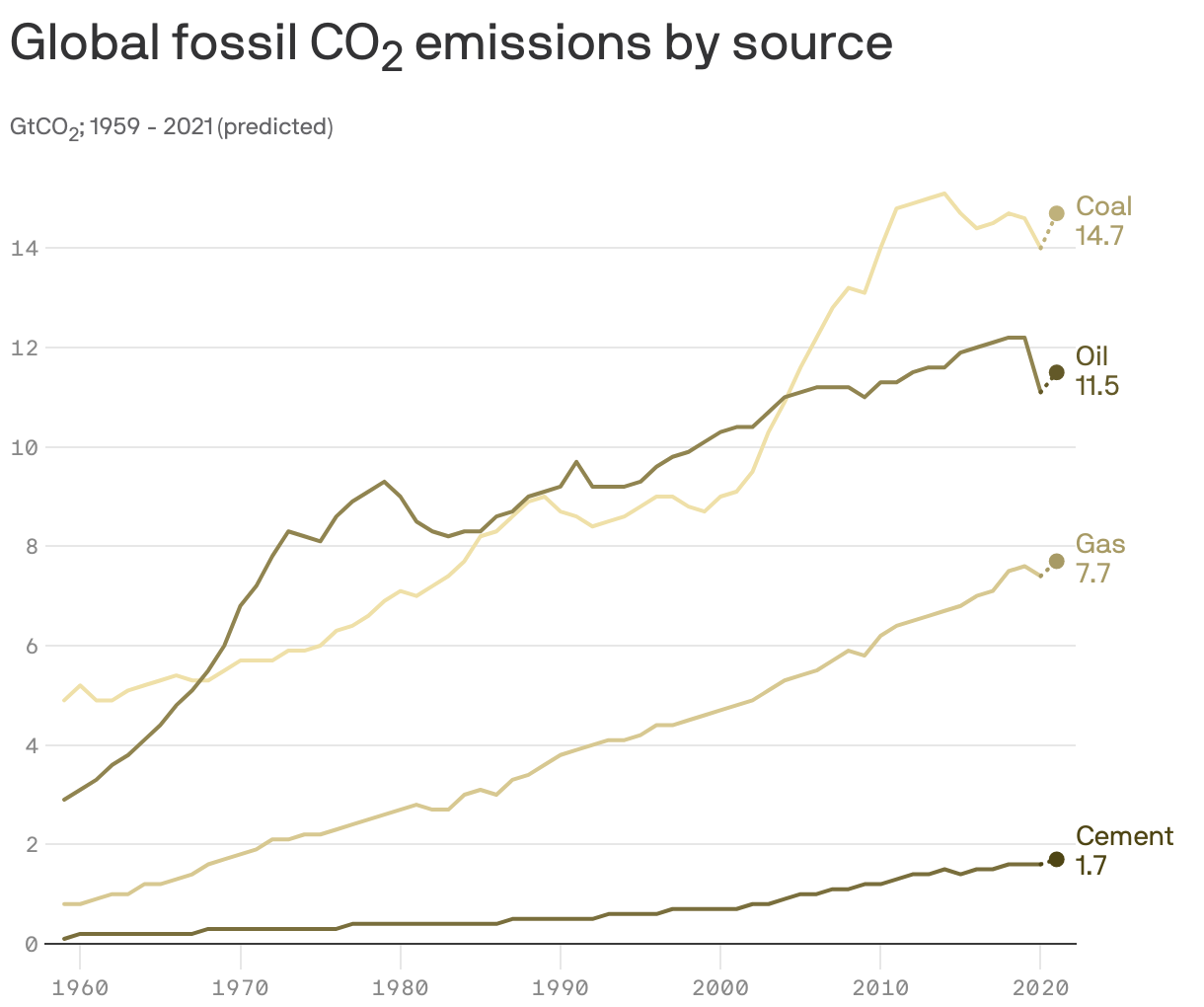
Data: Global Carbon Project 2021; Chart: Jacque Schrag/Axios
The chart above illustrates why the new pledge by dozens of countries to phase out coal in the 2030s and 2040s at the COP26 summit has been one of the most attention-grabbing developments this week.
"Seeing major coal-burning economies such as Viet Nam, Indonesia, South Korea and Ukraine commit to a coal exit genuinely is the progress we need to see," said Pauline Heinrichs, of the climate think tank E3G, in a statement. (Indonesia's endorsement was partial, however.)
There are significant divides between nations' negotiating positions as the summit reaches the halfway mark.
Why it matters: While the ambitious pledges are getting all the attention, closed-door meetings are unfolding in the background to hammer out specifics of how to put certain aspects of the Paris Agreement into effect, such as a carbon market to incentivize companies to reduce emissions.
The taxi business is going electric, which could spell trouble for ride-hailing giants like Uber and Lyft, who can't force their drivers to buy EVs.
Why it matters: The two companies don't own and operate EV fleets or a charging infrastructure, and they rely on contract drivers who operate vehicles of their own choice.