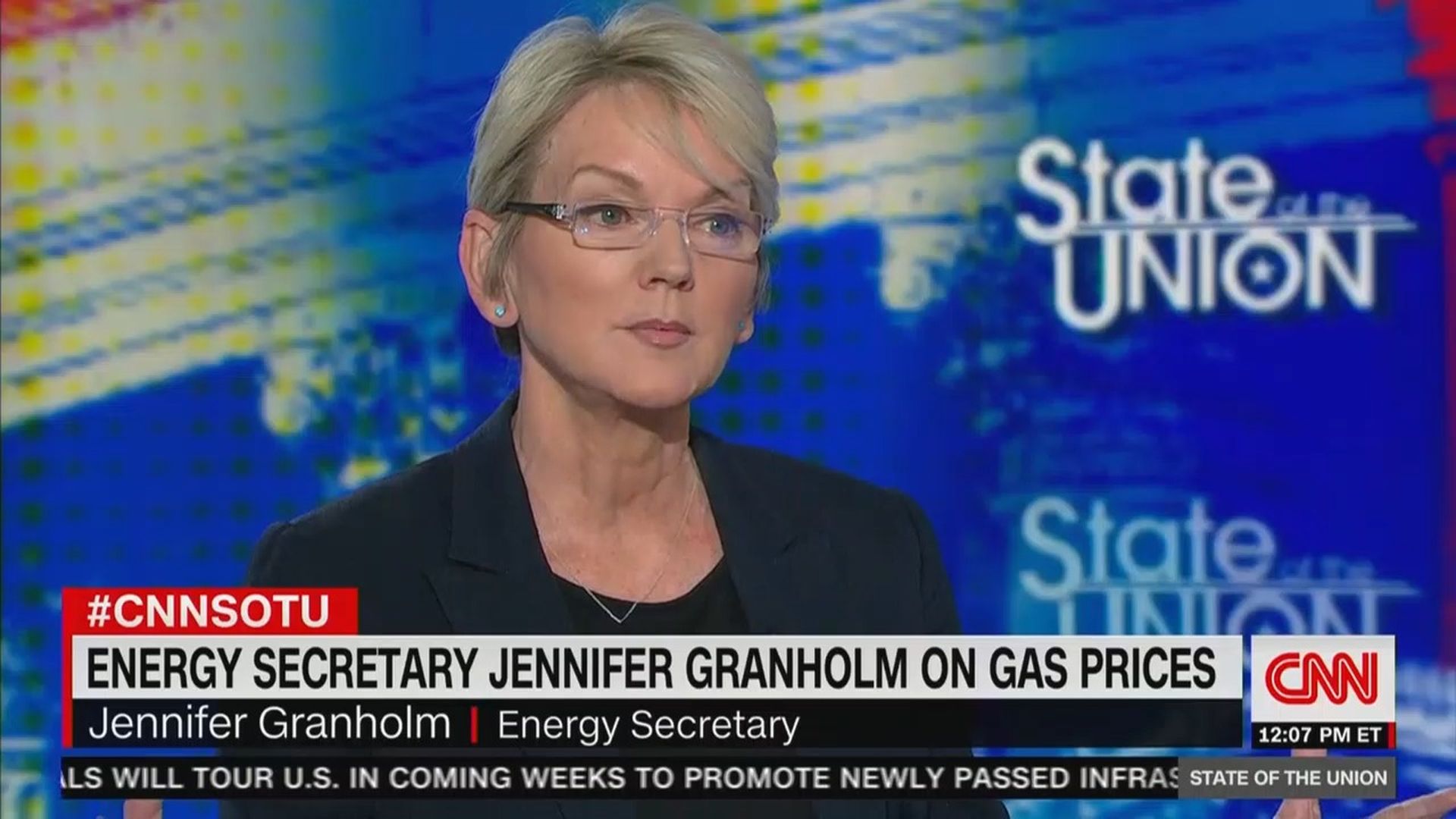
Energy Secretary Jennifer Granholm on Sunday said that President Biden is "looking at" tapping into the nation's Strategic Petroleum Reserve to address rising oil prices.
Why it matters via Axios' Ben Geman: Granholm's remarks on CNN's "State of the Union" come after OPEC+ decided last week to stick with only a moderate output increase, which is likely to keep crude prices elevated.
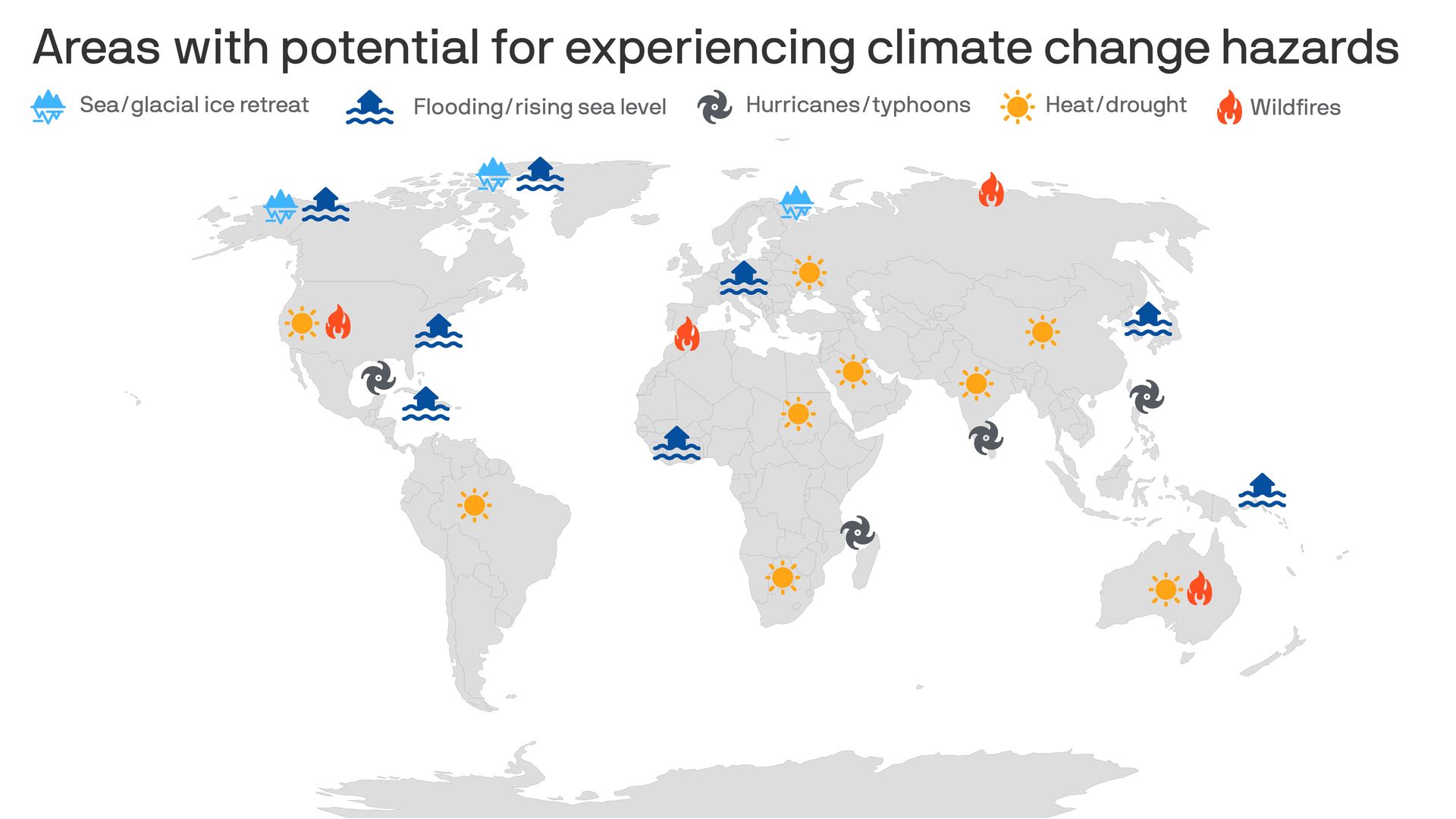
Drought, rising sea levels and melting ice caps are transforming the geopolitical map at the same time China's rise and revanchist Russia are testing the limits of American power.
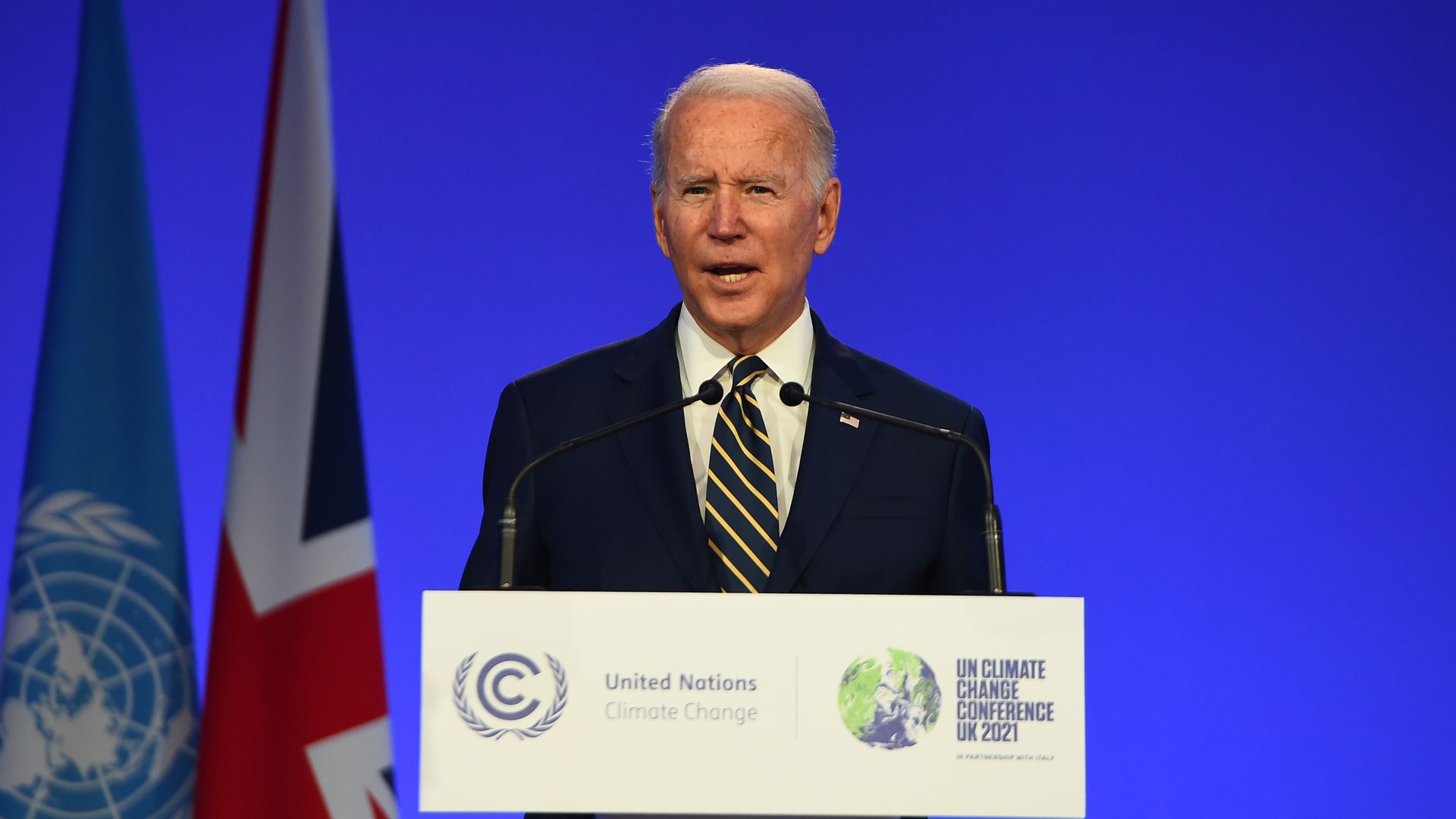
Driving the news: These dynamics, outlined in the first-ever National Intelligence Estimate (NIE) on climate change, released last month, played out this past week at the COP26 climate summit in Glasgow. President Biden rebuked China's Xi Jinping for failing to show up or present new commitments.
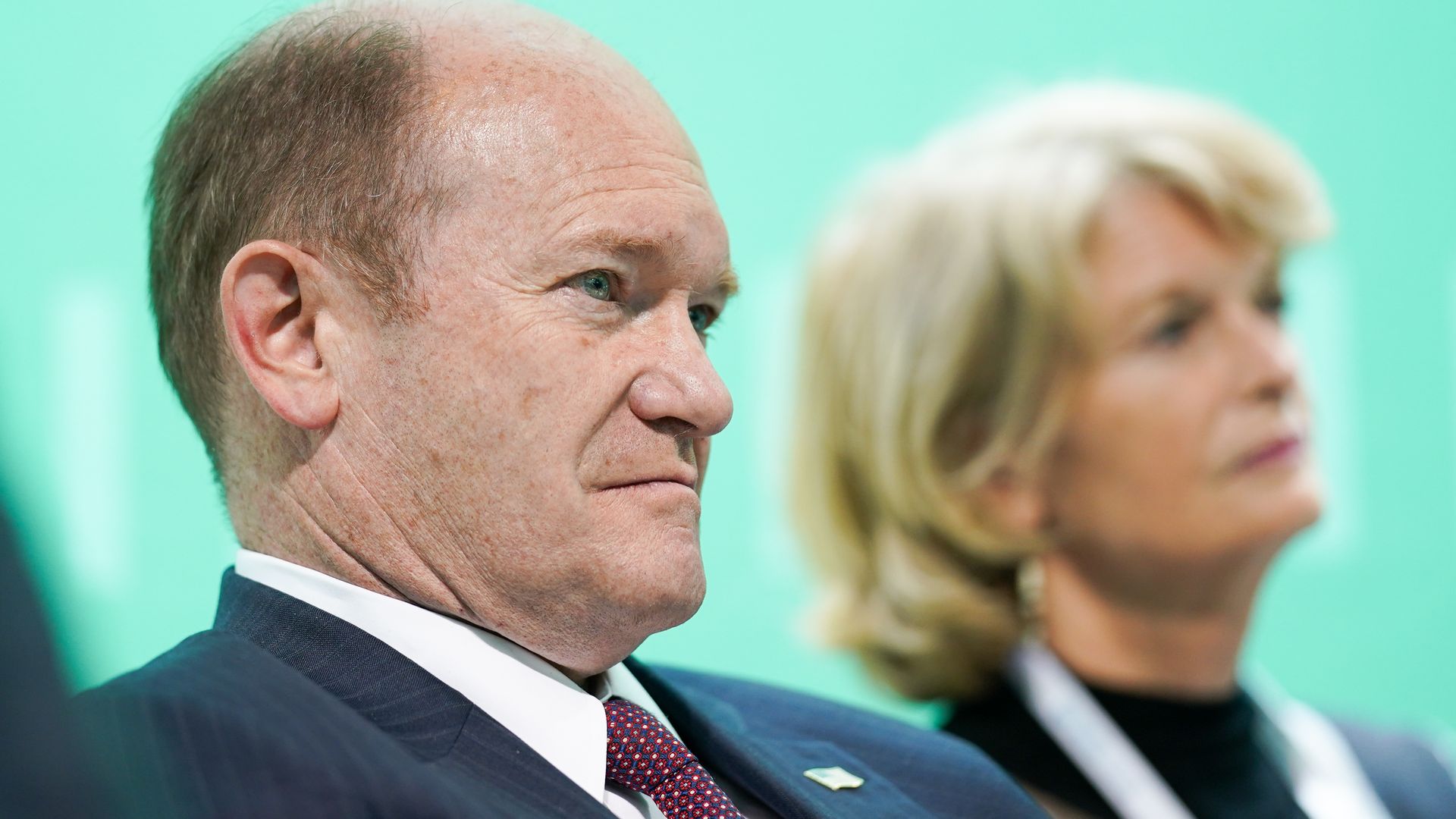
Driving the news: The delegation includes more than half a dozen Republican and Democratic lawmakers who intend to hold bilateral meetings with international counterparts as well as connect with President Biden’s climate envoy, former Secretary of State John Kerry.
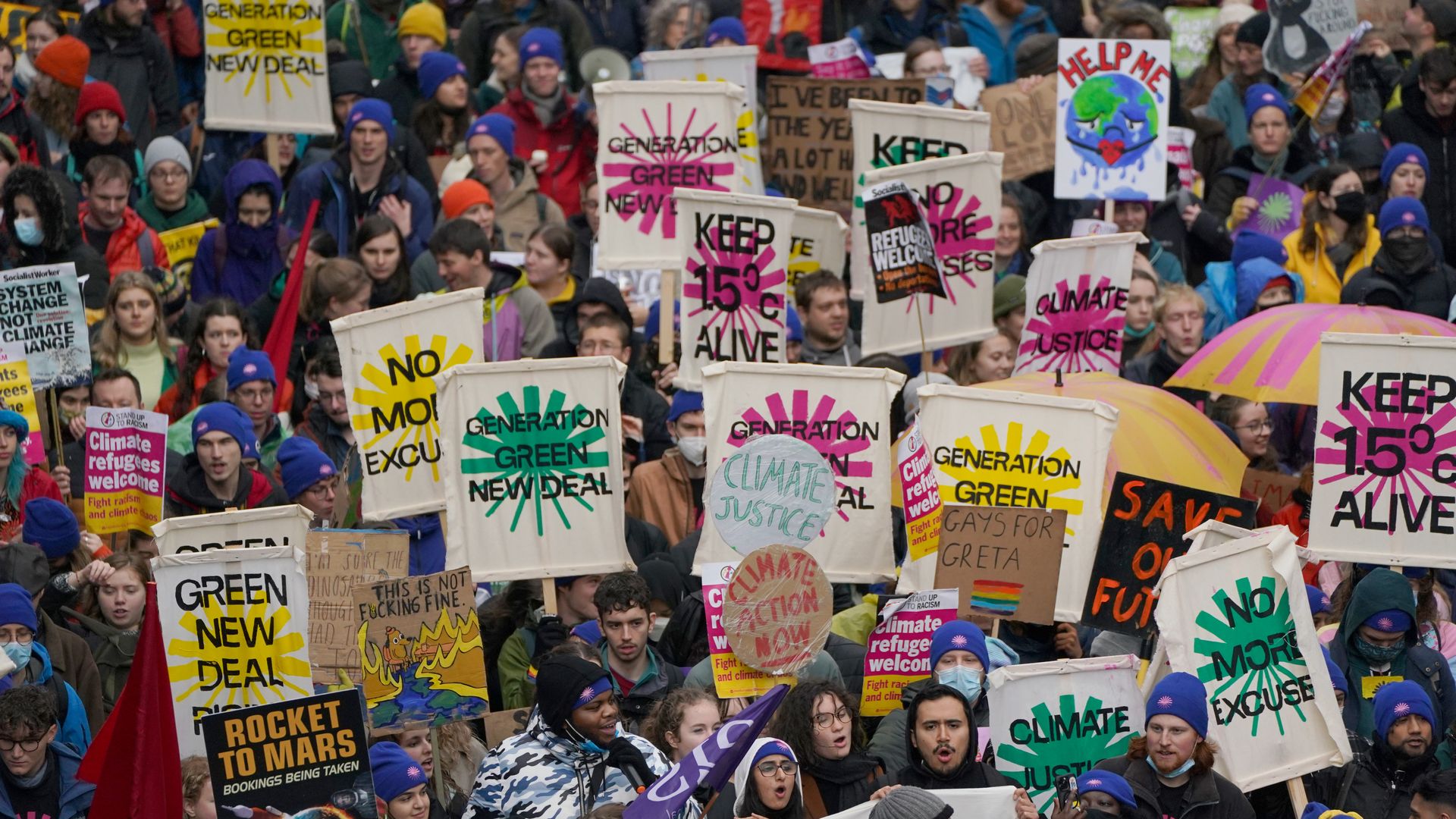
More than 100 world leaders — as well as thousands of diplomats and business leaders — converged on Glasgow, Scotland, on Oct. 31 to try to set new emissions reduction goals at the COP26 climate summit.
The latest: President Biden on Tuesday said that China made a "big mistake" by not showing up to the UN climate summit, adding that Beijing has "lost an ability to influence" other countries as a result.
COP26 is morphing into a climate conference, filled mainly with experts, journalists and bureaucrats who specialize in the subject.
For the opening days, CEO and celebrity sightings had lent a "Davos meets the UN General Assembly" vibe. Heads of state were popping up everywhere — identifiable because they don’t wear ID (they don lapel pins rather than badges).
Averting catastrophic climate change — while ensuringeconomic growth for the world — will require renewable energy and carbon removal projects on a massive scale.
Why it matters: There's strongingrained public resistance to big infrastructureprojects, including among many environmentalists.