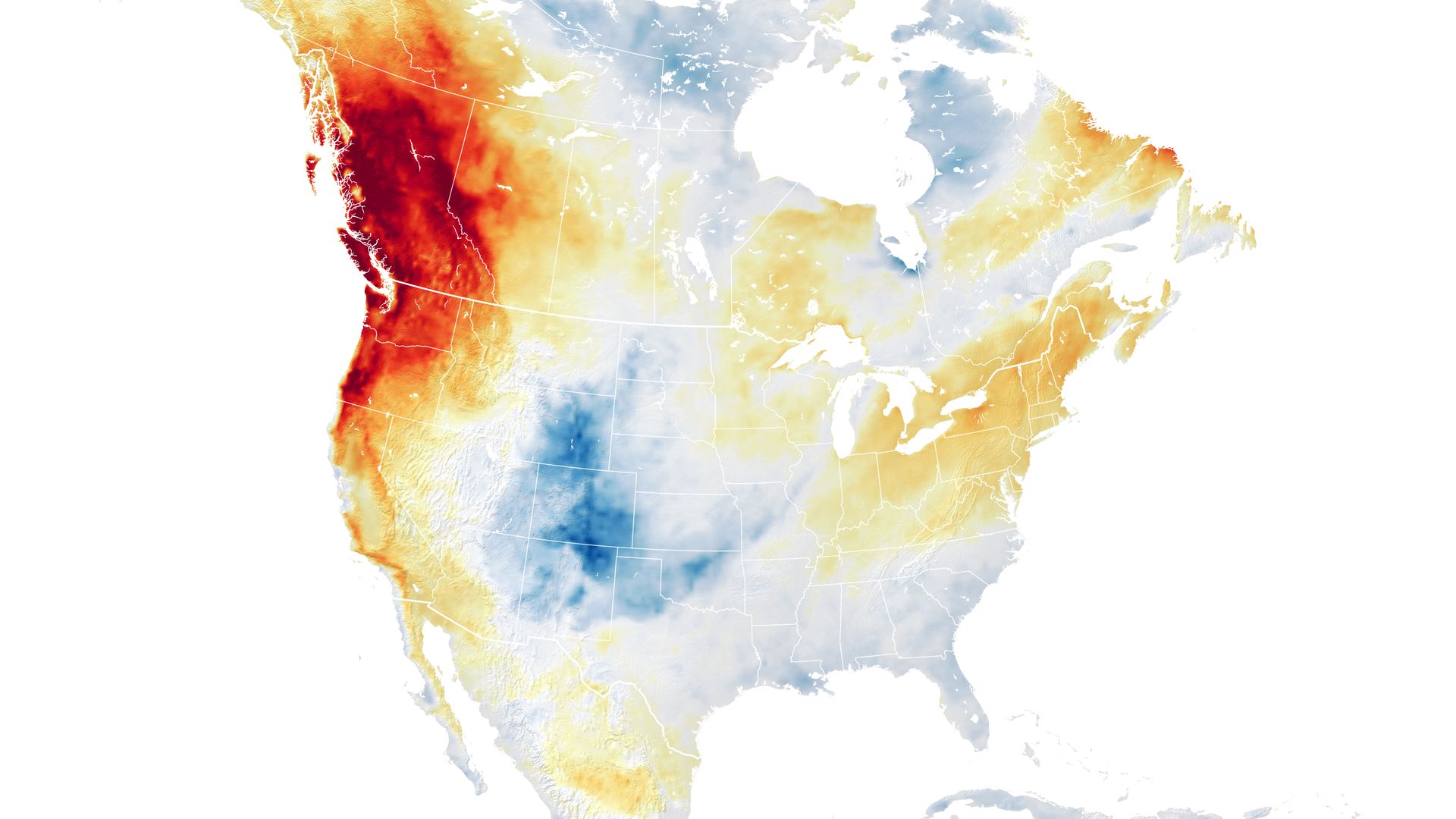
After reaching an unprecedented peak, the ferocious heat wave in the Pacific Northwest is retreating inland on Tuesday, sparing some of the biggest cities, including Seattle, from another day of record-breaking heat.
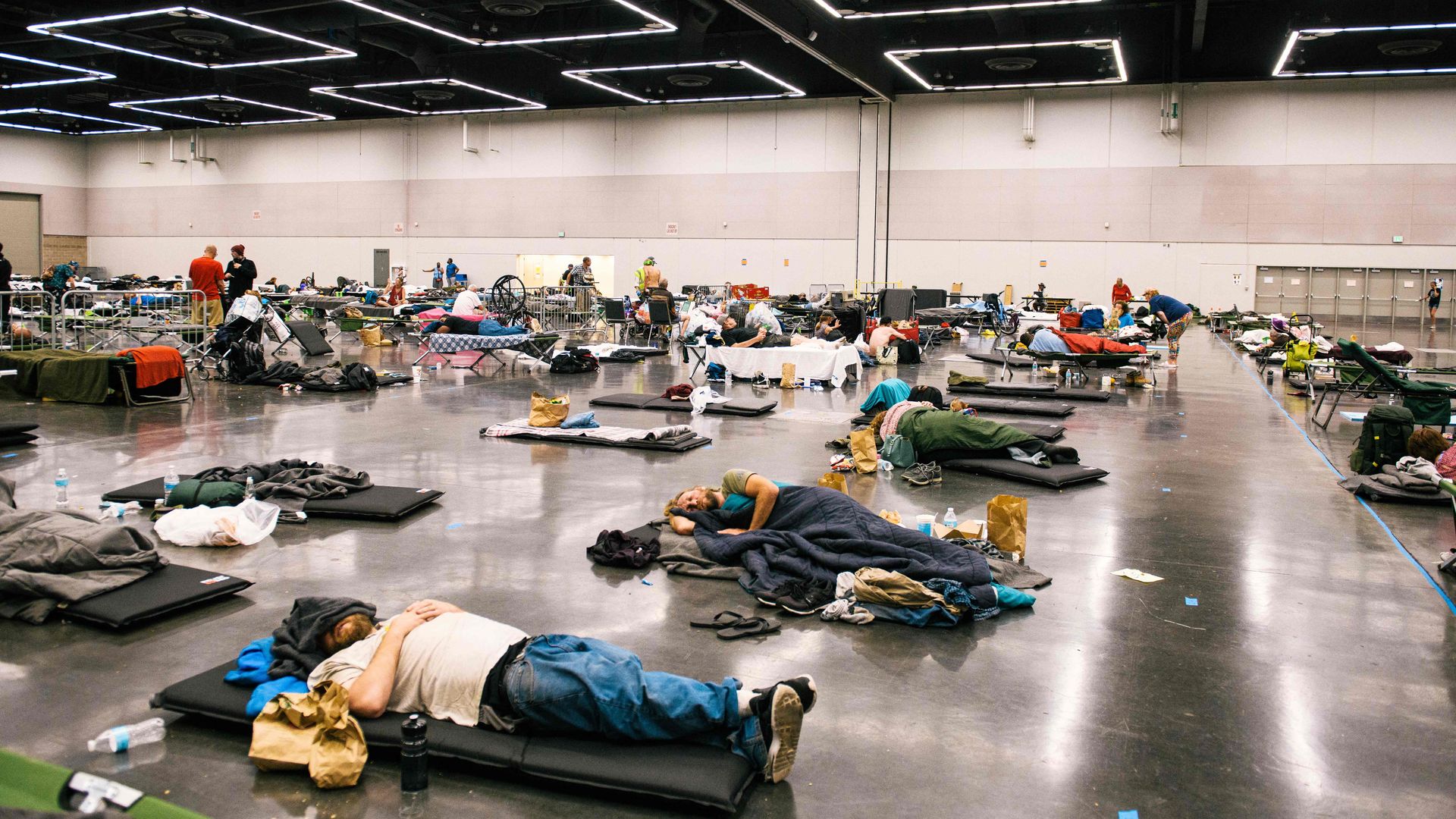
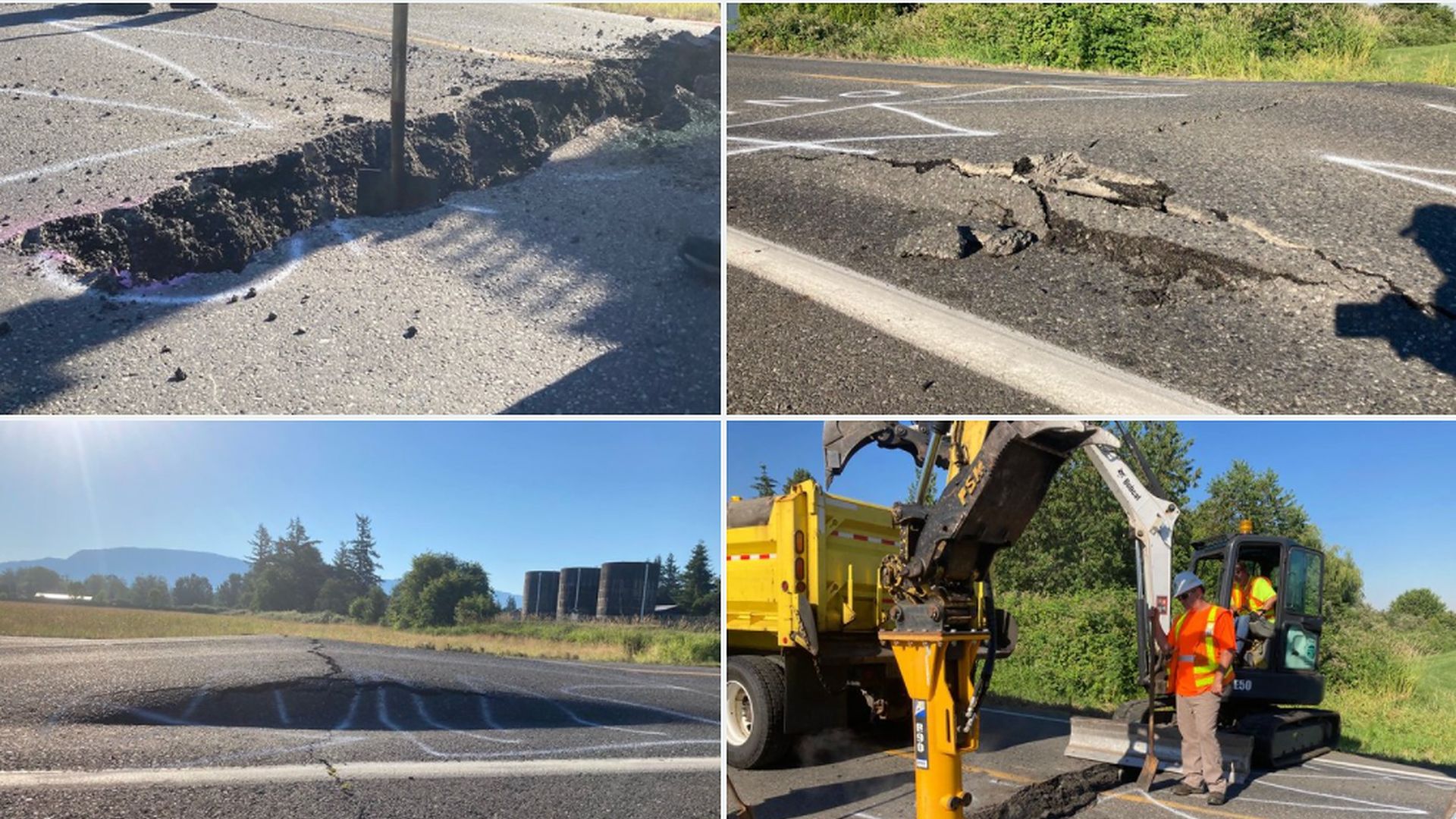
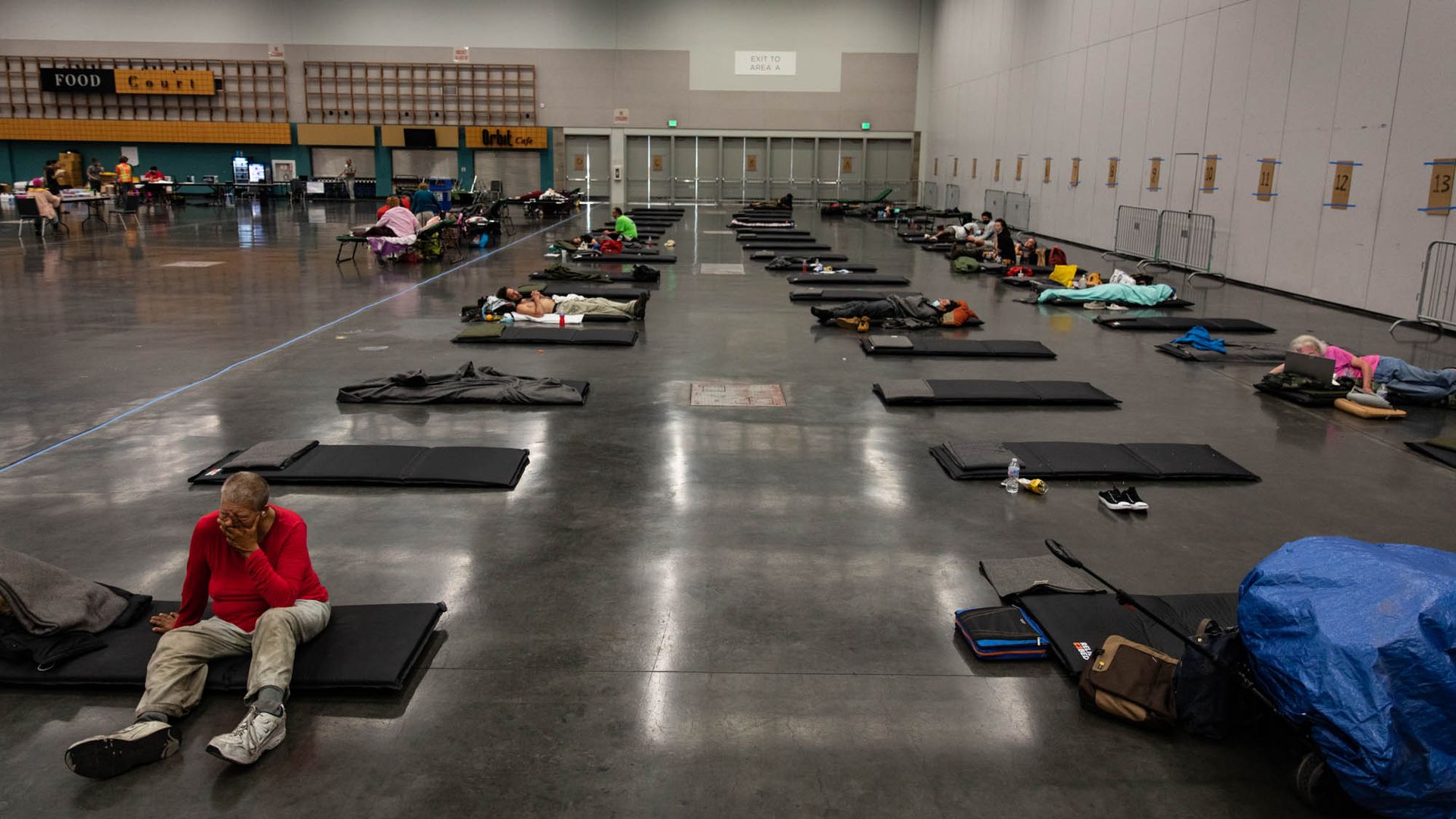
Why it matters: The worst heat wave on record in the Pacific Northwest has had a wide range of impacts, from damaging public transit infrastructure — rails failed and roads buckled — to public health issues. This event is not over, given the continued record high temperatures in areas further away from the coast.
The worst heat wave on record in the Pacific Northwest has resulted in more than 1,100 people going to the hospital for possible heat-related illness as of Tuesday, BuzzFeed reports.
The White House is trying to build support for clean energy and climate pieces of the $1.2 trillion bipartisan infrastructure outline at a time when activists are calling the plan far too modest.
Why it matters: The White House faces growing urgency to corral progressive lawmakers now that President Biden has abandoned threats to veto the plan unless a much larger, Democrats-only package moves too.
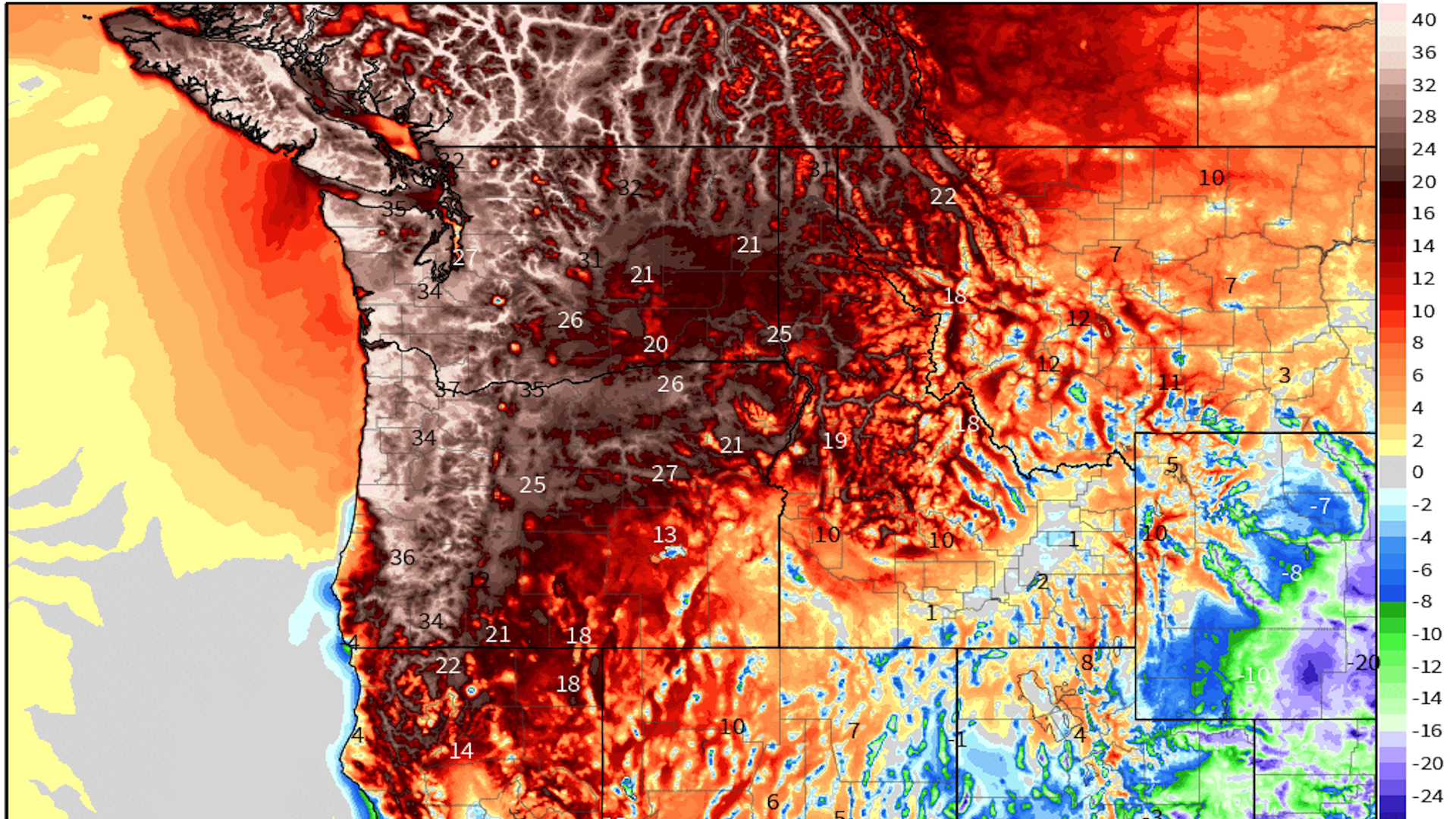
Of note: Seattle surpassed its record set Sunday by 4°F when it hit 108°F Monday evening and Portland for the third consecutive day recorded an all-time high temperature record high, reaching 116°F. The Canadian town of Lytton set a new national record for the second straight day when it hit 118.2°F.
The extraordinary heat wave that's stifling the Pacific Northwest reached its peak in many areas on Monday. Seattle smashed its all-time high-temperature record, set just the day before, by 4°F.
Why it matters: After two days of oppressive heat and little relief at night, the extreme weather event, boosted by global warming, is moving into a more dangerous phase.
President Biden in an op-ed published by Yahoo! News Monday pledged to do more to tackle climate change as he touted the $1.2 trillion infrastructure deal he reached with a group of bipartisan senators.
Why it matters: Biden has faced criticism from progressives over the agreement for not doing enough to address issues such as climate change. Reps. Cori Bush (D-Mo.) and Alexandria Ocasio-Cortez (D-N.Y.) joined hundreds of protesters outside the White House Monday to demand the president act on the matter.
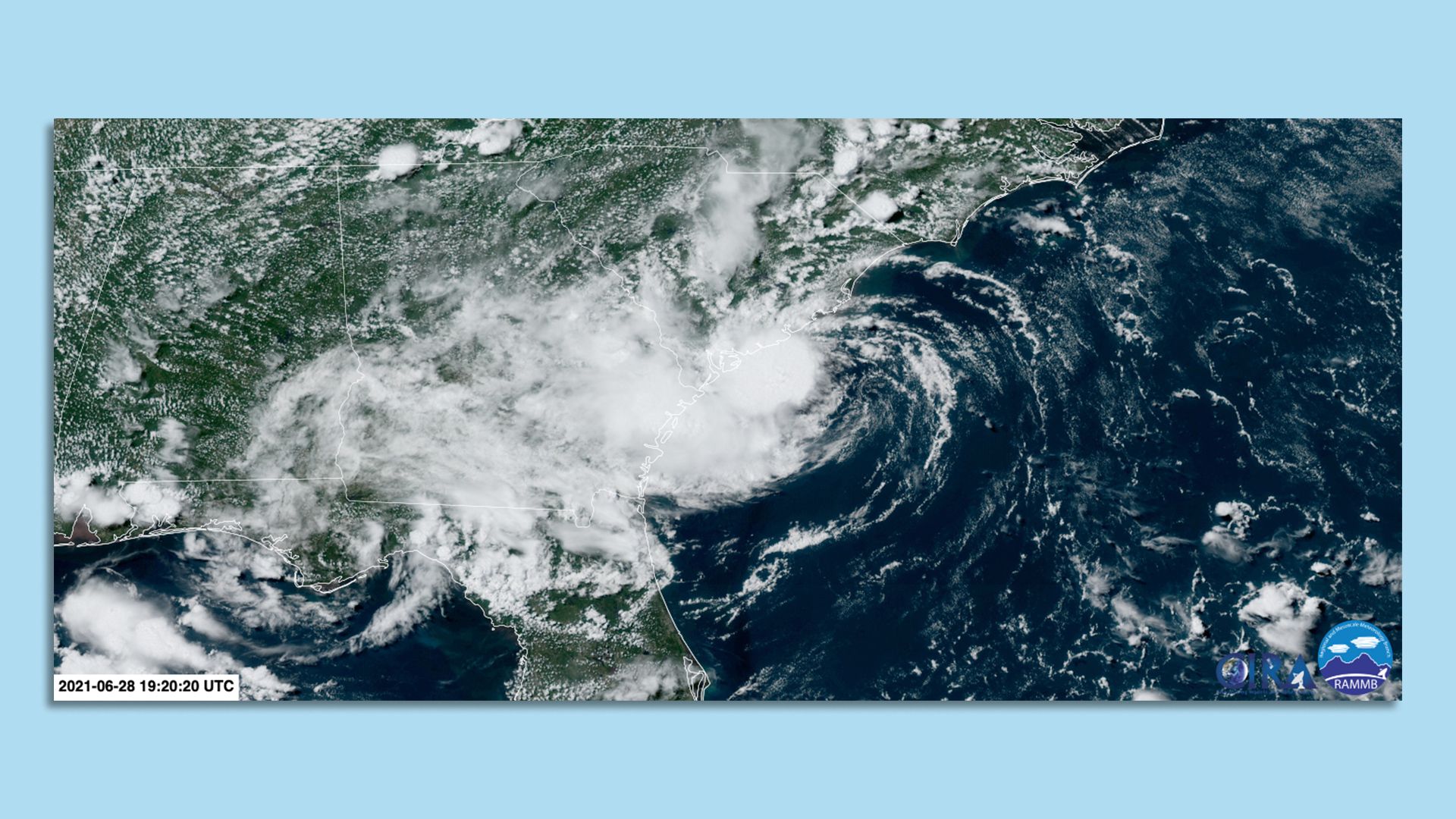
The fourth tropical storm of 2021, Tropical Storm Danny, formed off the coast of South Carolina Monday afternoon, according to the National Hurricane Center.
Why it matters: Tropical Storm Danny's arrival in June signals the season is off to an active start. On average, the fourth named storm arrives each year on Aug. 23.
Lawsuits filed against fossil fuel companies and governments for causing global warming have met a decidedly mixed fate, with most getting dismissed for failing to prove a causal link between emitters' actions and harm done to the plaintiffs. However, that could soon change, a new study finds.
Why it matters: Courts are an important venue for cities, states and citizens’ groups seeking carbon-cutting mandates — especially as governments fail to slash greenhouse gases fast enough to avoid potentially devastating effects.
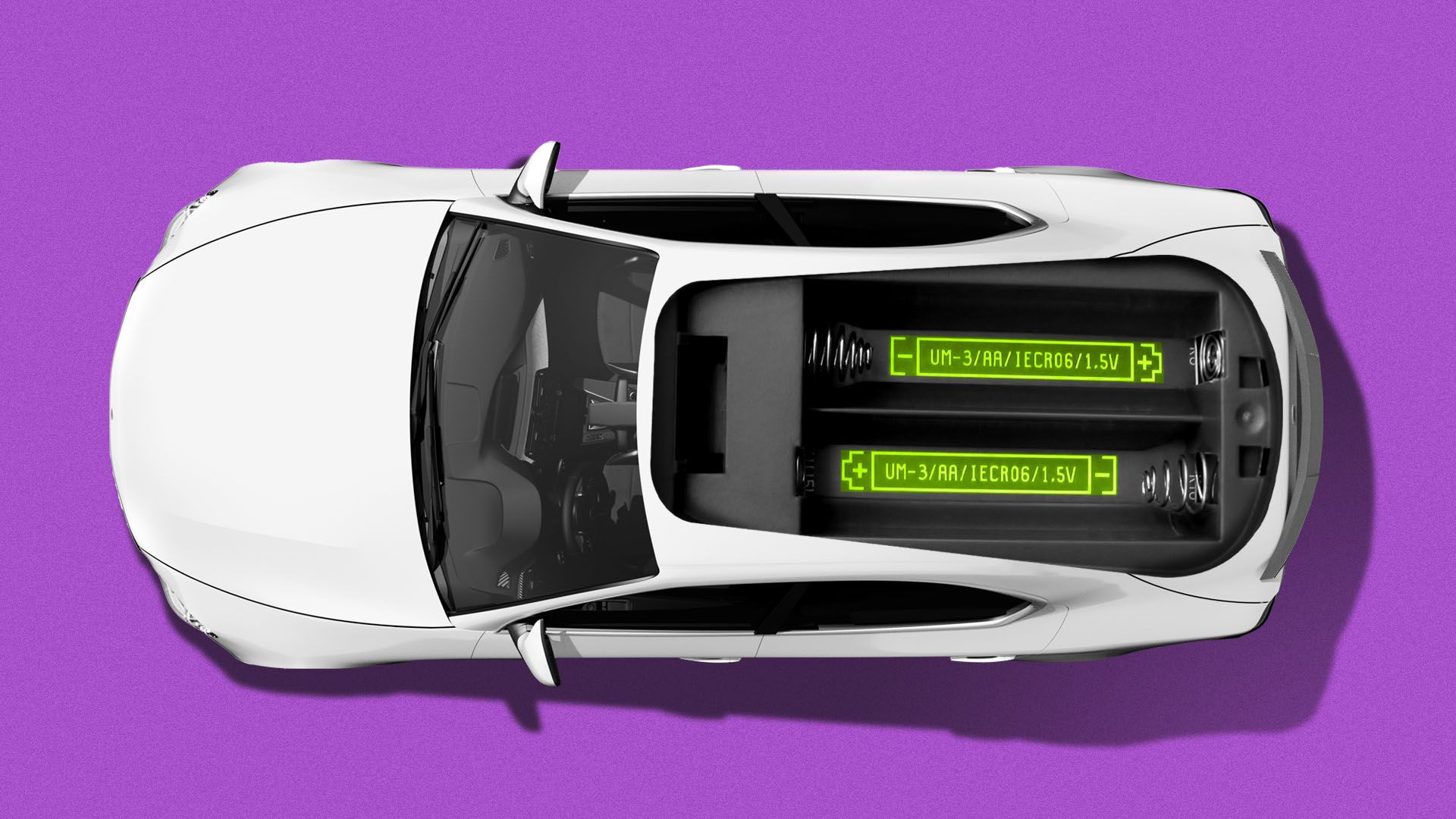
Just-released projections from the consultancy Wood Mackenzie see battery electric vehicles growing to 56% of global sales by midcentury as internal combustion models see their share greatly erode.
The big picture: It estimates there will be 875 million electric passenger vehicles and 70 million electric commercial vehicles on the roads by 2050. The latest analysis of passenger and commercial markets boosts its estimate of fully electric vehicles' share compared to even a February projection, which had it at 48%.
The dangerous heat wave enveloping the Pacific Northwest is shattering weather records by such large margins that it is making even climate scientists uneasy.
Why it matters: Infrastructure, including heating and cooling, is built according to expectations of a "normal" climate. Human-caused climate change is quickly redefining that normal, while dramatically raising the likelihood of events that simply have no precedent.
At the very moment the United States is ramping up electric vehicle development manufacturers are running up against the weakest link in the supply chain — a shortage of battery materials.
Why it matters: The bottleneck puts the United States at a major disadvantage to China, which controls most of the world's battery minerals mining and processing.
A stifling "heat dome" is parked over the Pacific Northwest, bringing unprecedented heat to at least 25 million in the United States, and more in Canada. Temperatures are forecast to hit an apex Sunday and Monday in many areas.
Why it matters: Extreme heat threatens lives, ranking as the nation's top weather-related killer annually. In addition, extreme heat events such as this one are a clear manifestation of human-caused climate change, with numerous studies linking such events to the long-term increase in global average temperatures.