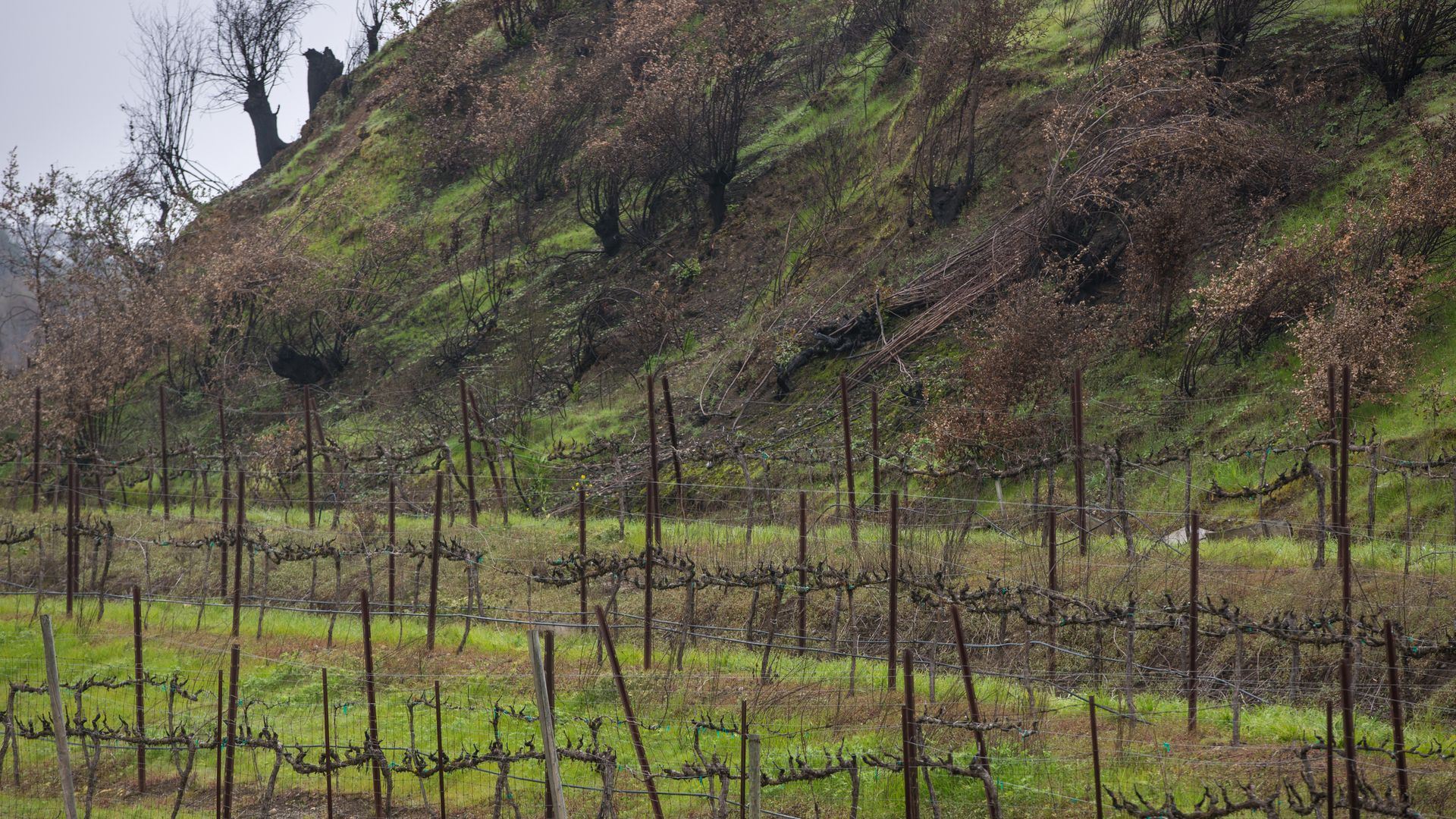
The 2017 Tubbs Fire that burned over 36,000 acres and killed more than 20 people in California's Sonoma County was caused by a "private electrical system," the California Department of Forestry and Fire Protection said Thursday — a relief for utility PG&E, whose equipment was suspected as having sparked the blaze.
The big picture: A source close to the company tells Axios that the findings of the investigation does not change its plans to file for bankruptcy next week.PG&E said earlier this month it would file for bankruptcy in an effort to shield itself from billions of dollars in potential liability costs related to PG&E's possible role in wildfires in 2017 and 2018.
Last year was the 4th-warmest year globally in temperature records that date back to the mid-1800s, ranking only behind 2016 (the warmest), 2015 and 2017, new data from the research group Berkeley Earth shows.
Why it matters: It underscores the long-term warming trend and arrives on the heels of major UN and U.S. federal reports on the near- and long-term dangers of failing to steeply cut emissions.
And the group's data fills a gap left by the partial government shutdown, which has delayed the release of annual data from two federal agencies: the National Oceanic and Atmospheric Administration and NASA.
The big picture: "The slight decline in 2018 is likely to reflect short-term natural variability, but the overall pattern remains consistent with a long-term trend towards global warming," the report states.
By the numbers: They find that global temperatures last year were almost 1.4°F (or 0.77°C) above the average between 1951 and 1980.
And it's even warmer when compared to the pre-industrial age.
"In our estimation, temperatures in 2018 were around 1.16 °C (2.09 °F) above the average temperature of the late 19th century, from 1850-1900, a period often used as a pre-industrial baseline for global temperature targets," they write.
They estimate that 4.3% of the Earth’s surface set new records for the warmest yearly average. "Most significantly in 2018, this included large portions of Europe and the Middle East," the report states.
What's next: They estimate that 2019 will be even warmer than 2018, but is unlikely to topple 2016 as the warmest on record. "At present it appears that there is roughly a 50% likelihood that 2019 will become the 2nd warmest year since 1850," Berkeley Earth writes.
Threat level: Robert Rohde, the team's lead scientist, underscored how current warming trends will blow past the targets of the Paris climate agreement.
The 2015 deal is aimed at avoiding some of the most damaging effects of climate change by holding warming to "well below" 2°C, or 3.6°F, above pre-industrial levels, with an aspirational target of limiting the rise to 1.5°C.
"If the current warming trend is allowed to continue at the present rate, we estimate that the Earth will have warmed 1.5 °C above the 1850-1900 average by about 2035, and reach 2.0 °C by about 2060," he said via Twitter.
The five warmest years in the global record have all come in the past decade.
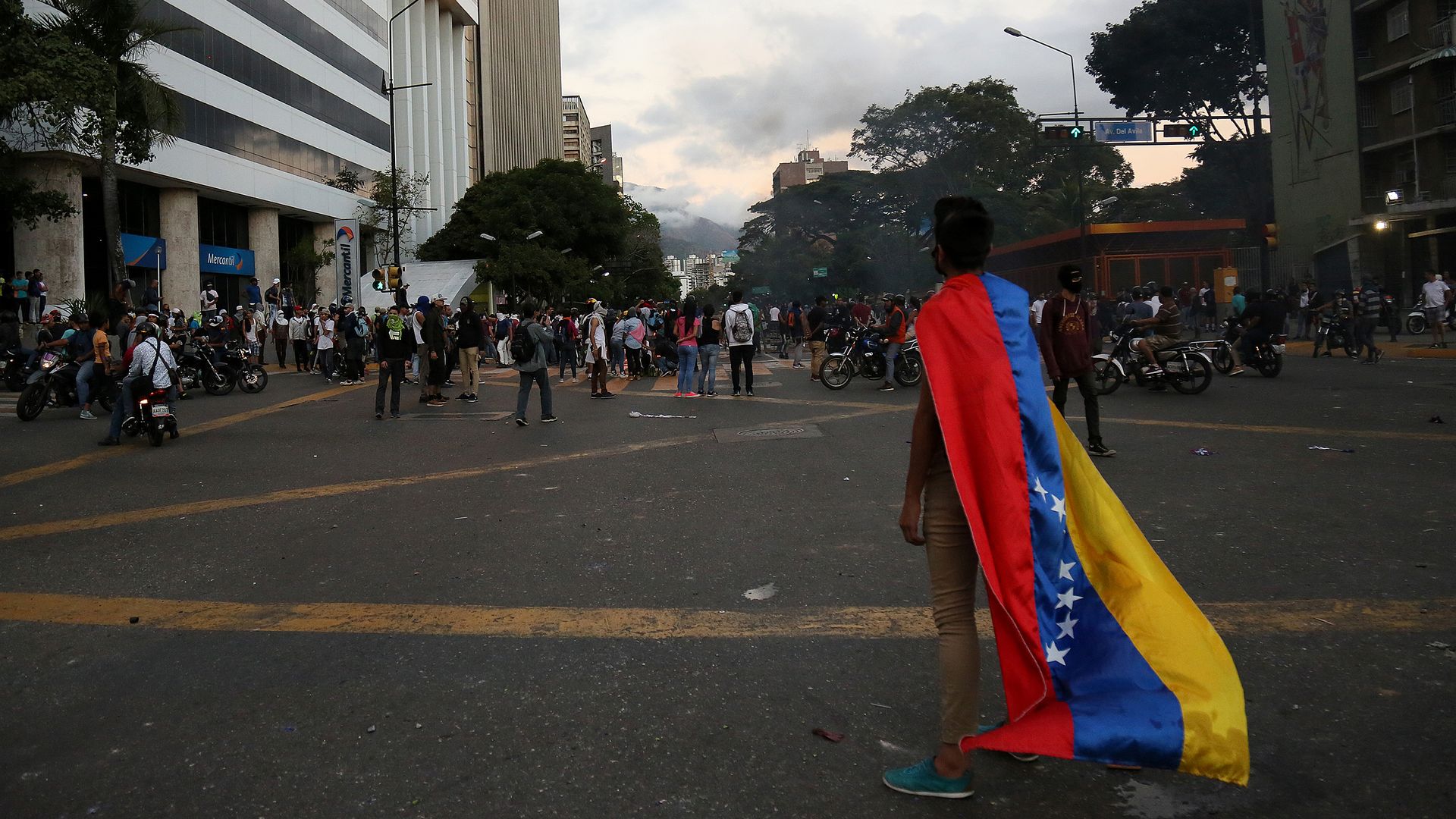
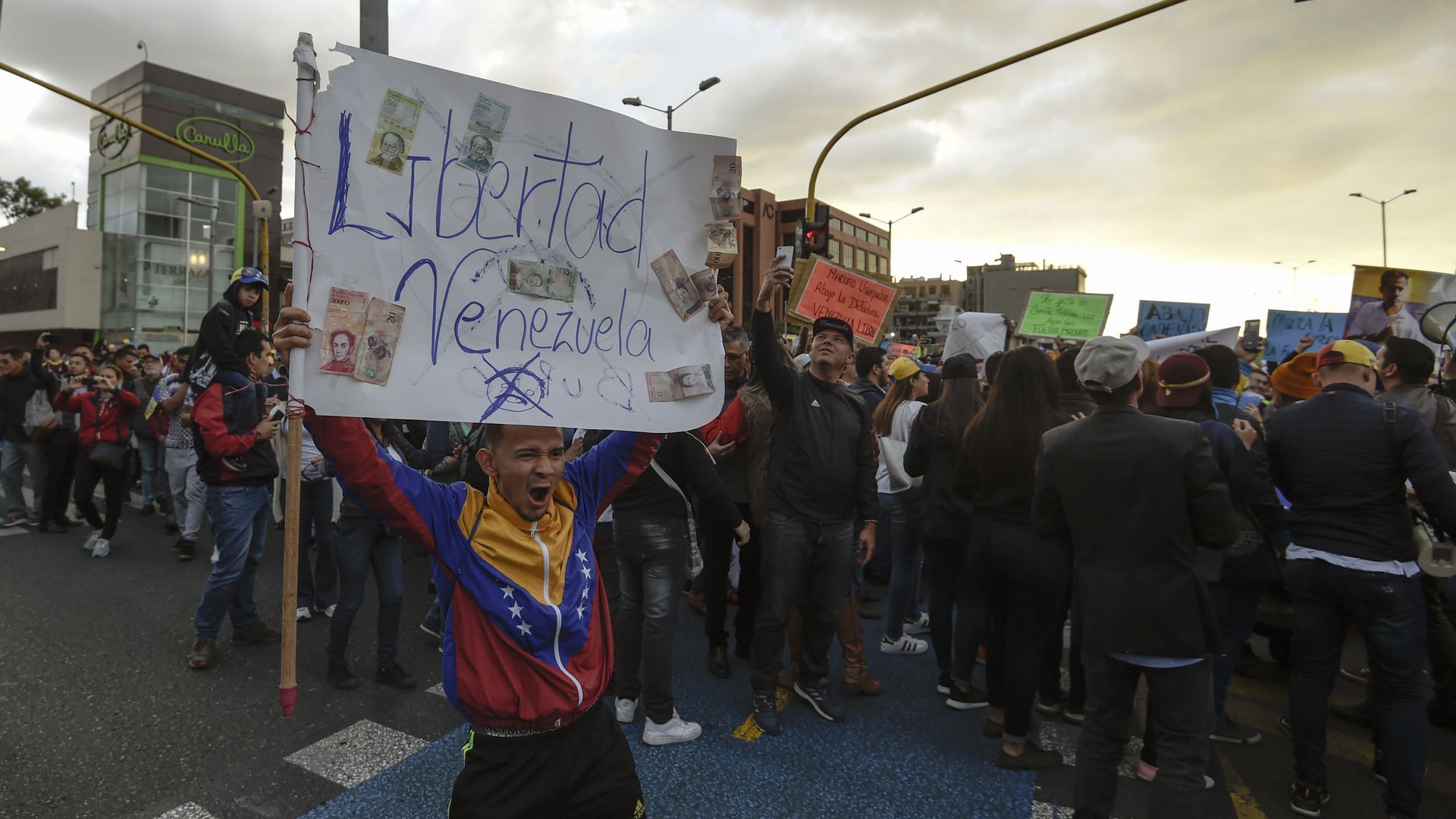
The president of Venezuela’s National Assembly, Juan Guaidó, declared himself interim president during a Wednesday rally held as part of a day of national protests, with hundreds of thousands across Venezuela marching against Nicolás Maduro. President Trump recognized Guaidó, along with Canada and 11 other Latin American countries.
Why it matters: The next few days — and Maduro’s response — will be crucial for the future of Venezuela, which holds the world’s largest oil reserves. The path forward will be determined by whether the military, including lower ranks, stays united in backing Maduro and how the interim government consolidates power.
The Senate Intelligence Committee has subpoenaed President Trump's former attorney Michael Cohen to testify in mid-February for what would likely be a closed-door hearing, CNN reports.
Background: Cohen's attorney, Lanny Davis, announced yesterday that Cohen would postpone his scheduled public appearance before the House Oversight Committee on Feb. 7 due to "threats against his family" from Trump and his lawyer, Rudy Giuliani. CNN reports that it's not yet clear how Cohen, who is due to report to federal prison in March on charges of campaign finance violations, tax evasion and lying to Congress, will respond to the subpoena due to his ongoing concerns about his family.
The Doomsday Clock will remain at 2 minutes to midnight — its closest to the symbolic destruction of humanity since its creation in 1953 at the height of the Cold War— because of a lack of progress on nuclear and climate issues, according to the Bulletin of the Atomic Scientists' Science and Security Board.
What they're saying: The board said that the decision to keep the clock unchanged was due to "the increased use of information warfare to undermine democracy around the world, amplifying risk from [nuclear, climate] and other threats and putting the future of civilization in extraordinary danger."
BP is investing in PowerShare, a 4-year-old Chinese startup providing a digital platform that "connects [electric vehicle] drivers, charge point operators and power suppliers," BP said today.
Why it matters: The funding amount in the Series A round was not disclosed, but it signals the interest in getting a stake in the world's largest market for EVs and its infrastructure.
Oil prices are basically flat Thursday after falling yesterday despite uncertainty in Venezuela and the White House endorsement of regime change against Nicolás Maduro. But, that could change if new U.S. oil sanctions arrive soon.
Why it matters: For now, the limited market response to Venezuela shows how concerns about a weakening global economy are keeping upward price pressures from the geopolitical turmoil in check.
Investors hoping for the removal of Venezuelan President Nicolas Maduro may get more good news this week. The Trump administration signaled it may impose new sanctions against the country's oil sector — the lifeblood of Venezuela's economy and only major source of revenue.
Driving the news: The news followed the announcement Wednesday the U.S. would recognize Juan Guaido, head of Venezuela's National Assembly, as the country's president, not Maduro.
A bipartisan handful of House members are introducing carbon tax legislation today after first floating it late last year.
Why it matters: While it’s very unlikely to become law in at least the next few years, it’s nonetheless a marker for efforts to move national carbon pricing beyond the think tank and advocacy world where it’s been for a decade and back into Congress.
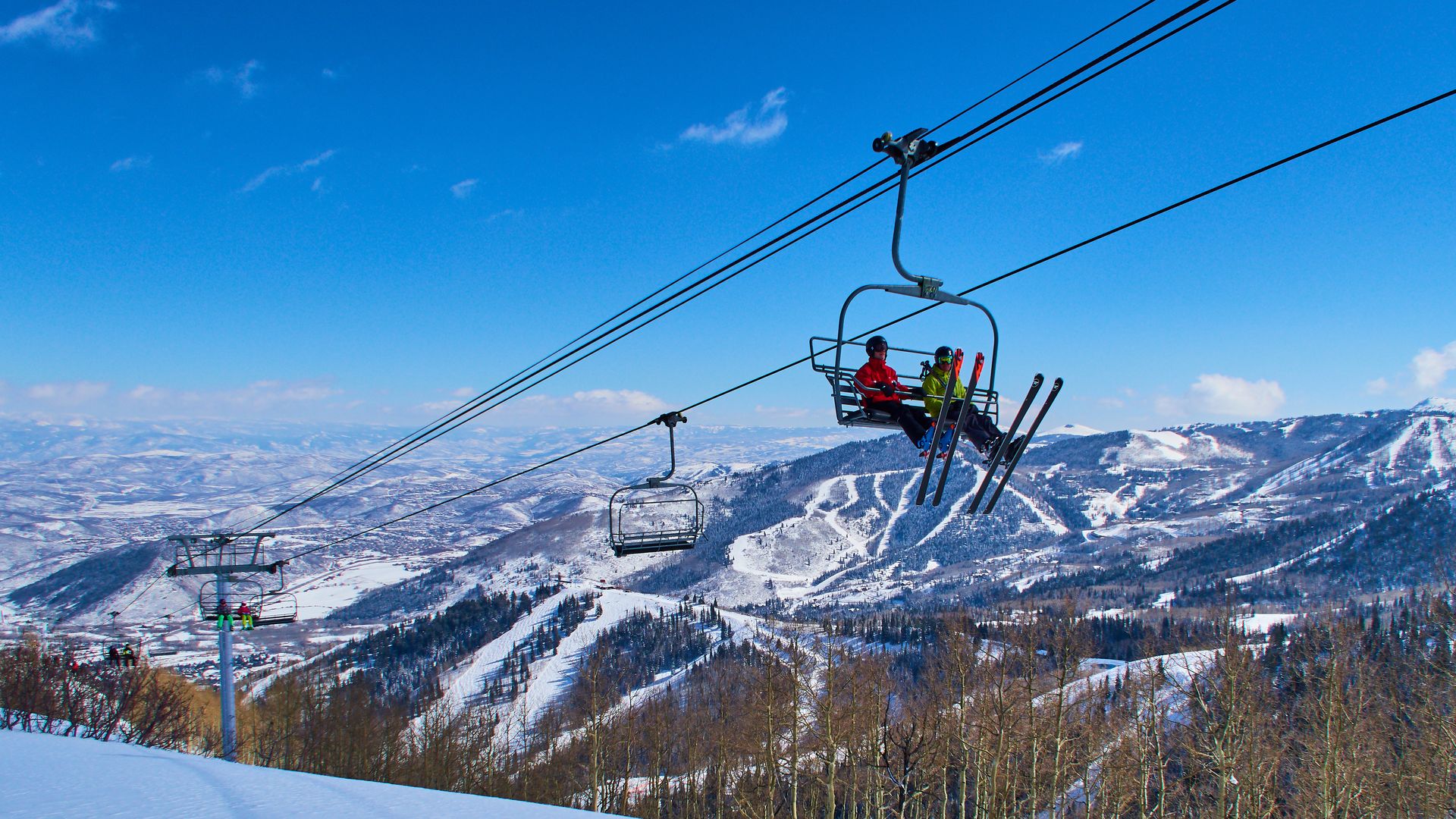
The big picture: The ski industry is increasingly embracing new innovations in energy-efficient technology — combined with existing technologies such as wind and solar energy and LED lighting — to reduce its carbon footprint and improve its bottom line.
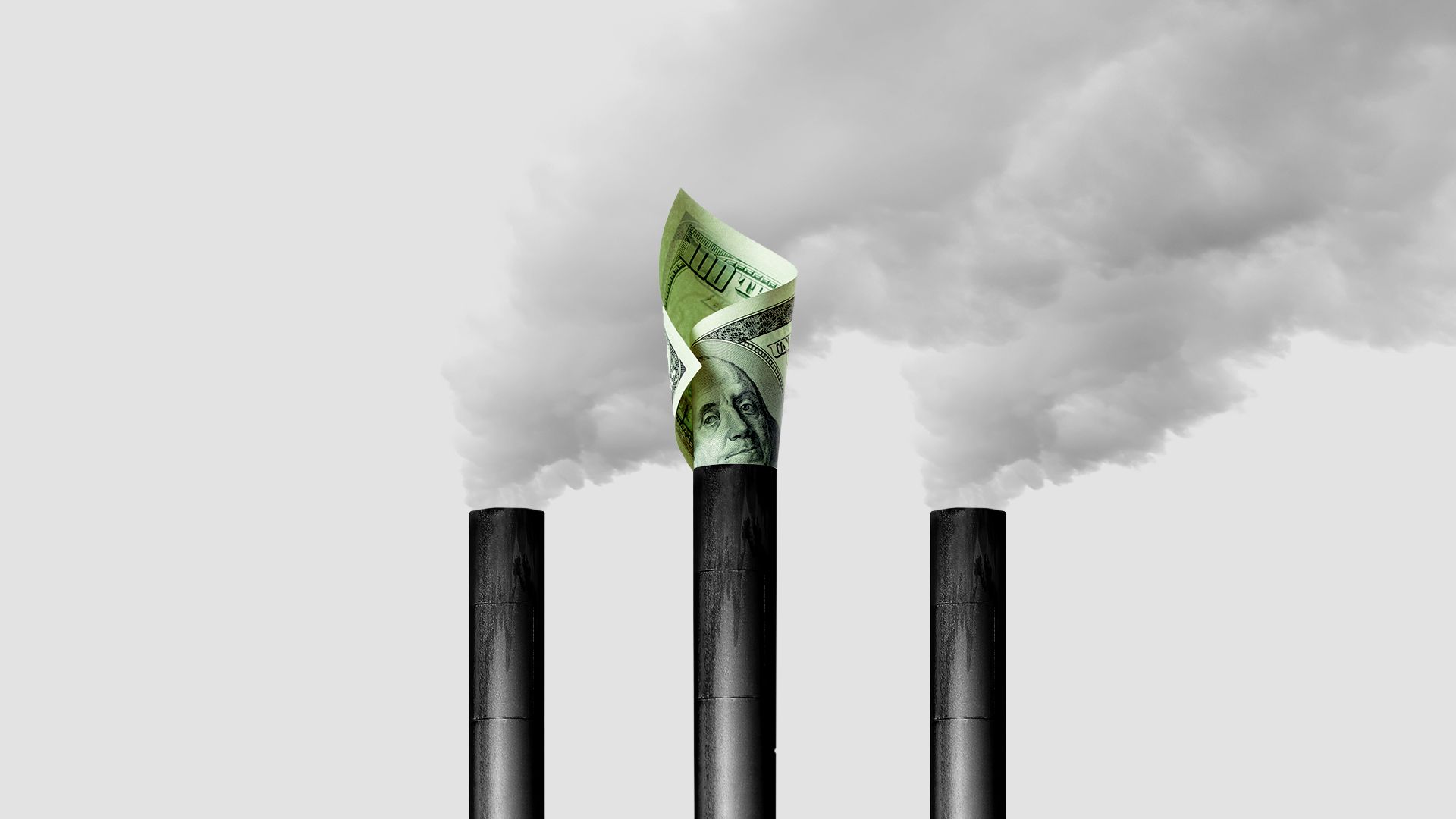
The storylines dominating climate change news are usually doom and gloom, but corporate America sees some new ways to integrate a warmer world into its business models.
Driving the news: That conclusion was gleaned from disclosures from more than 7,000 companies worldwide (1,800 in the U.S.) that were collected by CDP, a London-based nonprofit that asks companies to report their environmental impact.
Climate change is going to make us sick. We’ll need prescription drugs to get better. And that’s a business opportunity the pharmaceutical industry is starting to prepare for.
Between the lines: Those companies either declined to estimate the financial impact this increased demand would have, or said it would be minor. Several highlighted partnerships to make certain life-saving drugs available at reduced prices, especially in developing countries.









/2019/01/24/1548326242220.gif?w=3840)

/2019/01/23/1548286435197.gif?w=3840)