Prominent climate scientists are pushing back against the view, promoted by media coverage of recent science reports as well as climate advocates, that we have only 12 years to act on global warming or face an existential threat to humanity.
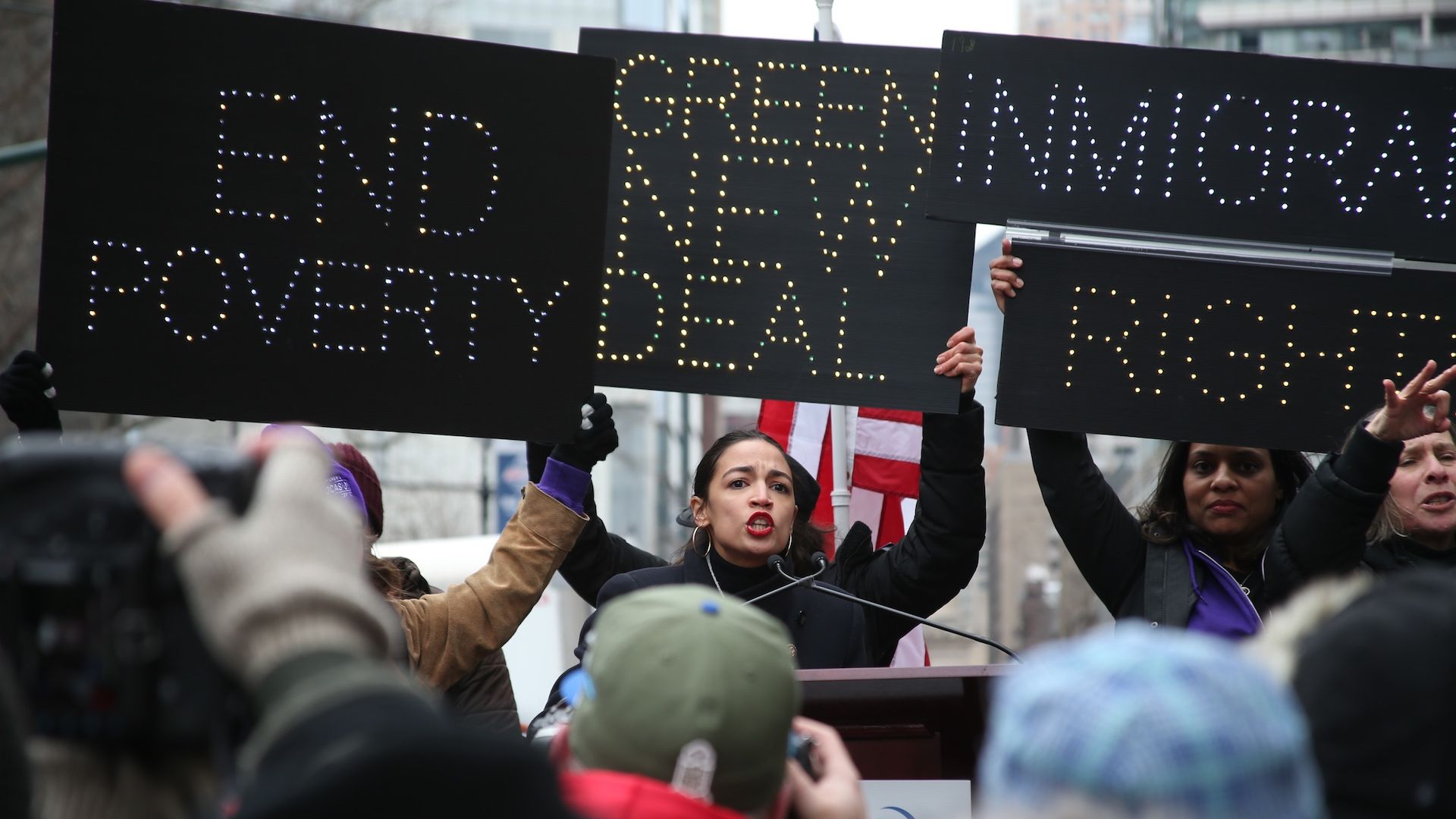
Why it matters: This do-or-die framing has found a powerful advocate in Democratic freshman Rep. Alexandria Ocasio-Cortez, who said on Monday that millennials understand that we only have 12 years or "the world is going to end." She is pushing a broad policy proposal to address climate change, known as the Green New Deal.
More Americans are very worried about global warming and say the issue is personally important to them than ever before, according to a new poll released Tuesday.
Why it matters: The polling may indicate that extreme weather events — coupled with a series of grim scientific findings — over the past year are starting to change peoples' minds about climate change, which could have significant implications for any significant climate legislation passing Congress.
Toyota and Panasonic announced Tuesday that they've inked a deal for establishing a joint venture to develop electric vehicle batteries.
Why it matters: It's the latest sign of companies in the automotive and battery space pooling resources to get ahead in the increasingly competitive EV market.
Facing more than $30 billion in potential liability claims for wildfires sparked by its electric system, Pacific Gas and Electric (PG&E), the largest utility in California, plans to file for bankruptcy by the end of the month. Consumers' lights will stay on regardless of what happens in court, but the future of California’s energy policy might be a bit dimmer.
Why it matters: To meet California’s ambitious climate goals, PG&E has entered into dozens of power purchase agreements (PPAs) with wind and solar farms, for thousands of megawatts, all over the West Coast. If PG&E enters into bankruptcy court, it might not have to pay those contracts, some of which extend past 2040, in full. While that might help PG&E’s balance sheets, it could hurt renewable suppliers that own the assets.
In Congress and on the presidential campaign trail, America is gearing up to tussle over big climate-change policy for the first time in nearly a decade. But what this actually means is up for massive interpretation.
Why it matters: How Washington considers tackling this problem, whether through a tax, regulations and/or something else, would affect almost every swath of the country and reverberate around the world.