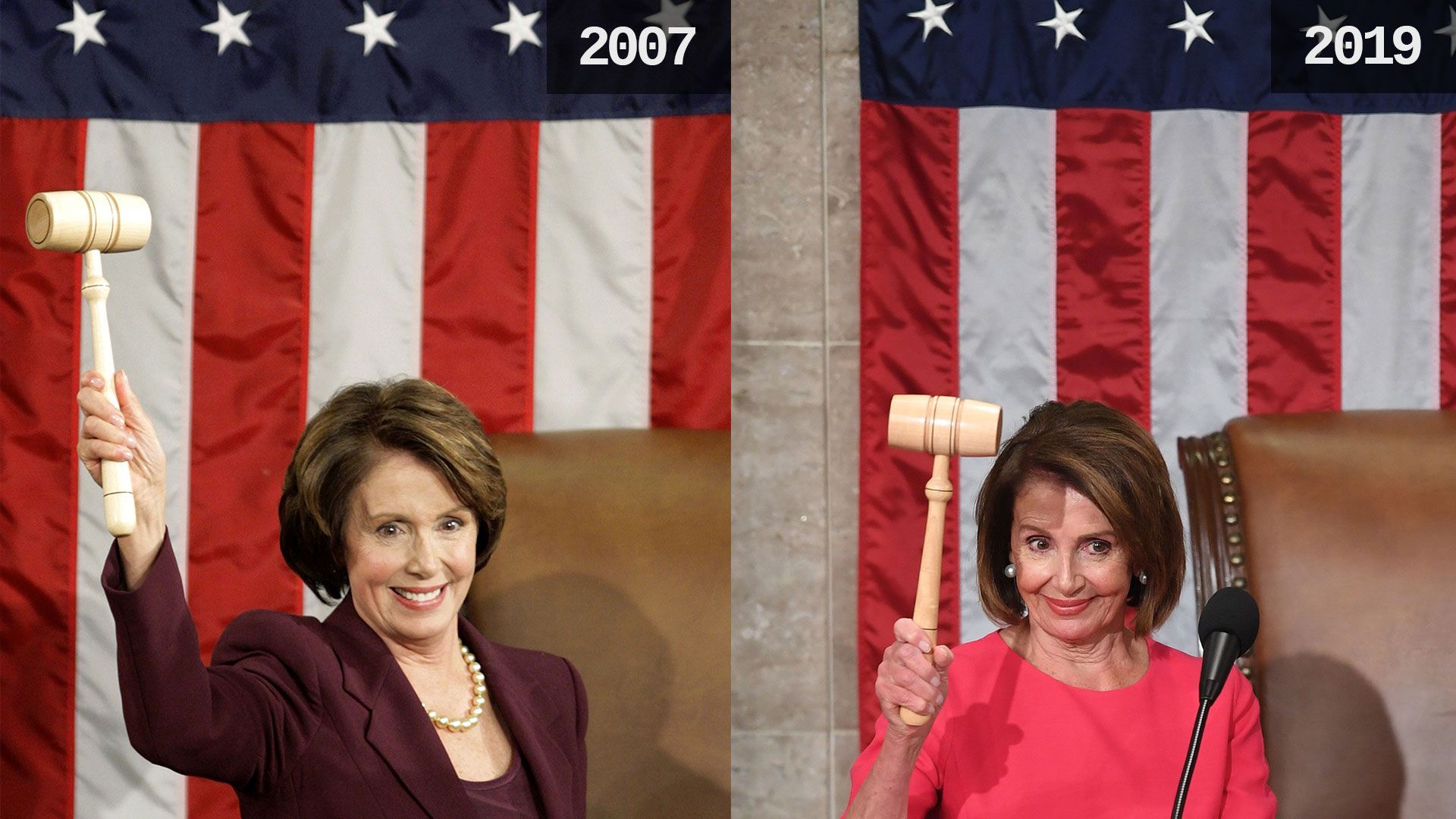
Nancy Pelosi is once more the most powerful Democrat in the country, assuming the task of leading her caucus through a generational change as the Democratic Party increasingly looks like the people it represents.
The big picture: After becoming the first female speaker of the House in 2007, she became the second one today by reclaiming the gavel.
Former oil industry lobbyist David Bernhardt became acting secretary of the Interior on Wednesday following the departure of Ryan Zinke.
Why it matters: President Trump campaigned on the promise of "draining the swamp." But Bernhardt is just the latest in a revolving door of special interests to take over key positions in the president's Cabinet. The New York Times’ Eric Lipton notes that as of Thursday, the Defense Department will be run by a former Boeing executive, the Department of Health and Human Services will be run by a former pharmaceutical lobbyist and the Environmental Protection Agency will be run by a former coal lobbyist.
Federal Energy Regulatory Commission member Kevin McIntyre has died at 57.
The big picture: McIntyre, a Republican, had stepped aside as chairman of the commission last fall after announcing a "serious health setback." E&E News, which first reported on his passing, notes that McIntyre's brief time heading FERC was nonetheless consequential. He led the unanimous rejection of Energy Secretary Rick Perry's request for sweeping changes in power market rules to benefit coal-fired and nuclear plants, and he launched a review of how FERC vets gas pipeline proposals.
President Trump finally has a top science official in place after veteran meteorologist Kelvin Droegemeier was confirmed by the Senate in a voice vote Wednesday to head the White House Office of Science and Technology Policy (OSTP).
Why it matters: Trump took longer to name a science adviser than any other president since Dwight D. Eisenhower. The Trump administration has been grappling with complex science topics with a depleted science staff and no OSTP director.
Apple's big reveal yesterday that China's economic slowdown will dampen revenues shows one reason why oil prices face headwinds despite OPEC's move to dial back production.
Why it matters: The tech giant's warning points to economic clouds that could also affect other sectors — including oil, which is already under pressure from rising U.S. supplies.
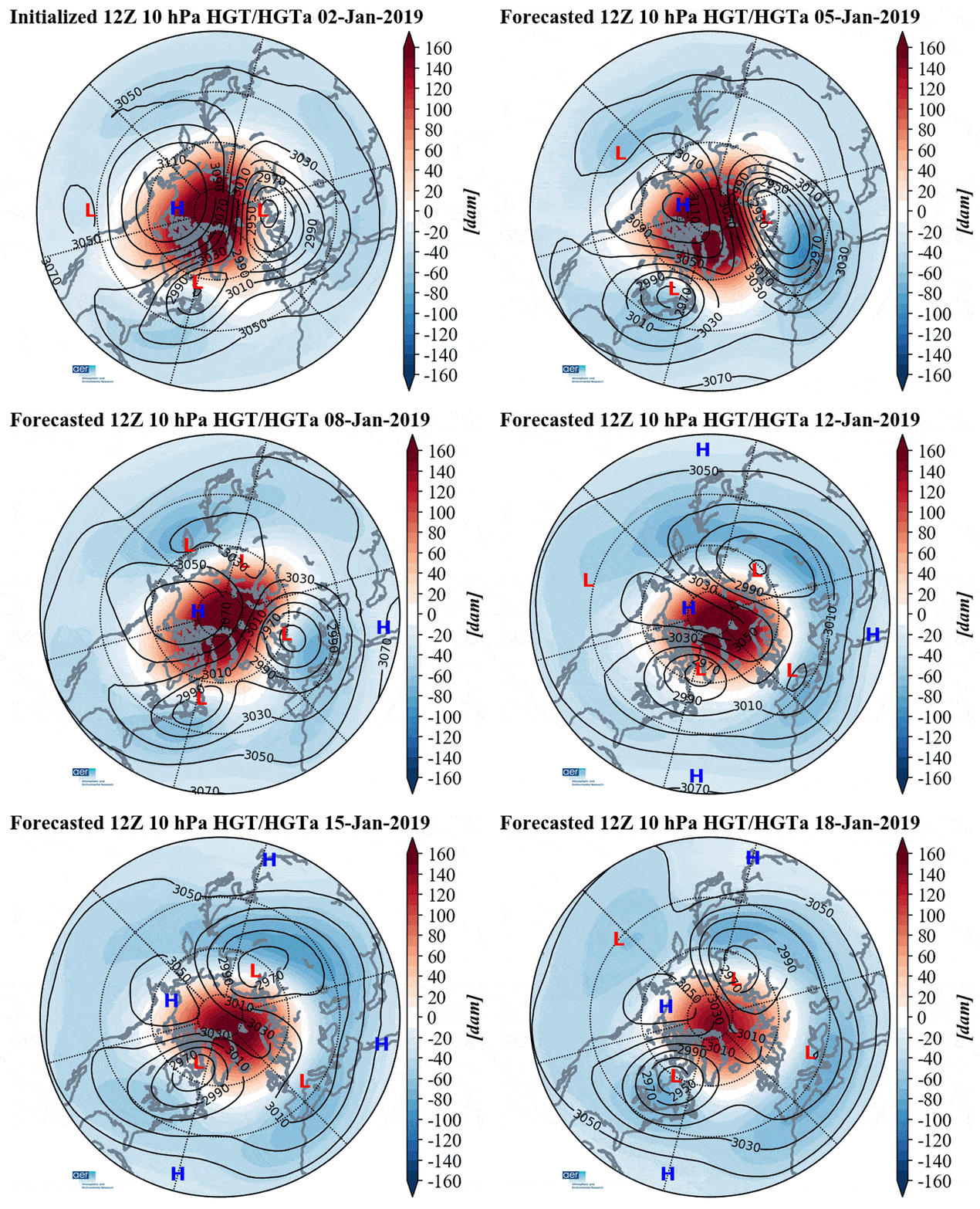
Computer model projected 10 mb geopotential heights (dam; contours) across the Northern Hemisphere for Jan. 2 through Jan. 18. Credit: GFS model via Judah Cohen/AER Verisk
Scientists are seeing signs that global weather patterns toward the latter half of January and into February may shift significantly to usher in severe winter weather for parts of the U.S. and Europe.
How it works: The possible changes are being triggered by a sudden and drastic warming of the air in the stratosphere, some 100,000 feet above the Arctic, and by a resulting disruption of the polar vortex — an area of low pressure at high altitudes near the pole that, when disrupted, can wobble like a spinning top and send cold air to the south. In this case, it could split into three pieces, and those pieces would determine who gets hit the hardest.
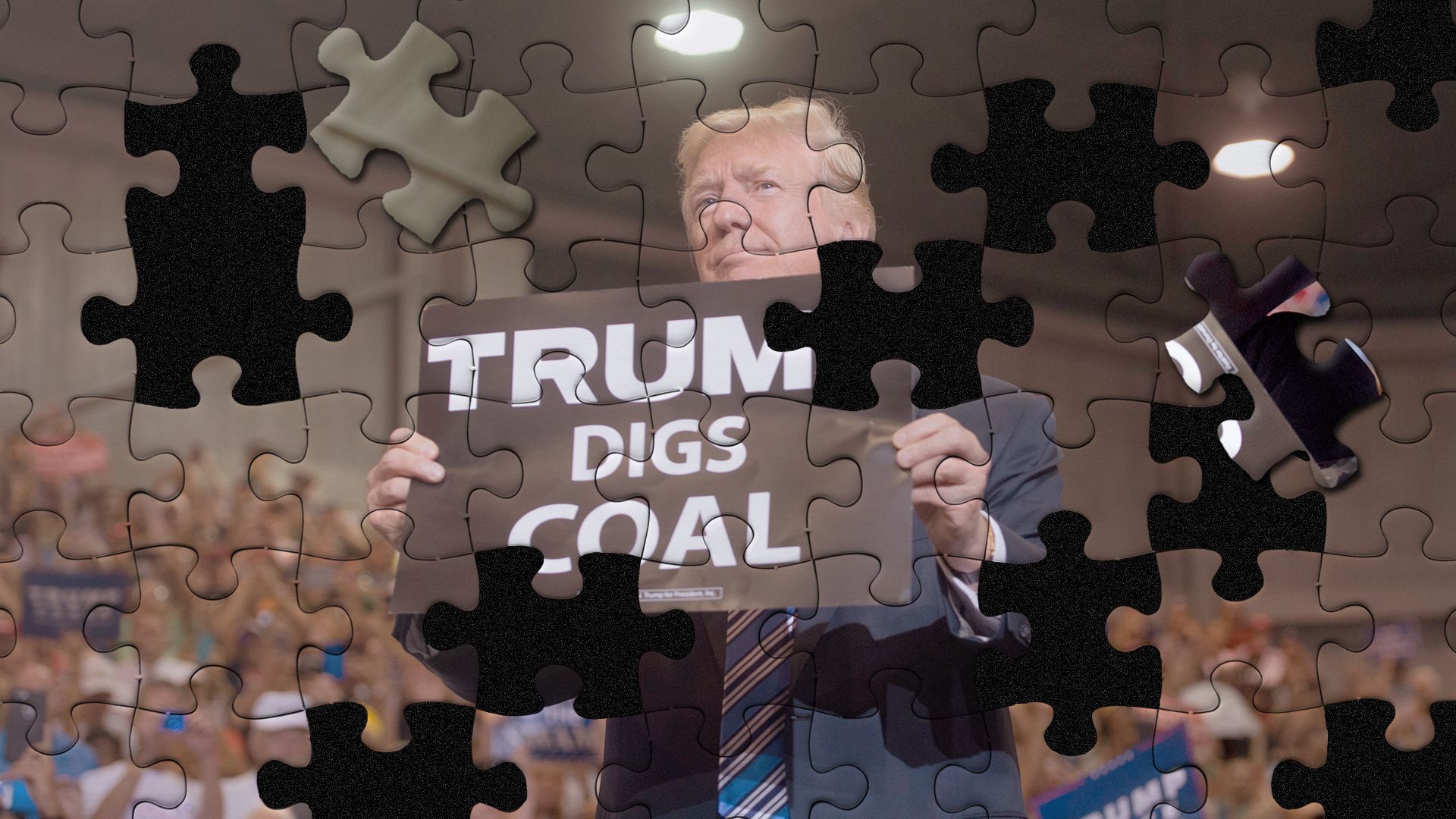
Almost two years into his push to unwind Obama-era energy regulations, President Trump's attempt to help the coal industry faces an uphill climb, while separate market forces may ultimately limit his moves to expand the oil boom into new regions.
Where it stands: When it comes to one of Trump's biggest energy pledges — to end what he and other Obama critics called the "war on coal" — the president hasn't turned the tide. The most recent Energy Information Administration forecast shows coal's share of electric power sliding down again to 26% next year, compared to 28% in 2018. The same analysis sees U.S. coal production falling another 3% in 2019.
After a year of competition, the price of Brent crude closed at $52.20 a barrel, and congratulations began to pour in on Twitter. It was last Friday and — for the third time in four years — I looked like a strong shot to win the Oil Bet, an annual contest among some two dozen energy analysts, academics and reporters to project Brent's year-end price. A snarky suggestion from a former BP executive was that Goldman Sachs — itself far out of the money — put me on the payroll.
Yes, but: In the most topsy-turvy market in a decade, everyone knew that actually anything could happen, and on Monday, in the final two hours of trading for the year, it did — oil prices made a dramatic bullish lurch. The crown went to Brian Scheid, of S&P Global Platts.
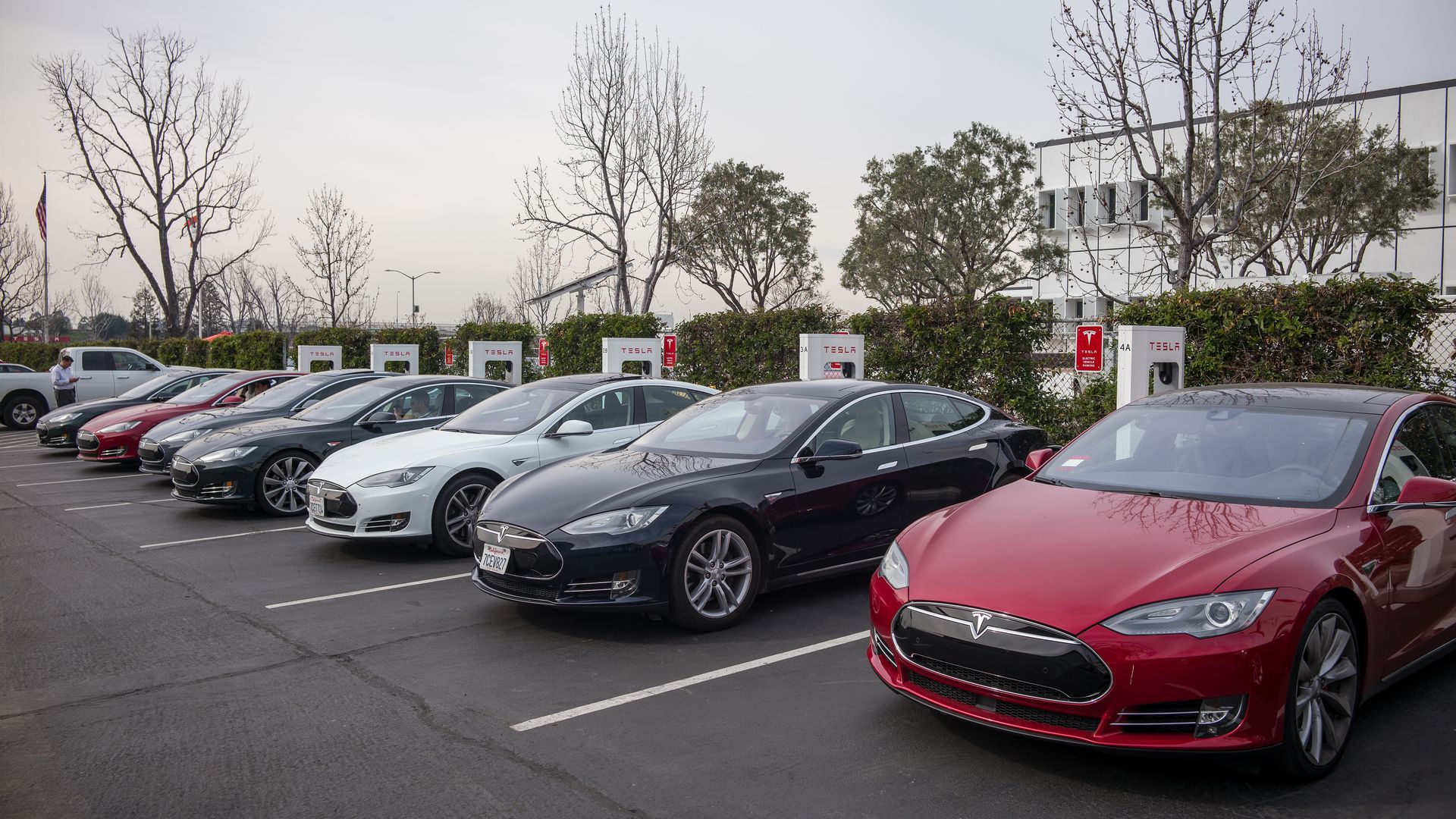
Shares of Tesla fell 9% after announcing it delivered 90,700 vehicles in the fourth quarter, fewer than the 92,000 estimated by FactSet, and the company said it would slash the cost of all of its models by $2,000, a buffer for the reduced tax credit for electric vehicles that took effect on Jan. 1. A Tesla spokesperson tells Axios that its deliveries were "roughly in line with Wall Street’s estimates," per its own internal tracking that forecast 91,046 deliveries.
The big picture: The company still delivered three times as many cars as it did in last year’s fourth quarter, as the Wall Street Journal points out. Tesla also boosted production, with 86,555 vehicles in the fourth quarter — 8% more than it did last quarter. Next month, we’ll find out whether that translates into another profitable quarter, when the company reports quarterly results.