Beer prices around the world could double as climate change-related droughts and heat waves cut into production of barley, one of the key ingredients in beer and a particularly heat-sensitive crop, according to a new study in Nature Plants.
The big picture: One of the paper's authors, Steve Davis of the University of California, Irvine, told AP that, as a beer drinker, the study was "born of love and fear" and meant to provide a more concrete basis for the warnings of climate change. A UN report last week warned of dire consequences without "unprecedented" global action to slash greenhouse gas emissions.
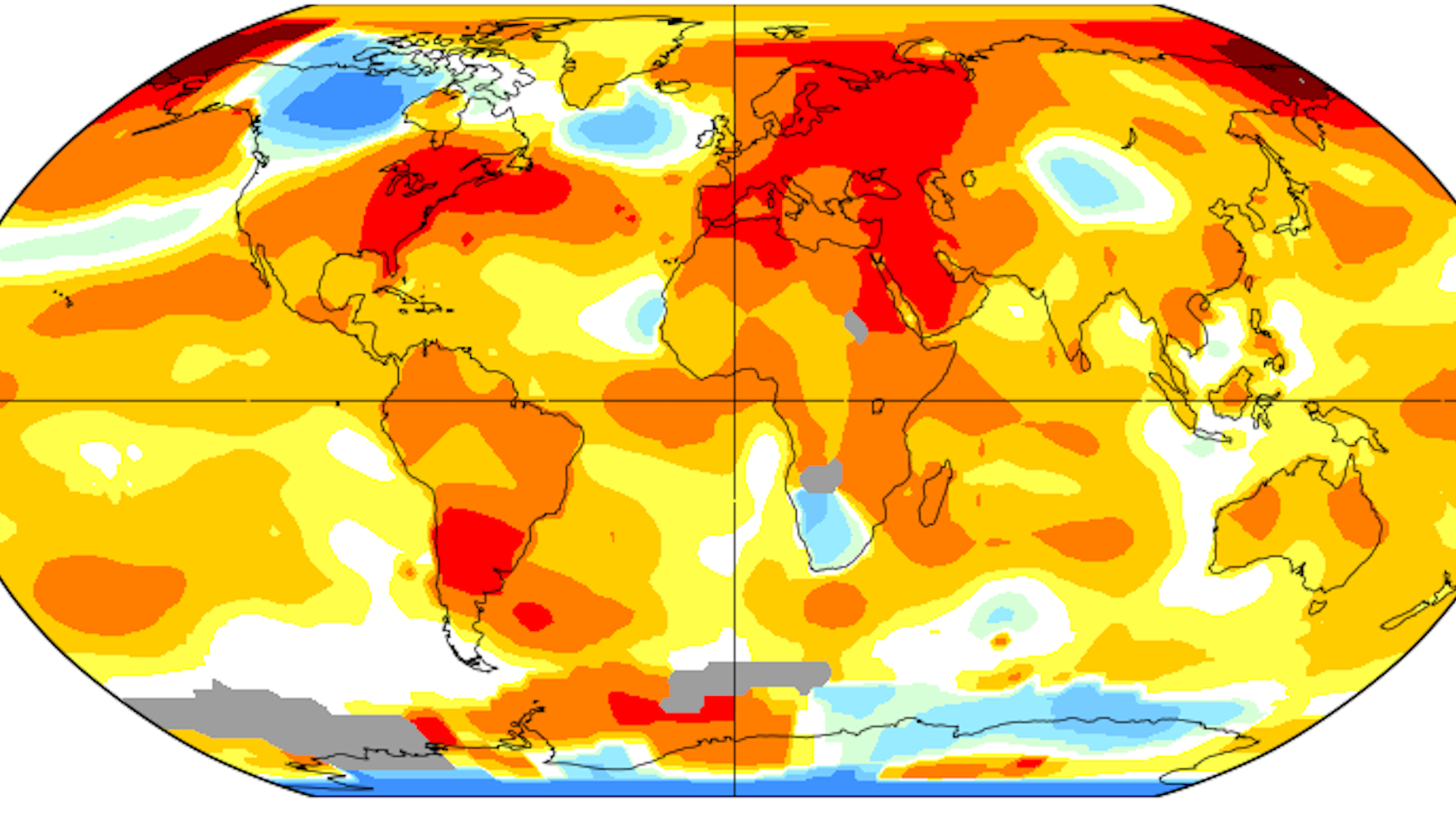
NASA data released Monday showed that 2018 is likely to become Earth’s fourth-warmest year on record.
September 2018 was the planet's fifth-warmest September on record, and the world is poised to record its fourth-warmest year, according to new data NASA released Monday.
Why this matters: According to Gavin Schmidt, the director of NASA's Goddard Institute for Space Studies in New York, 2018 is also likely to be the fourth year in a row with an average temperature of 1ºC, or 1.8ºF, above the 19th century average. A recent climate report from the UN warned of severe consequences if global warming is not limited to 1.5ºC, or 2.7ºF, above average, compared to preindustrial levels.
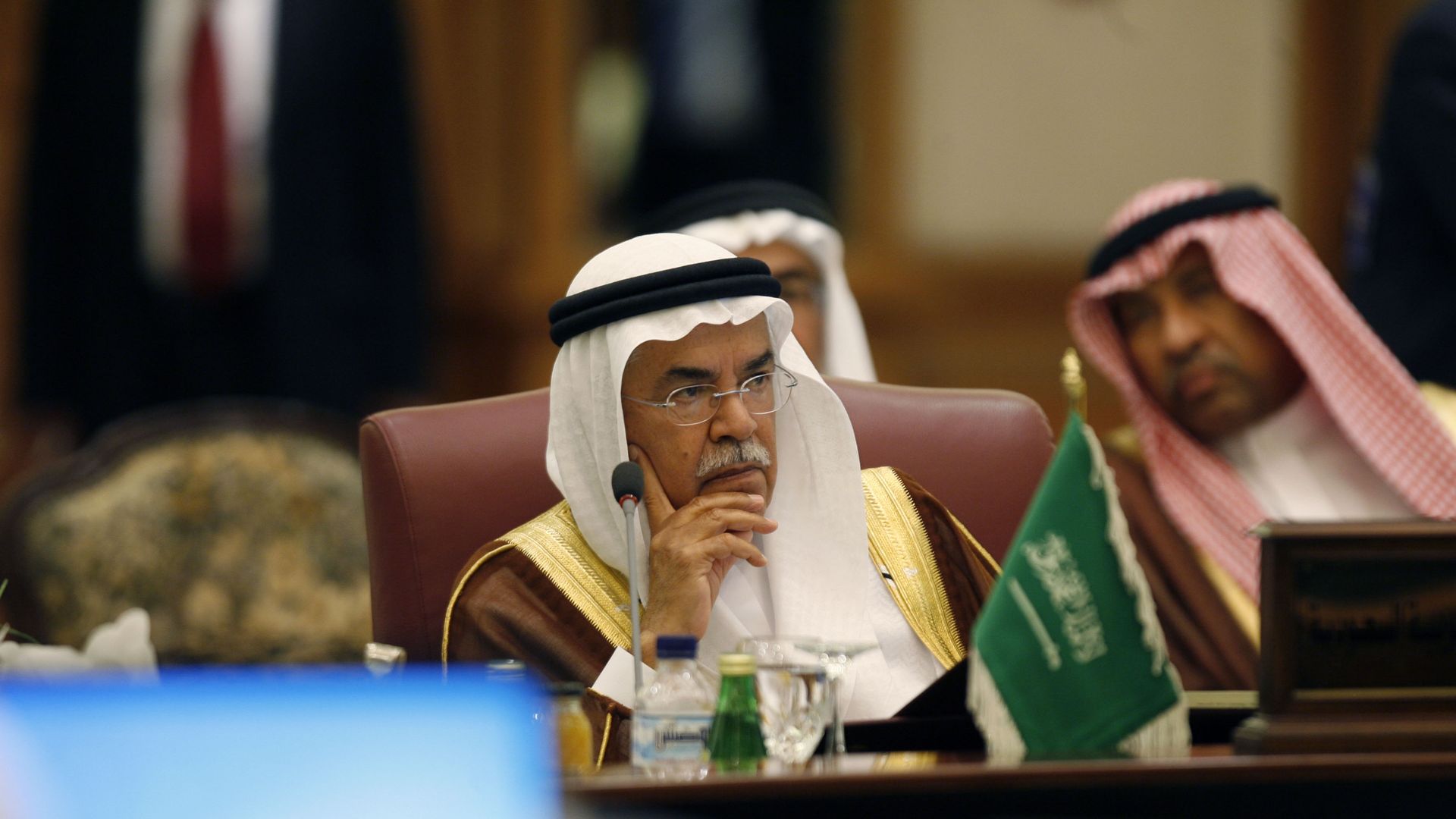
Crude oil prices are up Monday after the weekend's escalating rhetoric between the U.S. and Saudi Arabia over the disappearance — and apparent killing — of Jamal Khashoggi.
Between the lines: Traders don't appear convinced at this point that the rupture will cause major upheaval in oil flows. Prices for the benchmark Brent crude are higher but they're not soaring.
Two parallel efforts to tax carbon emissions are taking great strides to avoid the t-word.
Why it matters: Because words matter! And this one — tax — matters more than most. It’s at the intersection of our fossil-fuel dependence, the climate-change repercussions of that, and what (if anything) is done about it.
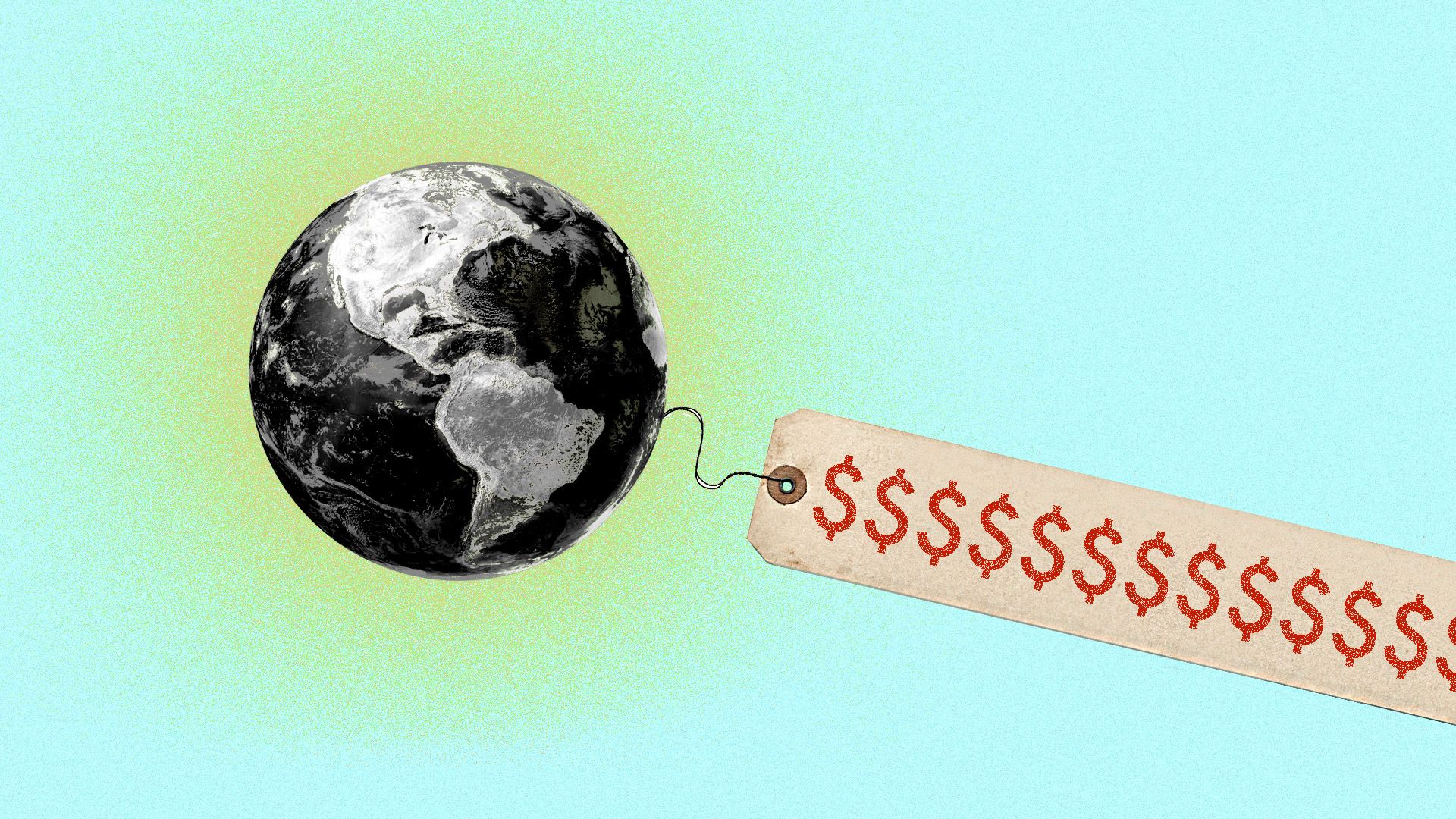
There's $500 trillion of wealth on planet Earth, give or take: Maybe $230 trillion in land and property, $200 trillion in debt and $70 trillion in equity.
The big picture: All of that wealth comes, ultimately, from the planet, and the climate. Specifically, it has come from a stable climate. William Nordhaus points out in his 2013 book "The Climate Casino" that “the last 7,000 years have been the most stable climatic period in more than 100,000 years.” The last 7,000 years have also seen the rise of civilization and the creation of that $500 trillion in wealth. This is not a coincidence.
A United Nations scientific body just released a seminal report on how the world’s energy systems would have to be transformed to adequately address climate change.
The big picture: The world is still heavily dependent upon fossil fuels. It accounts for 81% of the world's energy consumption, a figure that hasn’t changed in 30 years. Evolving electricity mixes is one clear gauge of how countries are doing cutting their greenhouse gas emissions and using cleaner energy technologies.