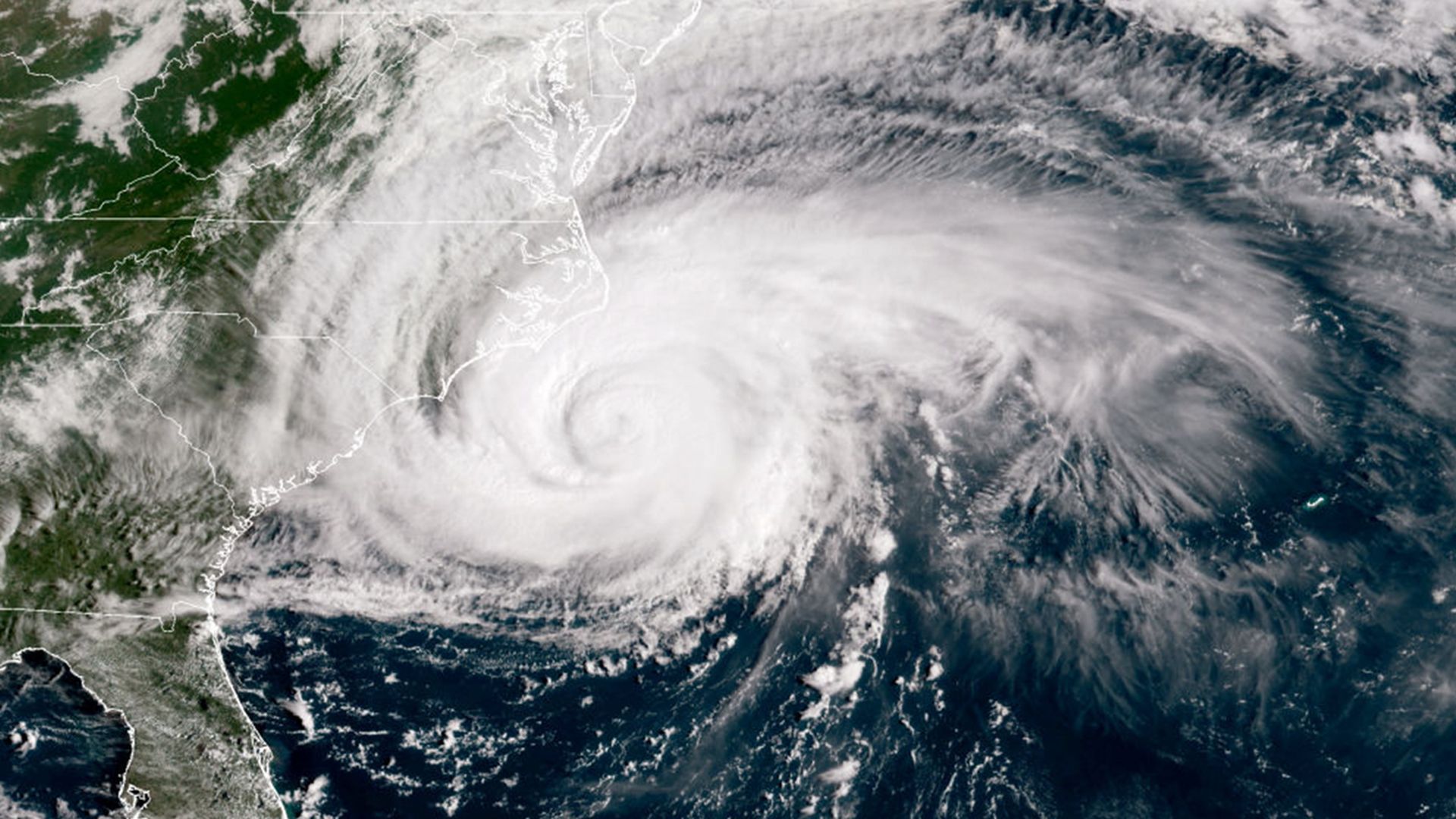
Hurricane Florence is slowing down on its way toward the North Carolina coastline, and its peak sustained winds have diminished to 105 miles per hour — but it will bring the storm surge equivalent to a Category 4 and an inland flooding threat of historic proportions. The storm's slow movement means that heavy rain bands will keep forming over the Atlantic and moving over land, causing flooding well inland of the coast.
The big picture: This storm illustrates the limits of the official rankings of hurricanes. The model, called the Saffir Simpson Hurricane Wind Scale, only measures a storm's wind speeds. But hurricanes primarily kill with water, and even though Florence is officially a Category 2 right now, it's setting in motion massive amount of water that will result in a near record surge along the North Carolina coast.
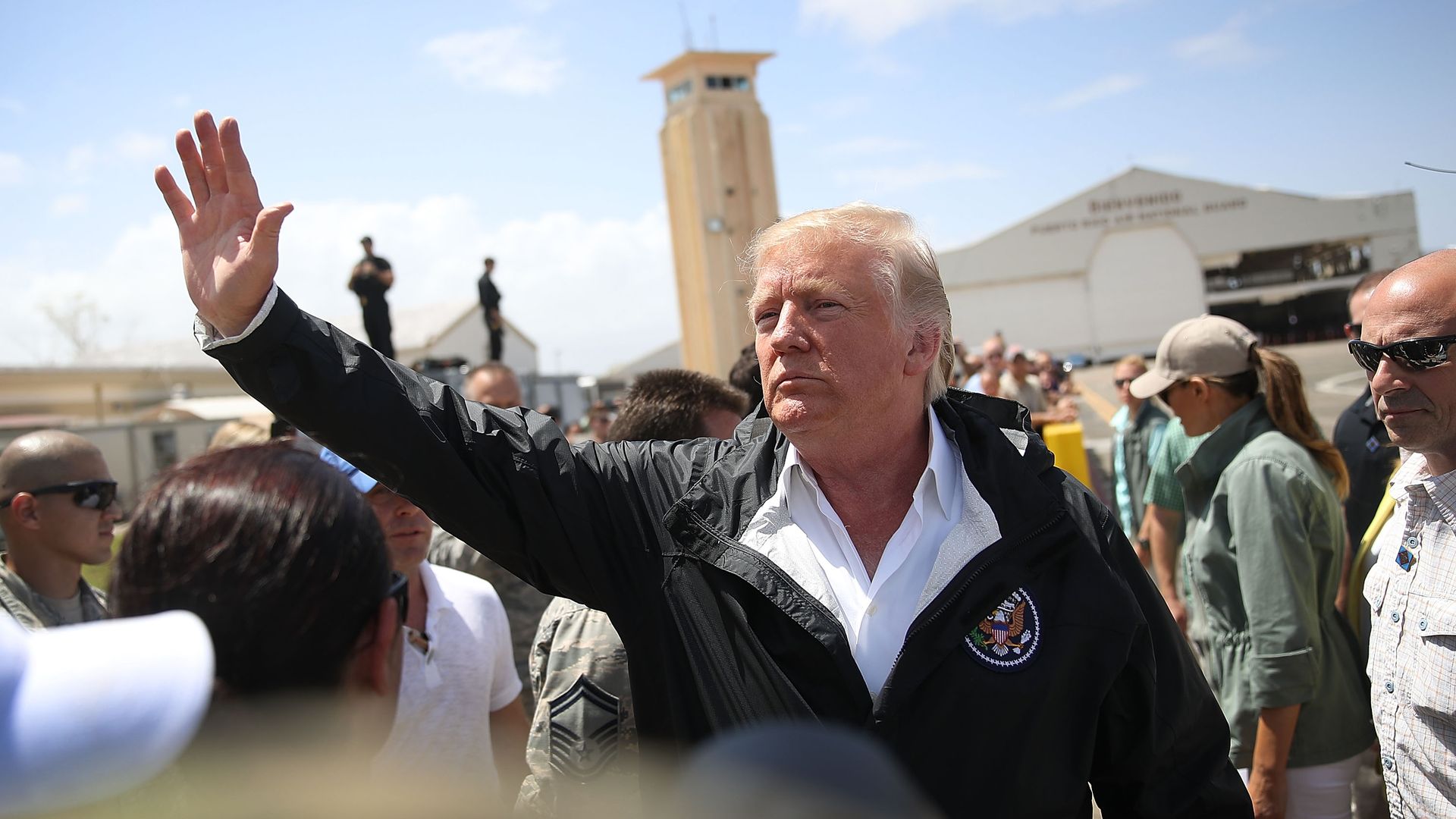
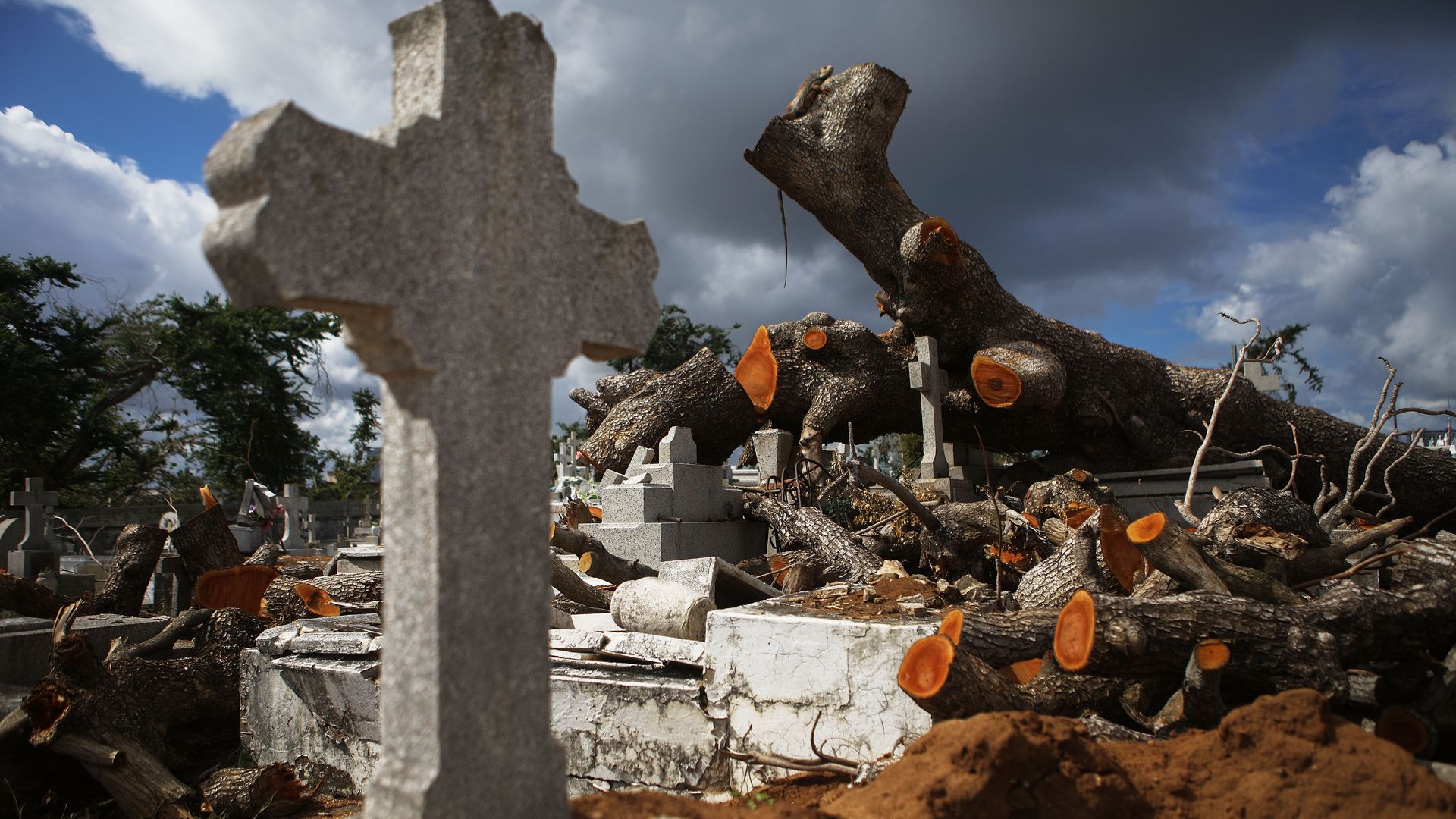
President Trump set off a social media firestorm Thursday after claiming, without evidence, that Democrats had inflated the Puerto Rican death toll stemming from last year's Hurricane Maria.
The big picture: The death toll estimate, the product of a George Washington University study that was commissioned by the Puerto Rican government, was a conservative one. And lawmakers were not shy about calling out the president for his baseless claim.
Hurricane Florence is a highly unusual storm, not just because of its intensity and size, but also the journey it's taking toward the Carolina coastline.
The big picture: As this historical track map shows,few other major hurricanes have hit North Carolina — and none hasfollowed as bizarre a path as Florence is expected to take.
President Trump claimed on Thursday, without evidence, that the death toll of Hurricane Maria was "done by the Democrats in order to make me look as bad as possible," and disputed the official count of almost 3,000 deaths.
Reality check: The number provided by the George Washington University study, which was commissioned by the Puerto Rican government, was conservative, the report's authors noted in the study.
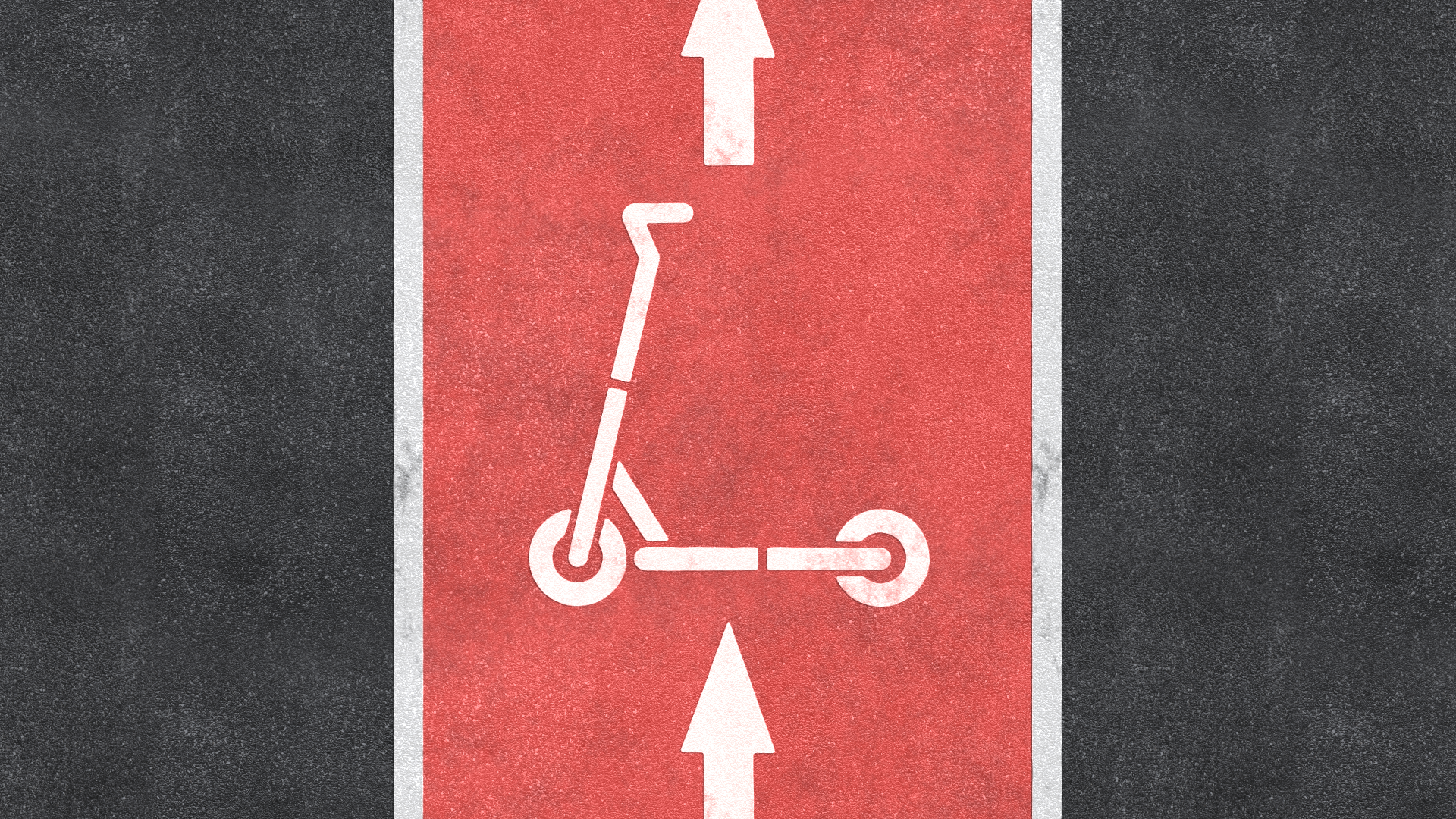
Yellow, a Brazilian e-scooter and bike company, raised $63 million in Series A funding led by GGV Capital.
Bottom line: The scooter wars have expanded to Latin America, especially as Yellow plans to expand to Mexico, where Y Combinator-backed Grin already operates.
In a series of Thursday morning tweets, President Trump denied the report commissioned by the Puerto Rican government that put the death toll from last year's Hurricane Maria's near 3,000, blaming Democrats for inflating the numbers "in order to make [him] look as bad as possible."
"3000 people did not die in the two hurricanes that hit Puerto Rico. When I left the Island, AFTER the storm had hit, they had anywhere from 6 to 18 deaths. As time went by it did not go up by much. Then, a long time later, they started to report really large numbers, like 3000. This was done by the Democrats in order to make me look as bad as possible when I was successfully raising Billions of Dollars to help rebuild Puerto Rico. If a person died for any reason, like old age, just add them onto the list. Bad politics. I love Puerto Rico!"
The International Energy Agency said Thursday that the global crude market is entering a "very crucial period" as U.S. sanctions against Iran loom and the country's exports have already dropped. Oh, and Venezuela is still collapsing.
The big picture: There's certainly enough crude from elsewhere sloshing around right now.
Hurricane Florence is taking aim squarely at the Carolinas — with North Carolina in the crosshairs first on Thursday through early Saturday, followed by South Carolina and possibly Georgia. The maximum sustained winds have weakened, and Florence is now expected to approach the coast as a Category 2 storm.
The bottom line: An unusual mix of weather systems across the U.S. will force Florence to hit the brakes as it nears the coast, somewhere close to the border of the Carolinas. It is likely to be the strongest hurricane to hit the coast in at least 25 years.
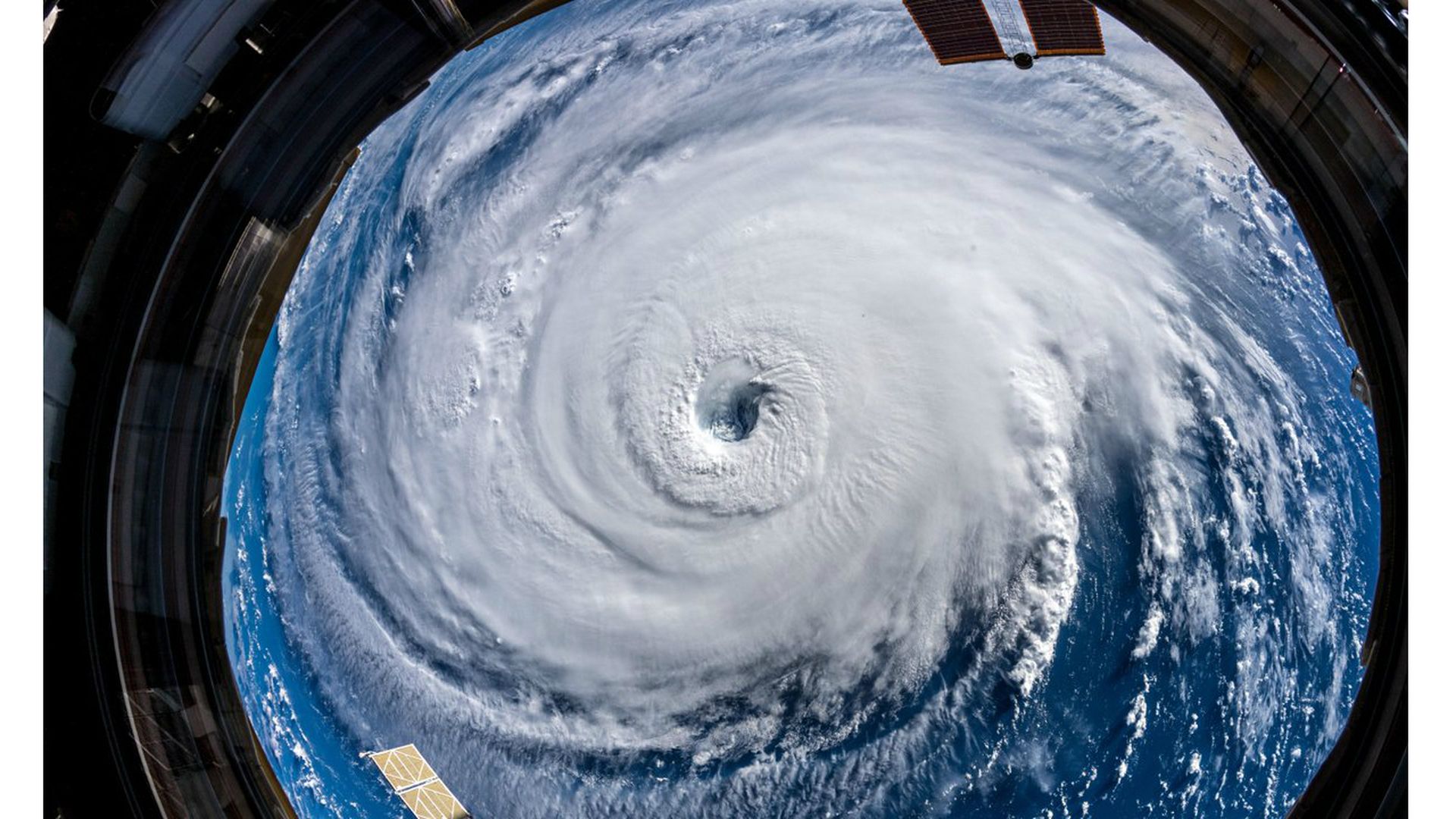
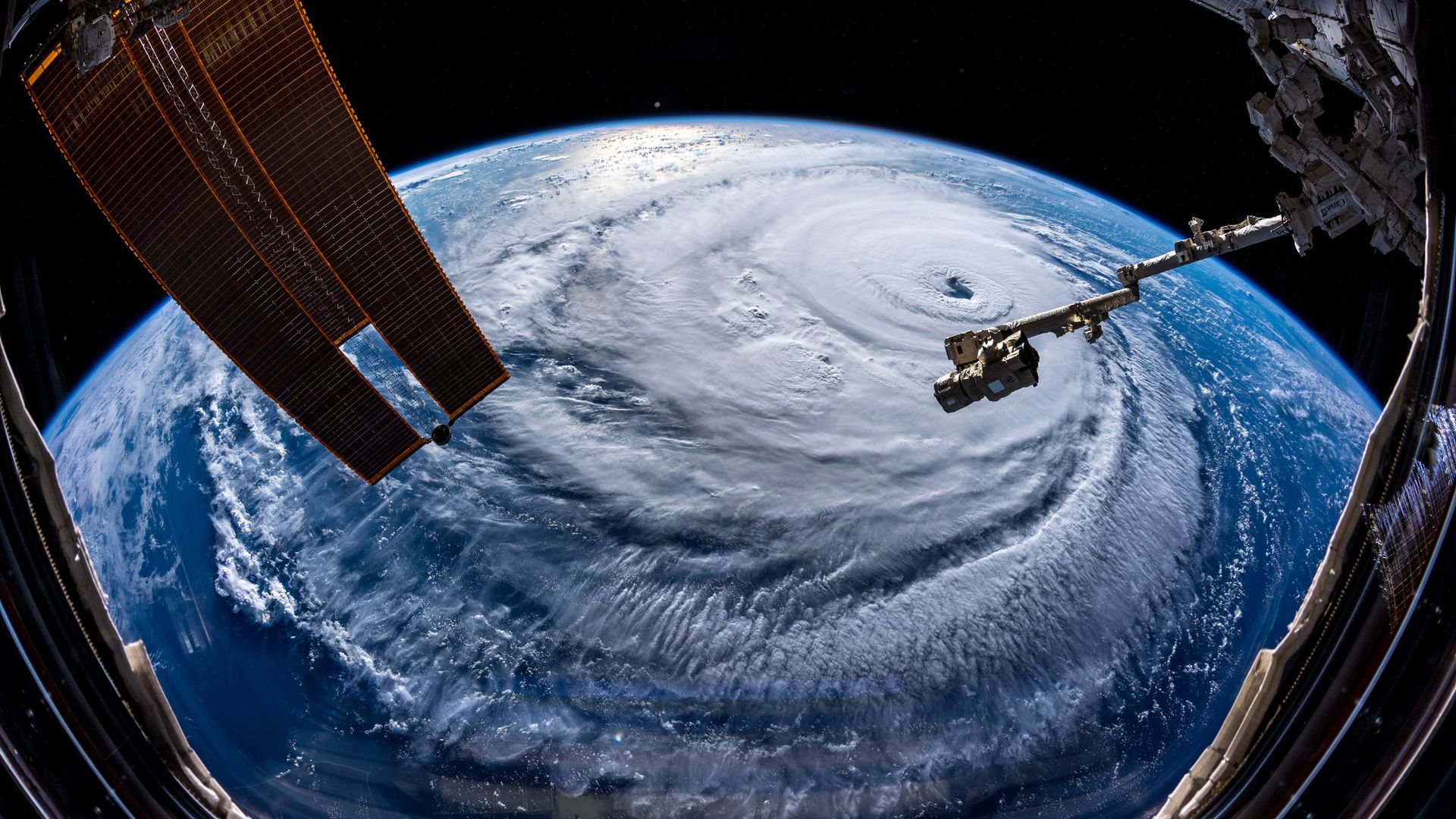
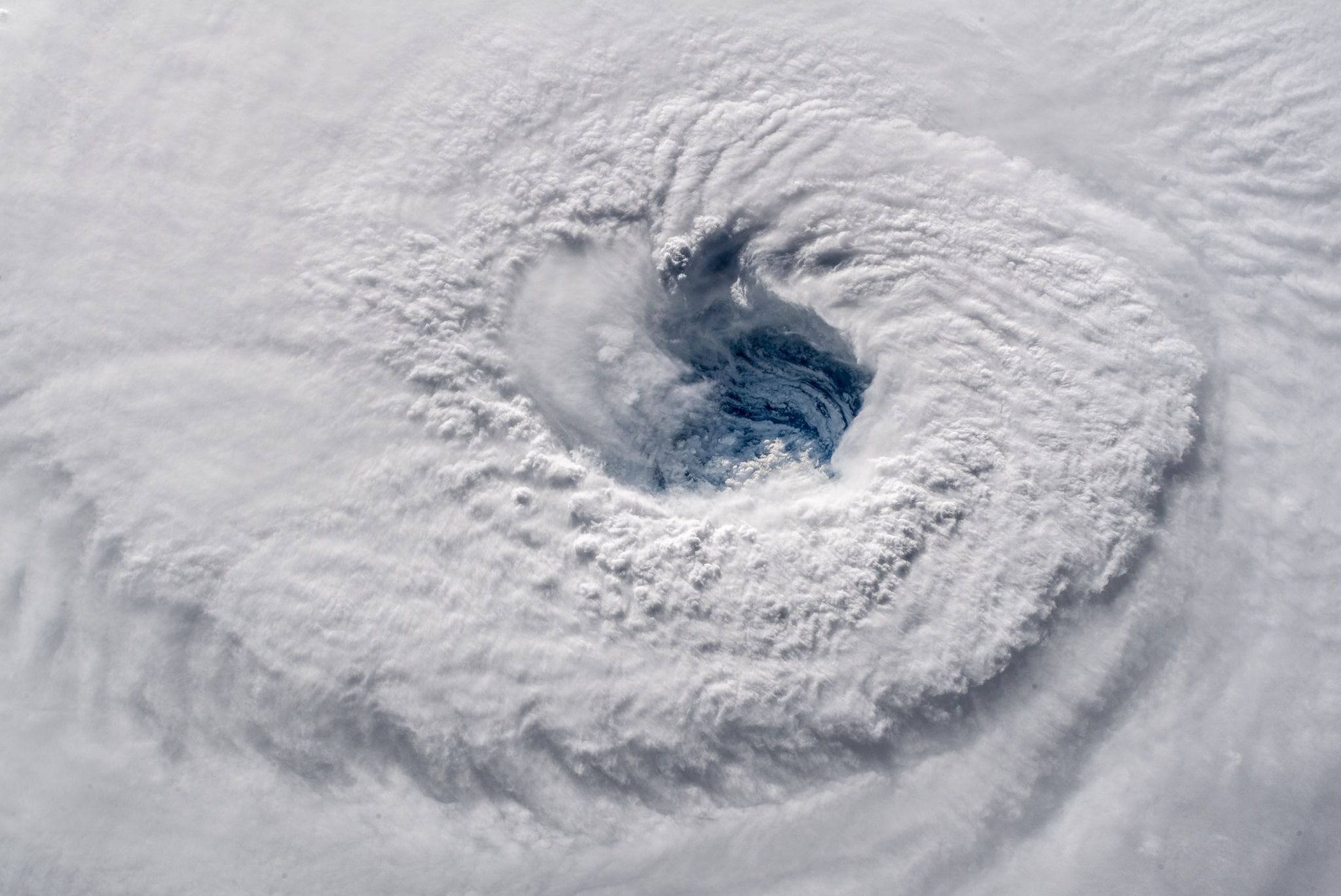
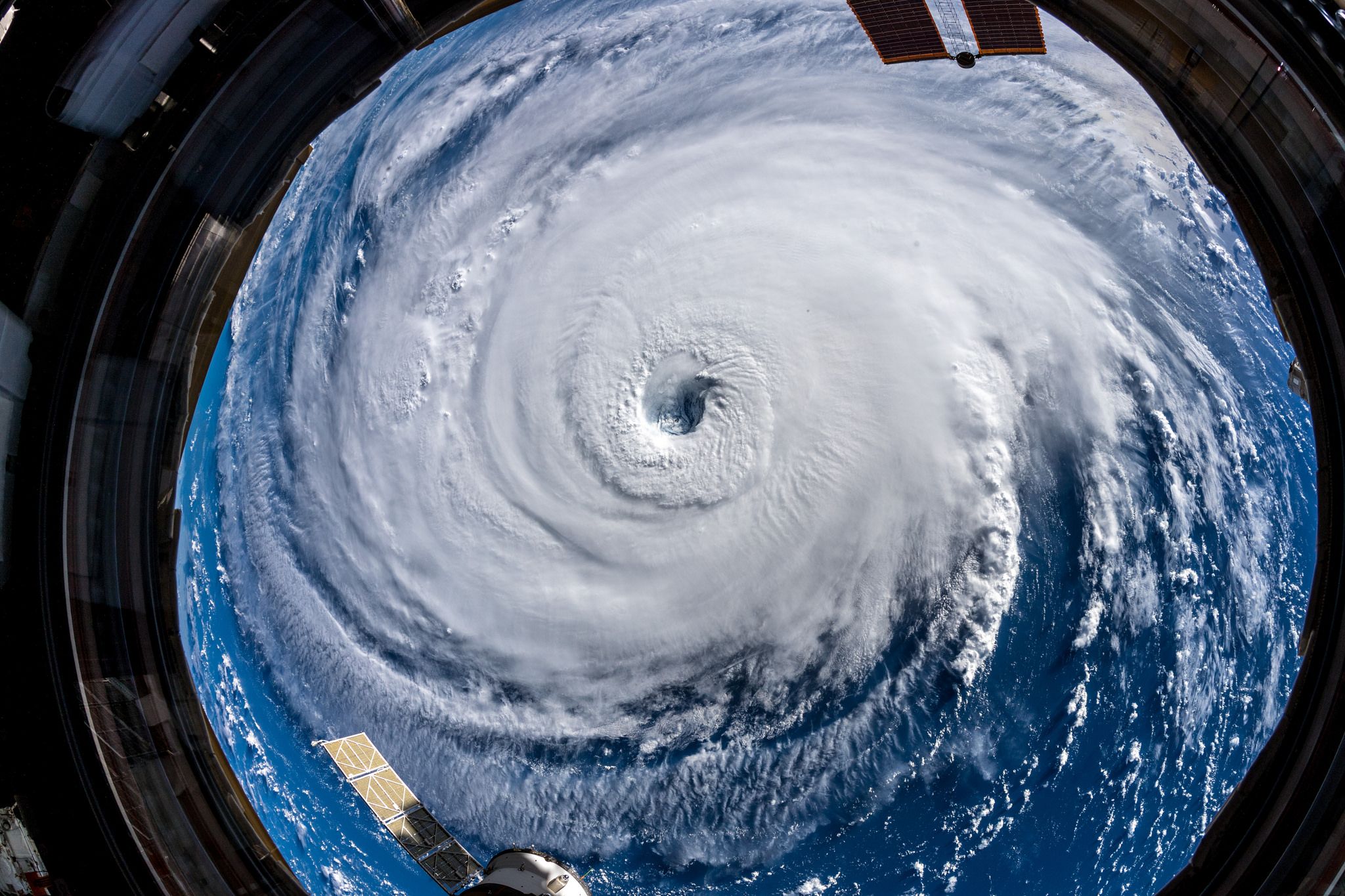
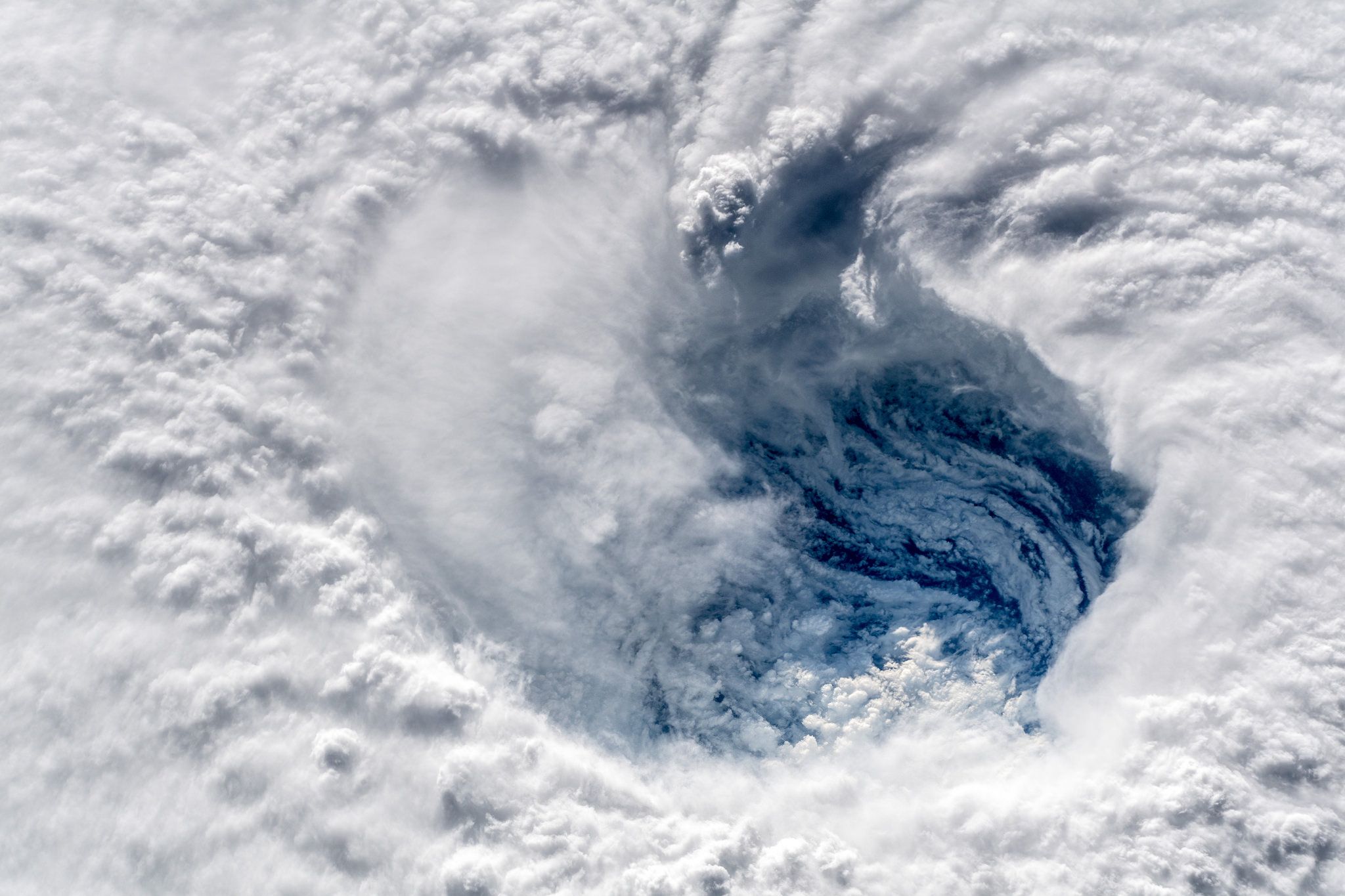
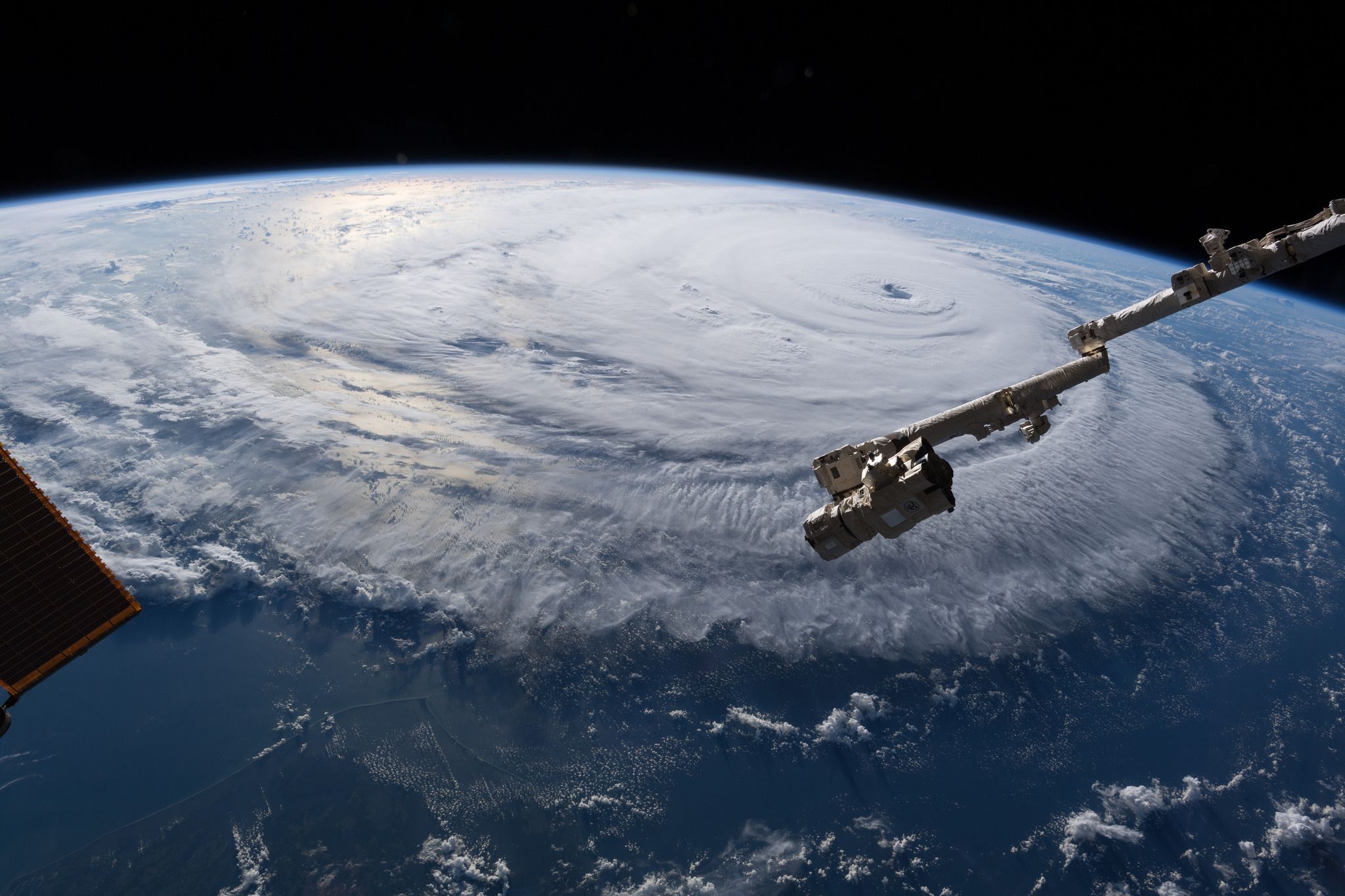
On Wednesday morning, European astronaut Andrew Gerst captured a unique set of photos of the massive Hurricane Florence barreling towards the East Coast.
At the time of these pictures, Florence was a Category 4 storm with a 25-mile-wide eye, based on hurricane hunter aircraft flying inside the storm. Gerst used "a super wide angle lens from the International Space Station, 400 km directly above the eye" to capture the images. These are angles few people ever get to witness firsthand, and almost manage to make the destructive storm look beautiful and serene — almost.