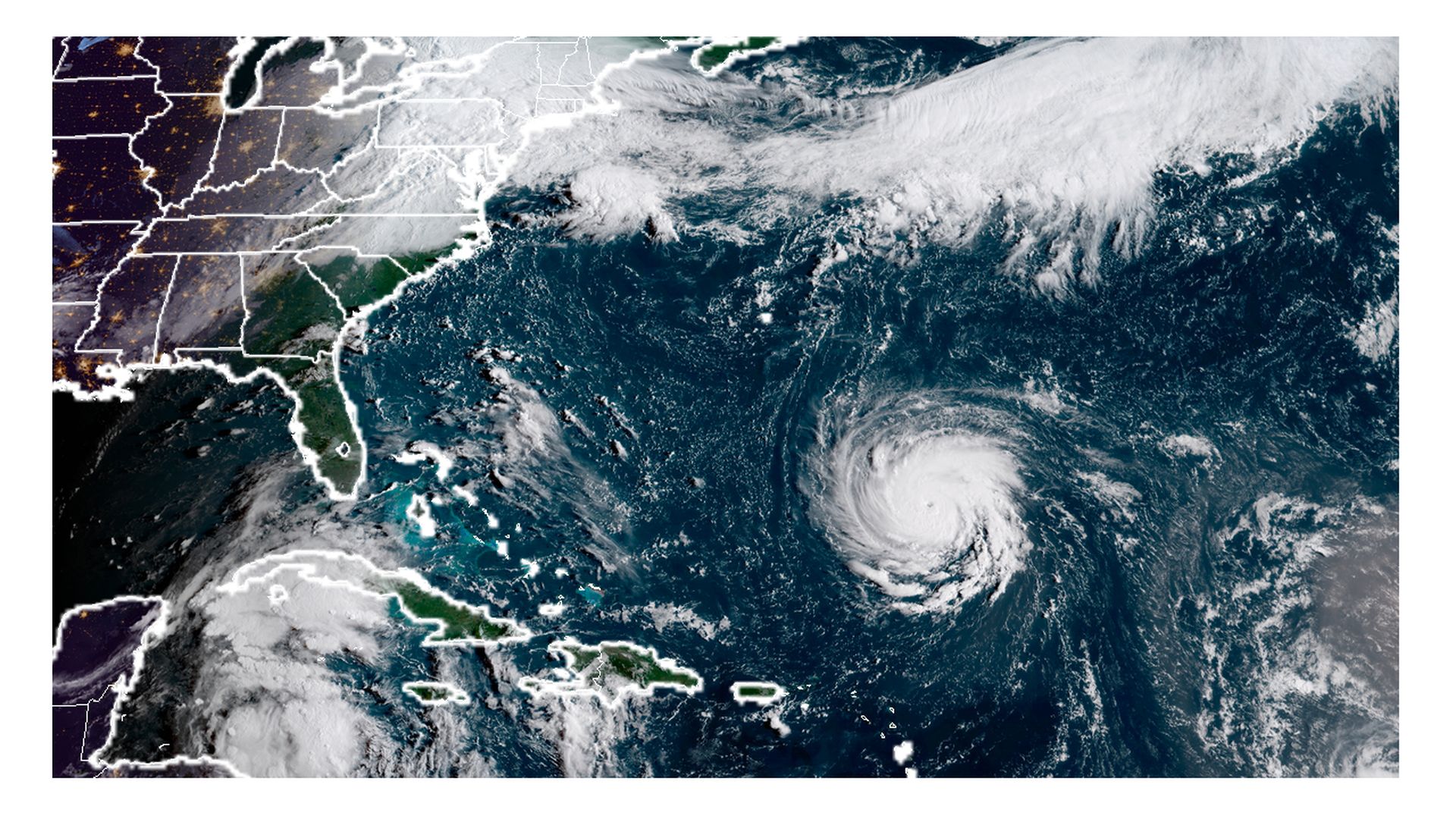
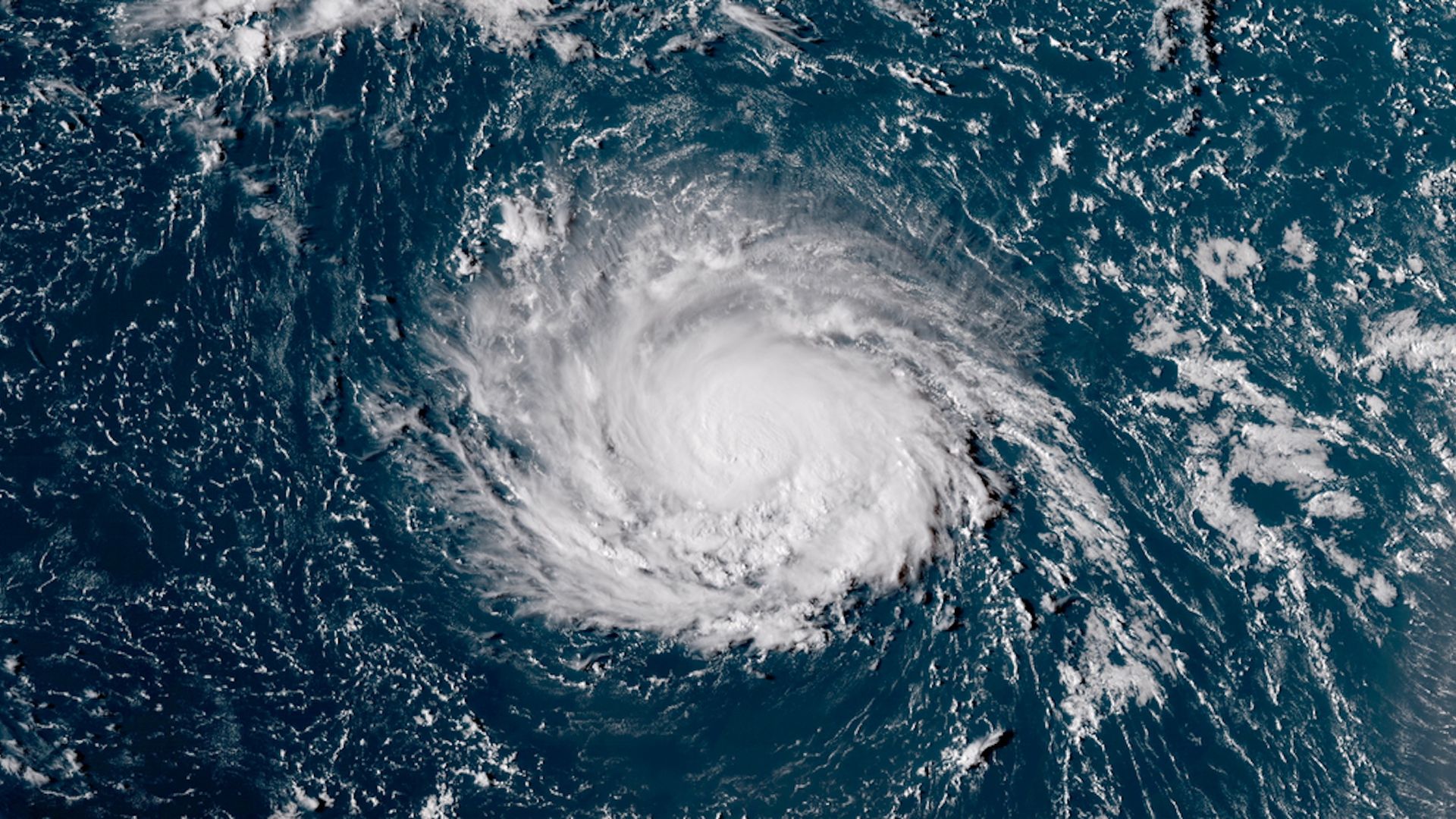
As of 5 p.m. ET, Hurricane Florence had maximum sustained winds of 140 mph. The official intensity forecast has been raised — now calling for it to peak as a Category 5 storm before weakening slightly as it makes its approach to the coast.
The big picture: Florence poses extraordinary risks for the East Coast, from storm surge flooding at the coasts, to high winds inland and potentially deadly inland flooding. As of 5 pm ET, the National Hurricane Center said the storm's hurricane force wind field had doubled in size in the past 12 hours.
Hurricane Florence, currently a Category 4 storm, is going through an astonishingly rapid intensification process, and could hit anywhere from the Carolinas to the Mid-Atlantic by Thursday or Friday.
Driving the news: As of 5 pm ET, Hurricane Florence had maximum sustained winds of 140 mph. The official intensity forecast has been raised — now calling for it to peak as a Category 5 storm before weakening slightly as it makes its approach to the coast. All eight of South Carolina's coastal counties will face a mandatory evacuation beginning at noon Tuesday, per The State.
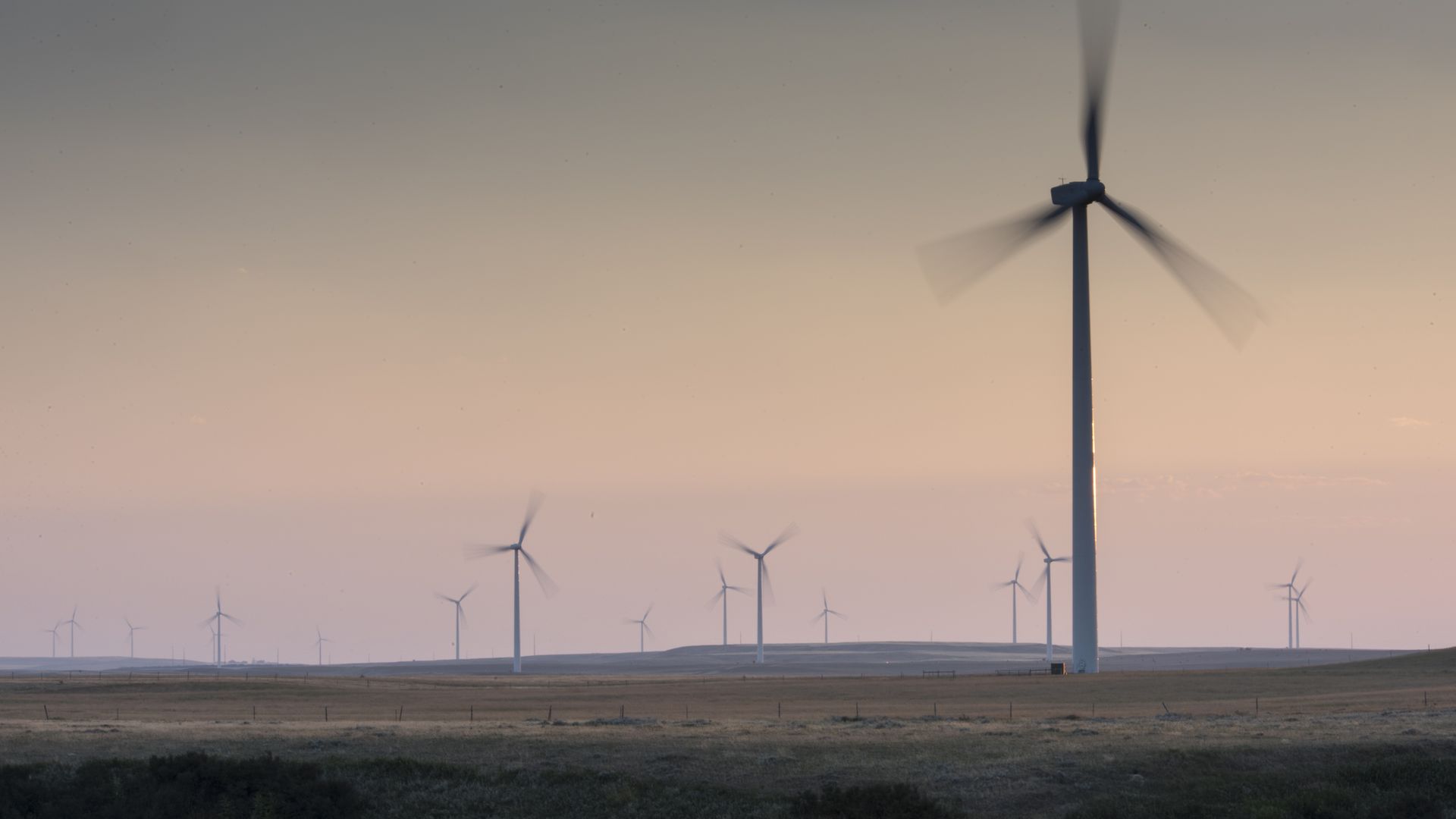
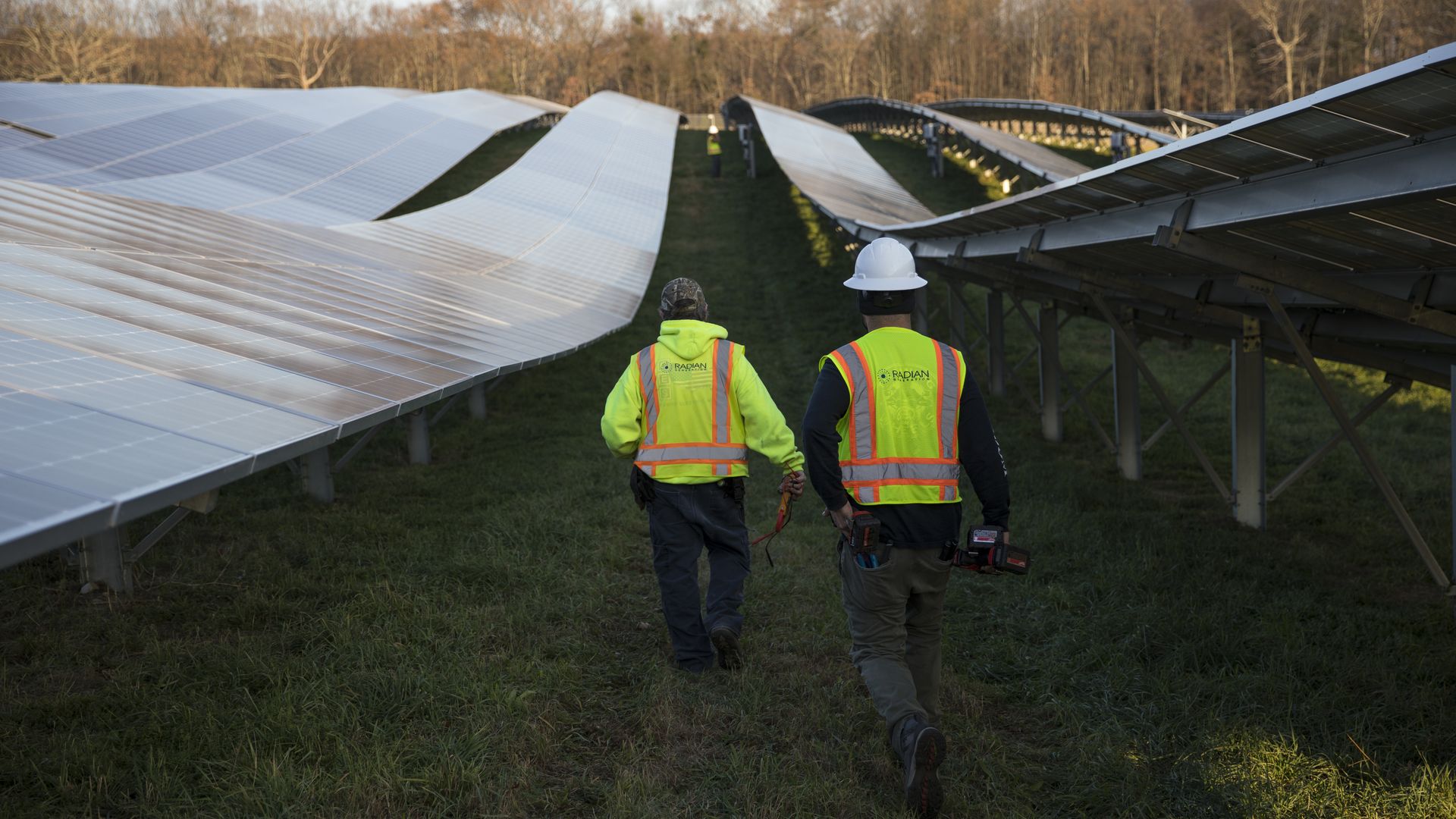
California passed a new law Monday that calls for the state to get 100% of its electricity from carbon-free sources by 2045, the AP reports.
What to watch: The bill will likely face two key challenges — finding reliable, long-term energy and pushback from "not in my backyard" landowners, former energy Secretary Ernest Moniz told Axios energy reporter Amy Harder. Go deeper with more from the interview.
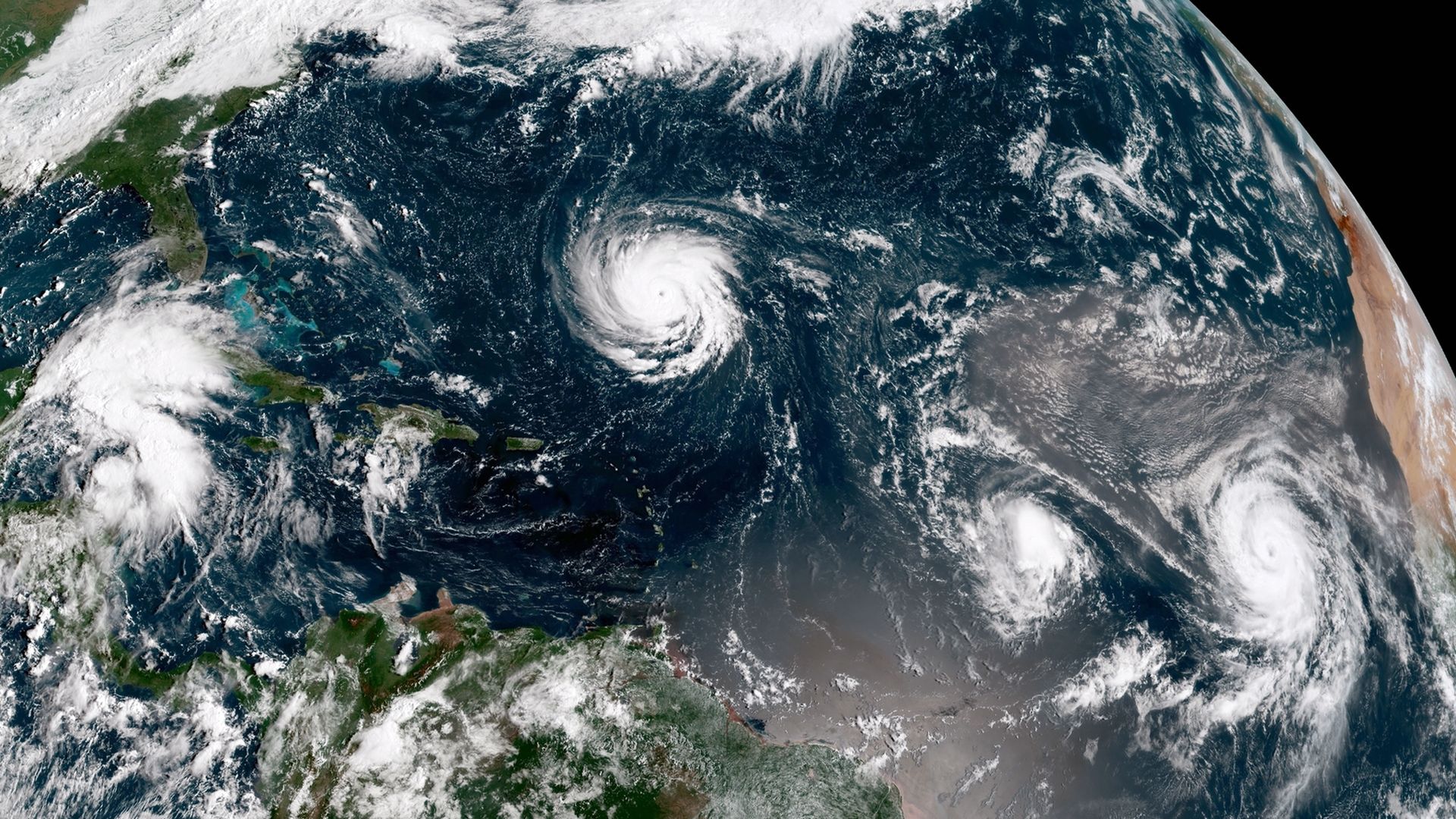
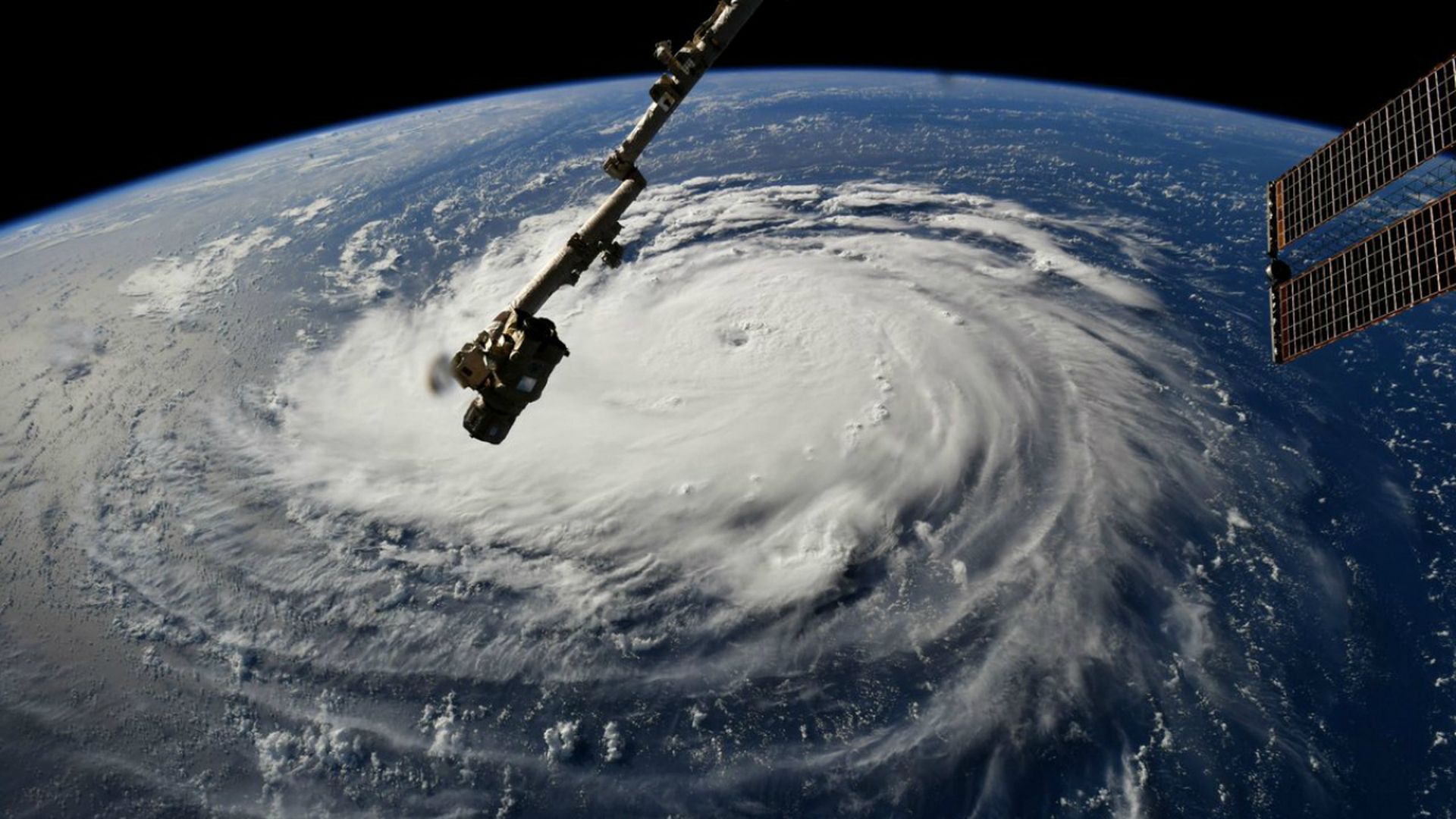
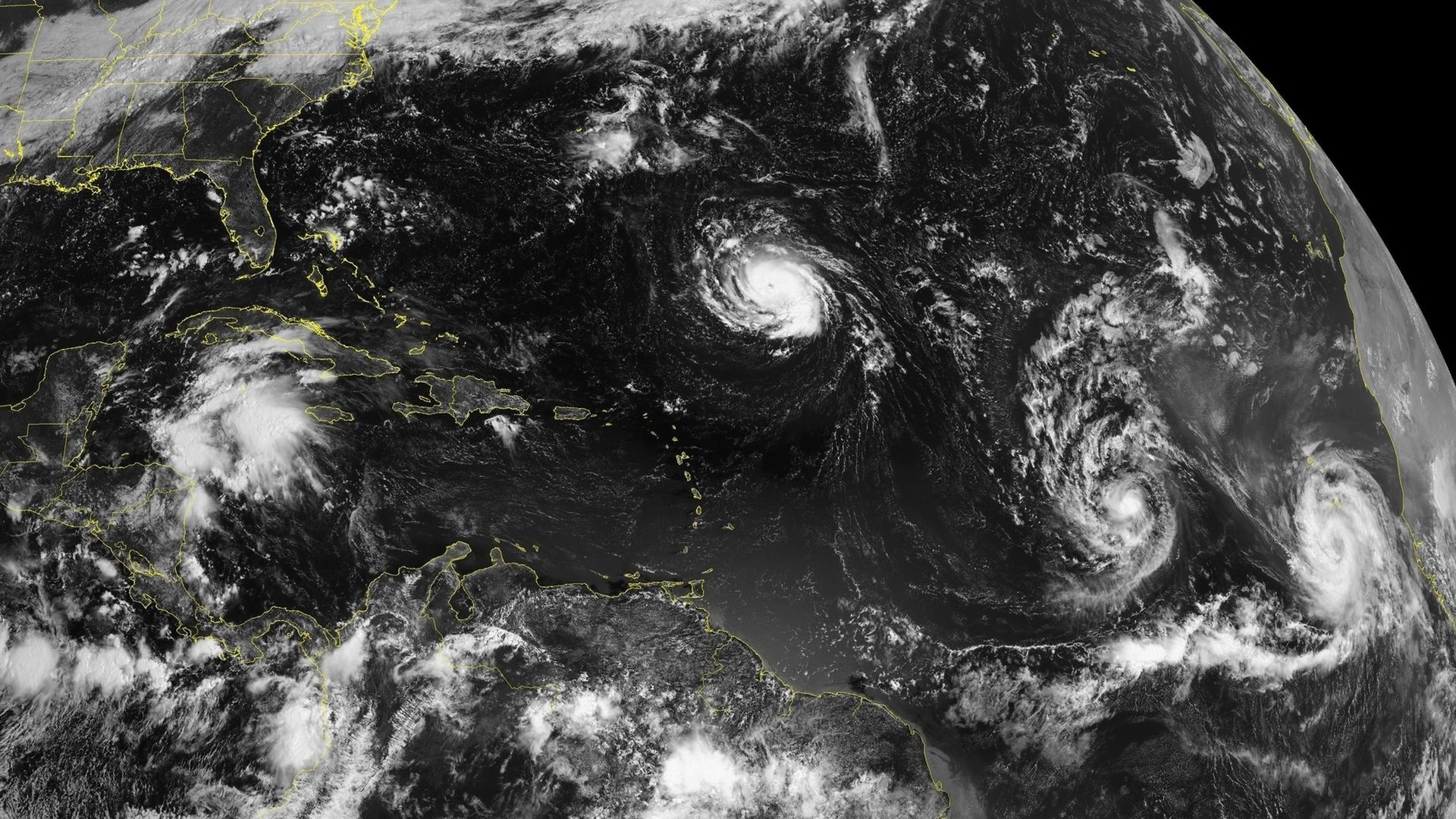
Hurricane Florence is intensifying at an astonishing pace as it takes aim at the East Coast of the United States — and astronaut Ricky Arnold got an incredible view.
The details: Arnold, currently on board the International Space Station, snapped pictures of Florence this morning, as Tropical Storms Isaac and Helene also soon came into his view.
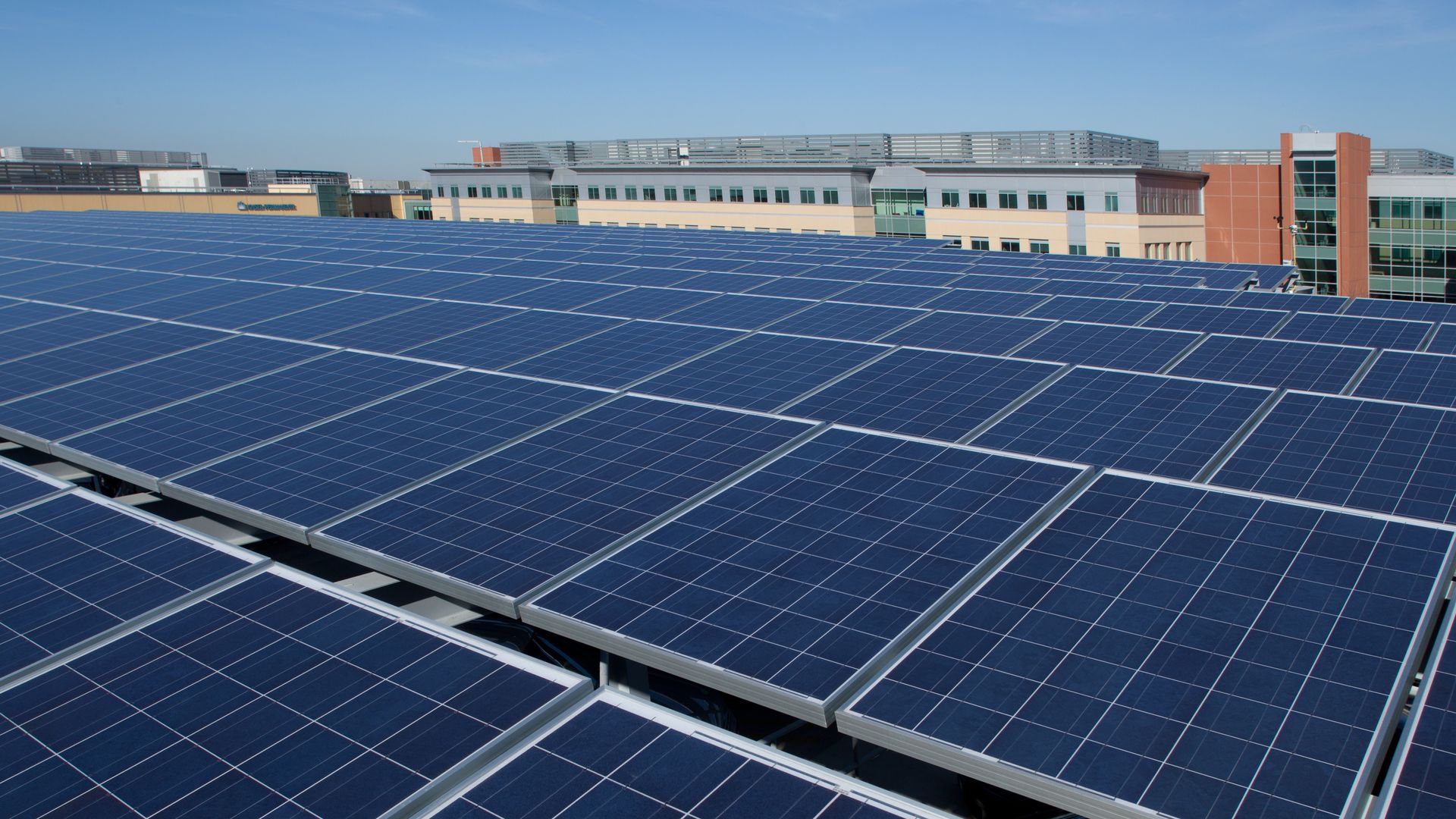
1,023 megawatts of community solar have been installed in the U.S. as of Q1 2018, according to a recent report, enough to power roughly 150,000–200,000 homes. Massachusetts, New York, Minnesota and Colorado are leading the way in providing community solar resources for their communities.
The details: Community solar refers to both community-owned solar installations and third-party-owned installations that allow anyone in the area to access the energy and , in some cases, obtain energy credits toward their electric bills. People who cannot afford solar installations or do not own the necessary real estate (renters, homeowners with shady rooftops, etc.) can participate and request clean energy through local utilities if community projects are available nearby. Several subscription models exist, from buying a share of panels in a solar farm to simply tapping into the power generated.
DENVER — A fight underway here in Colorado over a ballot initiative curtailing oil and gas drilling is NIMBYism at its most stark.
Why it matters: NIMBYism — "not in my backyard" opposition — is as old as time and often has a negative reputation. But in the case of Colorado, it shouldn’t. It’s the surprisingly simple result of a growing population and oil drilling encroaching on each other. It's a national symbol of both the economic benefits of drilling and its understandable drawbacks to nearby neighborhoods.
Kaiser Permanente, the multi-state network of hospitals, doctors and health insurance, is buying significant amounts of renewable energy and building solar and wind farms in an effort to be carbon-neutral by 2020, CEO Bernard Tyson said in an interview.
The big picture: The health care industry will have to be part of climate change solutions, given that it accounts for about 10% of U.S. greenhouse gas emissions.
Hurricane Florence has the potential to be a devastating storm for tens of millions along the East Coast later this week, when it is forecast to come close to or cross over the coastline of the Carolinas or mid-Atlantic region. It can possibly come to a complete stall as a major hurricane of Category 3 intensity or greater, which would be a potential nightmare scenario if it plays out.
The big picture: Computer model projections are unanimous in showing the storm will be unusually intense and slow-moving — two attributes that indicate its destructive potential. While Florence was a Category 1 storm Sunday afternoon, it's forecast to take advantage of warm sea surface temperatures, the absence of wind shear and other inhibiting factors to rapidly intensify to a Category 4 or possibly even Category 5 hurricane as it moves toward the East Coast.
Speaking at an Axios event on Friday, General Motors CEO Mary Barra said Tesla was among the "capable" electric vehicle competitors as GM expands its presence in the market by ramping up its commitment to electric cars beyond the Chevrolet Bolt.
"[Tesla has] very capable electric vehicles. When we look at the landscape of competition from a car company perspective, whether it's Tesla or whether it's some of the global [equipment manufacturers], there's very capable competition and that's what kind of drives us. That's why we've been so aggressive on investing in technology and moving quickly."
The big picture: As Axios science editor Andrew Freedman reported yesterday, "Depending on the storm's intensity and exact path, both of which are considerably uncertain, the storm could pose a devastating threat to areas that have not seen a major hurricane make landfall in decades."
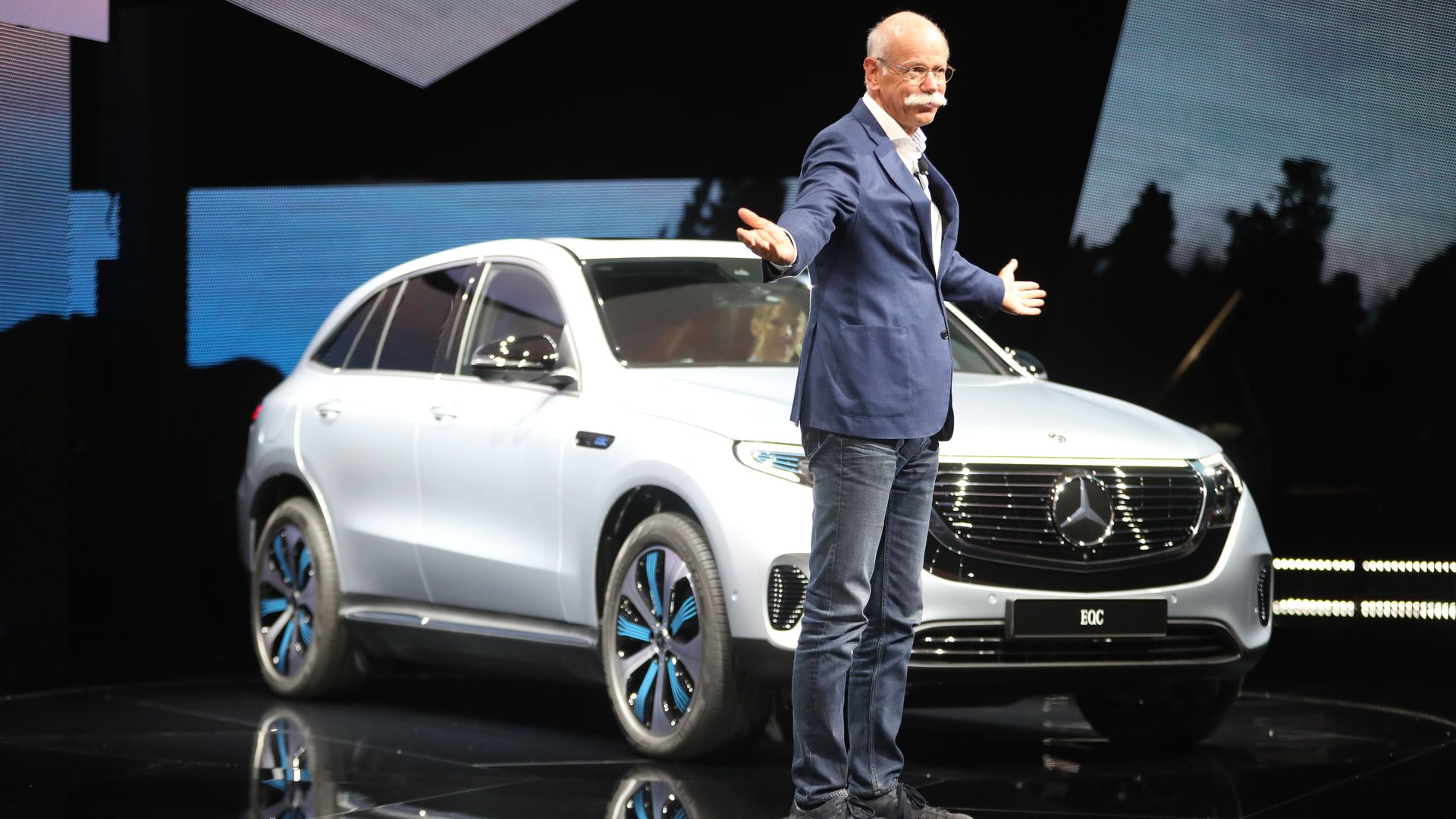
Mercedes-Benz is going "all in" on electric cars says Dieter Zetshe, CEO of Mercedes' parent-company Daimler, according to Bloomberg.
The details: Production on the first car in a new series of battery-powered vehicles, called the Mercedes EQC, starts next year. Mercedes plans to invest $12 billion in its move towards electric vehicles. The vehicles will be built at the same assembly plants as the non-electric cars "to be able to better adjust output," Bloomberg reports.