Last week, the California Public Employees' Retirement System (CalPERS) announced its plan to invest directly in private companies, which could enable its members to capitalize on the transition to a low-carbon economy and protect assets against climate risk.
Why it matters: Global investment in renewable energy, energy efficiency and low-carbon generation must average $2.3 trillion between now and 2040 in order to keep warming below 2 degrees Celsius — the target established in the Paris Agreement. Accordingly, investors need to find pathways to profitably scale-up spending to three times current levels.
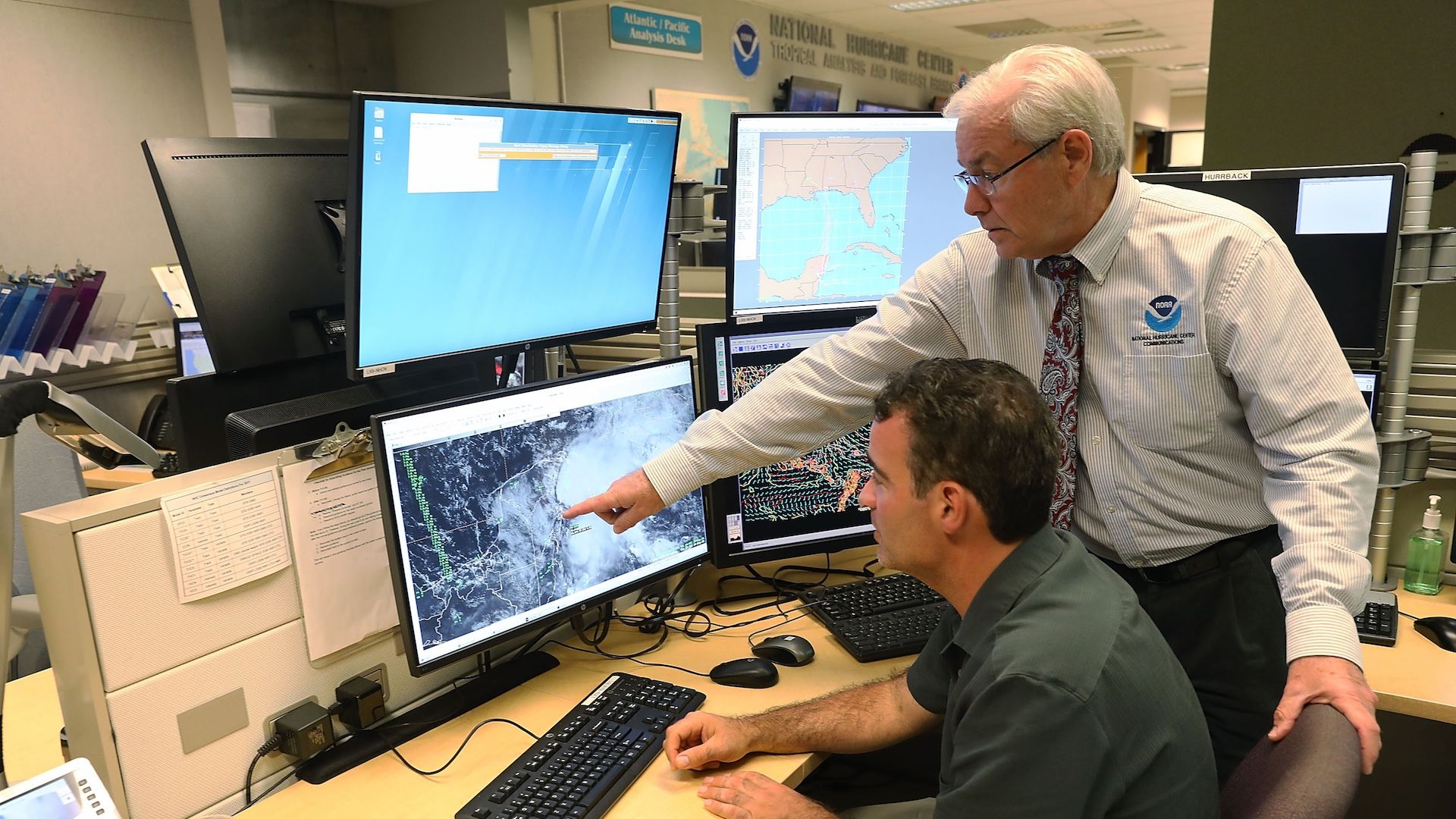
After watching an area of disturbed weather for several days, the National Hurricane Center has determined that Subtropical Storm Alberto has formed in the Gulf of Mexico. The storm, currently near the Yucatan Peninsula, is forecast to crawl northward throughout the holiday weekend.
The impact: The storm is eventually likely to come ashore somewhere between Louisiana and the Florida Panhandle early next week — possibly as soon as Memorial Day. The storm's biggest threat will not be its winds, but rather, its rains.
The full wrath of Tropical Cyclone Mekunu is moving across the coast of southwest Oman and northeastern Yemen on Friday.
The impact: No storm this strong has hit this area since reliable records began in the 1950s, and it's possible the damage from Mekunu will be billions of dollars. Due to a long-running civil war, Yemen does not have robust disaster response capabilities. Plus, the country is in the midst of one of the world's worst cholera outbreaks, which could be exacerbated by this year's rainy season. Oman, however, has more robust response capabilities, but still may be overwhelmed by this event.
It's happening. Per Reuters, "Russian Energy Minister Alexander Novak has had talks with Saudi Energy Minister Khalid al-Falih on an easing of the terms of the global oil supply pact that has been in place for 17 months, Novak said on Friday."
Why it matters: The comments signal how a swirl of forces — notably Venezuela's collapsing production and the revived U.S. sanctions against Iran — are prompting Russia and OPEC to weigh changes in their output-limiting agreement.
Shareholders at nearly two dozen energy companies have pushed for resolutions urging more disclosure around climate change over the past two years, with most firms either releasing, or committing to release, reports on the matter.
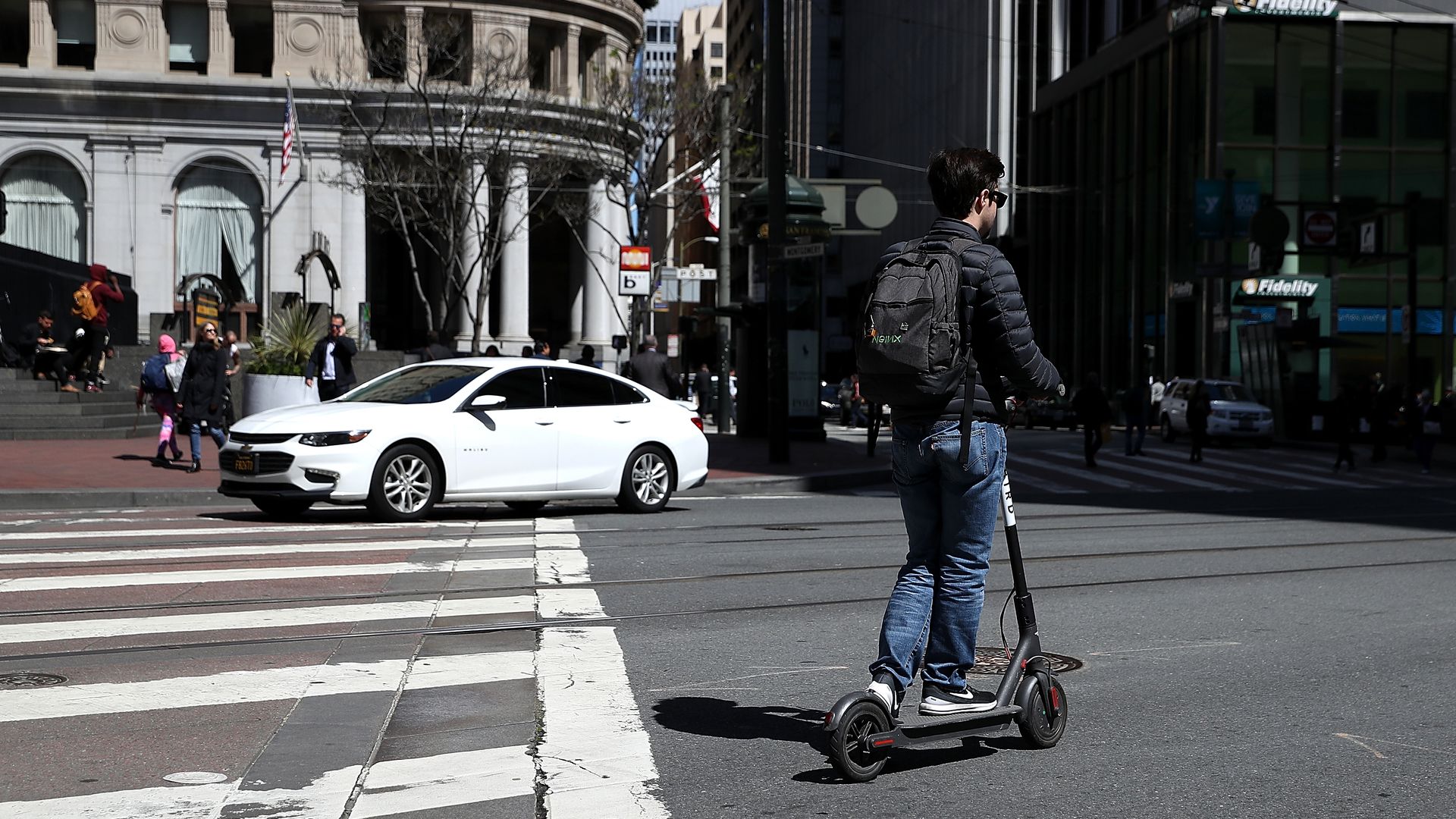
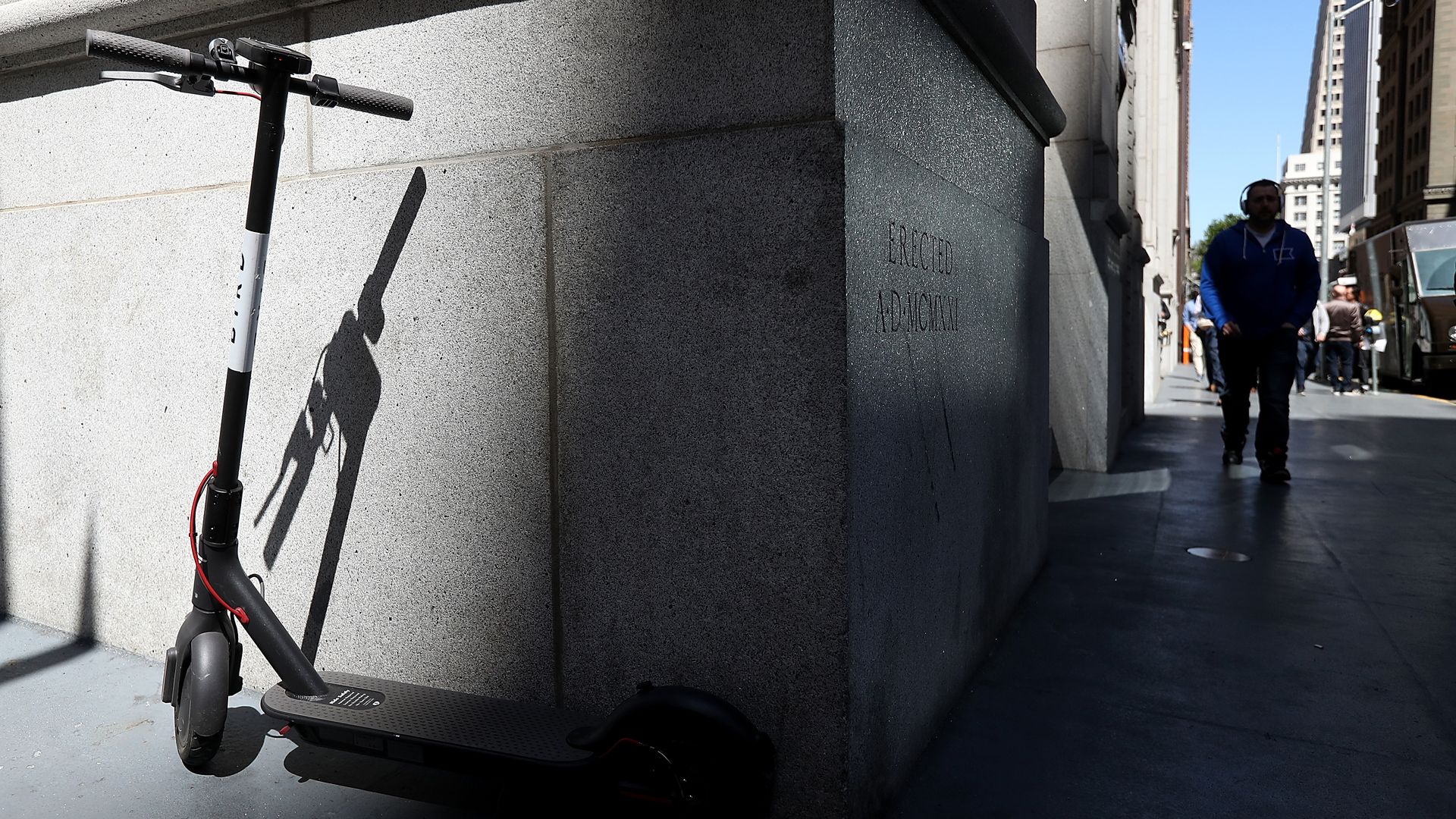
San Francisco is no longer the Wild West of electric scooters—on Thursday, the city's transportation agency announced its new regulations, which require that startups remove their scooters from the streets by June 4 and apply for permits by June 7.
Why it matters: In a process resembling ride-hailing's early days, the sudden boom in dockless electric scooters has forced cities to quickly come up with rules — both to keep a transportation option some residents enjoy and to keep streets and sidewalks safe.
The economic rationale for deeply decarbonizing the global economy is getting stronger even as evidence mounts that the worldwide energy system is nowhere near on pace to make that happen. Axios' Andrew Freedman reports on a new, peer-reviewed paper, which shows that meeting the more stringent global temperature targets in the Paris climate deal would save countries trillions of dollars in economic output, outweighing the costs of reducing emissions.
But, but, but: The same day that paper came out, the International Energy Agency released its latest data on global growth of low-carbon energy technology deployment. While IEA sees progress, they said that just four of 38 energy technologies and sectors they track are on pace to create a pathway that achieves a temperature rise of well below 2°C.
The electric scooter boom has been compared to early days of ride-hailing in terms of how it is revolutionizing urban transportation, but the two markets are fundamentally different.
The big difference: E-scooter companies own their scooters and charge rental fees, whereas ride-hail companies don't own their cars and take a minority cut from driver earnings.
ExxonMobil Corp., the world’s largest publicly traded oil producer, is setting a target of cutting its methane emissions 15% within two years, the company said Wednesday.
Why it matters: It’s the latest sign in how big oil and gas companies are cleaning up their operations under pressure from investors, lawsuits and the public on climate change.


/2018/05/25/1527258782981.gif?w=3840)