Shares of Lucid Group plummeted Tuesday after a report that the Saudi-backed electric vehicle maker is weighing a bankruptcy filing as part of a possible restructuring.
The company quickly denied the report, saying that "the rumors are completely false," after which its stock recovered some ground.
Why it matters: Lucid has earned rave reviews for its EVs and recently won a self-driving car deal with investor Uber — but the company has never recorded a quarterly profit.
A bipartisan group of senators is unveiling a revised Russia sanctions bill that the late Sen. Lindsey Graham (R-S.C.) helped finalize in one of his last efforts to broker a compromise and end the war in Ukraine.
Why it matters: If enacted, the bill would ratchet up pressure on Vladimir Putin by imposing 100% tariffs on the five largest importers of Russian oil and gas — likely including China and India.
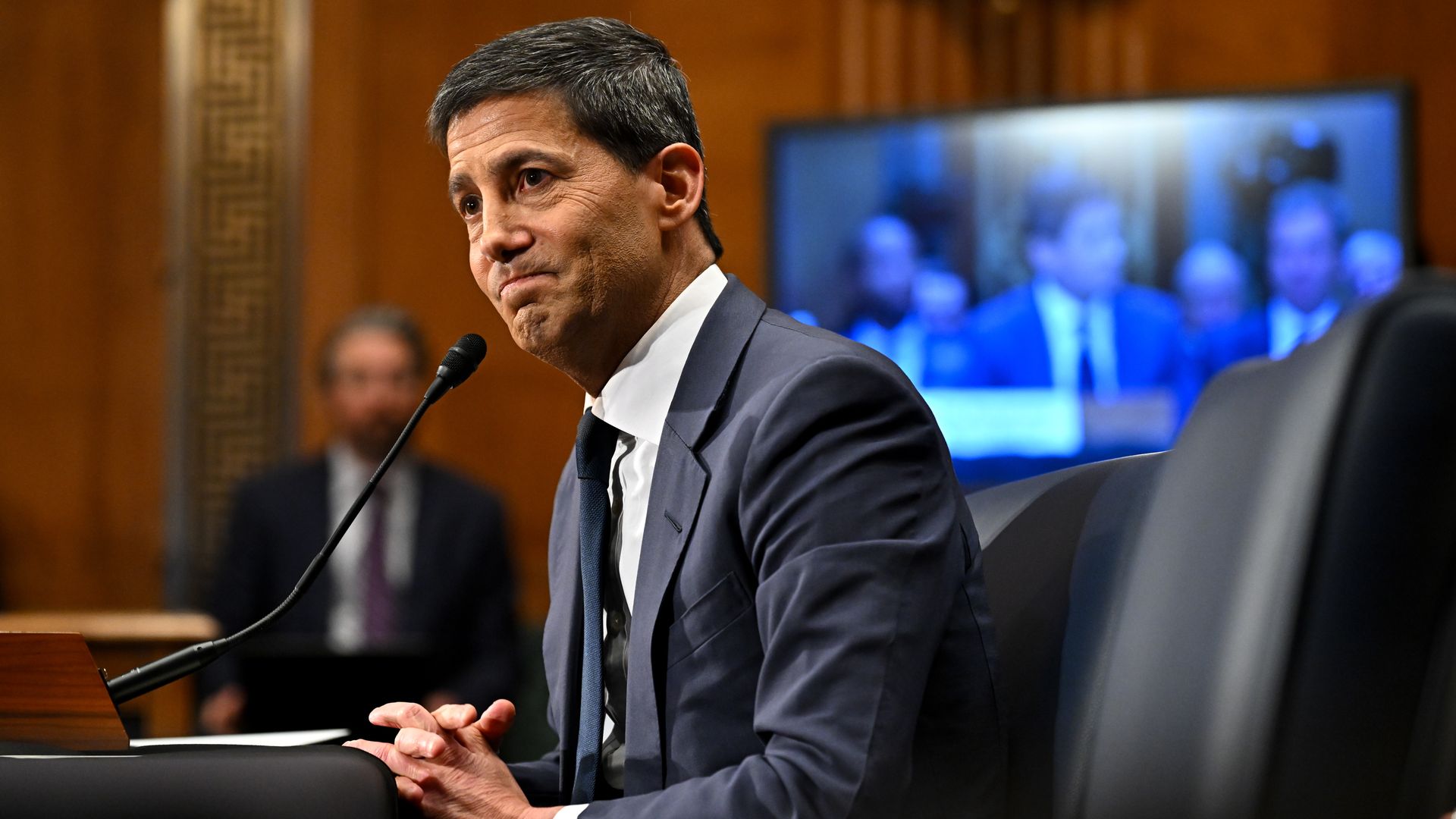
Federal Reserve chairman Kevin Warsh told Congress Tuesday that the central bank remains determined to bring inflation back to target, but declined to offer any hint about whether that could require higher interest rates.
Why it matters: Warsh is trying to break with the Fed's post-financial crisis habit of telegraphing its next move, leaving investors with fewer clues about where policy is headed.
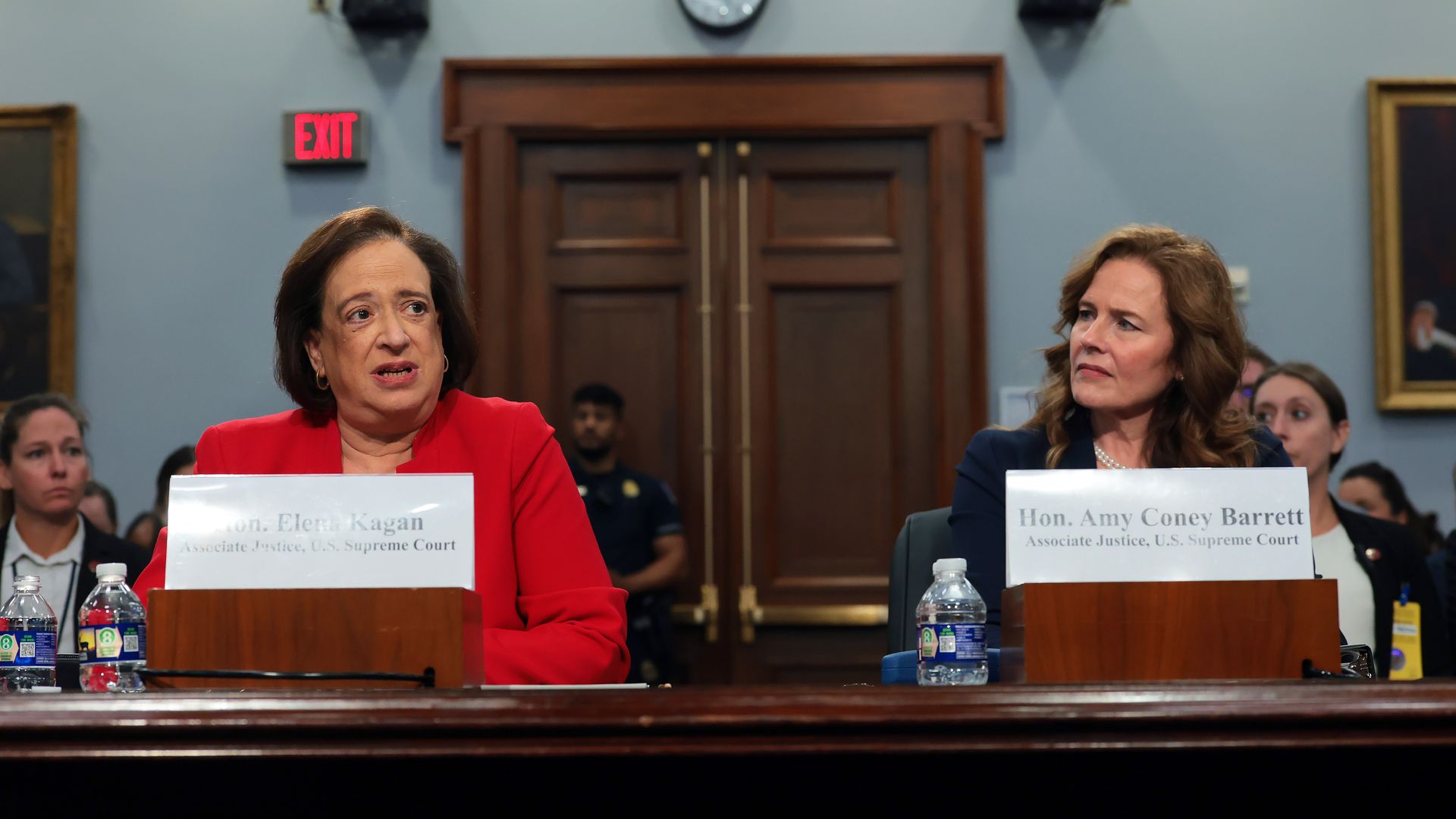
Justice Elena Kagan warned Congress on Tuesday that police expect threats against Supreme Court justices to rise nearly 40% this year.
Why it matters: As courts play a bigger role in deciding the nation's most contentious policy fights, anger from the losing side is turning into threats that risk undermining the court's independence.
Europe must take "concrete actions" to rein in its enforcement of laws that disproportionately hit American tech companies, U.S. Trade Representative Jamieson Greer said at Axios House D.C. on Tuesday.
Why it matters: At stake is who gets to write the rules for the world's dominant tech companies — Washington or Brussels — and Greer wants America to lead the way on how its companies operate.
Inflation fell in June, on the back of lower energy prices, the government said Tuesday.
Why it matters: It's the largest one-month decrease since April 2020, but it may be a short-lived reprieve — the report doesn't account for the sharp increase in oil prices this month as the Iran war re-ignites.
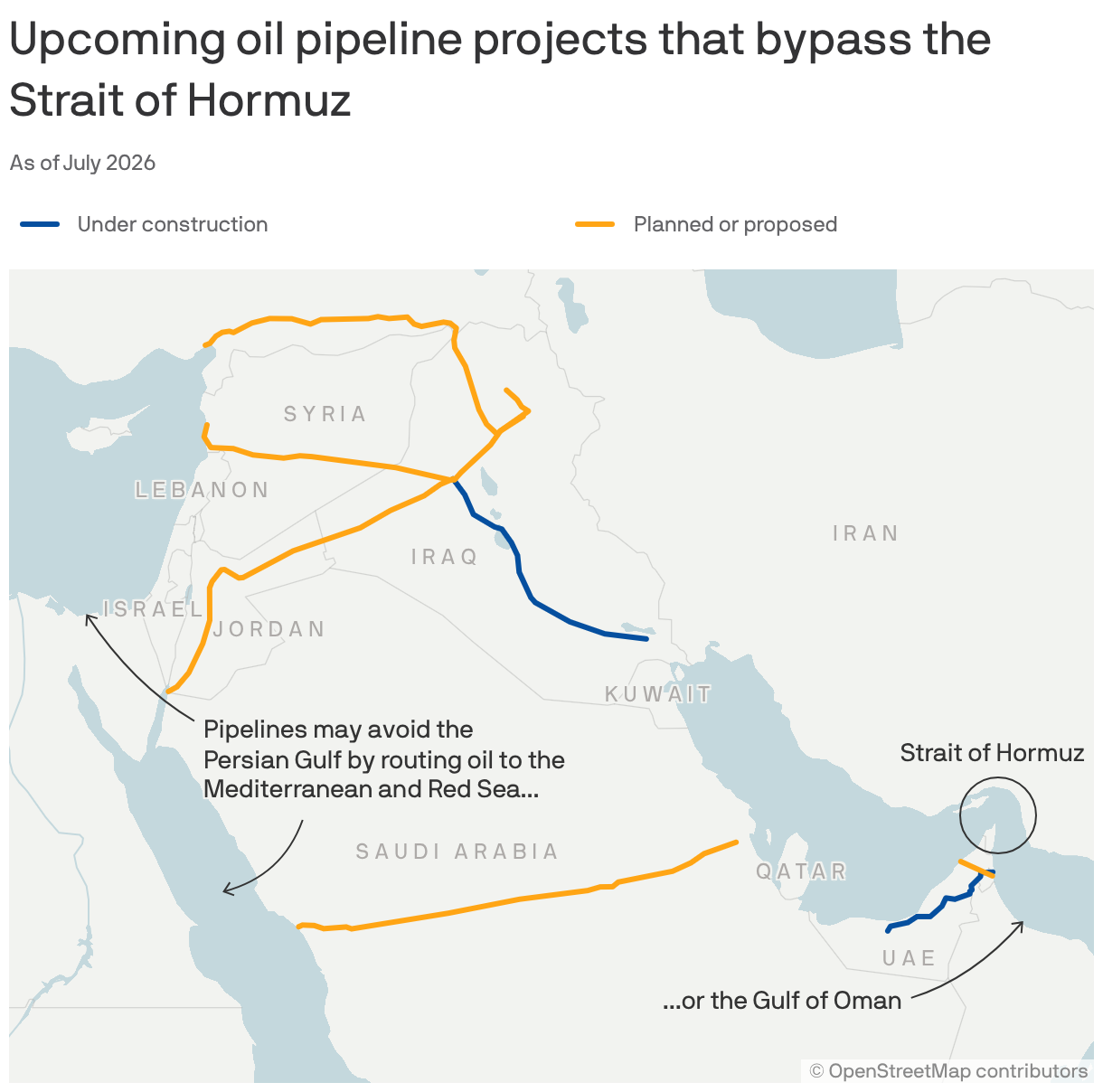
Data: Global Energy Monitor, Axios research; Map: Danielle Alberti/Axios
The oil market's top players aren't waiting around to see who winds up with control over the Strait of Hormuz — countries and companies are scrambling to bypass the waterway.
Why it matters: The Iran war threw a spotlight on the strait as the longtime center of the global energy trade, and the industry now has a huge incentive to reduce its dependence, regardless of the war's outcome.
"The 2026 U.S.-Iran war and Strait of Hormuz disruption may ultimately be remembered less for triggering an immediate oil crisis than for accelerating global efforts to reduce dependence on the world's most important energy chokepoint," Bloomberg Intelligence analysts wrote in a report.
Apple's shares hit an all-time high Monday, pushing the iPhone maker into pole position among the so-called Magnificent 7 year to date.
Why it matters: Apple's recent run — its stock is up more than 20% over the last three months, the best of the Mag 7 — reflects investors' growing appreciation for the iPhone maker's cautious approach to the AI boom, as doubts about the frenzy burble underneath the market's surface.
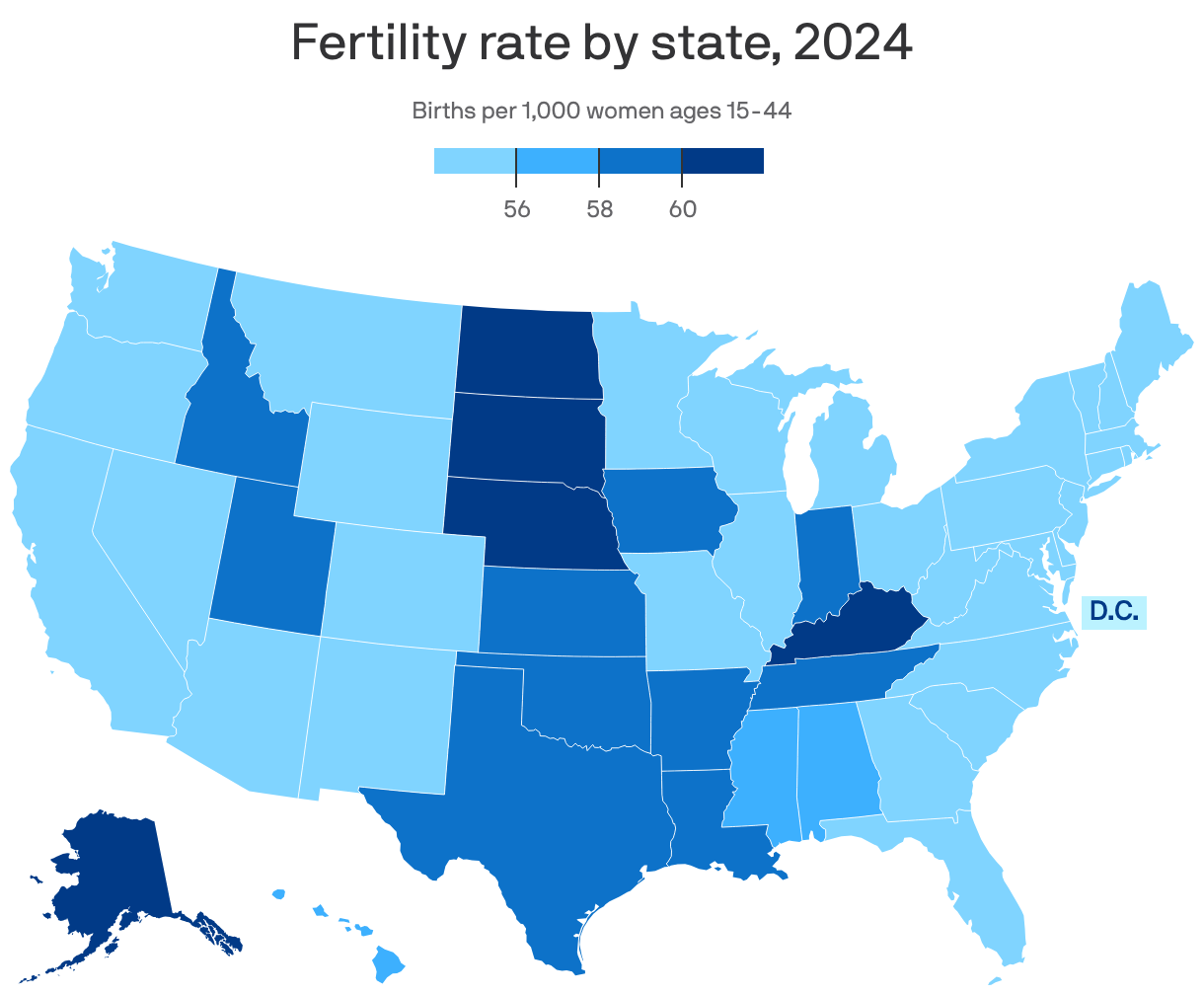
Despite a decades-long decline in U.S. fertility rates, a corridor of central Plains states — including North Dakota, South Dakota, Nebraska, Kansas, Oklahoma and Texas — continues to post higher rates than the rest of the country on average.
Why it matters: The national fertility decline isn't uniform, with a mix of demographic, economic and cultural factors at play.