The risk of a "sustained downturn" in the housing market is rising, as home prices show further signs of cooling off.
🏷️ Home prices rose 2.7% nationally in April, compared with a year earlier, down from a 3.5% jump in March, according to the S&P CoreLogic Case-Shiller Index released today.
⚠️ April had the smallest annual price gain in nearly two years, S&P noted.
📉 And on a seasonally adjusted basis, prices fell 0.4% nationally from March.
What they're saying: That decline "raises the risk that prices are entering a sustained downturn, as the market finally buckles under the weight of near-7% mortgage rates," Capital Economics North American economist Thomas Ryan wrote today.
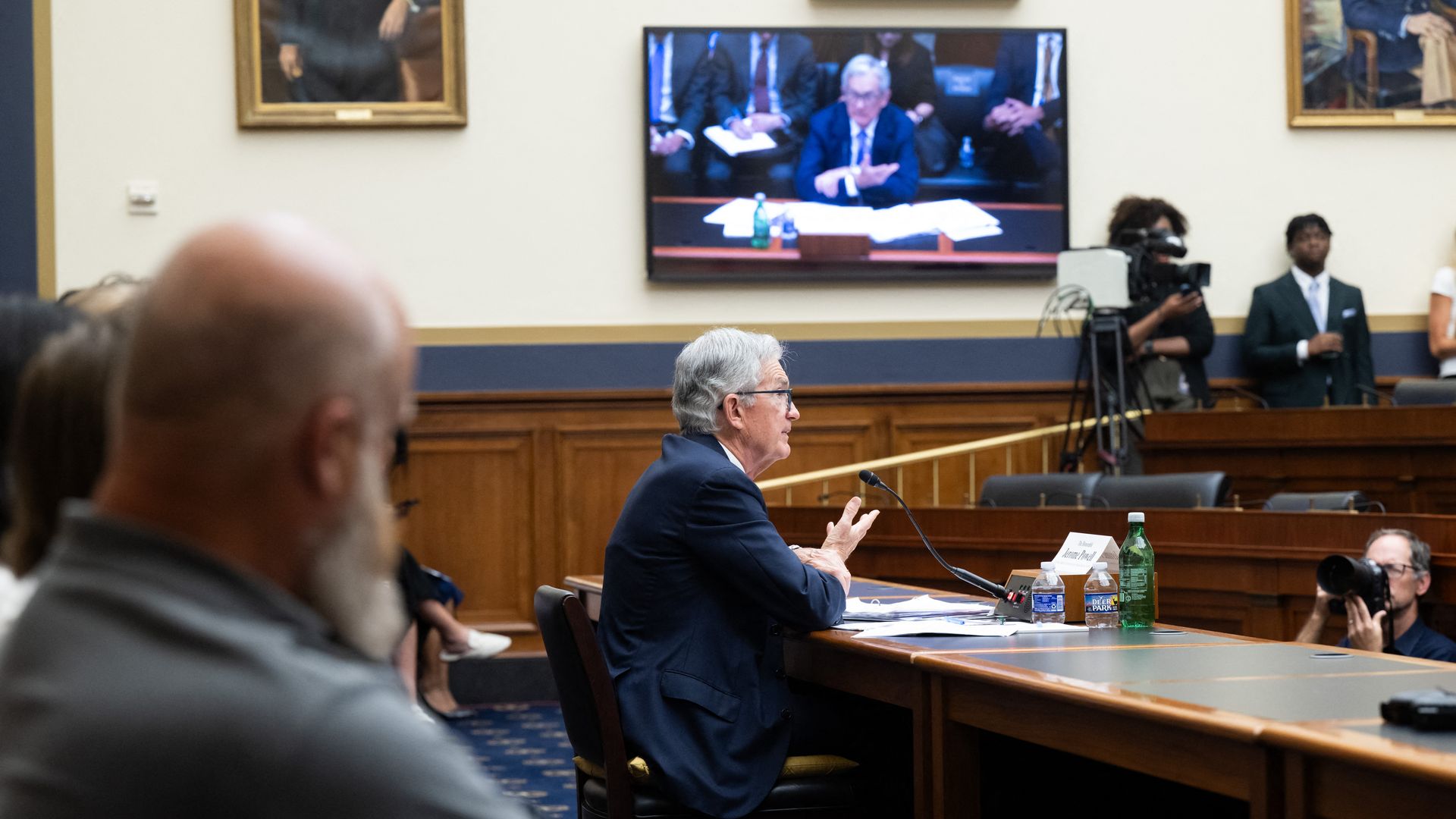
Federal Reserve chair Jerome Powell told lawmakers on Tuesday that he is in "wait-and-see" mode on interest rates, as Republicans and Democrats alike called for the Fed to make cuts soon.
Why it matters: It adds to the pressure Powell faces in Washington to slash borrowing costs — from some congressional leaders on both sides of the aisle, President Trump and even internally at the Fed.
When Sally (not her real name) thought she'd landed a job at ID verification company Socure after months of searching, she was thrilled.
The only problem: The job wasn't real, and she had just lost nearly $8,000 to fraudsters.
Why it matters: Sally's case isn't unusual. Last year, the Federal Trade Commission received about 105,000 reports of job scams and employment agency impersonations — nearly triple the 38,000 reports in 2020.
States across the U.S. are rolling out tough laws that cap deposits and tighten oversight on cryptocurrency ATMs, seeking to cut off a favorite tool of scammers and extortionists.
Why it matters: The kiosks are the easiest way for ordinary people to turn cash into crypto, and their use by fraudsters has surged over the last few years, especially with scams targeting older Americans.
The latest: This month, the Illinois legislature sent SB2319 to Gov. JB Pritzker, who called for such legislation early in the year.
Among other things, the law would require crypto ATM operators to include details on every receipt — such as the blockchain address where funds are sent — that would help law enforcement with any future fraud investigation.
The Federal Reserve has removed "reputational risk" from its manuals explaining how its staff should assess the soundness of banks.
Why it matters: This is not only a nail in the coffin for the unofficial government effort critics dubbed "Operation Chokepoint 2.0," it will also make it harder for any other such efforts to be quietly implemented by a future administration.
Catch up fast: This year, as the Congress started digging into the question of banks discriminating against crypto firms, a clear policy tool emerged as a means to execute a campaign against an industry: reputational risk.
Sen. Cynthia Lummis (R-Wyo.) had a placard printed for a Senate banking committee meeting where she showed the concept spelled out in a Fed manual, its "Account Access Implementation Handbook."
Why it matters: Fiserv is a 40-year-old firm wired into the economy of 100 countries, directly serving thousands of merchants and a slew of global financial institutions.
Stablecoins look set to go mainstream this year, with the U.S. Congress finally taking action to create clear rules for the instruments.
Driving the news: The $96 billion company announced its intention yesterday to launch its own stablecoin, FIUSD.
"We're working to get into the arena by helping customers that we already work with be able to access digital assets as a form of payment," Sunil Sachdev, Fiserv's embedded finance lead, tells Axios.
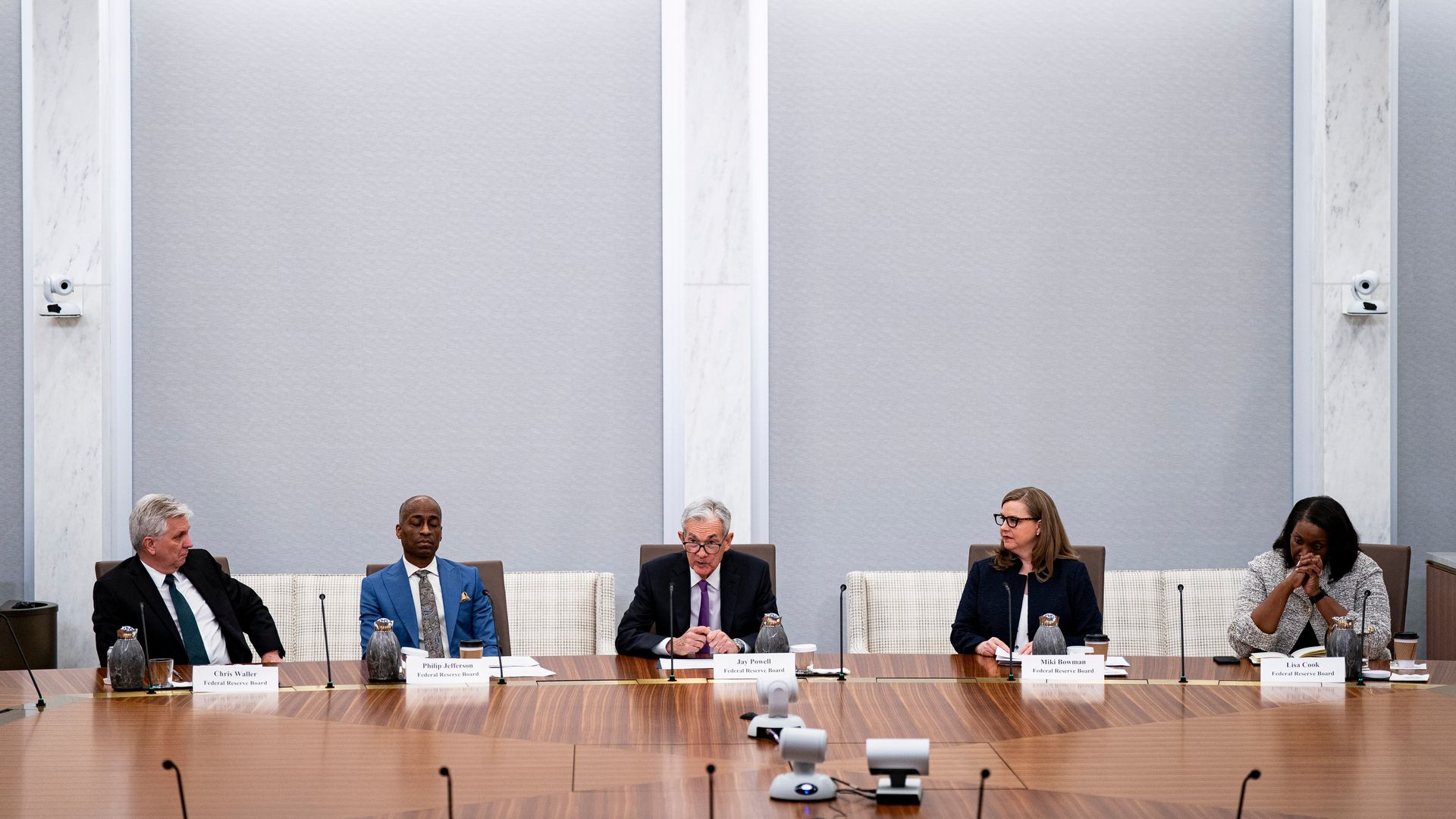
Two President Trump-appointed Fed officials favor interest rate cuts as soon as next month. Seven of their colleagues don't envision cutting rates this year at all.
Why it matters: It amounts to the biggest divide over the proper course for policy in years, one with delicate political optics as the Trump administration and some Republican lawmakers beat the drum for lower rates.
The tension boils down to whether the Fed should hold back from adjusting policy, despite falling inflation in backward-looking data, because of the inflation risks ahead due to tariffs.
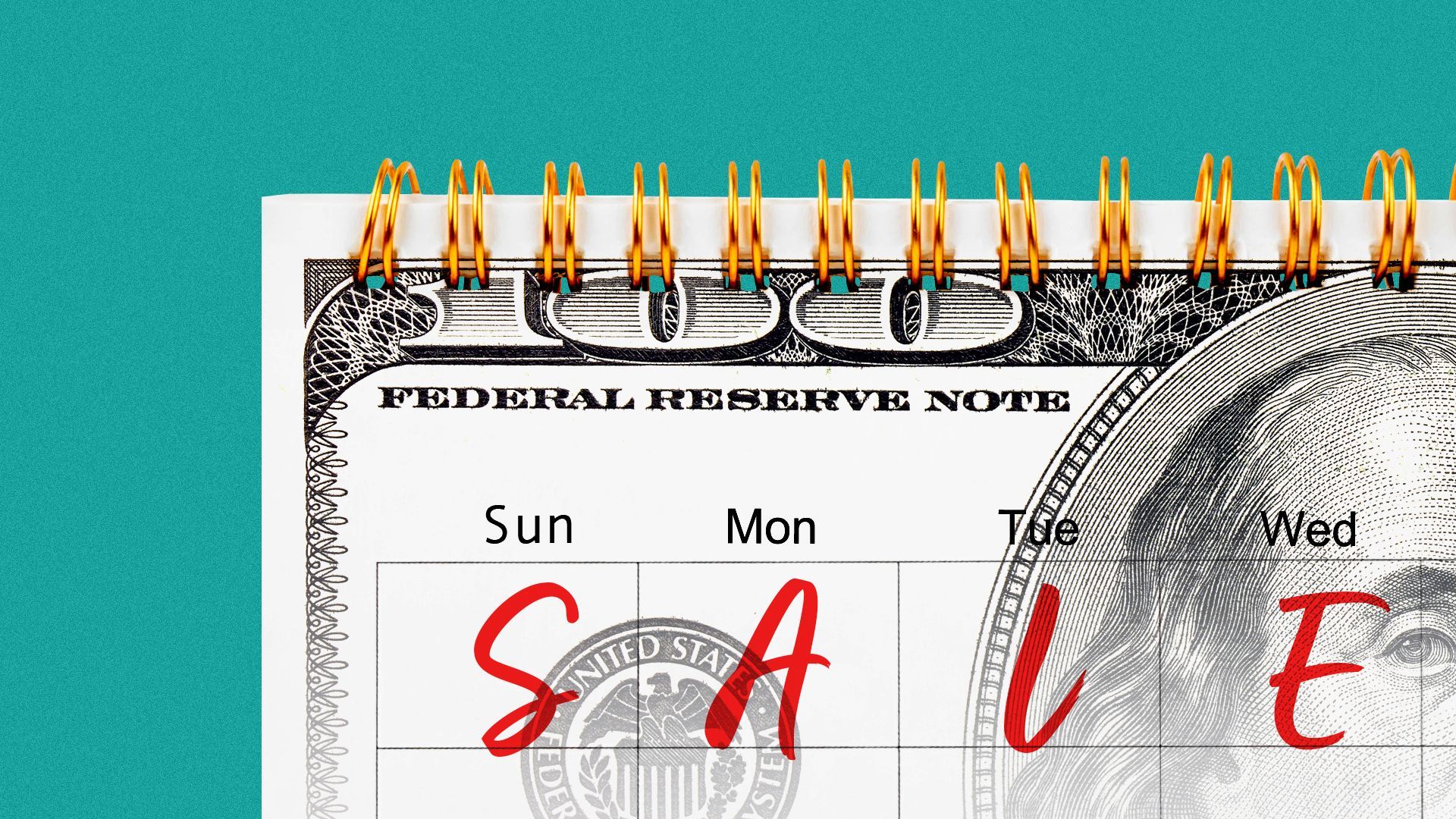
Why it matters: Amazon's sale has become a marquee mid-year event, prompting rivals to create their own overlapping promotions to keep shoppers from heading exclusively to the e-commerce giant.
Halter, a New Zealand-based maker of smart cow collars that enable virtual fencing for cattle ranches, raised US$100 million in Series D funding led by Bond at a $1 billion valuation.
Why it matters: The round is designed to further enable U.S. expansion, at a time when many cattle ranches are facing labor shortages due to increased immigration enforcement.
Why it matters: The decision follows a rocky spring for both brands — and caps months of uncertainty, after Krispy Kreme paused the planned national expansion in May to "reassess" the rollout.
Tariffs? War in the Middle East? Rising energy prices? Surging deficits? High interest rates? Weak dollar? Plunging CEO confidence? Climate change? Nope, nope, nope. The TACO trade is for everyone.
Why it matters: Investors are already ignoring a slew of headwinds.
Forget top hats and monocles, millionaires look positively middle class now.
Why it matters: The number of "everyday" millionaires — those with wealth between $1 million and $5 million — is soaring. But many of these folks don't necessarily feel rich.
New York, Los Angeles and Miami came out on top in an open-ended survey asking Americans where in the U.S. they'd most like to live.
Why it matters: The results show how Americans perceive different cities, with some intriguing differences when people are asked about where they want to live versus where the best job opportunities are.
President Trump's abrupt announcement Monday that a ceasefire in the Iran-Israel war is imminent threatens a congressional effort to limit his power to initiate unilateral military strikes on Iran.
Why it matters: The lead House Republican on the push is getting cold feet, but non-interventionist Democrats still want to have the vote in order to send a broader message about congressional war powers.