Iran ceasefire upends congressional fight to limit Trump's war powers


Add Axios as your preferred source to
see more of our stories on Google.
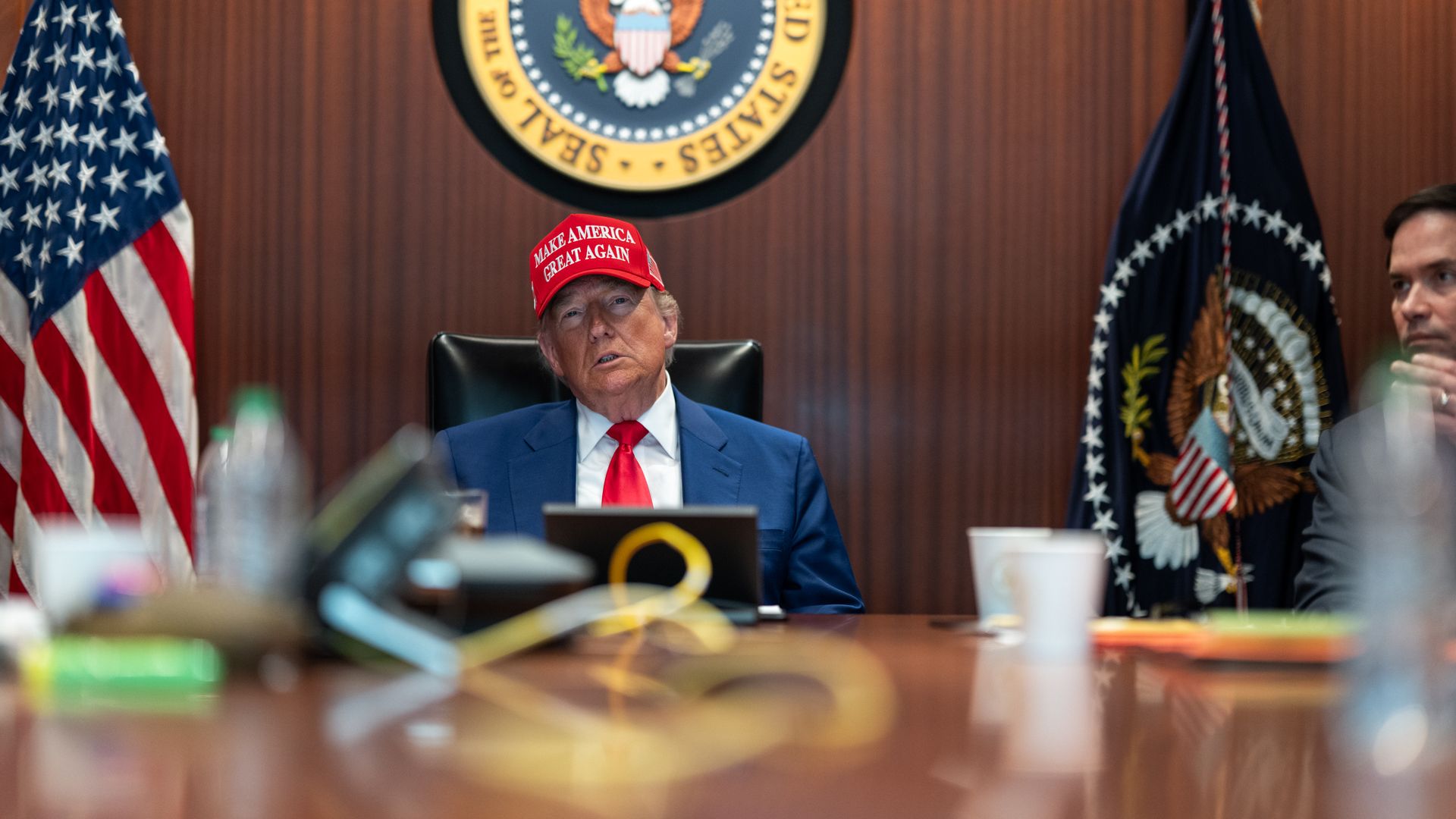
President Trump monitors U.S. strikes on Iranian nuclear facilities in the White House Situation Room on June 21. Photo: Daniel Torok/The White House via Getty Images
President Trump's abrupt announcement Monday that a ceasefire in the Iran-Israel war is imminent threatens a congressional effort to limit his power to initiate unilateral military strikes on Iran.
Why it matters: The lead House Republican on the push is getting cold feet, but non-interventionist Democrats still want to have the vote in order to send a broader message about congressional war powers.
- "We may ... have a conflict in the future, and we need to be on record saying no offensive war in Iran without prior authorization," Rep. Ro Khanna (D-Calif.) told Axios.
- It may be a moot point: House Speaker Mike Johnson (R-La.) had signaled plans to use a procedural work-around to block rank-and-file members from forcing a war powers vote.
The latest: House Foreign Affairs Committee ranking member Greg Meeks (D-N.Y.) is introducing his own war powers resolution, Axios has learned.
- His two-page measure would direct Trump to "remove United States Armed Forces from hostilities against the Islamic Republic of Iran," according to a copy obtained by Axios.
- The measure is also sponsored by Reps. Adam Smith (D-Wash.) and Jim Himes (D-Conn.), the top Democrats on the House Armed Services and Intelligence committees.
Driving the news: Trump said in a post on Truth Social that Israel and Iran had agreed to a "Complete and Total CEASEFIRE ... in approximately 6 hours from now."
- Trump said the ceasefire will last for 12 hours, "at which point the war will be considered, ENDED!"
- The ceasefire was mediated by Qatar and the U.S. after Iran sent the White House a message saying no further strikes would follow its attack on a U.S. base in Qatar, Axios Barak Ravid reported.
What they're saying: "If there's a ceasefire, we don't need to withdraw from a war," Rep. Thomas Massie (R-Ky.), the lead Republican on the war powers resolution, told reporters after Trump's announcement.
- The libertarian Kentuckian said he told Johnson he "wouldn't push" the resolution "if the ceasefire holds."
- Massie has been locked in an increasingly adversarial relationship with Trump — with the president's political operation even launching a PAC to defeat him in his GOP primary.
Yes, but: Khanna told Axios "we still need" a vote, arguing a ceasefire "makes it probably an easier vote for people to do, just to get it on record for Congress to take back its authority."
- Rep. Jim McGovern (D-Mass.), another supporter of the resolution, similarly told Axios: "I still think we need to do it."
- "This is a serious matter. Congress 'ought to debate this," he said. "I complained about when Obama took action without congressional authorization, I complained when Biden did as well."
