Shares of the Los Angeles-based financial services company recovered somewhat today from staggering losses this week that wiped out close to $360 million of its market cap, a drop of roughly 70%.
Incoming Starbucks CEO Brian Niccol's new pay package has prompted raised eyebrows and eye emojis this week.
The intrigue: Luring the rising star away from Chipotle wasn't going to be cheap. And it's his success at the burrito chain — reflected in its share appreciation — that's helping to fatten his number at Starbucks.
By the numbers: There are multiple components of the offer that helped sway Niccol, including:
$1.6 million per year: This is his initial base salary, 23% more than at Chipotle last year.
$10 million: This is his sign-on bonus, part of which is meant to cover cash incentive awards and equity that would have vested within the year at Chipotle.
Economists have been on a roller coaster in recent years: A recession looks likely … a recession looks unlikely … the recession is back on … the recession is back off … the recession is imminent ... the recession is far off.
Why it matters: At this moment, the economic data shows non-recessionary conditions. But the constant cycle of conflicting data and changing predictions has made it hard to trust that any forecast will stick.
Why it matters: By most measures, the two candidates could not be more different — yet former President Trump and Vice President Harris agree that high prices are the economy's central issue.
The 2024 presidential candidates are betting on populist economic pitches that they say will soothe the pain from the inflation shock that peaked years ago.
Why it matters: Former President Donald Trump and Vice President Kamala Harris agree that high prices are the economy's central issue.
By most measures, the two candidates could not be more different — yet there is at least a bit of overlap in how each says they would address price pain with some of the most economically populist agendas in recent memory.
Driving the news: Harris has been mum on the campaign's economic proposals, with few clues on how her position might differ from that of President Biden's. That changes today.
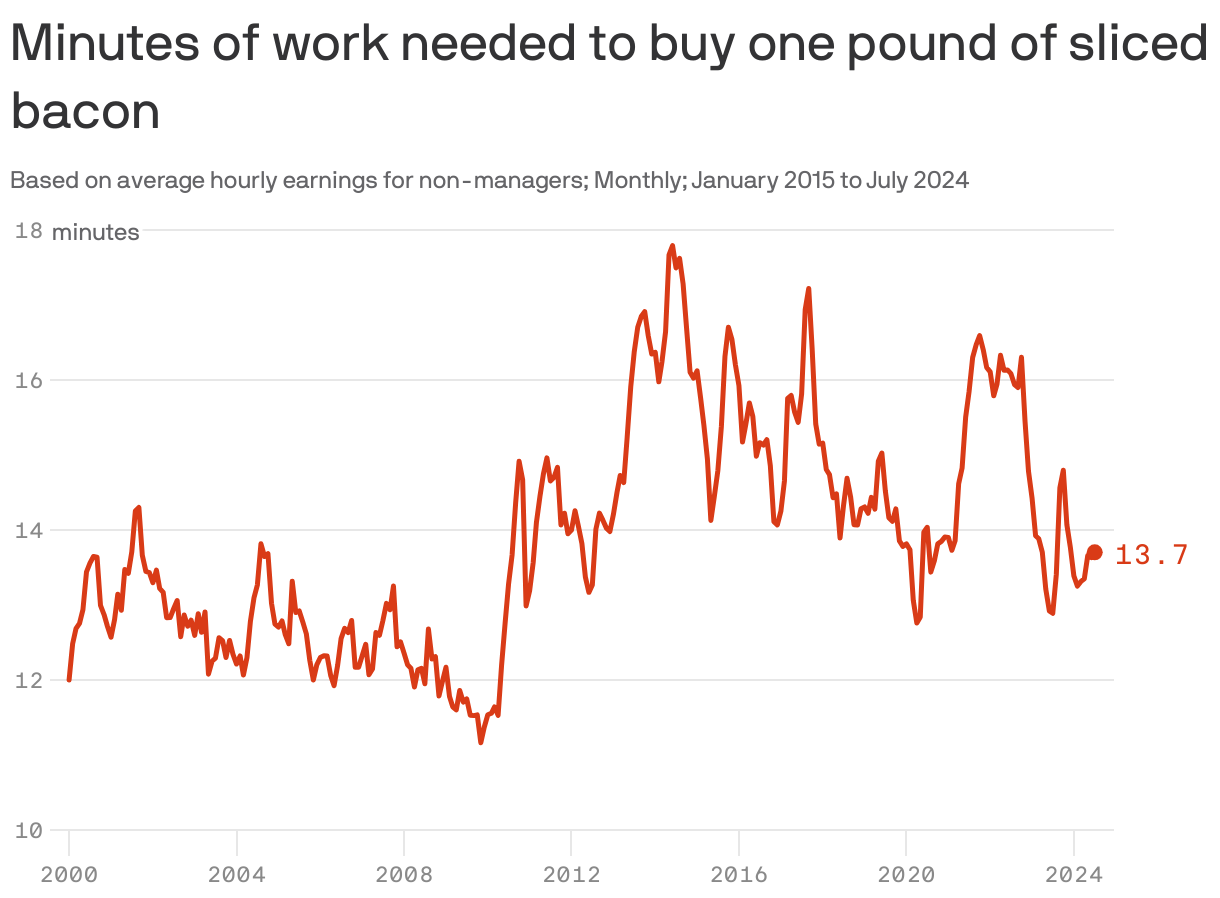
Data: Axios calculations via U.S. Department of Labor; Chart: Axios Visuals
For some Americans, skyrocketing gasoline prices or used car costs were the poster child of the inflation era.
For former President Trump, it seems that bacon is the most salient emblem of the nation's price struggles. He's called out the coveted cured meat three times this week alone.
Why it matters: While bacon prices have gone up, so has buying power, on average — making the steep price less painful than the sticker price alone would suggest.
Walmart and drone delivery partner DroneUp are ending drone delivery in three states to focus on perfecting the airborne package delivery service in the Dallas-Fort Worth area.
Why it matters:Instant drone delivery only makes economic sense if it can be done at scale, and Dallas is emerging as the capital of drone delivery in America.
The share of job listings that advertise remote or hybrid work has declined from its 2022 peak, but is still far greater than pre-pandemic levels, per data from jobs site Indeed.
Why it matters: The prevalence of remote work is declining, as the labor market weakens.
In a speech on Friday in North Carolina, Democratic presidential candidate Kamala Harris will propose a raft of progressive economic proposals that echo and expand on President Biden's agenda, campaign officials said.
Why it matters: Until now, Harris has offered little in the way of details on her economic plans.
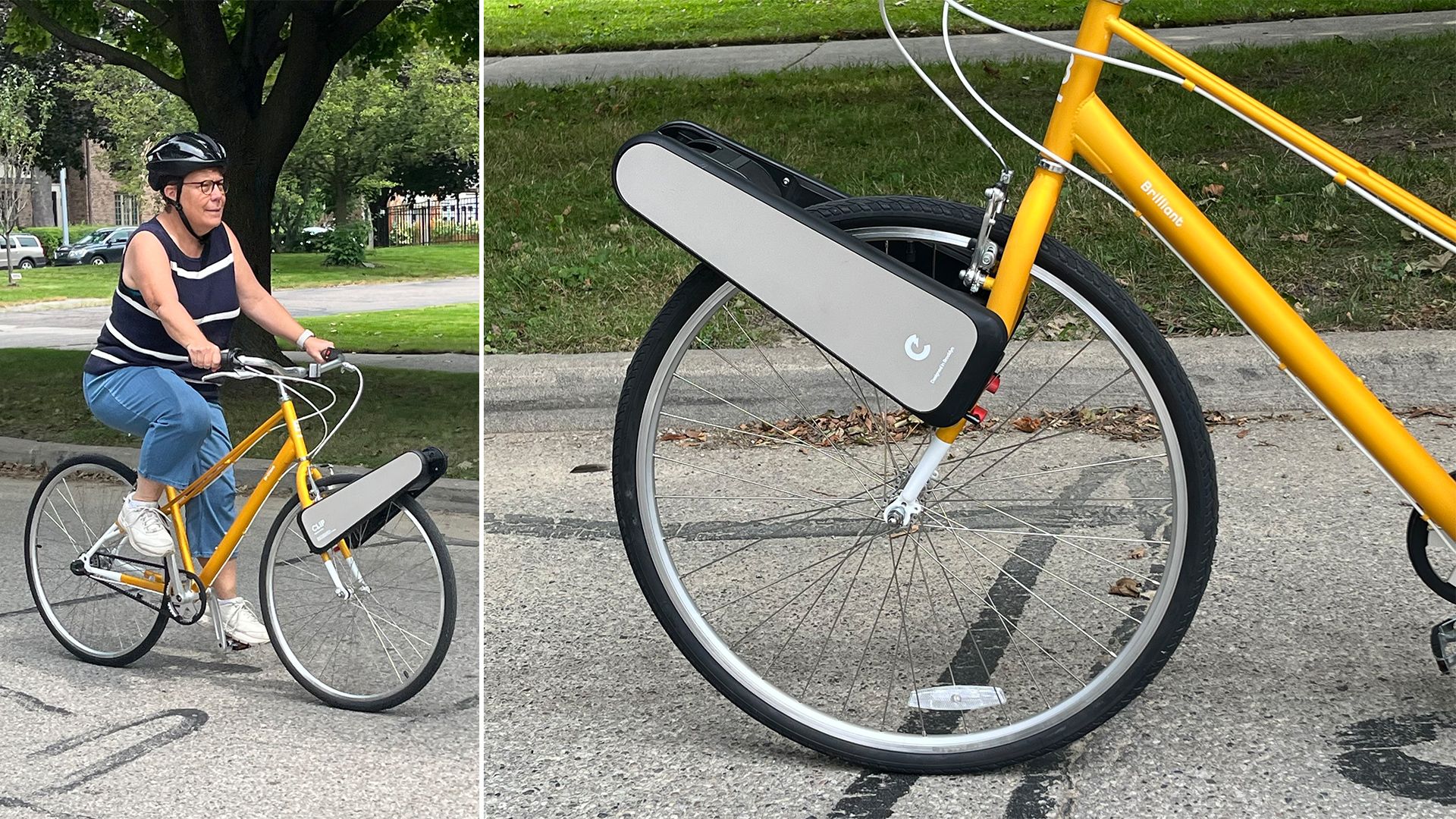
I'm usually test-driving electric cars, but lately I've been playing with a fun alternative: a clip-on electric motor that converts an ordinary bicycle into an e-bike.
Why it matters: CLIP is billed as a common-sense solution for urban commuters, making it easier for people to switch from driving to bicycling for short trips.