Scoop: Walmart, 7-11, Chick-fil-A pilot new drone delivery tech

Add Axios as your preferred source to
see more of our stories on Google.
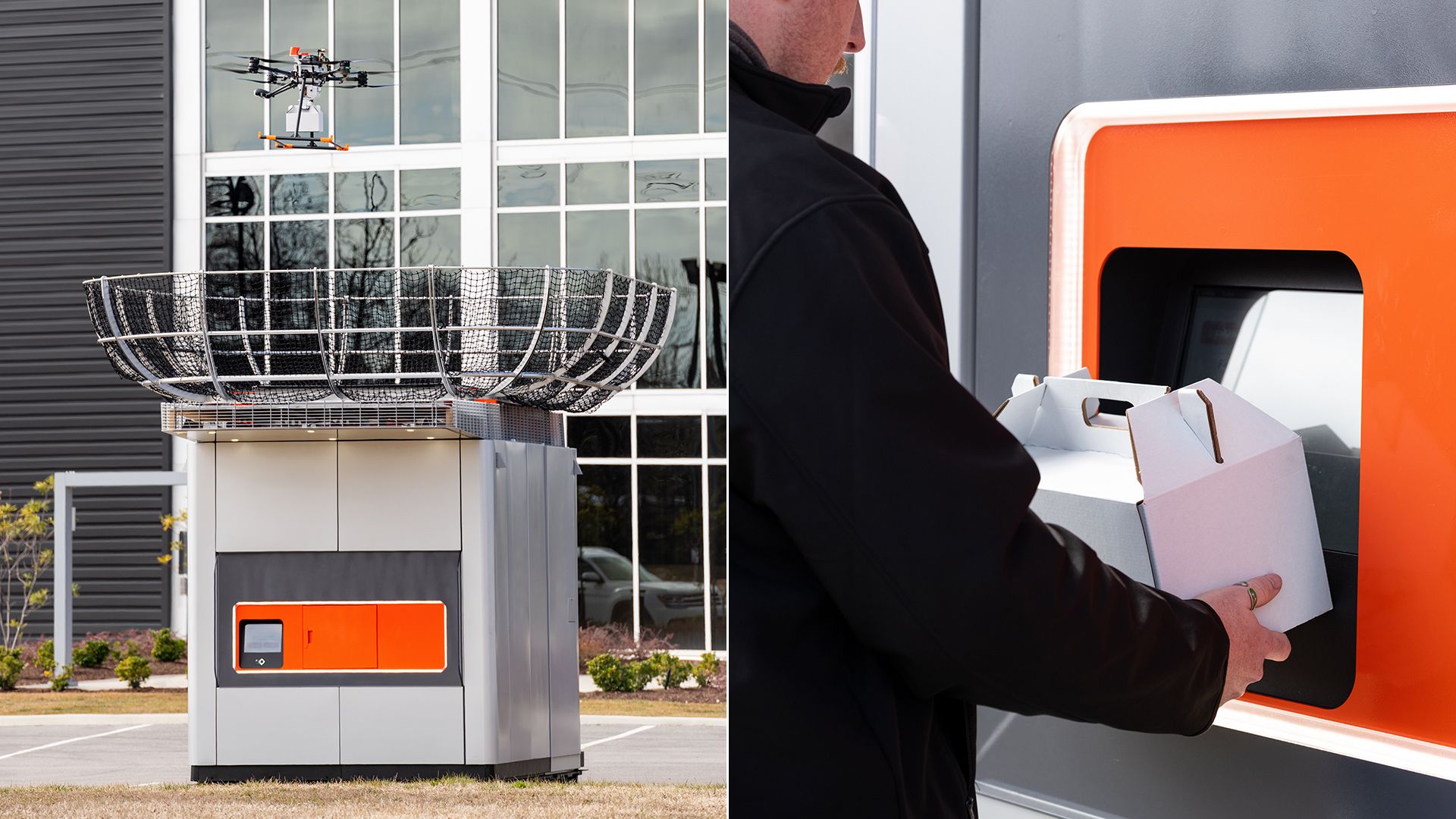
DroneUp's automated DBX system takes the labor out of drone delivery. Photo courtesy of DroneUp
Walmart, 7-Eleven and Chick-fil-A will be the first retailers to pilot new technology from a Virginia startup trying to solve drone delivery's ground logistics problems, Axios is first to report.
Why it matters: Getting a drone to deliver a hot chicken sandwich or a cold Slurpee in a matter of minutes depends a lot more on what happens on the ground than what occurs in the sky.
Driving the news: A company called DroneUp, partially owned by Walmart, on Tuesday unveiled a proprietary autonomous drone "ecosystem" that its CEO says will revolutionize last-mile logistics.
- It includes an automated, climate-controlled storage locker called DBX where drones can pick up and drop off packages.
- The system's software enables "end-to-end autonomy," meaning drones automatically know where to go and when — and how to avoid other aircraft. (Humans are still in the loop, but now a single operator can monitor many drones instead of flying just one.)
- The company is also introducing a more advanced drone that travels 60 mph, has a 30-mile range, and uses a claw-like grabber to lift packages up to 10 pounds and store them safely inside its belly.
How it works: A participating retailer or restaurant affixes a bar code label to a customer's order.
- Workers scan the barcode to open the DBX locker and place the package inside.
- Robotic equipment in the locker weighs the package, checks the center of gravity and places it on a shelf to await pickup.
Meanwhile, a drone is automatically dispatched to the landing pad on top of the DBX to pick up the package — if it's not already there, recharging on the built-in pad.
- The robot inside the DBX picks the package off the shelf and uses a patented winch to auto-load it into the drone, which then flies to the delivery destination.
- The DBX is smaller than a single parking space and can be placed at a strip mall, opening up access even to mom-and-pop stores.
Zoom in: The DBX can also serve as a delivery hub on college campuses or in cities, making drone delivery possible for people who live in harder-to-reach areas.
- Customers' packages can be delivered to and securely stored inside a climate-controlled locker until they use a code or CLEAR's verification system to unlock it.
- Shoppers can also use DBX to return orders via drone.
What they're saying: Combining "flying robots" with ground-based automation will dramatically lower the cost of last-mile delivery, CEO Tom Walker tells Axios.
- Drone delivery today is prohibitively expensive, at $38 per trip, Walker says — but nearly 80% of that cost is tied to labor.
- "When we put in a DBX, all that labor cost comes out. So overnight, my delivery cost goes from $38 to sub-$10. I'm now competitive with every other last-mile provider, but I'm faster and more reliable."
Between the lines: The system solves problems on both ends of the delivery process, Walker says.
- "We're going to democratize the airspace," he adds.
- "You could be Joe's Tailor Shop and you can have access to this for the same price that a Walmart has access to it. All you have to do is print out the barcode and put the barcode on the package."
What to watch: DroneUp will begin rolling out the DBX ecosystem in select markets starting this year.
