The bacon indicator


Add Axios as your preferred source to
see more of our stories on Google.
For some Americans, skyrocketing gasoline prices or used car costs were the poster child of the inflation era.
- For former President Trump, it seems that bacon is the most salient emblem of the nation's price struggles. He's called out the coveted cured meat three times this week alone.
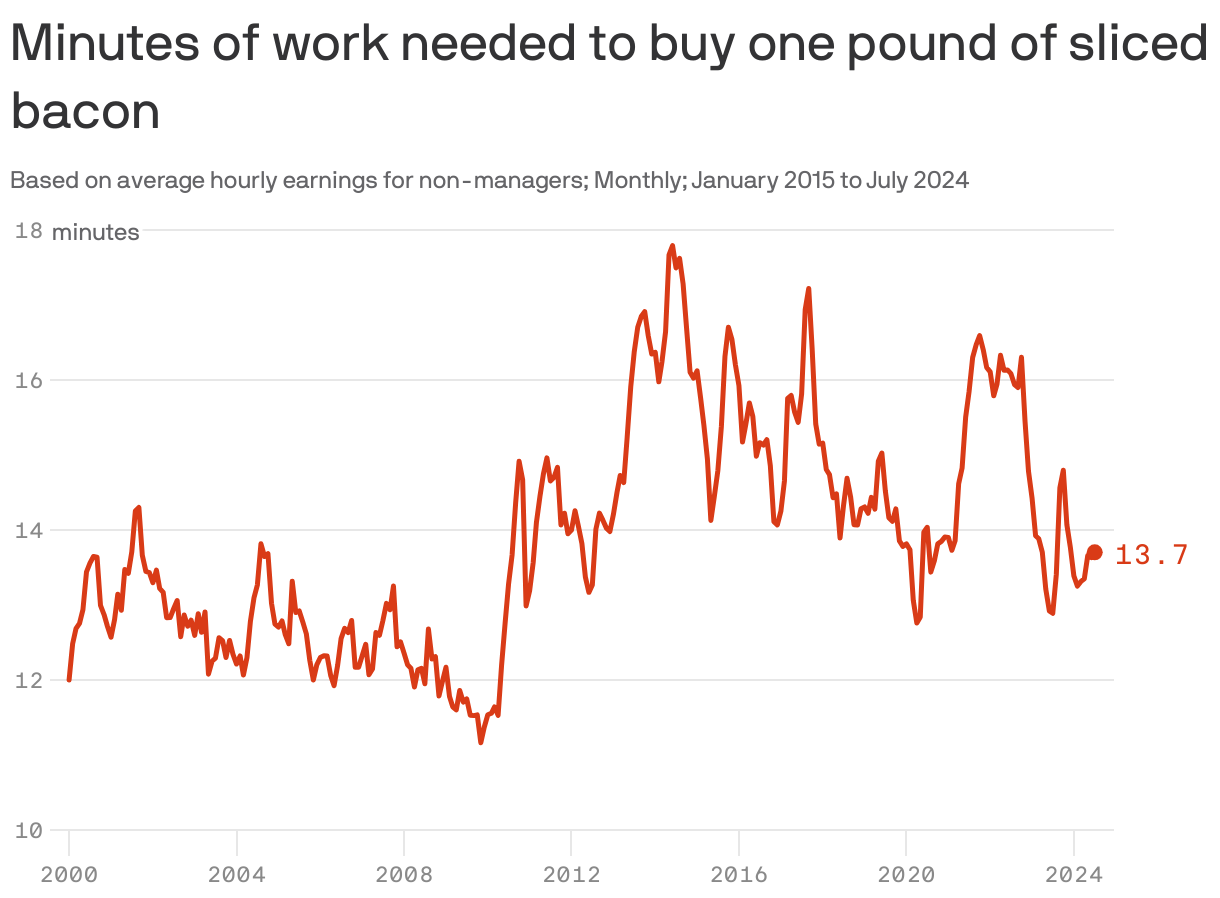
Why it matters: While bacon prices have gone up, so has buying power, on average — making the steep price less painful than the sticker price alone would suggest.
By the numbers: A typical package of sliced bacon cost $6.88 on average last month, according to government data — down from the peak $7.60 in late 2022, but still well above the roughly $5.50 at the beginning of 2020.
The intrigue: It takes about 14 minutes — or 13.7 minutes to be exact — of the average private sector rank-and-file worker's hourly shift to cover the cost of one pound of the breakfast staple.
- That is a bit less than the average time it took throughout Trump's time in office — about 14.5 minutes — to afford a pack of bacon.
- The caveat, of course, is that average measures mask lower-wage workers' pay dynamics. For many, this math is not as favorable.
The bottom line: Cumulatively, bacon prices are up 18% since January 2021. Average hourly wages are up even more in the same time period: about 20%.
- Fueling the inflation anger: Those aren't the type of calculations budget conscious grocery shoppers make in the meat aisle.
- "Bacon is through the roof," Trump said at a press conference held yesterday against a backdrop of grocery items (including, yes, a package of bacon).
- "It's too expensive — I don't want it, I don't want it," Trump said at a rally last month. His bacon shout-outs go back to at least late last year.
