Tuesday's economy stories


Widespread drug use is polluting the labor pool
U.S. employers would have a tough enough time filling empty positions, as the unemployment rate sits at the historically low level of 4.3%. But the New York Times reports, their struggles are compounded by increased use of marijuana and opiates, a habit that businesses with relatively dangerous workplaces cannot abide.
Manufacturer Columbiana Boiler Company told the Times that it forgoes close to $1 million annually in sales because it can't find qualified workers who can also pass a drug test, despite paying between $15 and $25 per hour and requiring little formal education.
Why it matters: It's not just the opioid epidemic that is keeping many workers from passing drug tests, but increased use of marijuana as well. Manufacturing companies in particular can't hire marijuana users even if they want to, as even casual users of the drug can test positive for it.
Adobe is finally killing Flash
For years internet users (including Steve Jobs!) have said it's time to get rid of Flash. Finally Adobe agrees and will end support for the Flash browser plug-in by end of 2020.
Why it matters: Once ubiquitous for everything from Internet video, to animations games and educational content, Flash usage has been waning amid the rise of HTML5 and the inability of Flash to make the transition from PC to mobile devices. Steve Jobs launched his war on Flash back in April 2010, saying in an open letter that Flash was a relic of the PC era and ill-suited to the battery, performance and security needs of a mobile world.
Adobe eventually agreed and ended support for Flash on Android and other mobile platforms back in 2012, and ultimately its inability to survive the move to mobile doomed the product.
Flash is still widely used for some applications, in Facebook games like FarmVille and in some educational efforts. But announcing an end of life that is still more than two years away should give time to plan a transition. And Adobe said it will continue to provide security and compatibility updates through the product's official end-of-life.
Adobe's take: "We're very proud of the legacy of Flash and everything it helped pioneer.," VP Govind Balakrishnan said in a call with reporters. "During the 20+ years it has been around, it has played a key role in advancing interactivity and creative content on the web. Few technologies have had such a profound and positive impact in the internet era. But Adobe has always been about reinvention and creativity. And we're excited to help lead the next era of digital content creation."
Balakrishnan also said Adobe doesn't expect the move to cause a hit to revenue or earnings.
Adobe is making the announcement in conjunction with Facebook, Microsoft, Google, Apple and Mozilla, with each offering details on their plans to move away form Flash. That said, many browser makers have already taken steps in recent years to disable Flash, or limit its use, because of both security and performance concerns.
Here's what the other players had to say:
- Apple: "Apple users have been experiencing the web without Flash for some time," the company said in a blog post. "iPhone, iPad, and iPod touch never supported Flash. For the Mac, the transition from Flash began in 2010 when Flash was no longer pre-installed. Today, if users install Flash, it remains off by default. Safari requires explicit approval on each website before running the Flash plugin."
- Facebook: "We're working with Adobe, Apple, Google, Microsoft, Mozilla, and Unity to create a migration path for developers that use Flash to power their games on Facebook," Jakub Pudelek, Partner Engineering Manager, said in a blog post. "As open web standards like WebGL and HTML5 rapidly advanced to offer many of the web game development capabilities provided by Flash, it became clear that Flash's lifespan was limited. As a result, we've partnered with game developers to support their HTML5 efforts, helping them continue to deliver games on Facebook."
- Google: "Chrome will continue phasing out Flash over the next few years, first by asking for your permission to run Flash in more situations, and eventually disabling it by default," Google said. "We will remove Flash completely from Chrome toward the end of 2020."
- Microsoft: "We will phase out Flash from Microsoft Edge and Internet Explorer, culminating in the removal of Flash from Windows entirely by the end of 2020," Microsoft said in a blog post. By mid-to-late 2018, the newer Microsoft Edge browser will require users to grant permission each session for Flash to run and by mid-to-late 2019 Flash will be disabled by default in both Edge and Internet Explorer. By the end of 2020, Microsoft will remove the ability to run Flash in either browser.
Mozilla: Starting next month, Mozilla will let users choose which web sites can run Flash. By 2019, Firefox will disable Flash by default and only those using a special extended support release will be able to use Flash through its ultimate end-of-life in 2020.

Tech jobs are surging in Seattle, declining in Silicon Valley
The number of posted tech jobs rose by 10.7% in the first half of the year from 2016 in the Seattle area, as eight tech hubs continue to dominate the U.S. technology industry, according to a new study by Indeed.
But while Silicon Valley retains its spot as the premier technological center in the U.S., tech listings plunged by 5.9% in the western and southern valley around San Jose in the first half of the year, and an even higher 7.8% in San Francisco and along the eastern Bay Area, Indeed said. Raleigh, NC, saw the largest plummet, with tech listings dropping by 14.6%.
Why it matters: Together, the eight hubs account for a whopping 27% of U.S. tech job openings. But housing costs may be driving greater tech job growth in Seattle, Baltimore and Washington, DC, while Silicon Valley is losing.

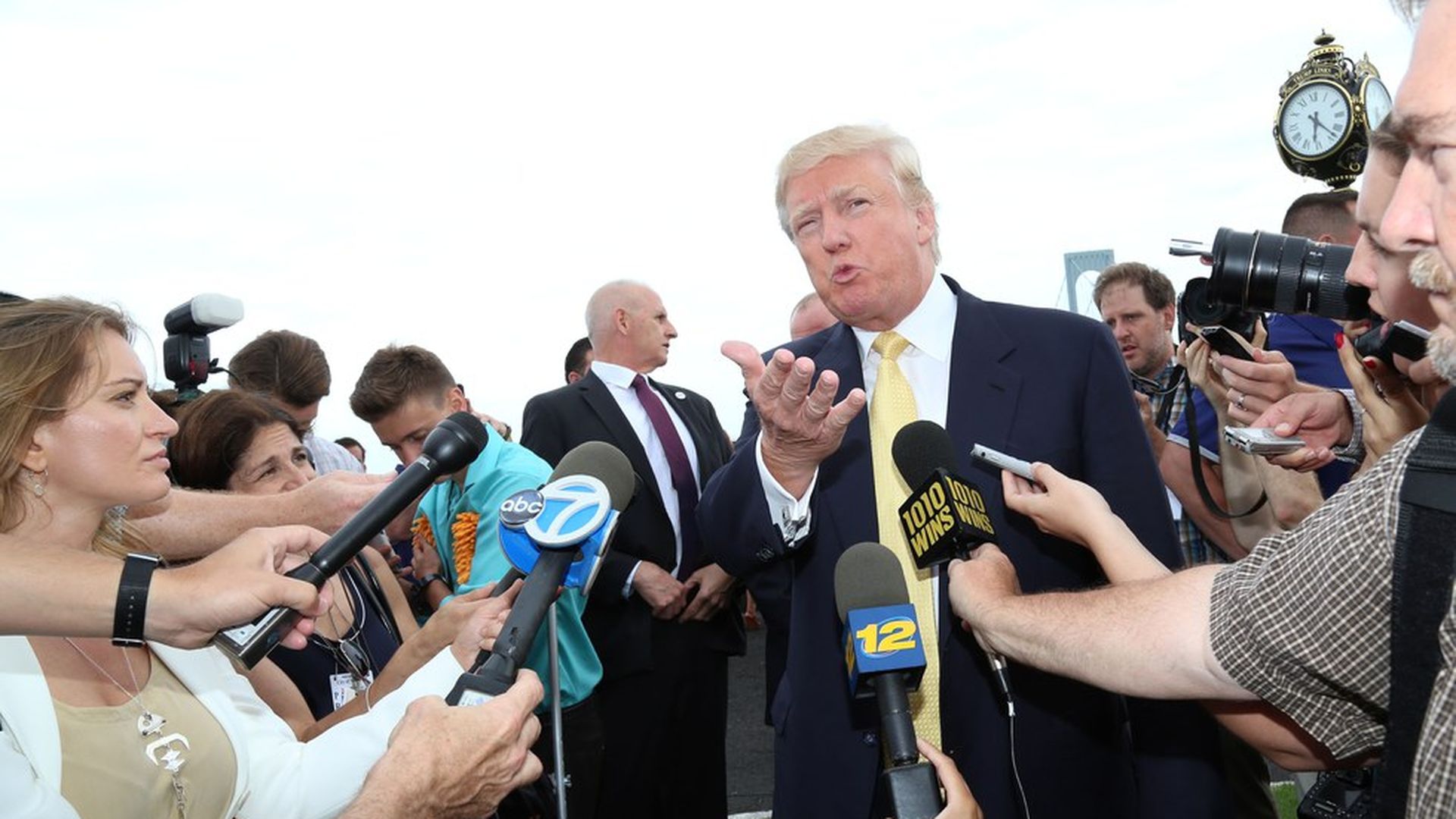
How Trump spent his morning: Live-tweeting "Fox & Friends"
President Trump's Tuesday morning Tweetstorm was in direct response to what he watched on "Fox & Friends." From his son-in-law Jared Kushner, to the health care vote and Sen. John McCain's return to Washington, here's how Trump's tweets line up with this morning's episode of "Fox & Friends":

Baidu's "Android" play may end up more like Nokia
*This post has been updated on July 25th at 9:30 am to include a response from Baidu.
Baidu, the search juggernaut often called "the Google of China," with a 76% share of the country's 700 million Internet users, is pushing further to mimic the U.S. tech giant, styling a new open-source self-driving program as "the Android of autonomous cars."
But experts are skeptical of "Apollo," as Baidu calls the program. They sense desperation from a self-driving late-comer hunting for a big break in a significant future industry. "I see it more as a Hail Mary pass" than a threat to industry leaders like Alphabet's Waymo and Tesla, Navigant analyst Sam Abuelsamid tells Axios.
Why it matters: Baidu's play — even if ultra-ambitious — reflects the scale of the global race to transform transportation, and is a shot over the bow of leaders of the nascent industry. China and its tech giants are highly unlikely to stand by while U.S., German and Japanese companies seize the high ground in a new self-driving age.

What Trump told the Boy Scouts
President Trump addressed the National Jamboree of the Boy Scouts of America on Monday, riling up the big crowd with attacks on the media and boasts about his election victory.
He noted that 10 of his cabinet members were scouts, and three of them — Energy Sec. Rick Perry, Interior Sec. Ryan Zinke and Health and Human Services Sec. Tom Price — joined him on stage. At one point Trump joked that Price "better get" the votes needed to repeal the Affordable Care Act, "otherwise I'll say, 'Tom, you're fired.'"
Attorney General Jeff Sessions, who Trump publicly criticized Monday and has discussed replacing, is an Eagle Scout but was not in attendance.

The Athletic thinks people will pay for quality sports journalism
The Athletic, a locally-focused, subscription-supported sports publication, announced its expansion into nationwide coverage today with the splashy hires of Stewart Mandel for college football and Seth Davis for college basketball.
What makes it different: The Athletic charges $5.99 a month (or $40 for a full year) to access its content, allowing it to provide a clean ad-free presentation to readers. From Mandel: "The Athletic's subscriber model allows us to focus entirely on high-quality written content. NO ads, NO auto-play videos, NO clickbait."
Why it matters: An AP NORC Center and American Press Institute study earlier this year found that 53% of people are willing to pay for news that suits their interests and fosters a good user experience. Spikes in subscriptions and investments in subscription products across diverse, often-specialized publications like The Washington Post, The Atlantic, The New York Times' cooking section and The Information prove that trend. By investing in a clean user experience and backing it up with quality niche content, The Athletic is hoping to latch onto the trend.
Attention deficit: Breaking through Trump
"In the age of Trump, global players — from tech companies to governments — have to shout," seven BuzzFeed reporters and editors:
The sheer attention Trump absorbs — on Twitter, on television, in culture, and in the anxious dreams of American citizens and the country's allies and enemies — draws away the lifeblood of everything from the launch of new apps to new social movements. Attention is the currency not just of American attention-seekers from Kim Kardashian to Amazon, but also of the other great geniuses of attention-seeking over the last decade: terror groups like ISIS, and opponents of the postwar social order like Julian Assange. Trump hoards attention...

The sky-high pay of health care CEOs
The CEOs of 70 of the largest U.S. health care companies cumulatively have earned $9.8 billion in the seven years since the Affordable Care Act was passed, and their earnings have grown faster than most Americans' during that time, according to an Axios analysis of federal financial documents.
Why it matters: The ACA has not hurt the health care industry. Stock prices have boomed, and CEOs took home nearly 11% more money on average every year since 2010 — far outstripping the wage growth of nearly all Americans. But the analysis also reveals that the pay packages for the country's influential health care executives don't give them incentives to control health care spending — something that economists, policymakers and even Warren Buffett have said is the most pressing problem in health care.