Sunday's economy & business stories

Oprah in graduation speech lauds Tennessee lawmakers' gun violence protest

Oprah Winfrey returned to her alma mater Tennessee State University over the weekend to give an emotional commencement address that denounced gun violence.
What she's saying: Winfrey was blunt in her assessment of the challenges facing the graduates.
- "The leaders are behaving like children. The children are being gunned down by military-grade assault rifles."

Airlines add workers as they gear up for summer travel bonanza
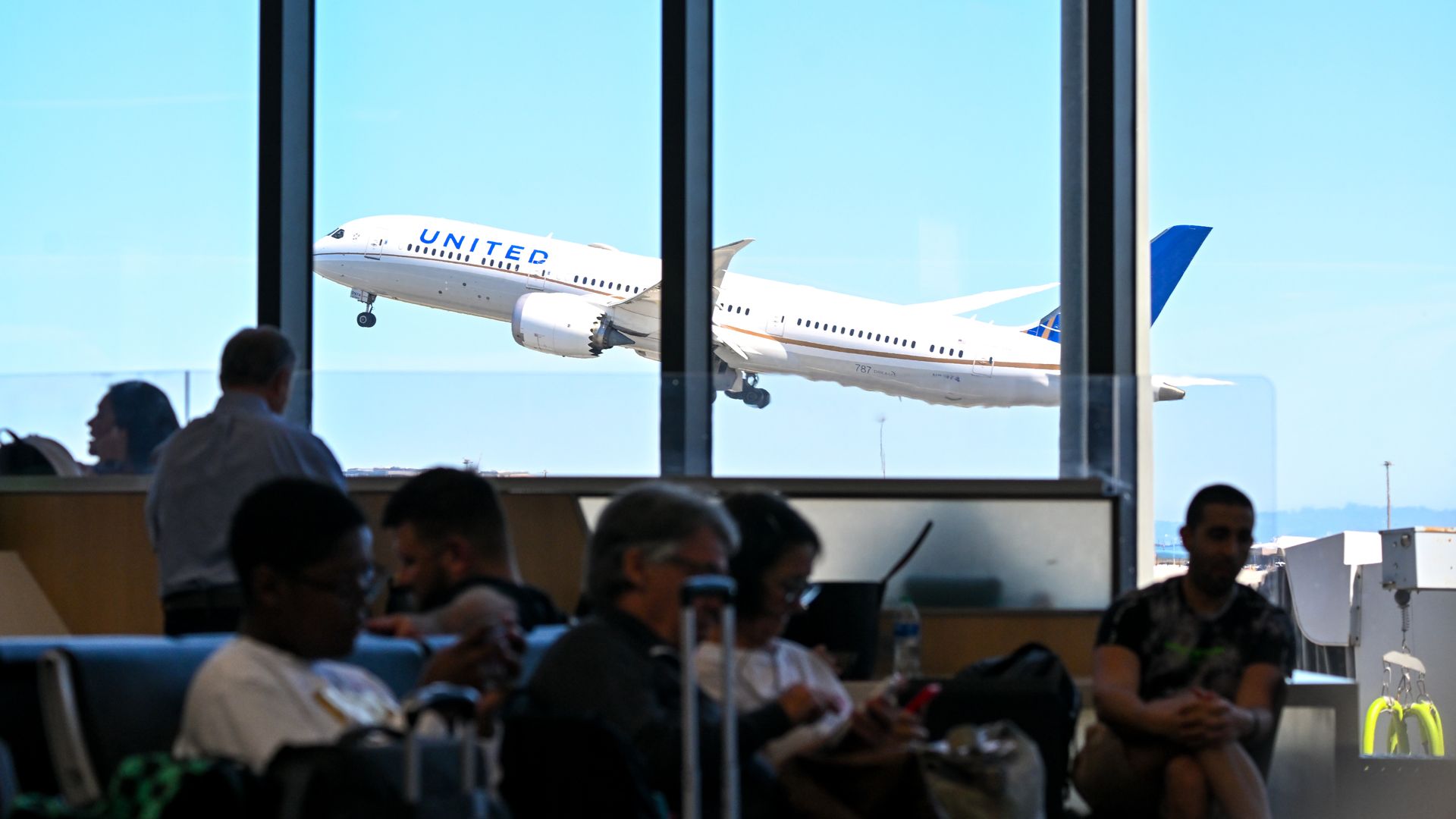
Airlines have more workers than they've had in 20 years, but they still might not have enough to handle what's projected to be a sizzling summer travel season.
Driving the news: United Airlines, which has already hired more than 7,000 workers since January, said Wednesday that it plans to add 8,000 more this year.

Buffett's warning on banking crisis: "Fear is contagious"

Warren Buffett on Saturday suggested that perverse incentives and messaging confusion are worsening the crisis that's buffeting the U.S. banking sector.
Why it matters: Rising interest rates have ricocheted across the financial system, figuring prominently in the failures of Silicon Valley Bank and First Republic Bank.
Buffett and Munger lash out at "stupid" U.S.-China tensions
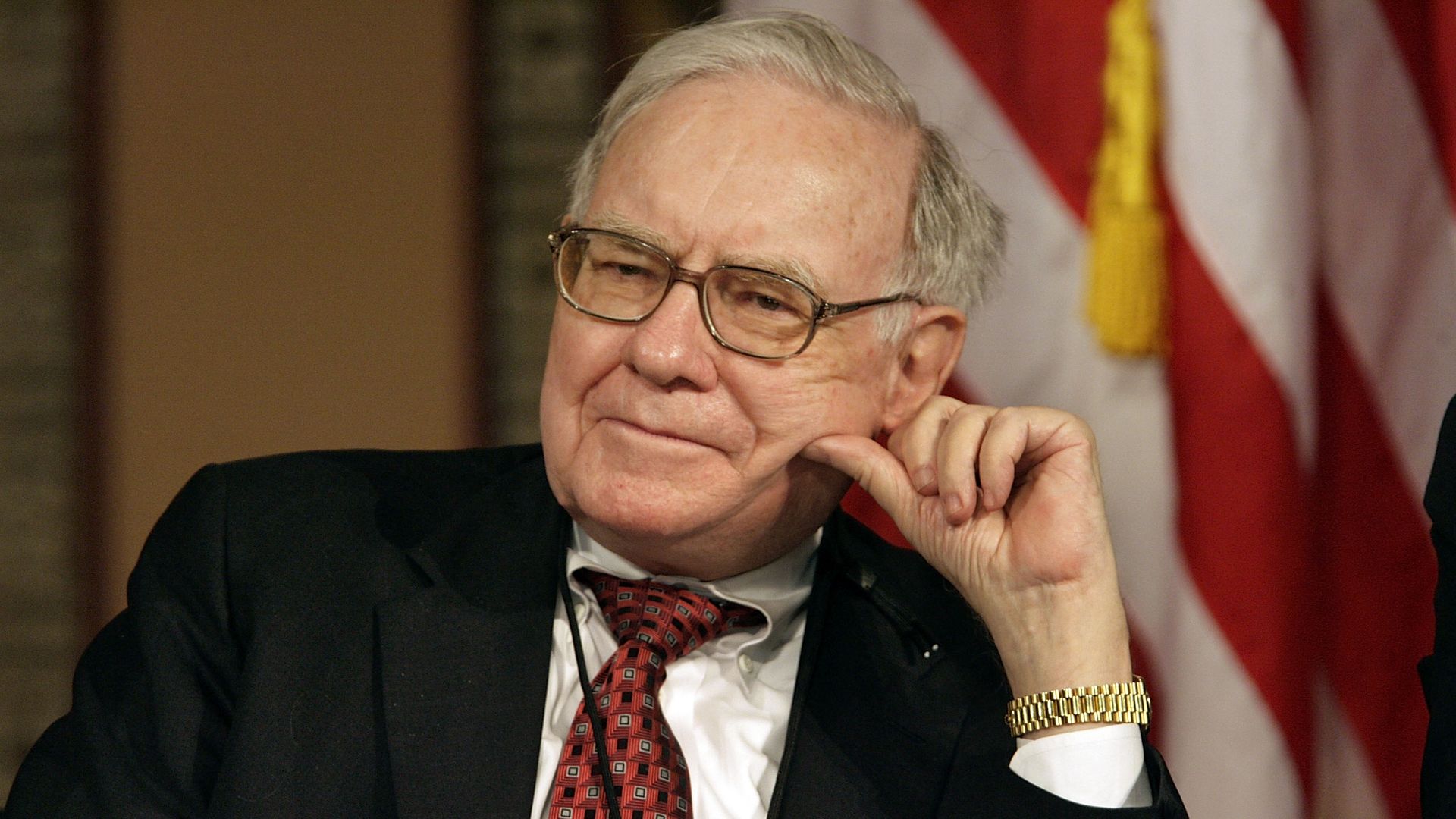
Investing legends Warren Buffett and Charlie Munger on Saturday urged the U.S. and China to settle their widening differences, arguing the superpowers have a "mutual interest" in continuing cooperation.
Why it matters: On multiple fronts, the world's two largest economies have found themselves at repeated loggerheads, with few signs of near-term reconciliation.

Good inflation
The pandemic was a major shock to the U.S. economy — one that destroyed the previous dynamic equilibrium. We're slowly settling into a new one, where prices for various goods and services are very different.
Why it matters: Insofar as inflation is an adjustment mechanism, it's not lasting and it can sometimes even be a good thing.
The great uncertainty of the banking crisis
/2023/05/05/1683294678993.gif?w=3840)
The banking crisis resembles the COVID crisis in that one of its scariest aspects in these early days is that we just don't know how bad it is.
Why it matters: There's something incredibly unsettling about being in a liminal state. That's one reason why so many people rushed to believe the idea that Silicon Valley Bank and Signature Bank were sui generis outliers and that no other banks were in danger.
- A similar whiff of wishful thinking can be detected in the confident assertions — from JPMorgan CEO Jamie Dimon, Fed chair Jay Powell, and others — that First Republic's failure will be the last of the crisis.
- That might be true — but it's hard to see where the confidence comes from.
By the numbers: A recent Stanford paper found that SVB was far from being an outlier in terms of solvency — in fact, it calculated that a whopping 2,315 U.S. banks are insolvent on a mark-to-market basis.
Be smart: The solvency worries that caused SVB's demise were raised not because SVB was sitting on a particularly toxic set of assets, but rather because the assets under scrutiny were bonds that were very easy to mark to market.
- In the case of FRB, the weakness in the balance sheet took longer to materialize because the assets falling in value were bespoke mortgages.
The big picture: Being insolvent on a mark-to-market basis should not in itself consign a bank to failure. If you were always going to hold an asset to maturity anyway, it shouldn't really matter how much it was worth along the way, especially if there are no real questions about credit risk.
- Low-yielding assets, however, make it hard for banks to make money when their cost of funds is high thanks to 5% interest rates.
- And if deposits do start flowing out, either through fear of a bank failure or because there are more attractive yields elsewhere, that can force assets to get sold — and mark-to-market losses to be realized.
How it works: As Bloomberg's Matt Levine once wrote, "A bank is a collection of reasonable guesses about valuation ... There is no objective reality."
- As a result, it's literally impossible, especially in the present environment, to look at any bank's balance sheet and be entirely reassured as to its solvency.
Where it stands: PacWest's statement on Thursday that its cash reserves are much greater than its uninsured deposits — the deposits most prone to flight — would be reassuring in normal times.
- Right now, however, all eyes are on the bank's $44 billion of assets — a number more than 100 times greater than its $0.4 billion market capitalization. And what those assets are "really worth" has become an almost metaphysical question.
The bottom line: In 2020, we found ourselves in a new reality in which almost none of the facts we most urgently wanted to know about the world were known by anyone at all.
- That's a feeling bank balance sheets analysts know extremely well.
Banks fight the stock market
Stock prices are more germane than ever — a powerful phenomenon that is contributing to the current mini banking crisis.
Why it matters: The pandemic created a whole new generation of stock traders. Even if they're not actively playing the ups and downs of PacWest Bancorp, the country is just much more aware than ever before of what individual stocks are doing. That's bad news for banks.
Between the lines: There's a case to be made that if Silicon Valley Bank and First Republic Bank hadn't had publicly listed stock, neither of them would have failed.
- In both cases, the proximate cause of death was a plunging share price that eroded confidence in the bank, so much that it could no longer survive.
The big picture: Stock market investing can be split into generational eras.
- Boomers generally bought stocks only once they were rich; a pension plan sufficed for the majority of the generation. For this generation, investing was largely an expensive and somewhat mysterious upper-middle-class hobby.
- Generation X didn't have as much wealth as the boomers, and even if they caught the stock investing bug, they learned their lesson during the 2000 stock market crash. That helped us embrace the passive-investing revolution: We're the slacker adopters of index funds.
- Millennials had even less wealth than Gen X — until the pandemic hit. At that point, armed with boredom and stimulus checks, they started buying individual stocks — and making real money as the market soared. As ever, the higher the risk the higher the reward, so attention ended up focused on the biggest movers.
Where it stands: Some companies ("meme stocks") have become as famous for their share price as they are for their products.
- A substantial cohort of "buy the dip" investors pays special attention to shares that fall sharply — currently, that would be the regional banks — hoping they will revert back to historical levels.
Be smart: At most companies, having a lot of people transfixed by your plunging share price might be embarrassing. At banks, especially now, it can become an existential risk.
How it works: Thanks to fractional-reserve banking, a bank's market capitalization is always a small portion of its total assets. A big bank like Truist, for example, has assets of $546 billion, and a market value of $38 billion as of Friday.
- Assuming the bank trades at exactly book value, a 1% drop in the value of the assets would mean a 15% fall in the share price. A second 1% drop in assets would mean an 18% fall. And so on. As the stock falls, relatively small moves in the perceived value of the asset base can cause highly alarming stock price swings.
- Realistically, the price-to-book value would also fall, causing even bigger price drops. (Truist's price-to-book value has fallen from 1.03 to 0.67 since March 9.)
- The most important asset at any bank is the trust of its customers. When those customers see their bank's share price spiraling downward, and also see headlines of other banks failing, they lose that trust and pull their money out, further endangering the bank.
The bottom line: Right now, millions of Americans really care about the price of bank stocks, and are treating share prices as an indicator of healthiness.
- If investors sell bank shares on worries they might go to zero, those concerns can become self-fulfilling prophecies.

A tale of two failed Bay Area banks
Something’s in the water in the San Francisco Bay Area, at least as far as embattled regional banks are concerned.
The big picture: In less than eight weeks, two Top 20 banks based in the same small corner of Northern California failed — and the similarities between their businesses, and the circumstances surrounding their collapse, run deeper than these basic facts.

The blockbuster summer of concerts
Demand for concerts is soaring, budgets are getting bigger and tour dates are piling up as America heads into an expensive summer of live events.
The big picture: Post-pandemic demand for live shows has come roaring back — and shows are bigger and infused with more tech than ever.