Here's one thing you might have missed in this morning's crowd-pleasing jobs report: Americans spent even less time in spells of unemployment.
Why it matters: The labor market is still hot and employers are hiring at a robust pace. That means laid-off workers have plentiful opportunity to find new gigs.
On Thursday morning, Silicon Valley Bank (SVB) had a plan to shore up its balance sheet. Clearly, the plan didn't work.
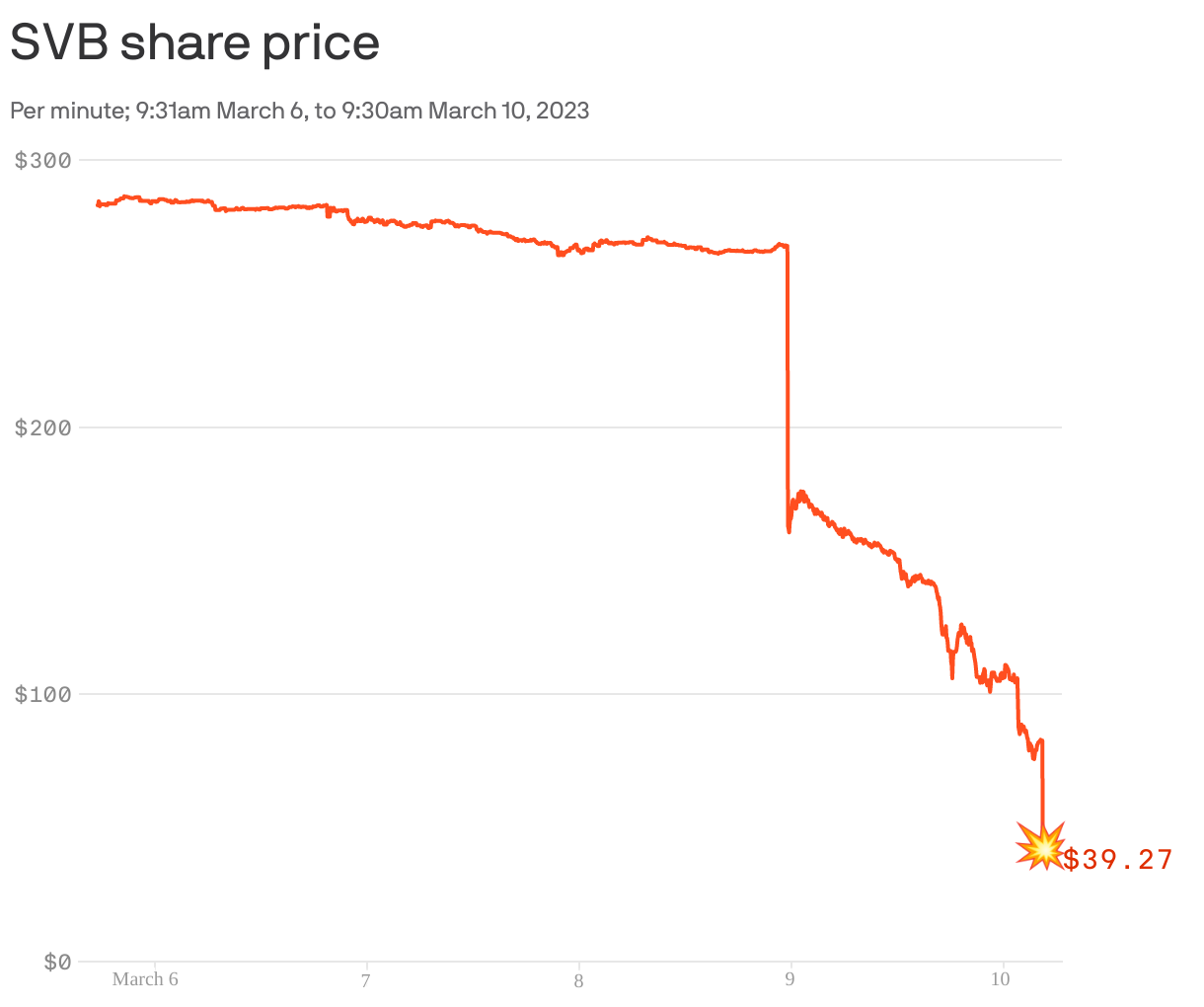
When SVB announced a plan to raise $2.25 billion of fresh capital on Thursday, it should have put worries about its solvency to rest. Instead, it precipitated a run on the bank, which has now been nationalized and is being run (at least until Monday, and possibly for much longer than that) by the FDIC.
A day after Silicon Valley Bank saw its shares drop 60% on Thursday, and experienced a bank run, U.S. regulators took control, freezing withdrawals and temporarily shuttering its branches.
Why it matters:SVB is the second largest federally insured bank failure since Washington Mutual in 2008. It's not clear yet how far-reaching the financial consequences will be.
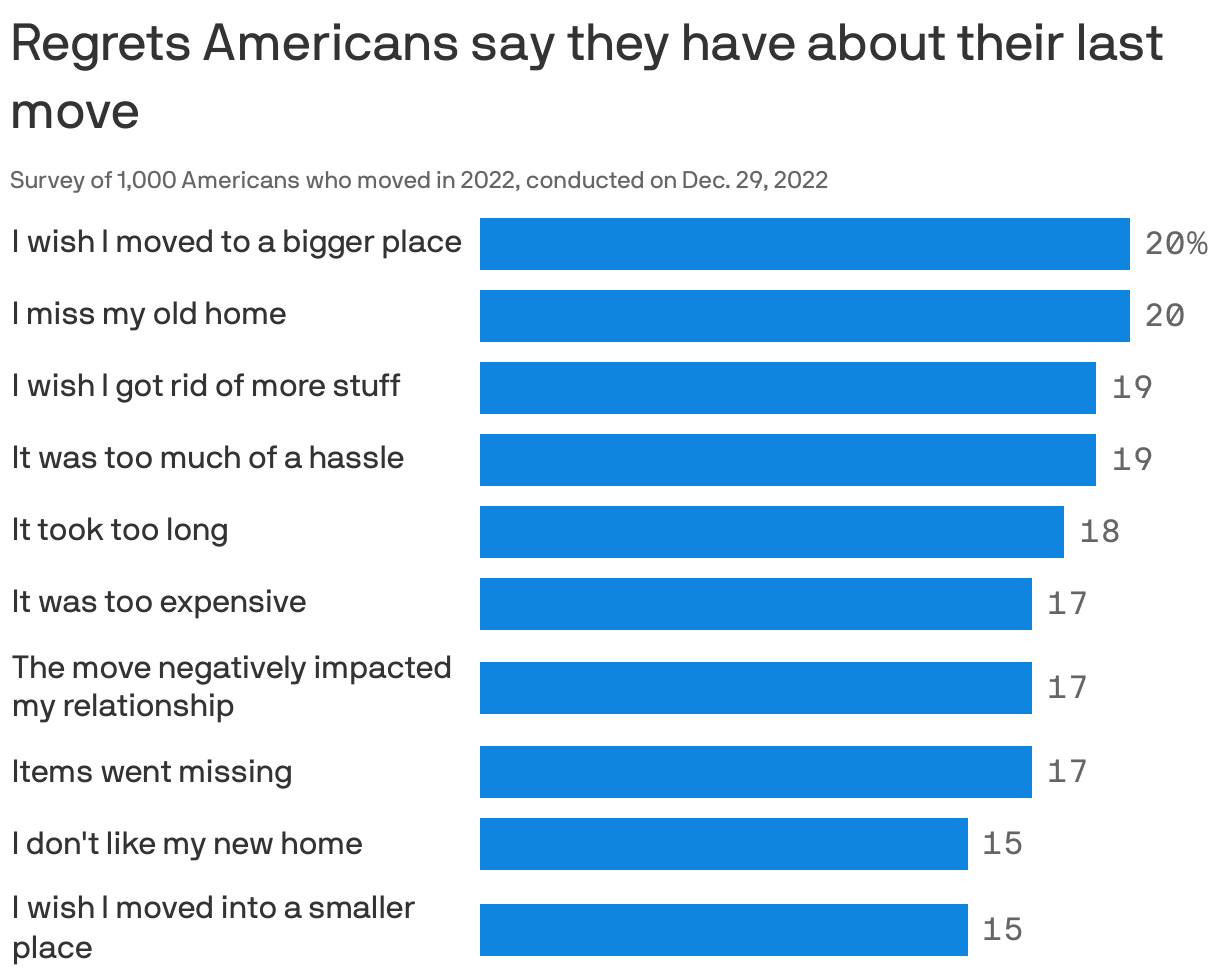
While the pandemic and work from home policies spurred an exodus from big city centers, very few Americans chose to relocate in 2022 and likely with good reason: Moving is no fun.
The big picture: About75% of people who moved had some regrets over it, according to recent data from Home Bay, a website that offers real estate analysis, and 44% of people reported crying at least once during the process.
The February jobs report had something for everyone: encouraging developments for American workers and the Federal Reserve's inflation-fighting efforts.
Why it matters: Economists and data-watchers hoped the latest payrolls report would clear up the big question of the moment: Will more hot data force the Fed to tighten more aggressively?
Silicon Valley Bank's troubles — and fears that other regional banks could face similar issues — are rippling across Wall Street. That could complicate the Fed's inflation fight, as well as the economic outlook.
Fears have been spreading that the rapid rise in interest rates over the last year has caused losses on banks' bond portfolios, which could create distress across the banking system.
Why it matters: Losses in the banking sector could throttle credit in the broader economy, if banks become more cautious in their lending and/or face deposit outflows.
State of play: Bond markets are going haywire. As of 11:50 ET Friday morning, the two-year Treasury yielded 4.71%, well below the 5.07% reached on Wednesday.
That likely reflects, in part, a sense that the jobs report and banking troubles will make the Fed more cautious about rate increases.
But a move that large probably also involves a more general flight to quality — panicky investors snapping up Treasury securities as a safe haven amid ominous signs in the banking system.
What they're saying: "There are recent developments that concern a few banks that I'm monitoring very carefully. And when banks experience financial losses, it is and should be a matter of concern,"Treasury Secretary Janet Yellen said Friday morning while testifying before the House Committee on Ways and Means.
The intrigue: There is an irony to the bond market rally over the last two days. Silicon Valley Bank got in trouble because the market value of its long-dated bonds fell due to Fed rate hikes.
But now SVB's troubles have triggered a bond market rally; the popular Vanguard Exchange Traded Fund with the ticker BND is up 1.3% Friday alone.
Call it interest rate ouroboros — the snake eating its own tail.
U.S. banking regulators on Friday assumed control of Silicon Valley Bank, the country's 16th largest bank and a top financial institution for technology and life sciences companies.
The big picture: This is the largest bank failure since Washington Mutual in 2008.
Why it matters: SVB is a cornerstone of the tech and life sciences startup economy. It's also America's 16th largest bank, and its failure would be the biggest since Washington Mutual.
The U.S. economy added 311,000 jobs in February, the Labor Department said on Friday, continuing a hot hiring streak that has underpinned the country's tight labor market.
Why it matters: Employers continued to add workers to payrolls at a very quick pace — despite months of rising interest rates meant to cool that demand.
The U.S. has hit its debt limit, which means — given congressional dysfunction — that the chances of a sovereign debt default are real, if small. One consequence has been a spike in the price of credit default swaps (CDS) that pay out if the U.S. defaults.
Why it matters: The price action in U.S. sovereign CDS is important, but it can't be used in the same way that other CDS prices can, to infer a probability of default.
Why it matters: Manhattan District Attorney Alvin Bragg's invitation could indicate that the former president may face criminal charges over the allegations, per the New York Times, which first reported the news. Trump's representatives called the "threat" of indictment "insane."
One of the most difficult emotions for me to tame is my reflex for revenge.
Why it matters: Even at 52 — despite knowing in calm times that it's wasted energy — when wronged, I want to fight. I want revenge.
The lust for vengeance lurks in all of us. But acting on it almost never satisfies us. In fact, it often makes us feel worse.
Psychological and behavioral scientists found that the mere thought of revenge stimulates the part of our brain that processes reward. Yet the reward is rarely realized.
Instead of making us feel better, revenge prolongs our bitterness with feeling wronged. When we obsess about the slight, it keeps tormenting us.
Instead of delivering the justice you think you deserve (and might deserve!), revenge often creates a cycle that drags things out even longer.
Plus you often feel like a jerk — when you were the victim.
So how do we tame an impulse as old as our species?
1. Get an anti-vengeance counselor. Mike Allen, my co-author and co-founder, has been my cooler-heads-prevail muse since the day we launched Politico in 2006. Back then, I would want to fight every naysayer or critic. He would pull me aside and say, "We'll be in this town a long time. Are you certain you'll look back and say that move was wise?"
Mike was always right.
You need a smart, trusted friend or mentor who can listen to you vent — and steer you toward a sane response.
2. Sit on your rage. Never retaliate immediately. The worst thing you can do is respond impulsively.
The only thing worse than revenge is ... regrettable revenge. Anything you want to write or say, sleep on it for a few days before acting. Most of the time you'll come to your senses.
3. Brush it off. It's different if the person has hurt your character or family. But most of the time, whatever you're stewing about isn't that big of a deal in the scheme of things, anyway.
Is this something that'll matter in 10 years? If not, move on! As Finish Liners know, a happy, fruitful life is focused on forward motion.
4. Don't bottle it. I find writing but not sending a retaliatory email to be therapeutic. Or simply sharing my fury with a friend.
This lets you release the steam more healthily. If you just let it build silently and alone, you're more likely to explode.
5. Vengeance in moderation. This is a tricky one — but it works. Letting revenge animate your decision is obviously stupid and usually wrong. But allowing yourself a sip or two of thinking about vengeance can be invigorating.
It motivates us to prove that person and others wrong.
The bottom line: Use the negative energy for a positive outcome — upping your game to be better than the jerk who wronged you.
This article originally appeared in Axios Finish Line, our nightly newsletter on life, leadership and wellness. Sign up here.
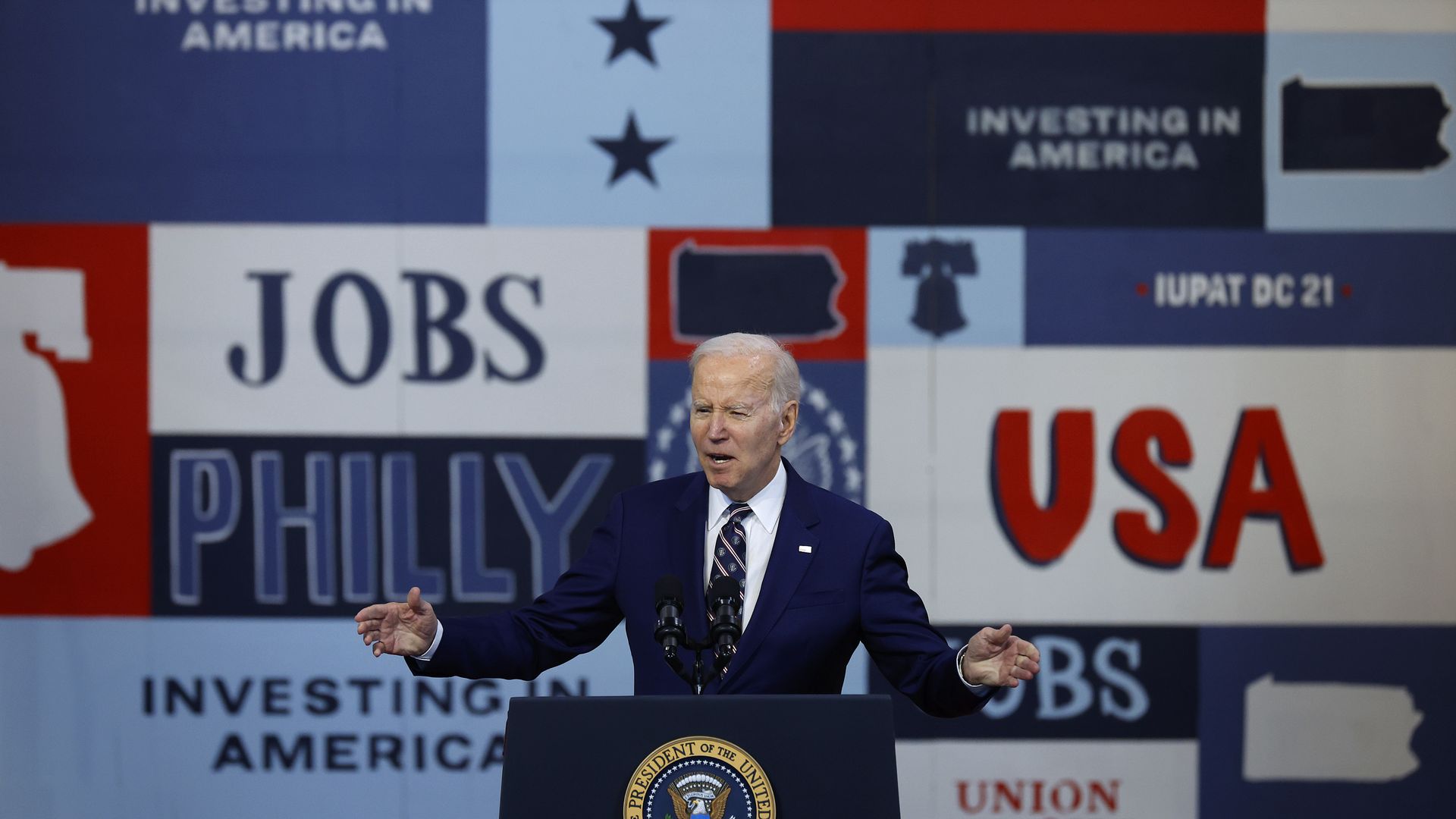
President Biden got his FY2024 budget out of the way. Now he can turn to a more urgent task: Goading Republicans into offering their own proposals — and trying to define them before they do.
Why it matters: By calling for the rich to pay higher taxes to shore up Medicare, Biden is trying to force a fight on deficit spending and entitlement programs on his own populist terms.








/2023/03/10/1678463212676.gif?w=3840)