Data: Moody's Analytics, OECD and Trading Economics; Chart: Baidi Wang/Axios
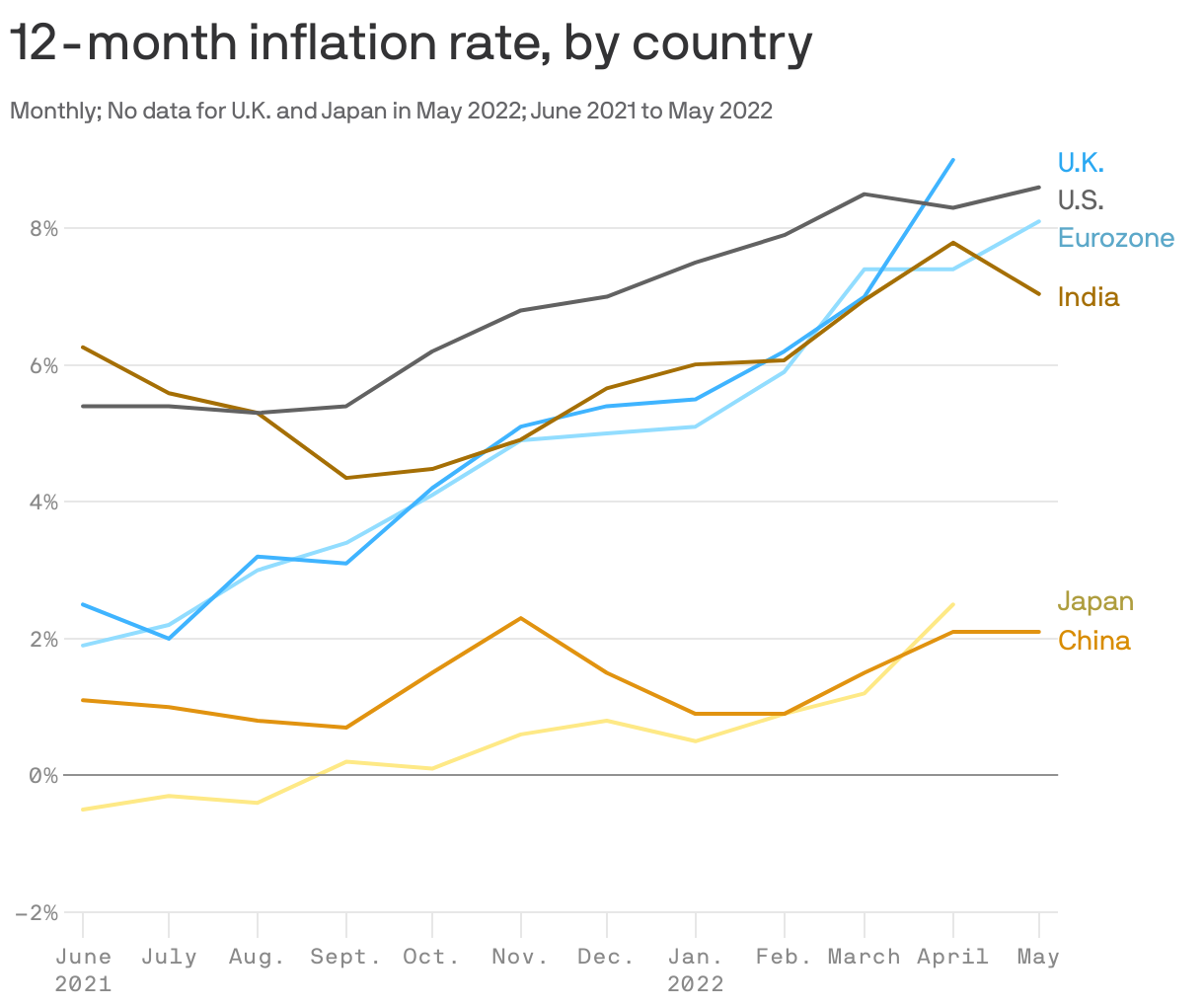
Inflation in the U.S.is at a 40-year high, but America isn’t alone. Soaring prices are a truly global phenomenon.
The big picture: An analysis of inflation across 111 countries from Deutsche Bank puts the U.S. near the middle of the pack. Among those countries, the median rate of 7.9% year-over-year inflation has more than doubled from 3.0% one year ago, thanks largely to spiking energy and food prices.
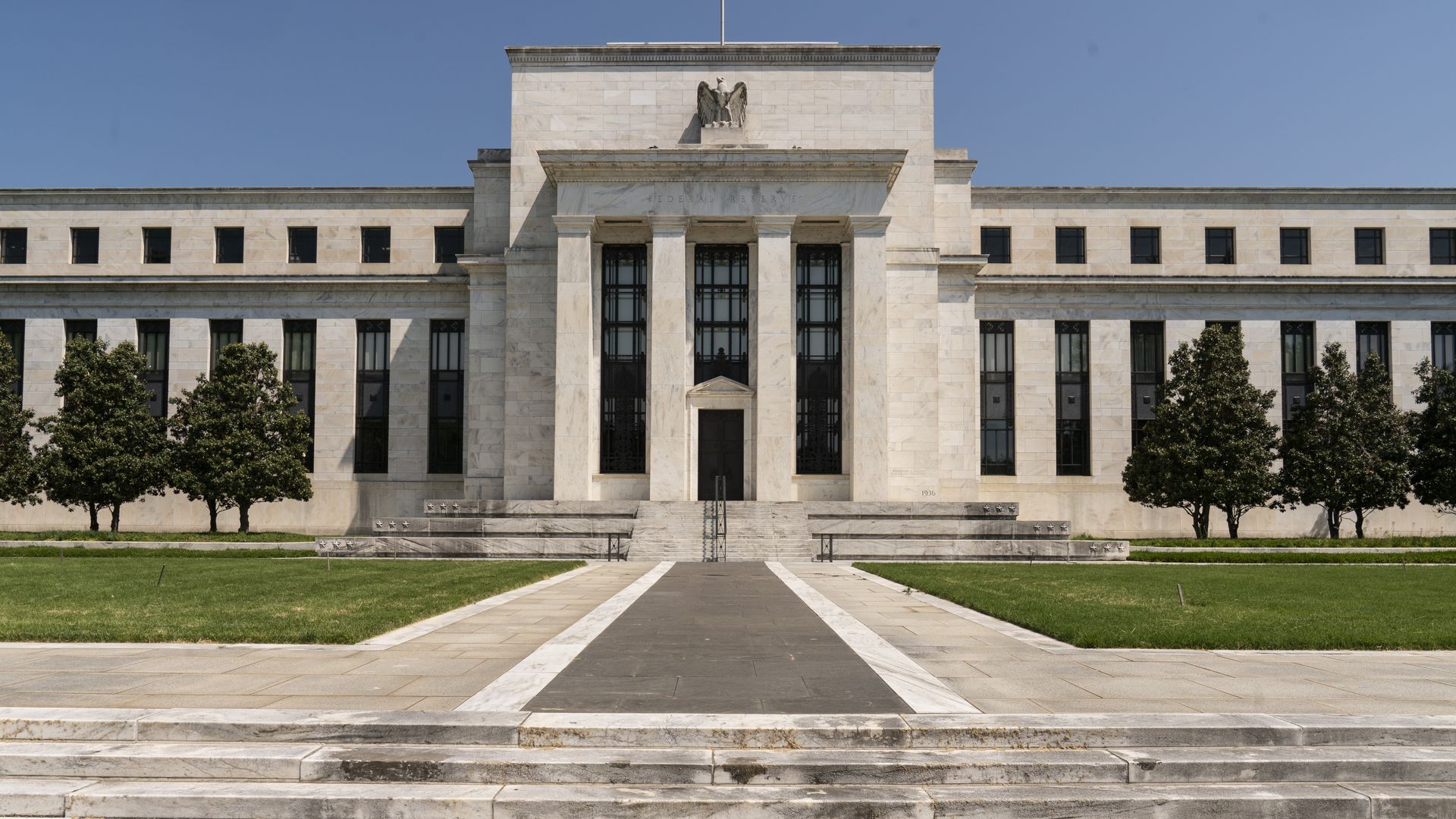
The Federal Reserve could respond to the surge in inflation with its steepest interest rate increase since 1994. At its policy meeting on Wednesday, the central bank may opt to raise rates by 0.75 percentage points, rather than the half-point that has been signaled for weeks.
Why it matters: If the Fed opts for the more aggressive move Wednesday, it would amount to stepping away from the slow-and-steady rate rising campaign, and an escalation of the central bank's war against inflation — one that is already causing steep drops in asset prices and rising recession risk.
Electric Last Mile Solutions plans to liquidate about a year after a SPAC deal tagged the electric vehicle startup with a $1.4 billion valuation.
Why it matters: Upstart EV companies face questions over their ability to compete with established automakers, which have long track records of vehicle development, supply chain expertise and manufacturing knowhow.
The S&P 500 tumbled on Monday, pushing the benchmark index into bear market territory as Wall Street reacted to soaring inflation — and fears about how aggressive the Federal Reserve will need to be in order to arrest it.
Why it matters: The news underscores the deeply uncertain outlook for the stock market after more than a decade of astronomical growth.
Nearly a decade after Amazon began working on drone delivery, customers living in one small California community will soon be able to take advantage of the 30-minute air delivery service.
Why it matters: Drones bearing packages could soon be as ubiquitous as the Amazon van or UPS truck rumbling through your neighborhood, helping to reduce roadway congestion and lessen tailpipe emissions.
Yes, but: Widespread deployment won’t happen until the Federal Aviation Administration finalizes drone flight rules — a process that could take another year or two.
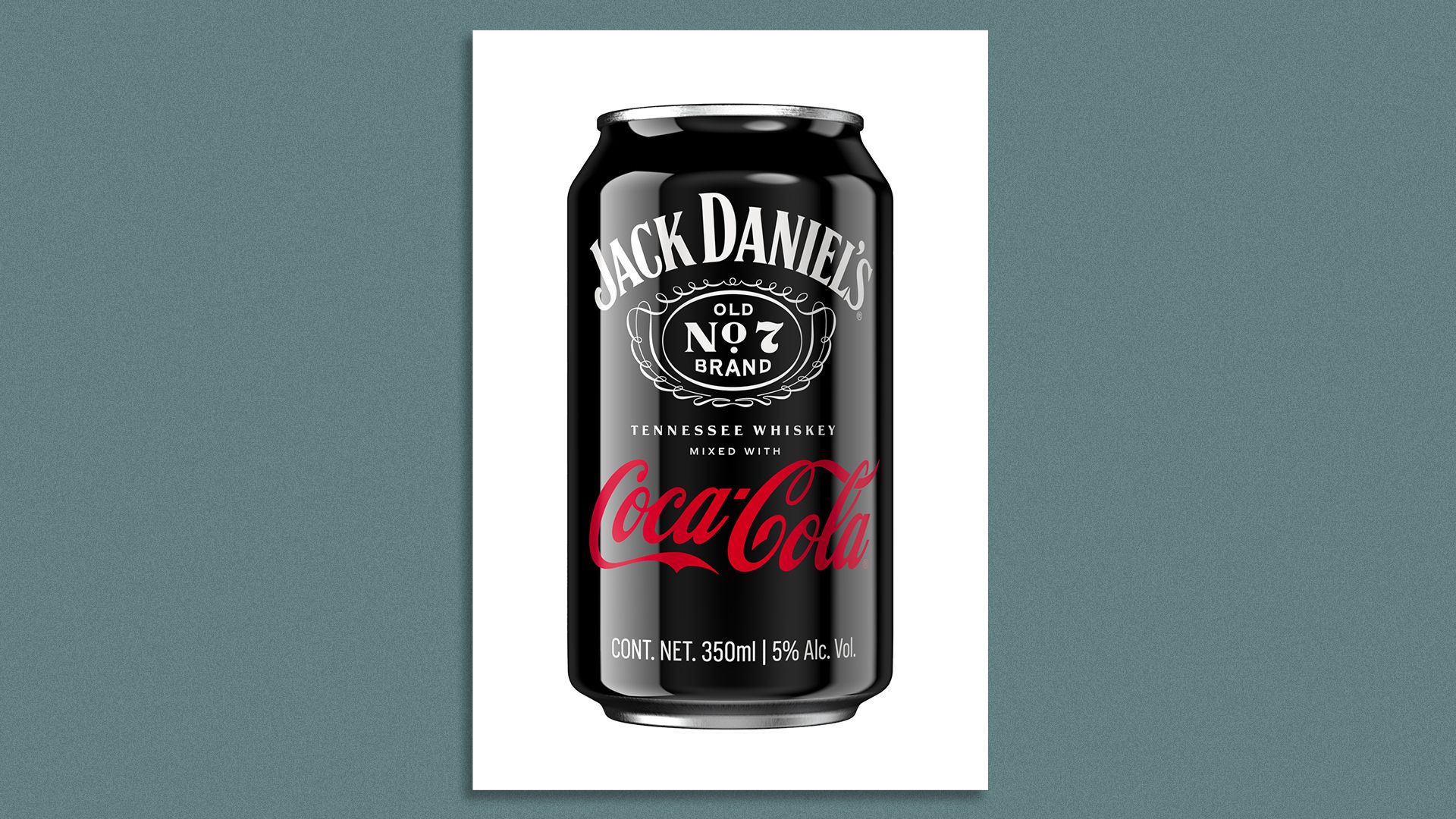
What's happening: Coca-Cola and Jack Daniel's owner Brown-Forman announced Monday that they will introduce a new alcoholic canned drink branded as Jack Daniel’s & Coca-Cola RTD.
Friday morning, after a hot inflation number was released, stock and bond markets rapidly adjusted. Interest rates rose and stocks fell as investors figured, correctly, that it meant the Fed will raise rates more aggressively.
This pattern has been happening since last fall, but it shows something interesting: Even as inflation has become a national crisis, the Fed is the only entity in Washington truly focused on bringing it down despite the pain that entails.
Music platform Audius is among the more mainstream projects to come from the crypto world, securing early funding from players in the very industry the shop aims to disrupt. Think: Katy Perry, Nas, Jason Derulo and Pusha T.
Why it matters: The company's mission No. 1 is to make money for the music artists on its platform, Roneil Rumburg, co-founder and dance music fanboy, tells Axios in an interview at Consensus 2022 in Austin.
If you're looking for sunshine, you've come to the wrong place.
Over the past month, my conversations with private market investors have become progressively bleak. This culminated last night when a veteran source put his finger on why this is really different from 1999: Scale.
By the numbers: Private markets AUM hit $9.8 trillion through July 2022, which is up from just $7.4 trillion one year earlier, with over $2 trillion held by venture capital firms.
Blue Nile, a Seattle-based online retail of diamonds and jewelry, agreed to go public at an implied $683 million enterprise valuation via a blank check company called Mudrick Capital Acquisition Corp. II.
Why it matters: The SPAC market was poised to suffer its first week without a new merger since early January, before this announcement arrived at 5:40pm ET on Friday.
There was an invisible force at Digital Currency Group CoinDesk's crypto festival in Austin last week: its resurrected social token, DESK. Color us obsessed.
Why it matters: Nearly nine-in-10 Americans have heard of crypto, according to a Pew Research study published in November, but far fewer have ever actually invested in, traded or used them.
BlackRock, the world's biggest fund manager, oversees trillions of dollars in index funds — which means that it gets a huge vote come proxy season.
On Monday, it announced a small amount of progress in terms of reducing that power by handing voting decisions over to institutions that invest in its funds.
Federal securities regulators have expanded their investigation into the planned merger between a blank check acquisition company and former President Trump's social media business, known as Truth Social, according to a Monday morning filing with the SEC.
Why it matters: Truth Social's financial prospects are heavily reliant on investment tied to the merger, which may never come to pass.
Data: Federal Reserve Bank of St. Louis; Chart: Thomas Oide/Axios Visuals
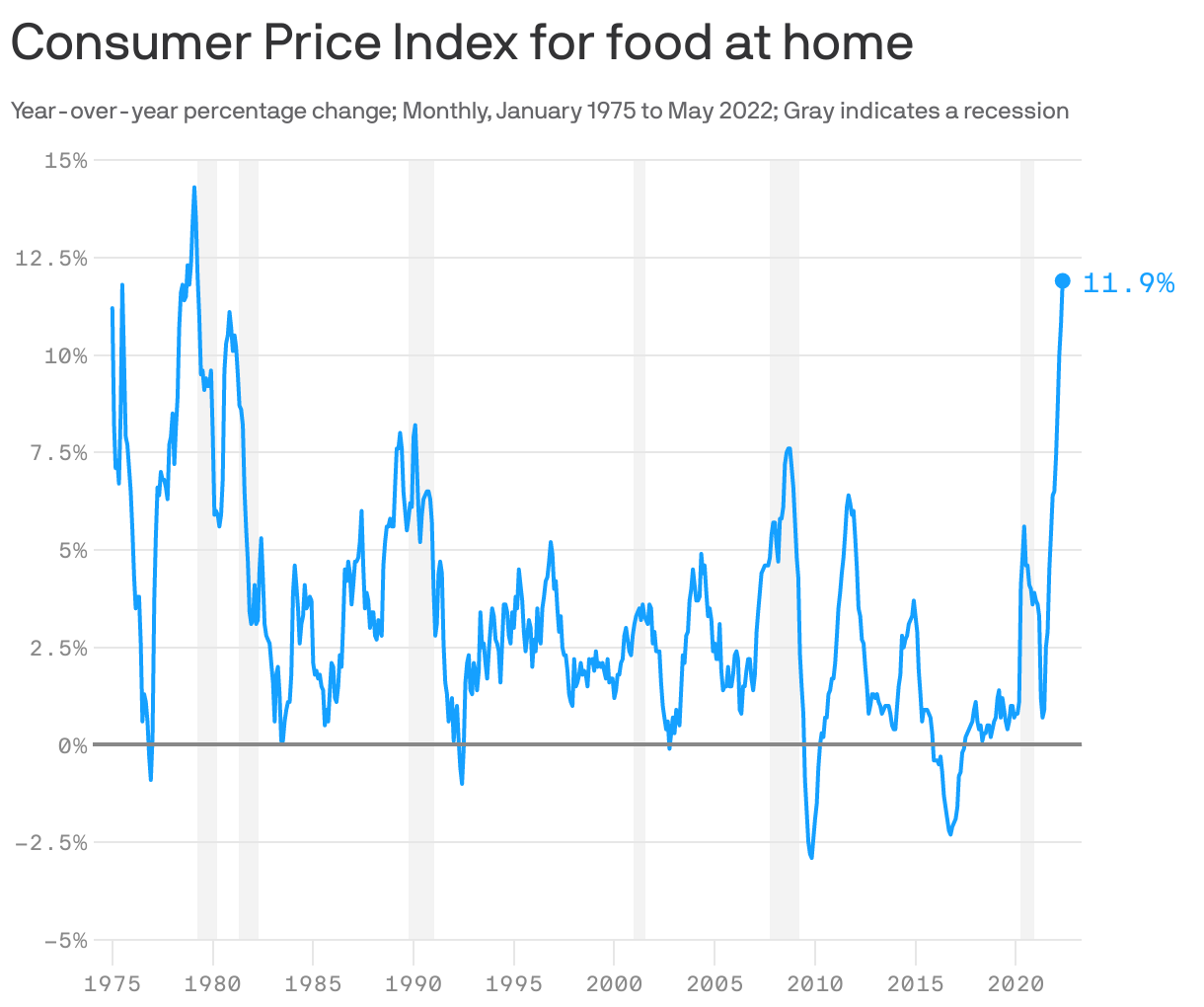
Skyrocketing food prices in the U.S. are changing the way Americans eat and grocery shop — they're buying more store brands, and less costly meat and produce. Some are now just making do with less.
Meanwhile, food manufacturers continue to "shrinkflate" — putting less potato chips or cereal in the bags and boxes that we buy.
Why it matters: This is inflation hitting home, contributing to the overall bummed-out mood of the nation.
Sunday's Tony Awards marked Broadway's most racially diverse season — with Michael R. Jackson's "A Strange Loop," about a gay, Black theater artist, winning the best new musical crown, per AP.
The big picture: Jennifer Hudson co-produced the show, meaning she's now the 17th person to achieve EGOT status, adding a Tony to the collection of Emmy, Grammy and Oscar awards that the singer and actress already won.
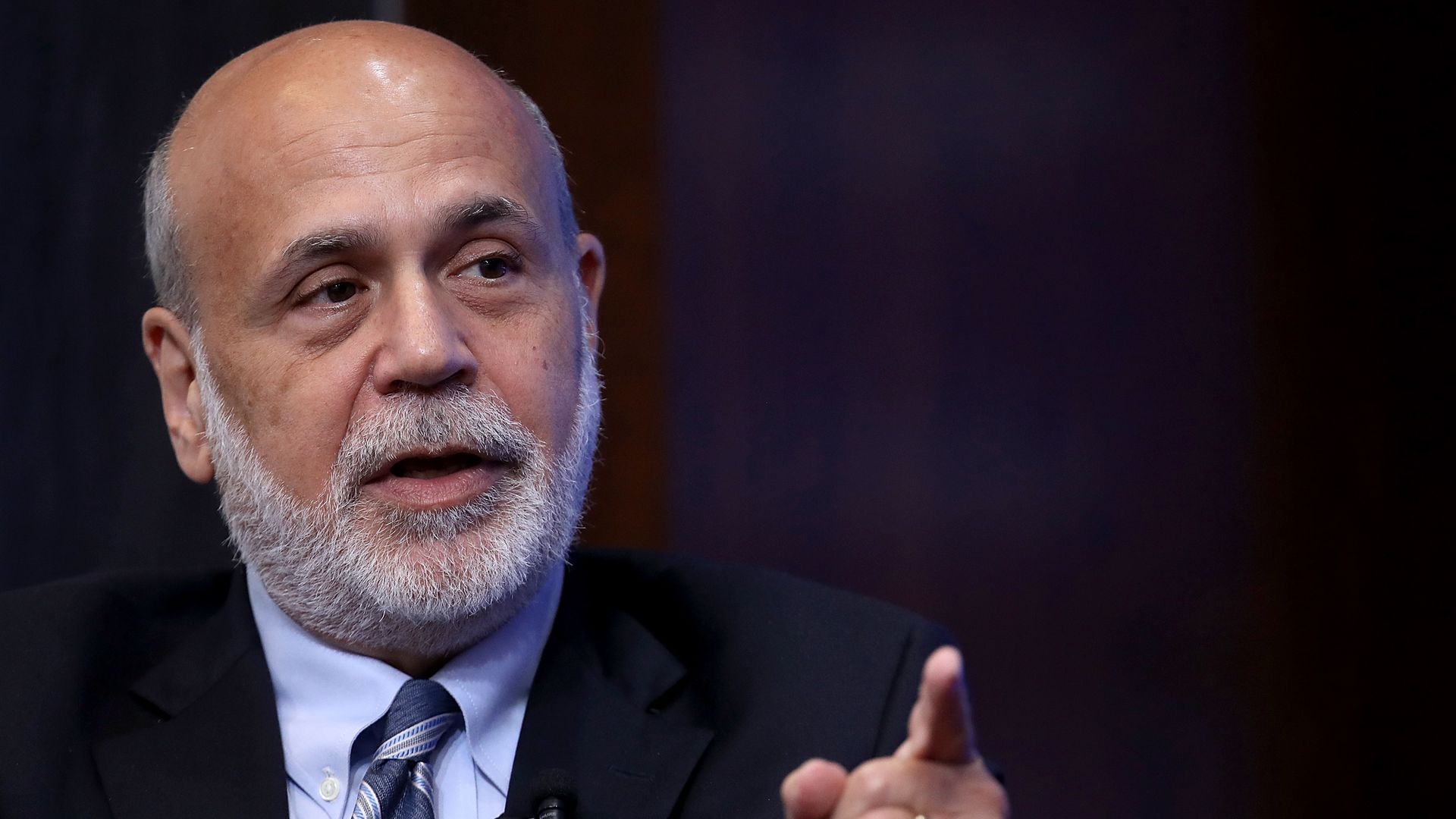
The Federal Reserve has "a decent chance" of helping the U.S. swerve a full-on recession, former Fed chair Ben Bernanke told CNN on Sunday.
Why it matters: The Fed will likely have to take more aggressive steps to cool demand broadly in the economy to tackle worsening inflation, which amplifies the risk of a sharp economic downturn, per Axios' Neil Irwin and Courtenay Brown.














/2022/06/12/1655069489812.gif?w=3840)