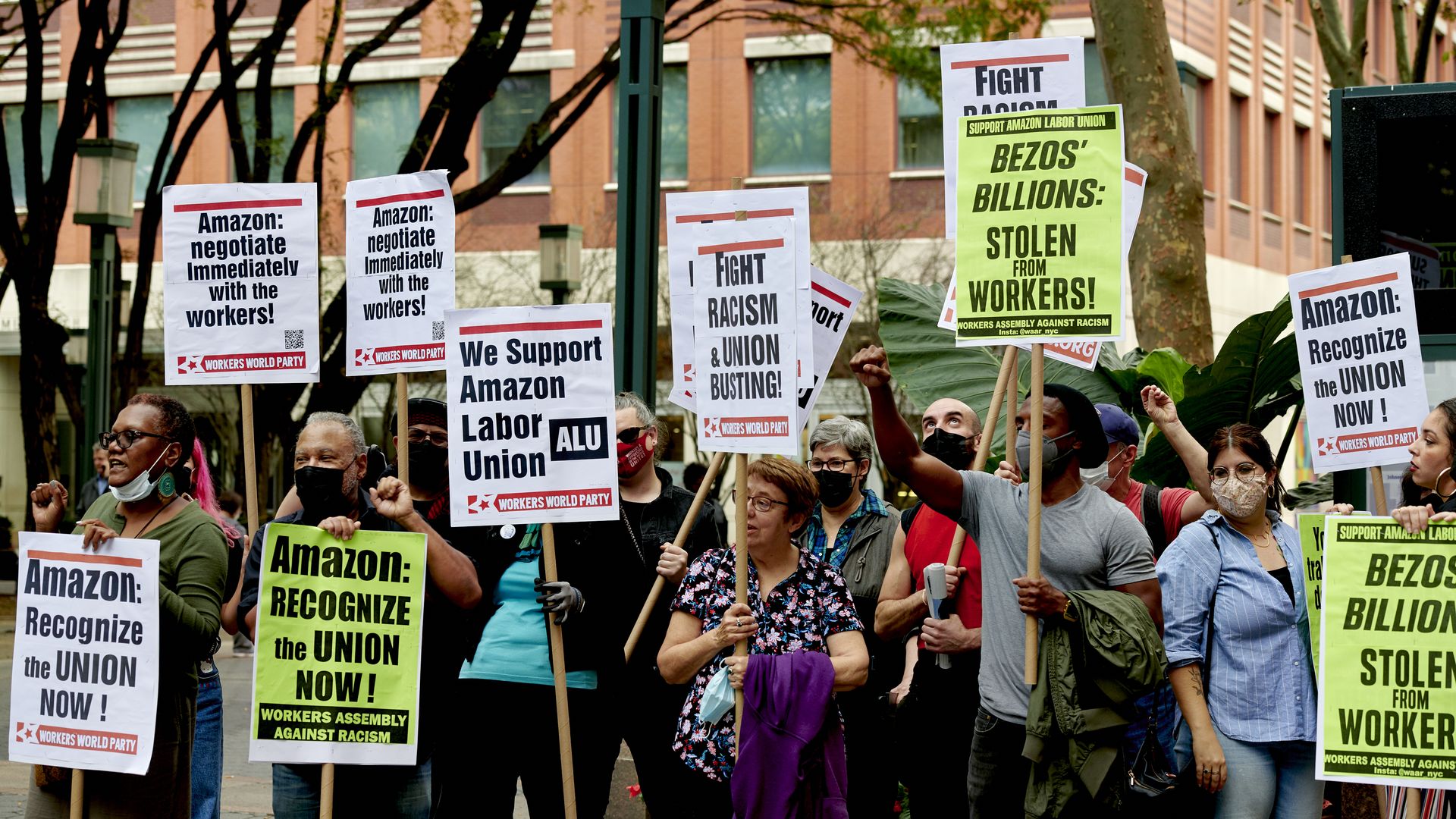
Why it matters: The election is part of a wave of labor organizing at Amazon facilities across the U.S. Another Staten Island warehouse is already set to hold an in-person union vote from March 25 to 30.
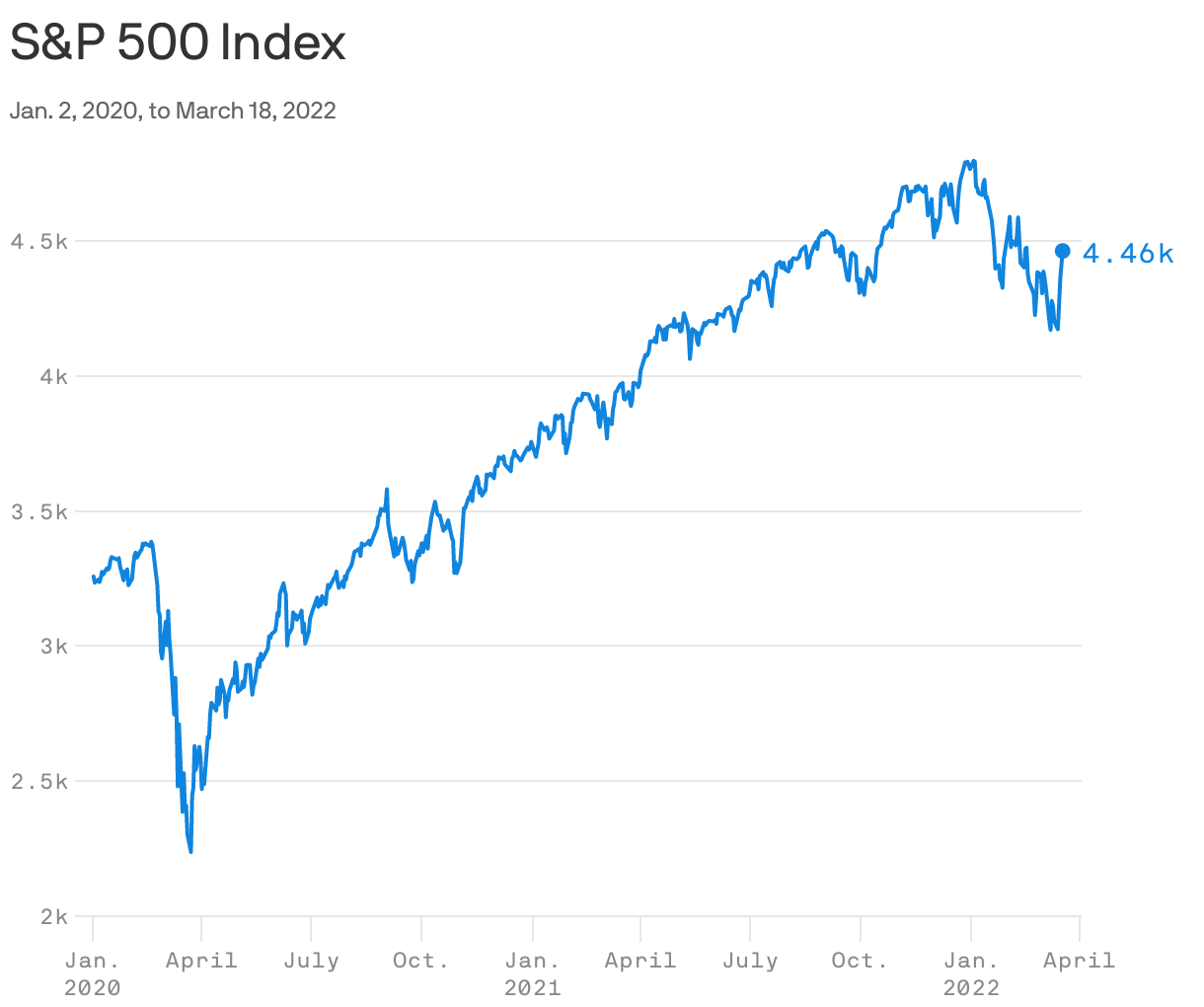
The big picture: Investors are now having to weigh how the Ukraine crisis and geopolitical fallout will impact their money — just as the pandemic is expected to transition into an endemic.
“For a year that started with such hope and optimism, many are extremely concerned about the U.S. economy,” Amanda Wallace, head of insurance operations with MassMutual, told CNBC.
My personal flashback: I can still feel the collective tension on the floor of the New York Stock Exchange when I covered the beginnings of the crash on live television. The air was choked with suspense, and the din of traders’ phones and alerts filled the air with a thickness like the humidity of a New York City summer.
You’ll be hearing a lot of wedding bells this year — and that’s music to the ears of companies in the matrimonial business.
Driving the news: Signet Jewelers — owner of Kay Jewelers and Zales — said Thursday it expects a nearly four-decade high in weddings in 2022, fueling sales of its jewelry, including engagement rings and wedding bands.
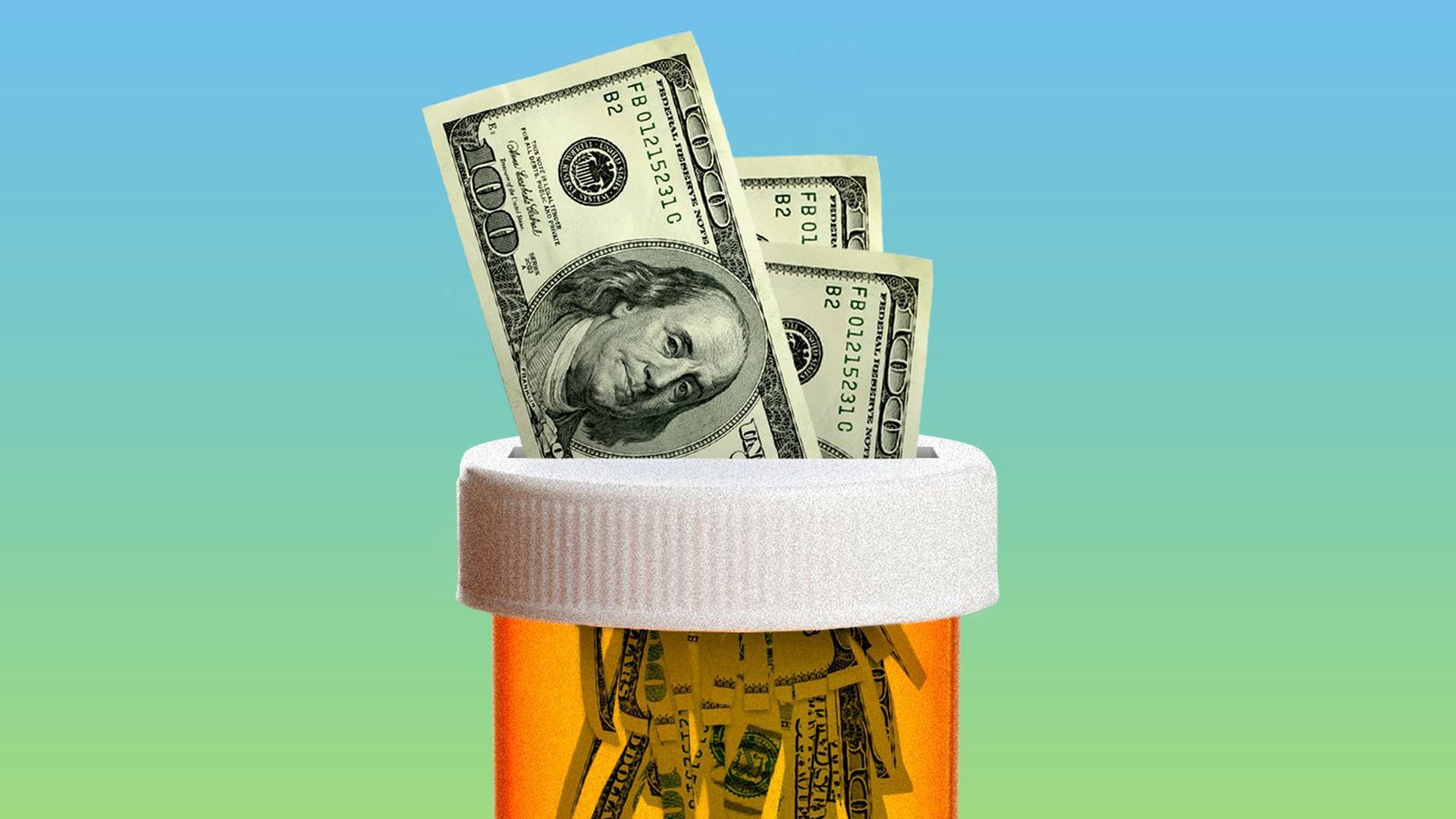
The country’s major credit-reporting firms will soon remove roughly 70% of medical collection debt from Americans' credit reports.
Why it matters: Medical debt is the most common source of collection-related blackmarks on credit reports. It can lower people’s credit scores, making it harder or more expensive to secure mortgages, auto loans and other credit — and even make it harder to secure a job.
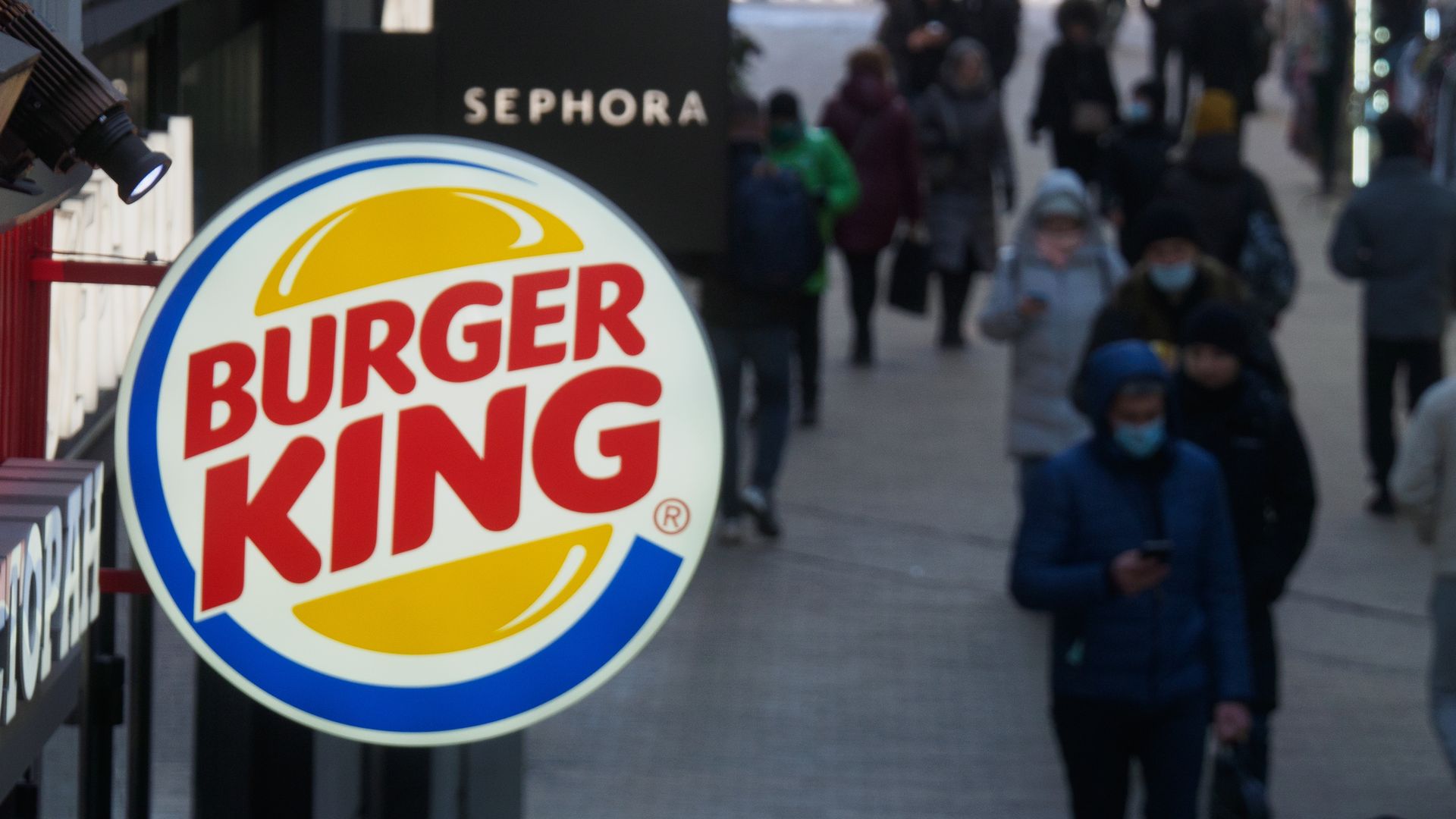
Burger King on Friday said that its business partner controlling approximately 800 restaurants in Russia has "refused" to suspend operations in the country.
Driving the news: "We contacted the main operator of the business and demanded the suspension of Burger King restaurant operations in Russia. They have refused to do so," David Shear, the president of Restaurant Brands International, which owns Burger King, said in a statement.
Driving the news: The ban comes as Western institutions crack down onRussian state-funded outlets that have long served as a propaganda arm of the Kremlin, Axios' Sara Fischer notes.
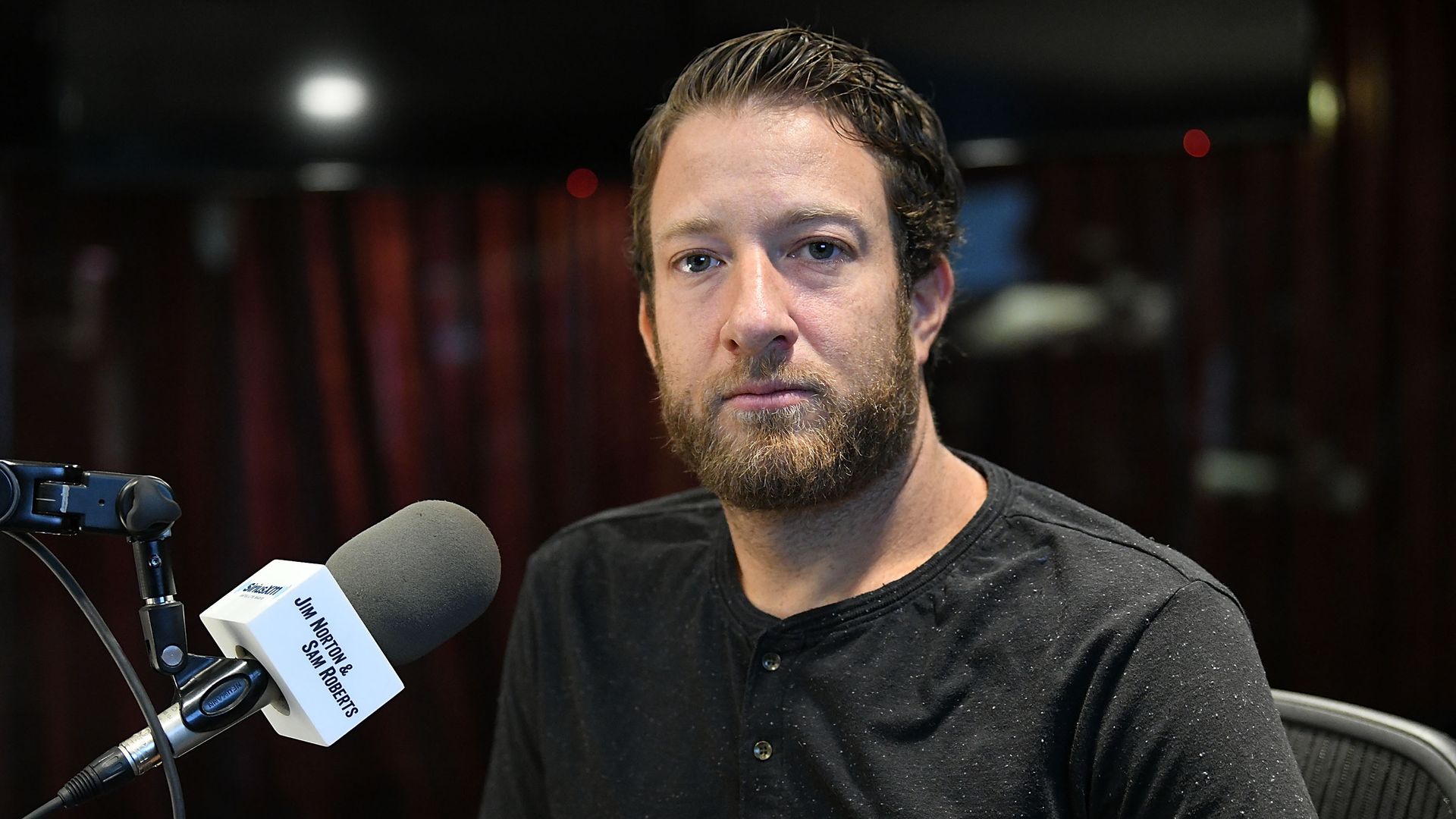
Gambling regulators in two states are investigating Penn National Gaming over concerns with Barstool Sports and its founder Dave Portnoy, the Wall Street Journal reported.
Why it matters: Penn's acquisition of Barstool always had brand risk, but now it also has business risk that could result in losing gambling licenses.
Optimism, a New York-based Ethereum scaling startup, raised $150m in Series B funding at a $1.65b valuation co-led by Paradigm and Andreessen Horowitz.
Why it matters: Web3 evangelists see a decentralized future that sprints cheaply along the Ethereum network, but the current architecture can't handle more than a jogger's pace at a luxury gym. Optimism, and a handful of peers, wants to build a second layer that adds speed and reduces costs.
The world's second-oldest profession — overseas shipping — is getting smarter: Nautilus Labs raised $34 million in a Series B driven to support its AI platform for the shipping industry.
Why it matters: Nautilus' tool promises to slash shippers' costs by reducing fuel consumption, improving planning — and, not least, lowering emissions.
Details: The round was led by both M12 — Microsoft's venture fund — and the Microsoft Climate Innovation Fund, marking the first time the two funds have co-invested.
Other investors included NSS Advisors, Systemiq Capital, Root Ventures, Quiet Capital, TMV, and Amplifier.
What's happening: The "Voyage Optimization" platform enables shipping companies and ports to better coordinate, and ship operators to adjust their plans based on weather, port congestion, and other factors.
Ships tend to cross the seas at the fastest optimal pace so even when "slow steaming" at low speed to save fuel, they often end up loitering at port until a berth opens.
Those normal delays have been exacerbated by port constraints that have caused huge lines at ports around the world and shippers trying to take advantage of sky-high cargo prices.
By the numbers: Ocean-going ships account for 3% of global greenhouse gas emissions.
These emissions and air pollution have spiked — in places such as the Port of Los Angeles, air pollution has as much as doubled — as ships have reportedly raced 22% faster to reach port, only to idle for days off the coast.
Nautilus says that its platform can help shippers cut their fuel consumption by nearly a third — roughly $50 billion in fuel, or 1% of emissions.
What they're saying: "We’ve seen upward of 12% fuel reduction just by giving people better predicted confidence on how to manage a voyage," CEO Matt Heider tells Axios. "Those vessels didn’t need to be there, because there’s nothing to do but wait. And I can guarantee you that every single ship that was there waiting at anchor could have gone just as slow."
Alan Neuhauser will co-author the Axios Pro Climate deals newsletter. Join the waitlist now.
In a new Gallup survey released Friday morning, only 24% of employees said they believe their employer cares about their well-being, down from 49% at the height of the pandemic.
Why it matters: The country is apparently getting back to normal. Since Gallup started asking about this back in 2010, only about a quarter of employees typically believed well-being was something the boss truly cared about.
The annual Tulane deal gathering kicked off in New Orleans on Thursday, with antitrust and supply chain concern dominating conversation.
Why it matters: The common theme was that there's a harder antitrust regime in town, and that any large M&A is going to be hard, particularly in the tech space. But paths to success exist for companies that do opt to pursue deals.
Consumers gobbled up a record $36.9 billion in candy, gum, mints, chocolate and other confections in 2021 — and are poised to keep buying more, a new report by the National Confectioners Association says.
Why it matters: When times are tough, people turn to sweets to make themselves feel better. The pandemic not only gave people more license to buy goodies, it got them into the habit of buying them online and consuming them at home — for movie nights, etc.
Forget toxic pesticides: The next generation of urban rodent control relies on internet-connected traps that shock or impale a rat or mouse before isolating it in a chamber for disposal.
Why it matters: Rat complaints have surged in the aftermath of pandemic lockdowns, and cities are cracking down with renewed vociferousness, appointing "rat czars" and prioritizing citizen complaints about rodents.
Companies that never had to deal with abortion rights are now picking a side.
The big picture: After Texas effectively banned the procedure last year, and with the Supreme Court potentially poised to roll back abortion rights, new restrictions could soon put more pressure on big businesses to act.
I’ll never forget asking Mike Allen, my co-founder and co-author, how he grew kinder as his public prominence — and power — soared, Axios CEO Jim VandeHei writes.
"I don't understand how you could not get more humble. It's obvious how much luck and help it took to get me here," he said.
Why it matters: We often celebrate those who break things, invent things or build things with bravado. But I have learned more studying two men of uncommon modesty: Mikey and the late Fred Rogers, a.k.a. Mister Rogers.