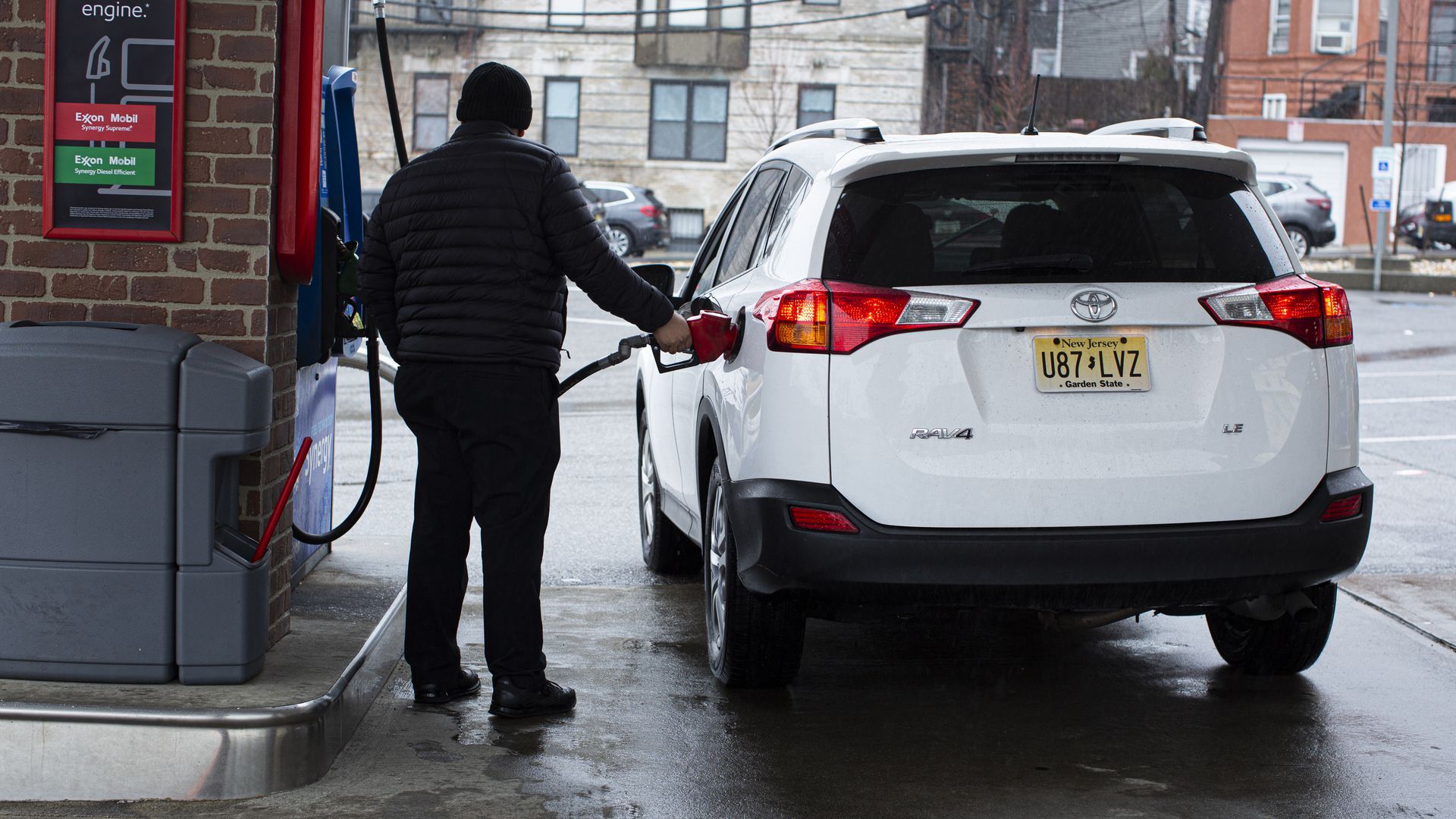
Why it matters: Gas prices hit new highs in recent days amid Russia's ongoing invasion of Ukraine, and could go even higher due to bans on Russian oil exports.
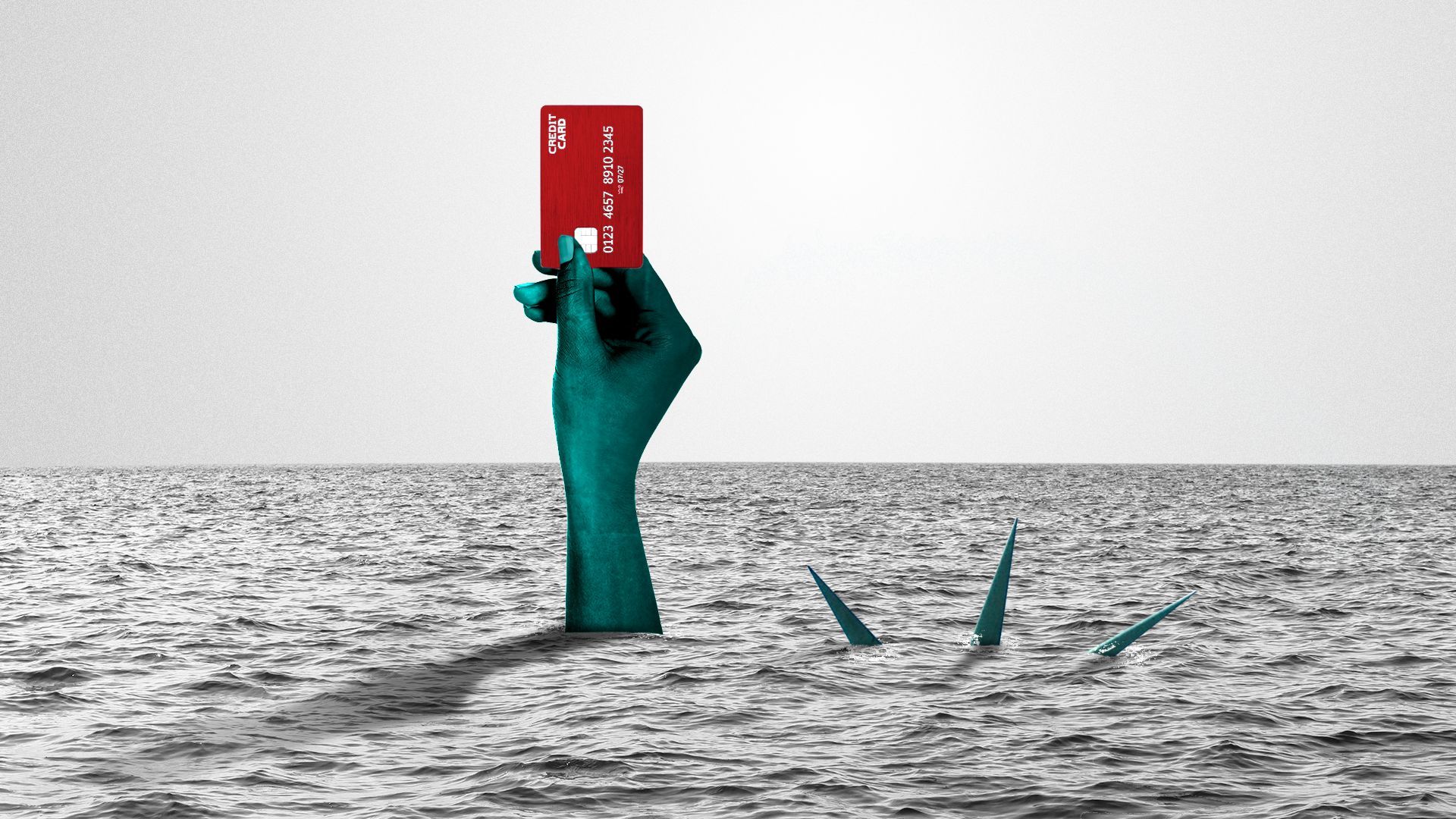
Americans are going into debt to deal with a generational high in inflation after increasing their savings in the early going of the pandemic when stimulus funds were flowing.
Inflation hit another 40-year high in February, rising 7.9% over the previous 12 months, according to federal data released Thursday.
Why it matters: Low-income folks are particularly susceptible to inflation, including the rising cost of rent, gas and food — each of which is a big factor in the increased cost of living.
Nearly one-third of Americans have added credit card debt during the pandemic — and of those, about half say inflation was the biggest reason, according to LendingTree.
Inflation was a bigger reason than job loss, pay cuts, medical bills or child care.
Despite wage gains, more than 6 in 10 banking customers say "the price of goods that they buy are increasing faster than their income," according to the J.D. Power Banking and Payments Intelligence Report.
Threat level: Rising inflation comes with rising interest rates, as the Federal Reserve is poised to act. But that will make the cost of debt rise even further.
Meanwhile, the skyrocketing cost of gasoline in March hasn't even yet factored into the government's Consumer Price Index inflation gauge.
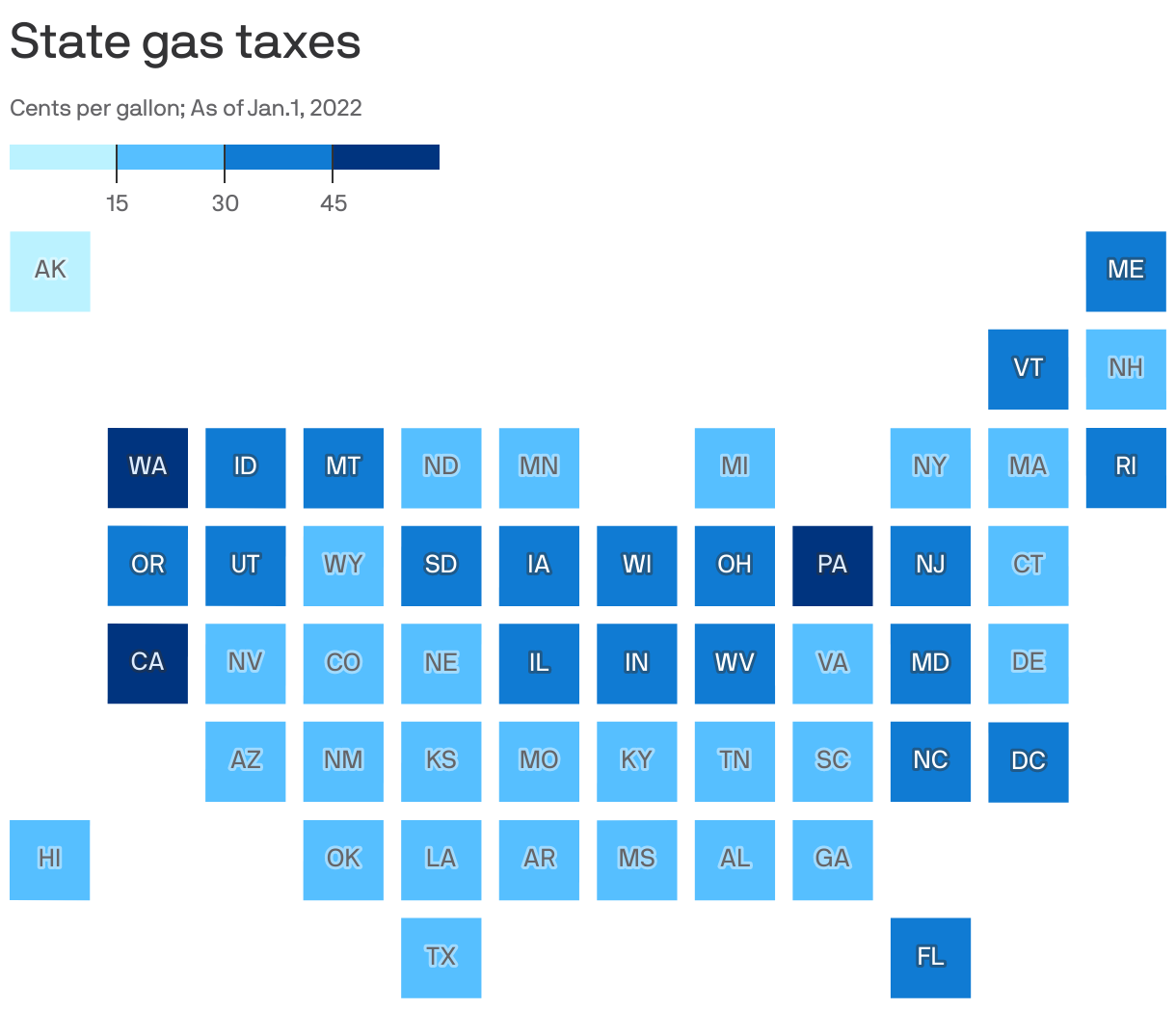
Gas prices reached another all-time high Thursday at a national average of $4.32 per gallon, up $1.50 from a year ago, according to AAA.
Every $1 increase in the price of gas costs about $1,200 per household annually, Morgan Stanley analyst Adam Jonas estimated.
What’s next: Economists and politicians are murmuring about taking steps to ease the impact of soaring gas prices on consumers.
California Gov. Gavin Newsom on Tuesday said he would be floating “a proposal to put money back in the pockets of Californians to address rising gas prices.”
Several economists have endorsed the idea of lawmakers sending out “gasoline vouchers,” potentially targeted at low-income citizens.
Reality check: Democrats eager to tackle climate change will have to decide whether they’re willing to hand over money for people to spend on fossil fuels. And Republicans will have to decide whether they're OK with the government borrowing more.
But, but, but: November midterms are fast approaching.
“This is an election year, and consumers have been stunned by gasoline prices — a perfect storm, in our opinion, for rebates or vouchers,” wrote Greg Valliere, chief U.S. policy strategist of AGF Investments.
Major League Baseball and the MLB Players Association have reached an agreement, ending the longest lockout in its history after a months-long labor fight, multiple outlets reported.
Why it matters: With the new deal, free agency starts Thursday night and players can report for spring training as early as Friday, ESPN reports.
The Walt Disney Company on Thursday said it would pause all business in Russia, due to the "unrelenting assault on Ukraine and the escalating humanitarian crisis."
Why it matters: Disney was the first major Western movie studio to pull its theatrical releases from Russia last week, which prompted many other studios to follow suit.
The commodity price spike caused by the war in Ukraine has increased the risks of a recession, sustained high inflation, or both.
Between the lines: Just a couple of short weeks ago, the economic outlook seemed to be coming into focus. Supply crunches were starting to un-crunch. The Federal Reserve was starting monetary tightening, taking away the economy's pandemic-era training wheels. The private sector was booming anyway.
For decades, New Jersey has held steadfast to a law prohibiting gas station customers from pumping their own tanks. That may be about to change, in ways that contain a surprising insight about how the economy works.
Why it matters: If New Jersey backs off its gas pumping rules, it will show the power of "endogenous productivity growth," the idea that tight labor markets can create powerful incentives to deploy workers in ways that generate the most economic value.
If there is a saving grace in this new world of $110 per barrel oil, it is that petroleum products play a less significant role in the U.S. economy than they did during the oil shocks of the 1970s, or even the price spikes of 2008.
Driving the news: Energy represented 4.2% of Americans' personal consumption expenditures in January, before the recent price surge. It was nearly 7% in the summer of 2008.
When the world economy creaked and nearly collapsed in 2008, one of the biggest winners was the asset manager Pimco, and its larger-than-life chief, Bill Gross.
That is one subplot in Mary Childs' vivid tale of the bond manager and his empire, "The Bond King," out next week.
A group of blockchain investors has committed $165 million to make bitcoin more of a force in the decentralized finance and app development world.
Why it matters: Bitcoin has long been considered just a store of value, while most hardcore blockchain app development has been focused on ethereum and other chains.
SmithRx filled a $20 million Series B funding round led by leading Silicon Valley firm Venrock with support from Founders Fund, bringing the PBM startup's valuation to $100 million, Venrock partner Bryan Roberts tells Axios exclusively.
Why it matters: As anyone who's ever filled a prescription knows, the pharmacy industry is the opposite of transparent, but entrepreneurs and giant tech companies are trying their hand at injecting some clarity into the sector.
JPMorgan Chase became the second investment bank to pull out of Russia Thursday, after Goldman Sachs said it will exit operations in the country and focus on managing or closing out pre-existing obligations in the market and "ensuring the well-being of its people."
Why it matters: While the list of businesses signaling their exit of Russia is already long and growing, Goldman and JPMorgan represented the first such statements from a major Wall Street bank.
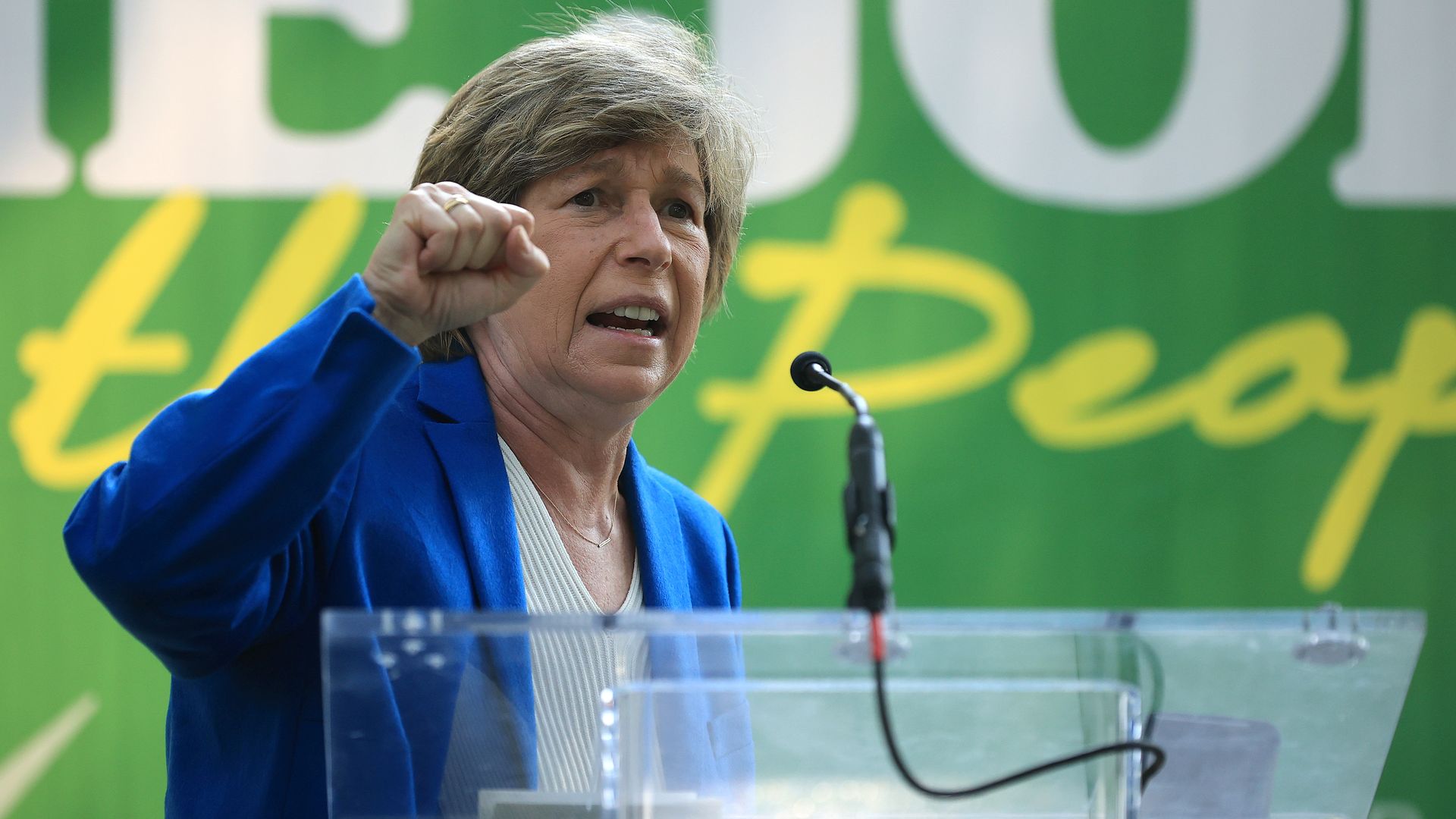
Randi Weingarten, president of the American Federation of Teachers, on Thursday will call for her organization to divest from Russia-related assets, Axios has learned. This would include assets owned or controlled by Russian oligarchs.
Why it matters: AFT is the country's second-largest public teacher union, with 1.6 million members, and manages around $1 trillion in pension assets.
Financial services company Western Union said Thursday it will cease its operations in Russia and Belarus starting over the unprovoked invasion of Ukraine.
Why it matters: The decision by Denver-based Western Union, one of the world's largest money transfer firms, adds to a growing number of financial, tech and retail companies leaving Russia in response to the war.
Third Point, the hedge fund led by Dan Loeb, disclosed a 6.4% stake in Cano Health (NYSE: CANO) and is pushing for a sale process. Cano, a Miami-based primary care company focused on seniors, went public last year via a SPAC led by Starwood Capital's Barry Sternlicht.
Why it matters: This is the first major activist targeting of a company that went public in the recent SPAC boom. It's also something of an attack from inside the house, as Third Point was a small participant in the SPAC merger's $800 million PIPE.
Atmosphere, the Austin-based streaming TV service for businesses, is launching a new sports-focused channel, COO Blake Sabatinelli tells Axios.
Why it matters: Atmosphere Sports' launch follows the startup's $100 million raise ($80 million in a Series C and $20 million in debt), announced in January, as it adds new content to help expand its reach and engagement for out-of-home viewership.
InTandem Capital Partners is launching Vivo Infusion, a new network of ambulatory infusion centers (AIC) created via the firm's simultaneous investments in MPP Infusion Centers and ID Consultants.
Why it matters: With patient demand for infusion and injection care expanding — and the supply of available therapies on this front also growing — more cost-effective, quality providers are needed, InTandem senior managing director Brad Coppenstells Axios.
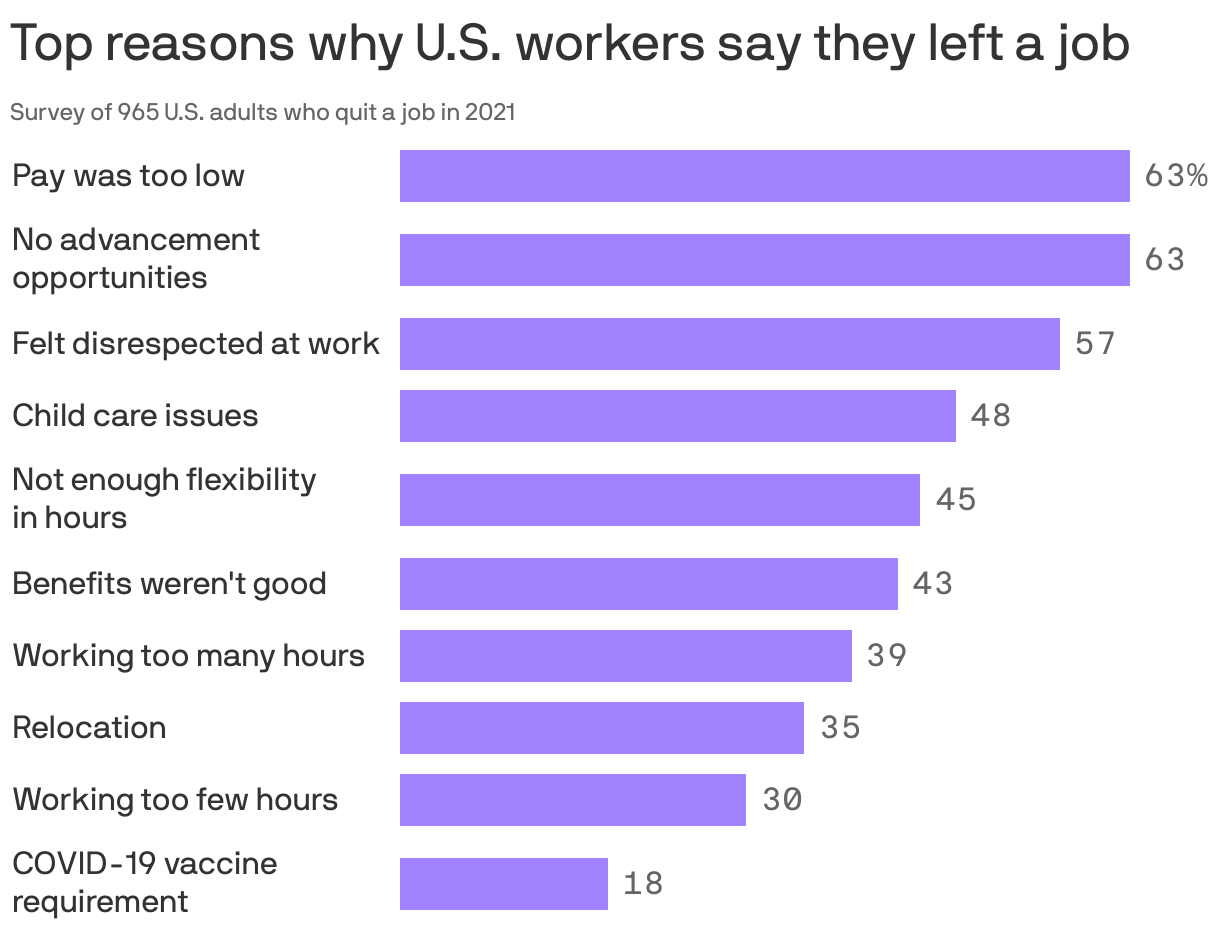
Turns out if you pay people more per hour, they don't need to work as much. Case in point: People want to work fewer hours than they did before March 2020, according to a working paper published recently by the Chicago Fed.
Why it matters: The findings suggest that the labor market is even tighter than many realize. Pay is better, especially for those at the bottom of the wage scale — and that means people aren't as desperate for more hours or a second job.
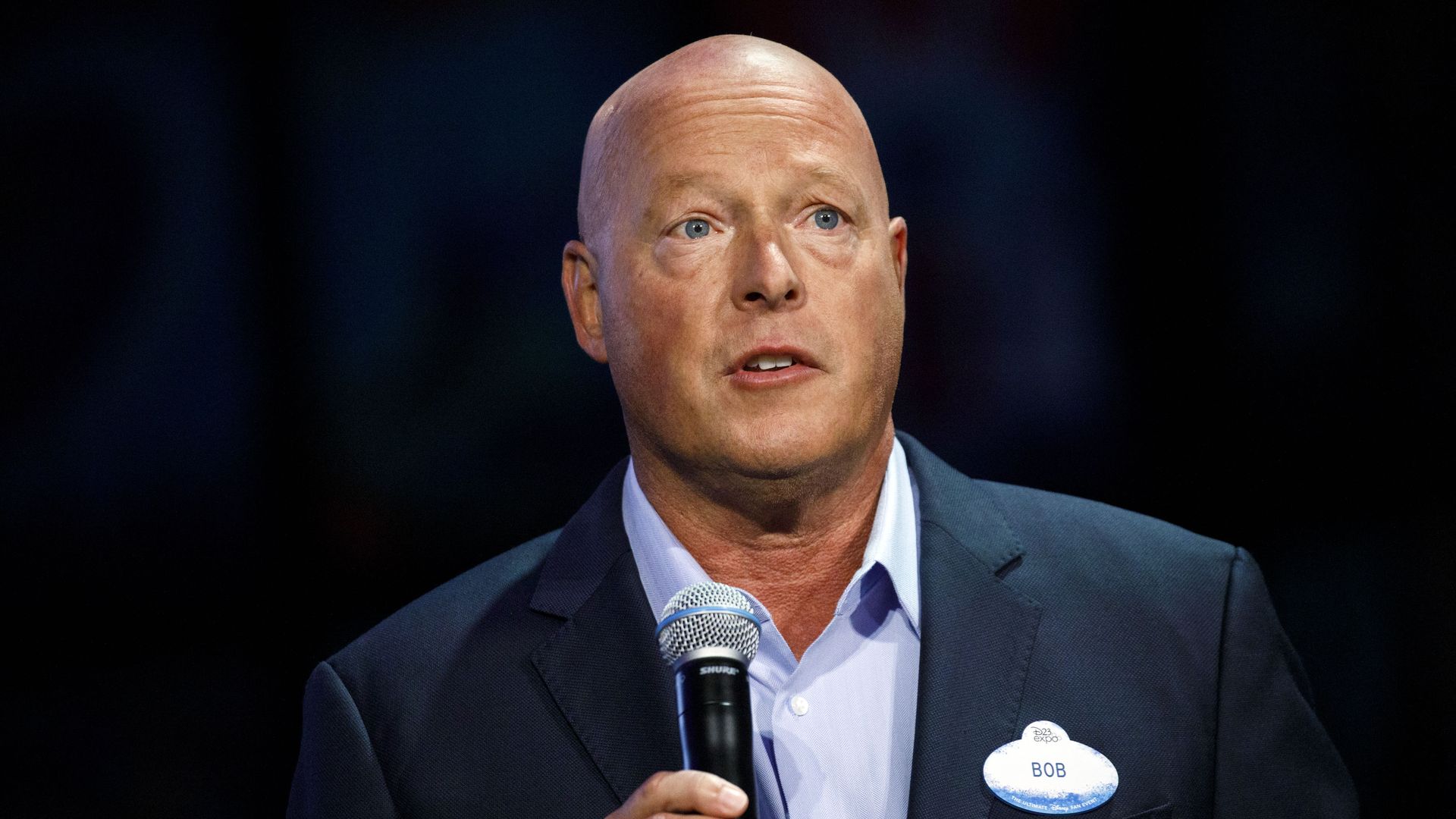
Disney has found itself in the middle of a political firestorm, between its reaction to Florida's "Don't Say Gay" bill, its courtship of China and, most recently, its decision to pause its studio releases in Russia.
Why it matters: The worlds of entertainment and politics are more intertwined than ever before. Executives are finding out the hard way about staying silent on current issues.
Why it matters: The sanctions mean the planned sale of Abramovich's English soccer team is now effectively on hold as Chelsea is among the assets the billionaire businessman has had seized, per a statement from the U.K. government.
Fox News star Tucker Carlson's comments could cement voting machine company Smartmatic's defamation lawsuit against the network, a judge said this week.
























/2022/03/10/1646912306809.gif?w=3840)
/2022/03/10/1646915627554.gif?w=3840)