President Biden's executive order today calling for policy recommendations on cryptocurrencies comes as trading by institutional investors has taken hold.
Why it matters: The order is an acknowledgement that crypto is here to stay, and moves the government one step closer to a policy framework that would legitimize — and regulate — its use in the U.S, as Axios' Ryan Lawler notes.
American office workers are having their own back-to-school spending moment.
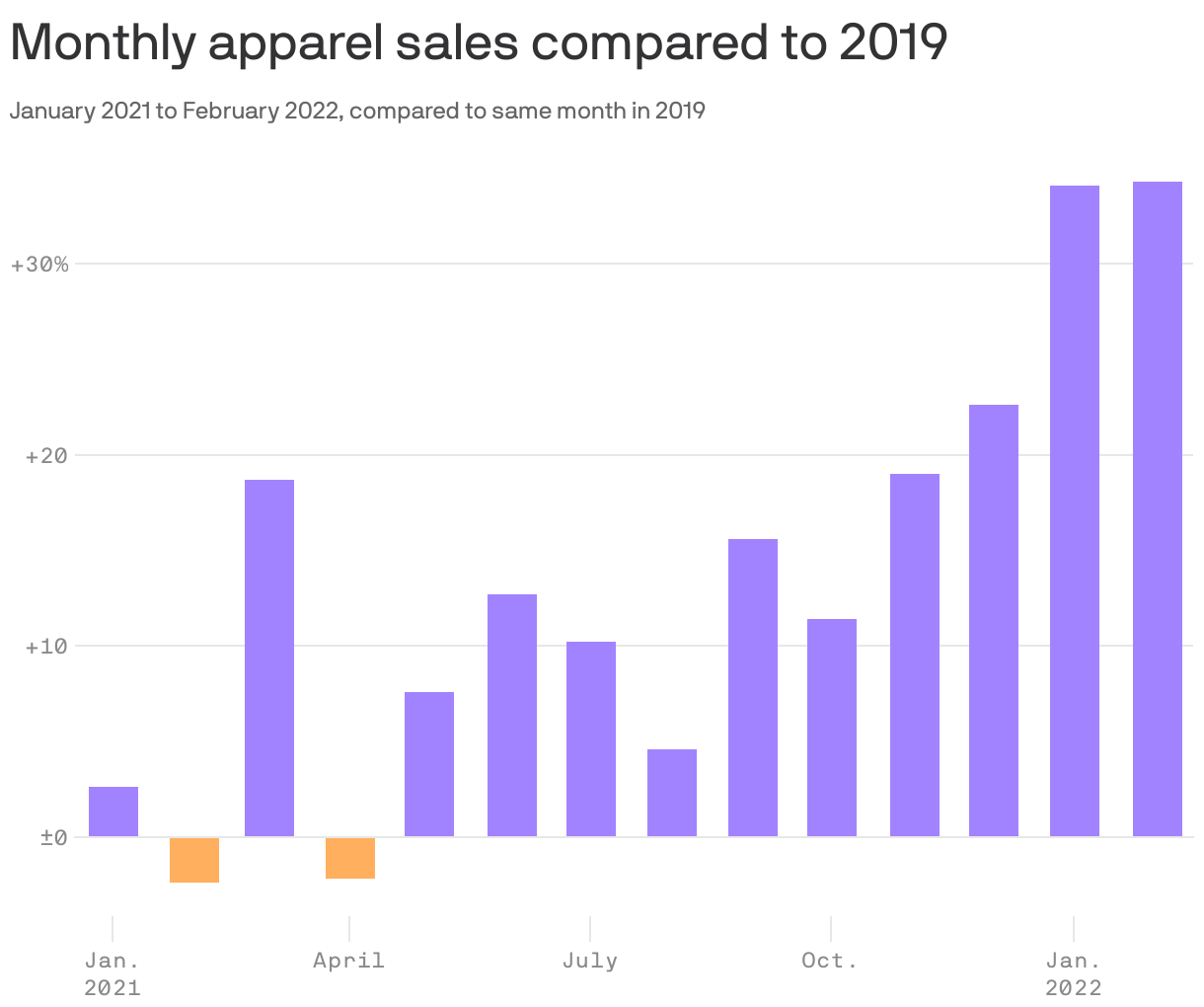
What’s happening: Outlays on “return-to-office attire” are soaring as workers head back amid a sharp nationwide decline in COVID-19 cases, according to a MasterCard Spending Pulse report released Wednesday.
By the numbers: Apparel sales rose 37.6% in February, compared with a year earlier.
Both outpaced overall retail sales (excluding auto), which were up 8.7%.
The bottom line: Out with the sweatpants, in with the office clothes.
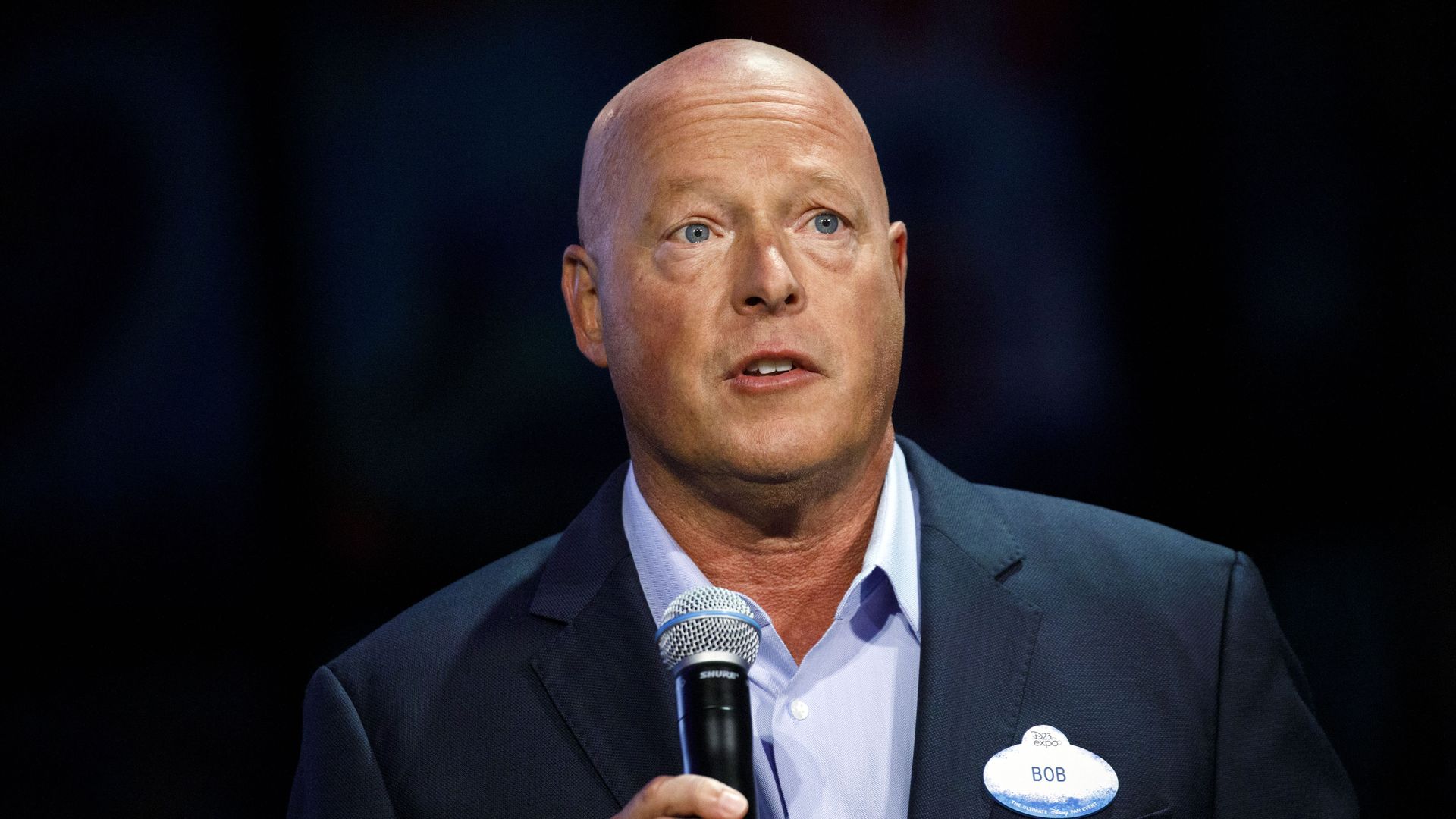
Disney CEO Bob Chapek told attendees at the company's annual meeting of shareholders Wednesday that the company opposes Florida's "Don't Say Gay" bill and "were opposed to the bill from the outset."
Why it matters: Disney has faced backlash for choosing to remain silent on the bill, which would prevent educators from talking to students about LGBTQ+ topics that are not considered "age-appropriate or developmentally appropriate."
Record gas prices are striking after years of Americans ditching compact cars and sedans for larger, less fuel-efficient SUVs and pickups.
The average full-size SUV owner is now paying close to $110 more per month to gas up than a year ago, while the average compact car owner is paying $60 more, according to Kelley Blue Book.
Tesla will pay Ukrainian employees for up to three months if they are asked to return to their country to fight, CNBC reports.
Driving the news: "For any Tesla employees who is a Ukrainian national and has been asked to return to Ukraine for active duty as a reservist, we will maintain their employment and salary for 3 months, with a view to assessing after this period as needed," according to an email sent to employees, per CNBC.
The email was sent on Monday to employees in Europe, the Middle East and Africa, per CNBC.
Any of the 5,000 Tesla owners can also access free Supercharging at some select locations in Poland, Hungary and Slovakia, per CNBC.
The big picture: A number of automakers and other global companies have cut ties with Russia following the invasion of Ukraine.
General Motors suspended exporting vehicles and Ford halted their business in Russia after the invasion.
Driving the news: Volkswagen on Wednesday revealed the European production version of the long-awaited VW ID. Buzz, a modern electric twist on the German automaker’s long-discontinued-yet-much-beloved microbus.
Reproductive support startup Noula Health raised $1.4 million in pre-seed funding led by Muse Capital and Precursor Ventures, founder Noelle Acosta tells Axios.
Why it matters: Women entrepreneurs in charge of women's health-focused startups are garnering increased attention from investors and the wider public in recent years, after centuries of inequity.
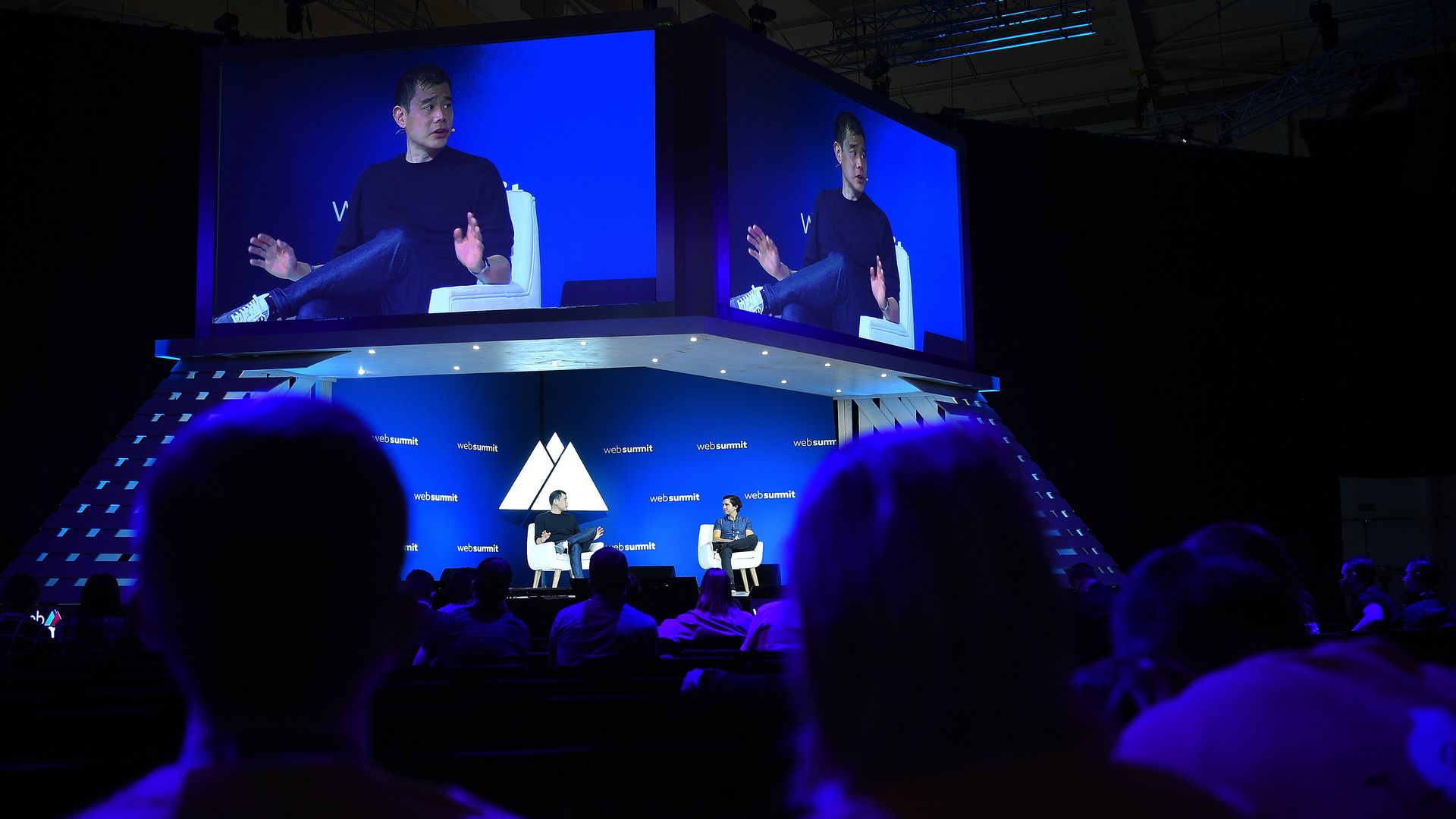
Wesley Chan, founder of Google Analytics and Google Voice, has quietly teamed with former Morgan Stanley tech banker Pegah Ebrahimi to launch a new venture capital firm, Axios has learned.
Details: The pair are raising $350 million to invest in early-stage tech companies, with expectations that the money will last around three years.
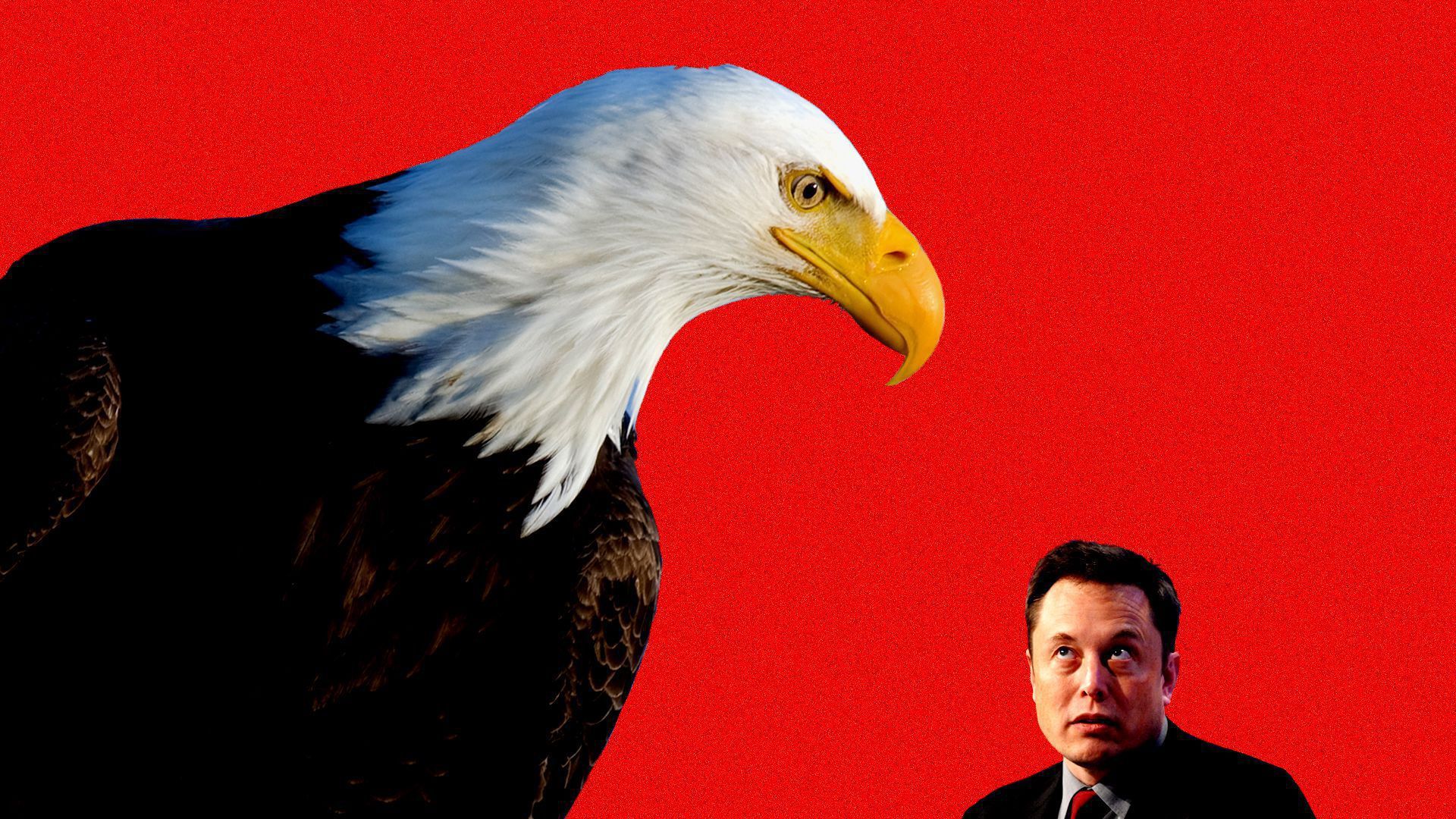
Elon Musk is trying to back out of his 2018 settlement with U.S. securities regulators, related to his social media claim of having had "funding secured" to take Tesla private.
Driving the news: Musk this week asked a federal judge to terminate the consent decree, which required that Tesla counsel vet any of Musk's tweets that could be deemed material to the company and/or its shareholders.
AngelList, a venture fundraising platform, raised $100 million at a $4 billion pre-money valuation. Tiger Global led, and was joined by insider Accomplice.
Why it matters: AngelList is one of the few organizations to successfully disrupt traditional venture capital, and can lay claim to around 200 "unicorns" that have raised on its platform. It also hasn't announced an outside investment in around seven years.
Colossal Biosciences, the firm pioneering "de-extinction technologies" to restore threatened or even vanished species, announced a $60 million Series A.
Why it matters: The early stage funding announcement comes five months after Colossal raised $15 million in seed capital, bringing the company's total funding to $75 million.
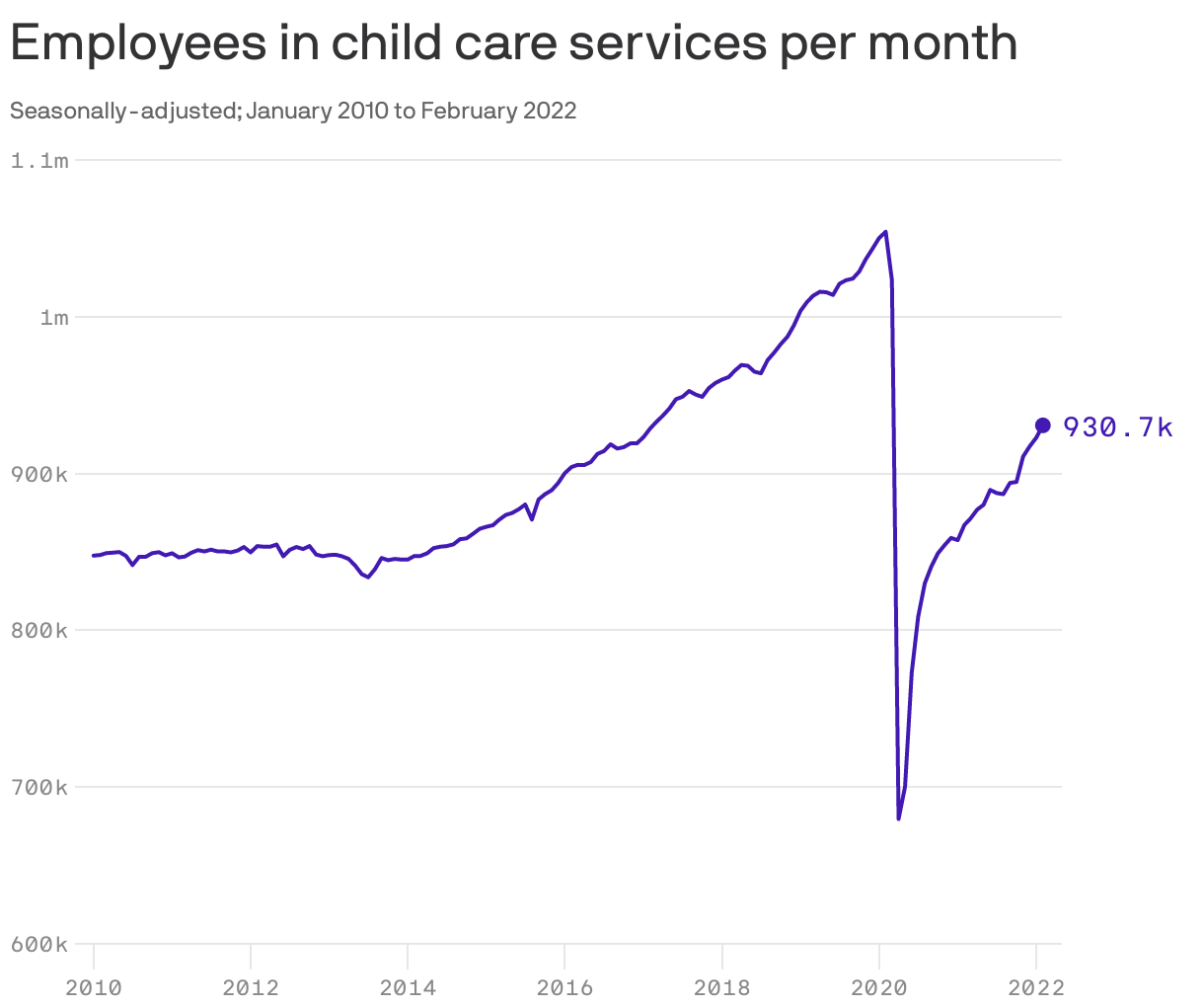
Data: U.S. Bureau of Labor Statistics; Chart: Axios Visuals
There's a shortage of child care workers in the U.S., largely because the pay is so low — and workers can now find higher wages in fast food and retail.
Driving the news: "We're competing with McDonald's, a half-mile up the street," said Meredith Burton, the director of a small child care center in Greenville, South Carolina. It took her all year to fill a part-time position that doesn't pay quite as well as fast food, she tells Axios.
The U.S. and U.K. decisions Tuesday to ban Russian energy imports sent oil prices surging yet again.
Why it matters: The oil import ban will help choke off a little of Russia’s main source of revenue, but here at home the soaring prices will also filter down to the cost of gasoline and consumer goods.
Amazon is working with CarbonCure Technologies, a sustainable materials construction startup, on 13 of its current building projects, the companies tell Axios.
Why it matters: Amazon's carbon footprint continues to grow as it continues expanding its logistics empire across the globe. A small reduction in emissions from ongoing construction projects could have a substantial impact on its journey to becoming a net-zero emissions company by 2040.
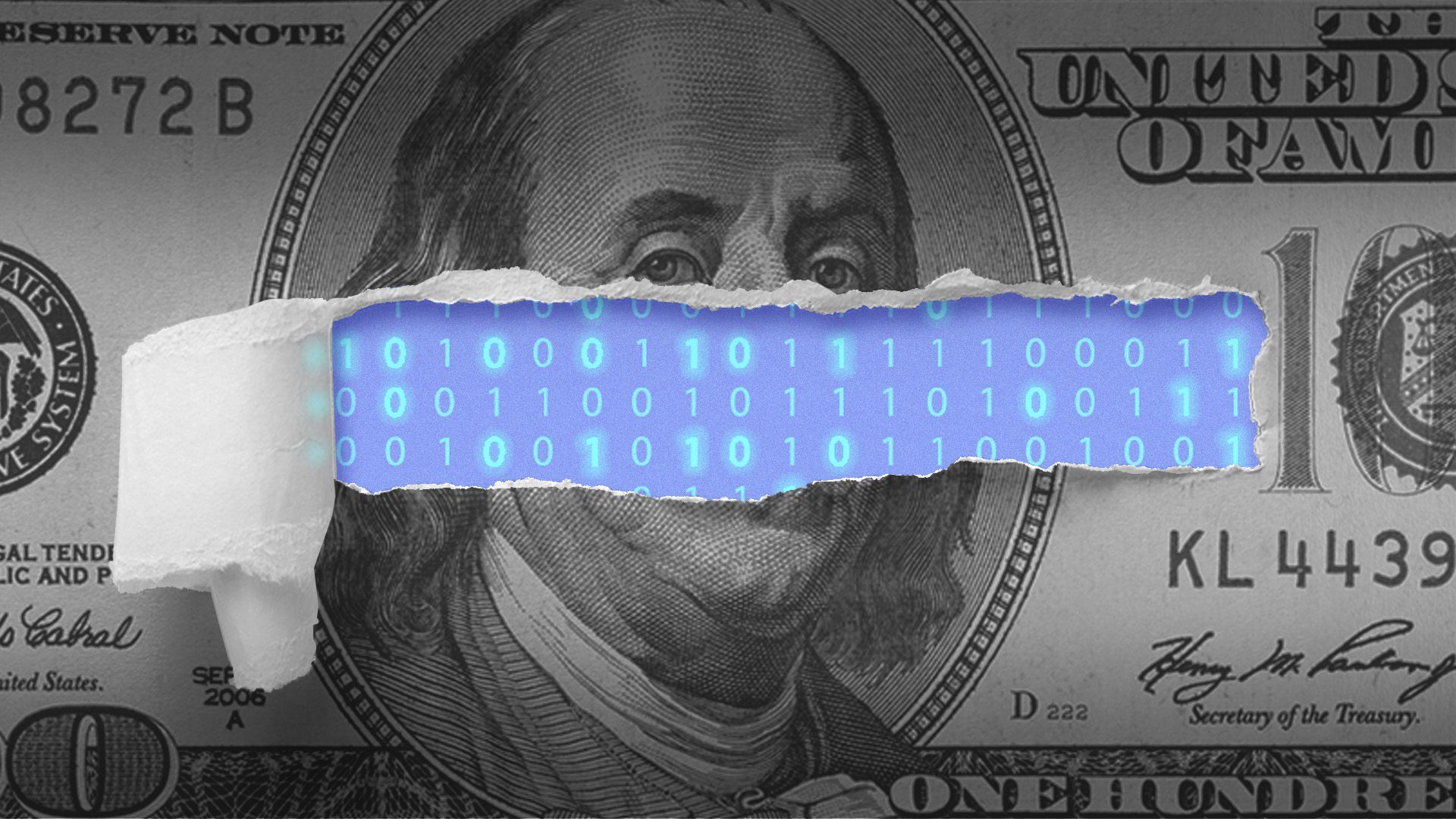
President Biden will issue a wide-ranging executive order today for multiple government agencies to develop policy recommendations on digital assets and cryptocurrencies.
Why it matters: The order is an acknowledgment that crypto is here to stay and moves the government one step closer to a policy framework that would legitimize — and regulate — its use in the U.S.
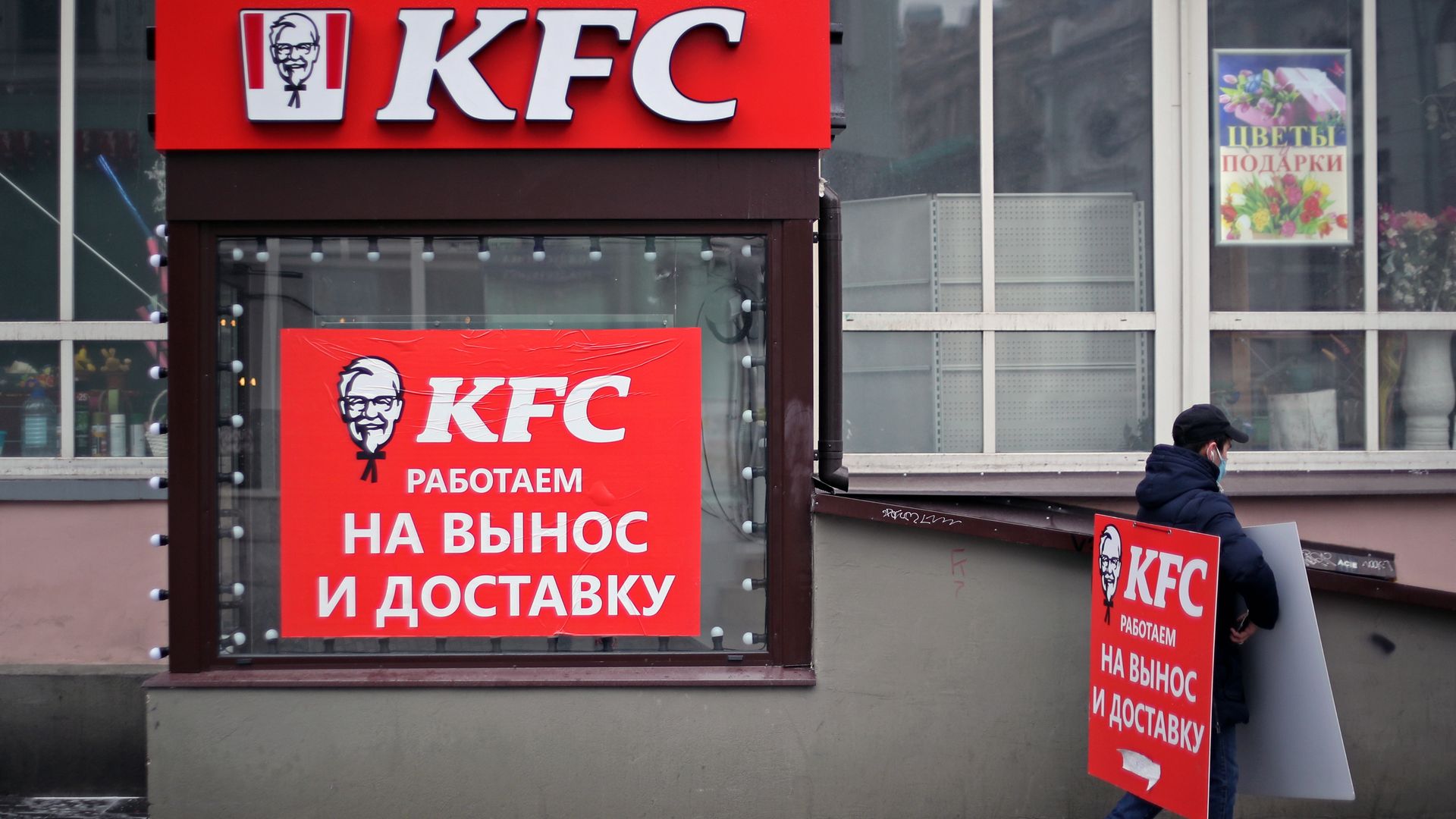
Yum Brands, the parent company of KFC and Pizza Hut, said Tuesday it has suspended operations and investment in Russia in response to the invasion of Ukraine.
By the numbers: "In Russia, the business includes approximately 1,000 KFC restaurants and 50 Pizza Hut locations nearly all of which are operated by independent owners under license or franchise agreements," per a Yum statement.
The New York Times pulled its reporters out of Russia on Tuesday, the latest precaution taken by a large media company in response to The Kremlin's punitive new "fake news" law.
Why it matters: "Even in the depths of the Cold War, under the Soviet dictatorship, this never happened," tweeted Times deputy managing editor Cliff Levy.