Why it matters: The U.S. labor force has struggled against the backdrop of rising demand, mental and physical health issues, and low wages, as businesses emerge from the economic damage incurred at the height of the pandemic.
The Environmental Protection Agency said Monday it will tighten pollution standards for cars and light trucks in an attempt to reduce carbon dioxide emissions from automobiles.
Why it matters: Transportation overall is the largest source of U.S. greenhouse gas emissions, so tougher standards for passenger vehicles are a major part of efforts to curb CO2 output.
Sen. Joe Manchin yesterday decapitated President Biden's "Build Back Better" legislation and, in so doing, maintained the status quo on business taxation.
The big picture: No changes are coming to carried interest or qualified small business stock, at least for the 2021 tax year. And forget about that 15% minimum tax on large corporations or the 1% excise tax on stock buybacks.
BMO Financial Group agreed to buy San Francisco-based Bank of the West from BNP Paribas for $16.3 billion.
Why it matters: This is two banking trends in one deal — European banks retreating from the U.S. and Canadian banks increasing their exposure. It also comes amid growing chatter that the FDIC or other U.S. regulators could crack down on big bank mergers.
"Spider-Man: No Way Home" has easily become the biggest hit of the pandemic era, bringing in a whopping $260 million in its North America theatrical debut over the weekend, according to Comscore's latest tally.
Why it matters: The movie is now the second-highest grossing North American box office opener in history, behind 2019's "Avengers: Endgame."
Biogen is lowering the list price of its controversial Alzheimer's treatment, Aduhelm, from an average of $56,000 per year to $28,200.
Why it matters: The decision is a quick reversal from October, when CEO Michel Vounatsos said Biogen had no plans to lower Aduhelm's price because "price doesn't come up as the first worry."
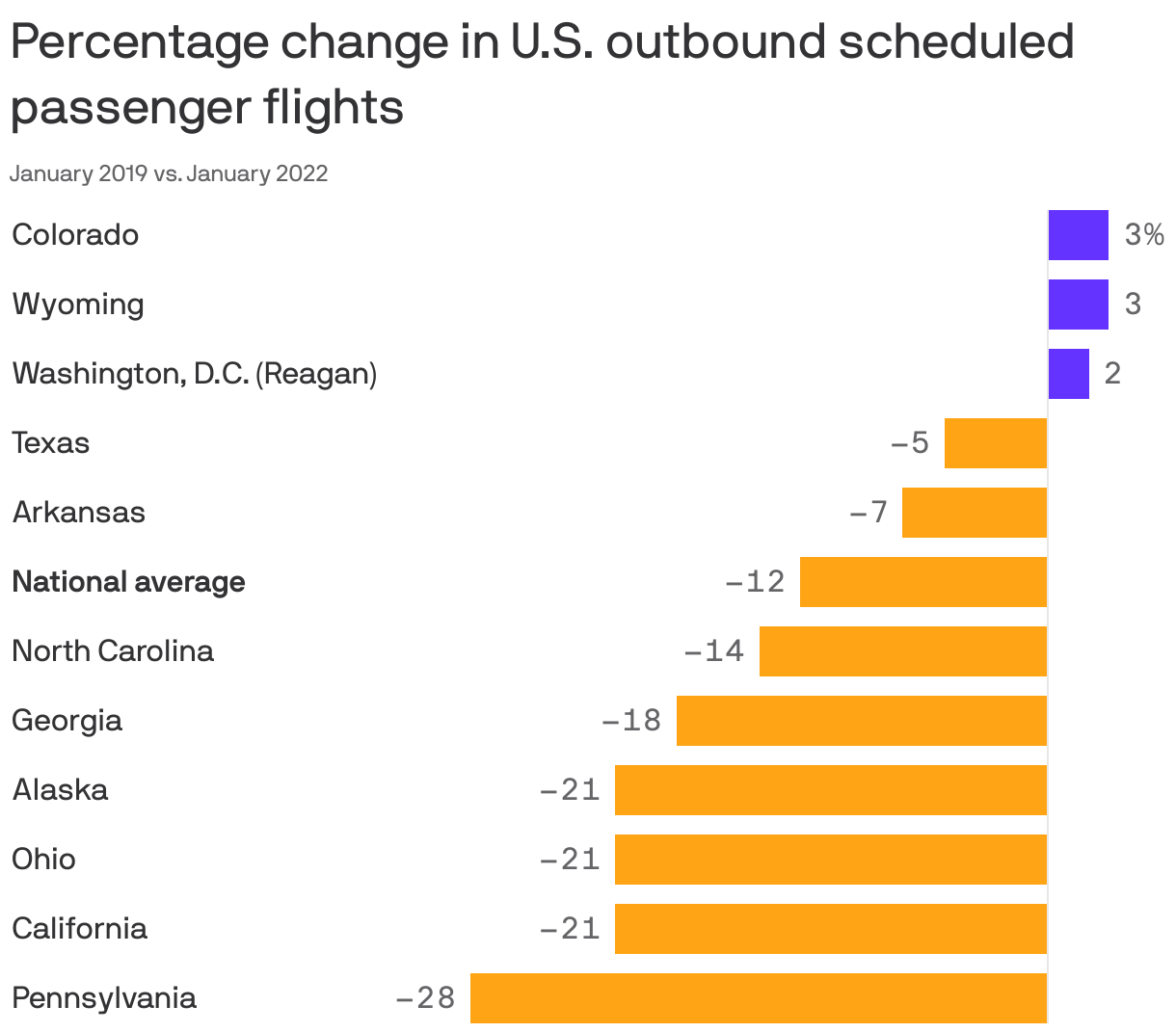
Data: Airlines for America; Chart: Jared Whalen/Axios
Omicron fears notwithstanding, this is a time of year when many of us are traveling by air for the holidays.
A look at passenger traffic statistics shows improvement compared to the worst of the pandemic's first wave, but business travel, a major revenue driver for airlines, is still down compared to pre-pandemic days.
Post-COVID revival of businesses conferences could bring substantial carbon emissions, but planners can curb the impact while still enabling lots of in-person interaction, new analysis shows.
Driving the news: The paper in Nature Communications attempts a holistic look at the resource footprint of conferences, looking at travel and food demands for big in-person events, but also energy needed for remote communications, to name a few big categories.
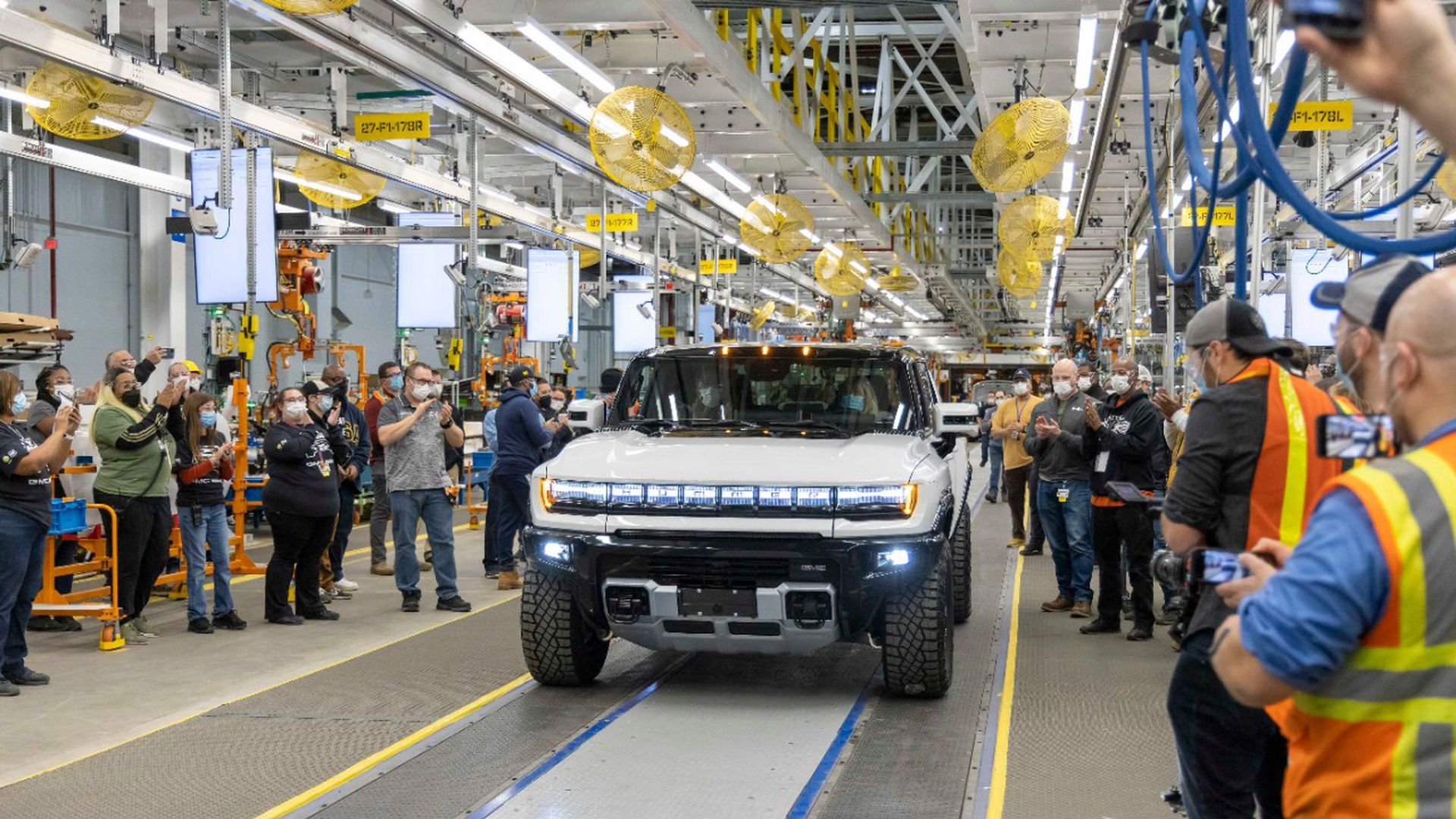
General Motors has begun deliveries of two new electric models to customers: the GMC Hummer, and the EV600 van, the first offering from its BrightDrop commercial delivery vehicles business.
Driving the news: GM said Friday that FedEx, which has ordered 500 electric delivery vehicles from the recently created BrightDrop unit, received the first five.
The World Economic Forum announced Monday it will delay its 2022 global meeting in Davos, Switzerland, until the summer in response to uncertainty over the emergency of the Omicron coronavirus variant.
Why it matters: The annual January meeting has now been disrupted by the coronavirus pandemic for a second year.
A key input to the batteries that power electric vehicles and smartphones has more than tripled in price this year, as investment in the EV industry skyrockets.
Why it matters: Lithium carbonate is one material needed to create lithium-ion batteries. Battery packs for EVs can cost several thousand dollars, and keeping their costs down is one part of making EVs more affordable.
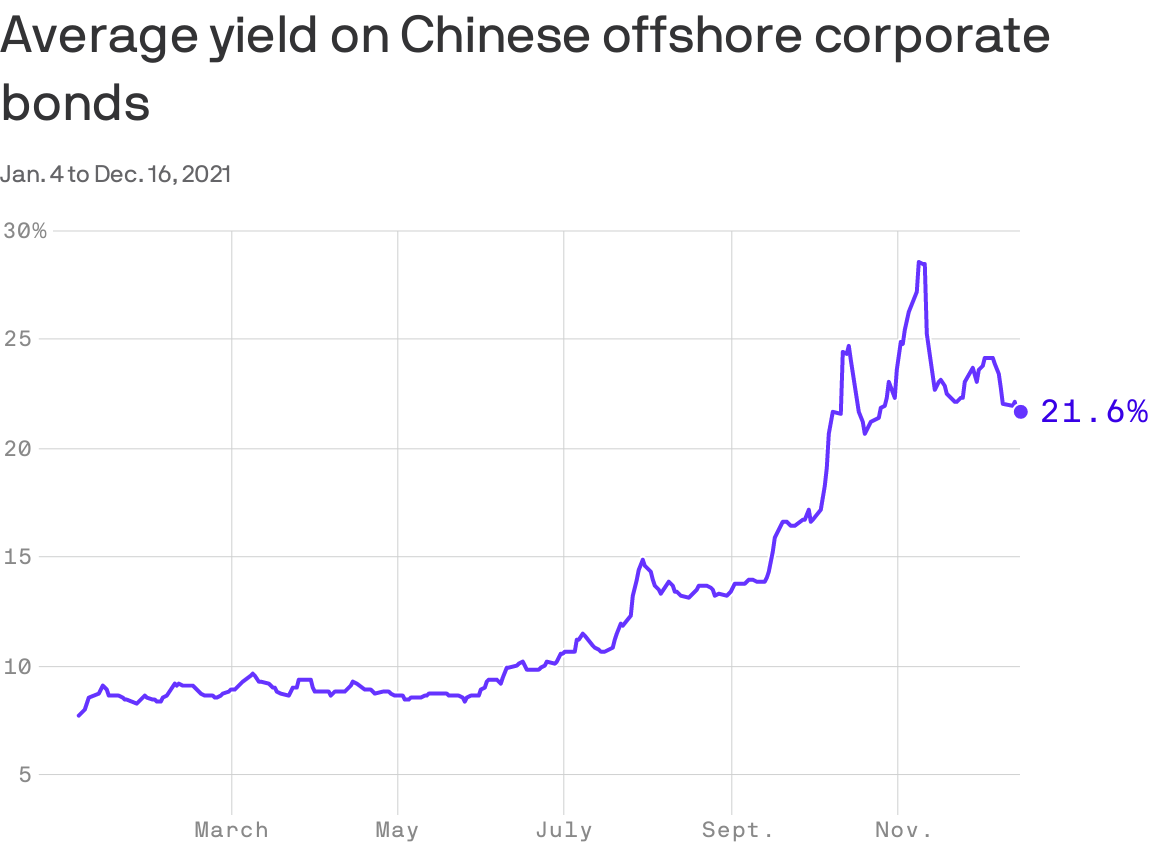
Source: ICE BofA Asian Dollar High Yield Corporate China Issuers Index; Chart: Axios Visuals
With defaults stacking up in China’s property sector, Beijing has stepped in more forcefully to contain the damage.
Catch up fast: The Chinese government is loosening the flow of credit. It recently cut reserve requirements for banks and has asked the banks to provide more loans to property developers. To encourage M&A, it declared that loans backing such deals won’t be subject to the “three red lines” test that effectively froze lending to property developers.
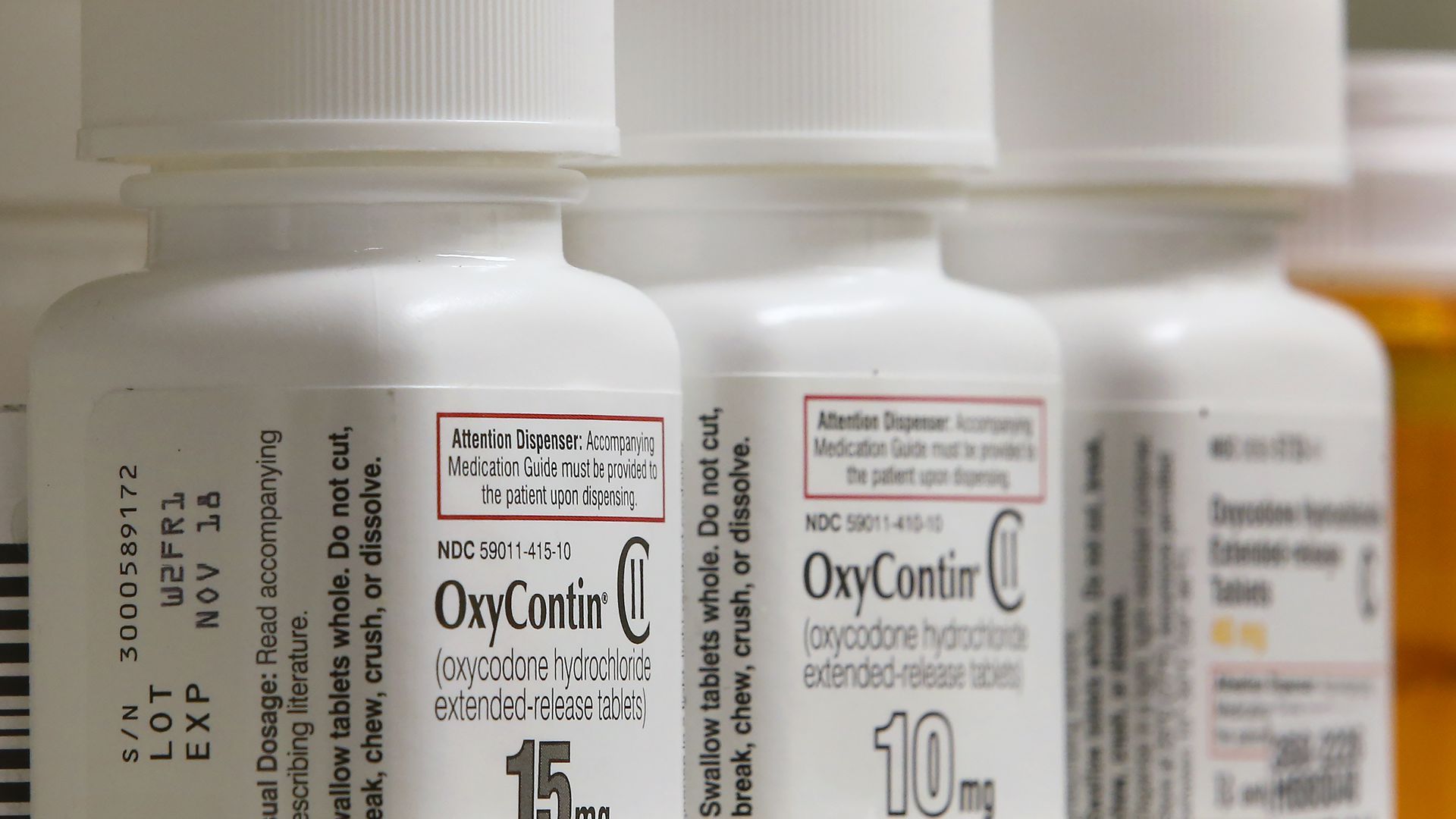
A federal judge’s decision to reject Purdue Pharma’s multibillion-dollar opioid settlement shines a light on a controversial part of bankruptcies that quietly helps grease the wheels for complicated reorganizations.
Catch up fast: At issue are “non-debtor releases” provided to Purdue's owners, the Sackler family.