The Peloton slowdown is here, new financials show.
Why it matters: Few benefited from the at-home fitness phenomenon ushered in by the pandemic like Peloton.
If (or when) the boom times taper off might be a key indicator of whether the colossal workout economy underwent a permanent shift.
Data: Company filings. Chart: Axios Visuals
What’s new: Peloton’s connected fitness subscribers — people who own a bike and pay a monthly fee for classes — jumped to 2.3 million.
But check out the chart above. For the first time since the pandemic, the number of users added during the quarter slowed.
And those subscribers worked out less: an average of 20 times per month last quarter — a drop-off from the same time a year ago (roughly 25 rides), when people were more likely to be stuck at home.
But, but, but: Results got hit by a recall of its treadmill product that put sales on hold — a key reason the company lost money last quarter. Sales resume next week.
Of note: It's slashing the price of its cheapest spin bike again by $400 to $1,495.
Flashback: Peloton saw unprecedented (and likely unrepeatable) demand for its equipment and classes as the economy locked down, shuttering gyms.
“The past year represented an inflection point for the connected fitness industry, with significant increases in awareness and demand,” CEO John Foley said in a release.
What to watch: Popular gym chain Planet Fitness said this month it's recouped 75% of members lost during the height of the pandemic, a sign that gyms aren’t dead.
John Binns, a 21-year-old American who now lives in Turkey, told the Wall Street Journal that he was behind the T-Mobile security breach that affected more than 50 million people earlier this month.
The intrigue: Binns said he broke through the T-Mobile defenses after discovering an unprotected router exposed on the internet, after scanning the carrier's internet addresses for weak spots using a publicly available tool.
Bank of America Vice Chairman Anne Finucane, who helped push the industry into climate finance and other forms of sustainable investing, will retire at the end of the year, the bank announced today.
Why it matters: Finucane positioned Bank of America as a leader in environmental, social and governance (ESG) efforts, and pushed the bank to commit to sustainable capital deployment as part of the business, not just as part of corporate-responsibility efforts.
Western Digital (Nasdaq: WDC) reportedly is in advanced talks for a $20 billion all-stock merger with Kioxia, the Japanese flash memory chipmaker owned by Bain Capital.
Why it matters: This reflects surging demand for memory chips, driven primarily by 5G expansion and the home office boom. It also could set up a series of global regulatory showdowns, if past semiconductor company merger efforts are any guide.
Just days before jury selection starts in the criminal fraud trial of Theranos' Elizabeth Holmes, federal prosecutors filed fraud charges against another VC-backed founder: Manish Lachwani, former CEO of mobile app testing company HeadSpin.
Why it matters: The Lachwani case is a reminder that startup execs can be held liable for what they tell VCs, and also that investors are often blind to the veracity of those statements.
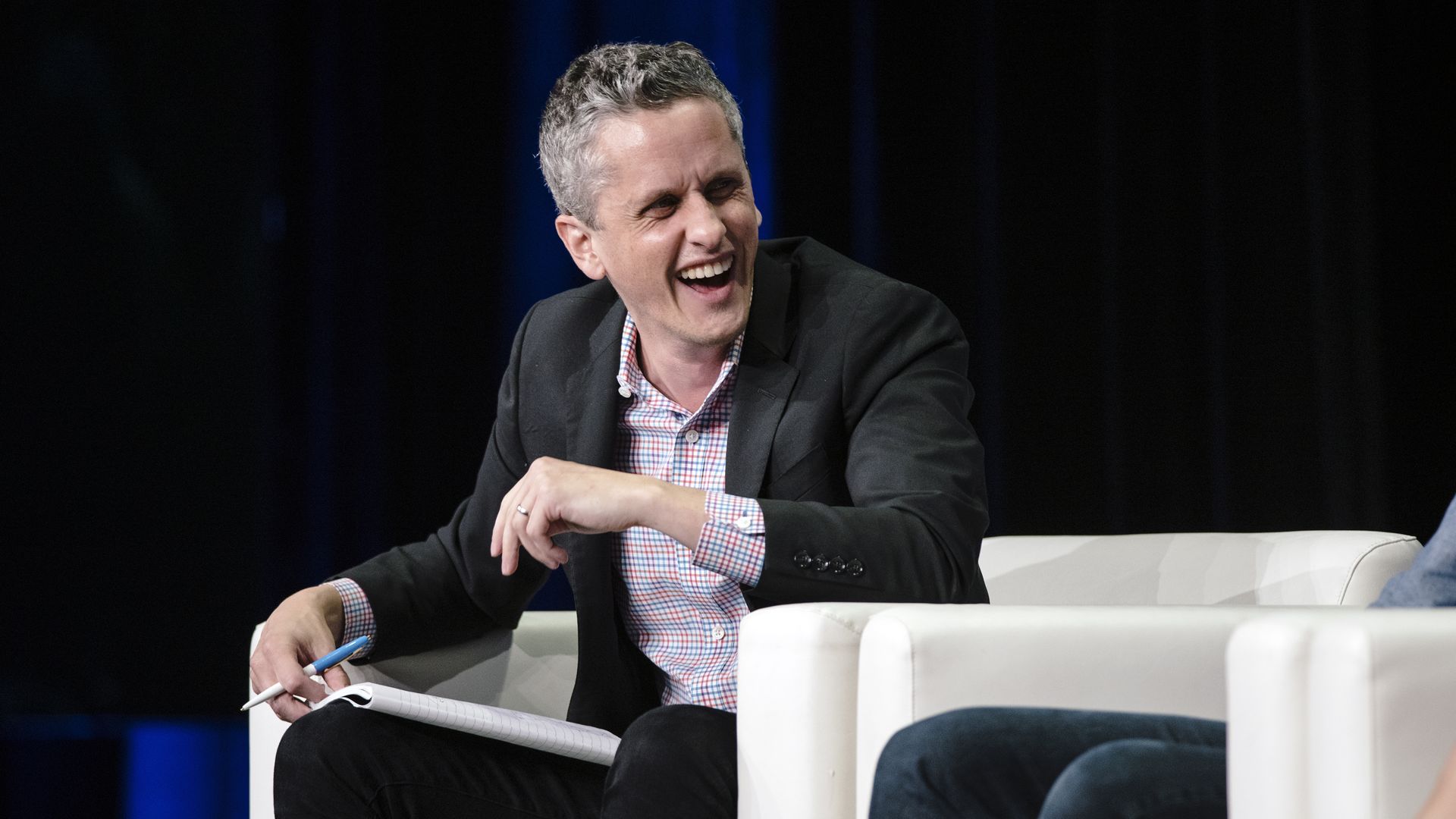
Box CEO Aaron Levie tells Axios that yesterday's earnings report shows that the company can deliver long-term growth, and that last year's slowdown was a hiccup.
Why it matters: The online storage firm is in the midst of a proxy fight with activist investors who want a greater role on the company's board.
German publishing giant Axel Springer has acquired Politico, according to a news release out Thursday.
Why it matters: The deal is valued at about $1 billion, per CNN, making it one of the most expensive media merger deals of late. Axel Springer also acquired the remaining 50% of the two companies' joint venture, Politico Europe, and the tech news website Protocol from publisher Robert Allbritton.
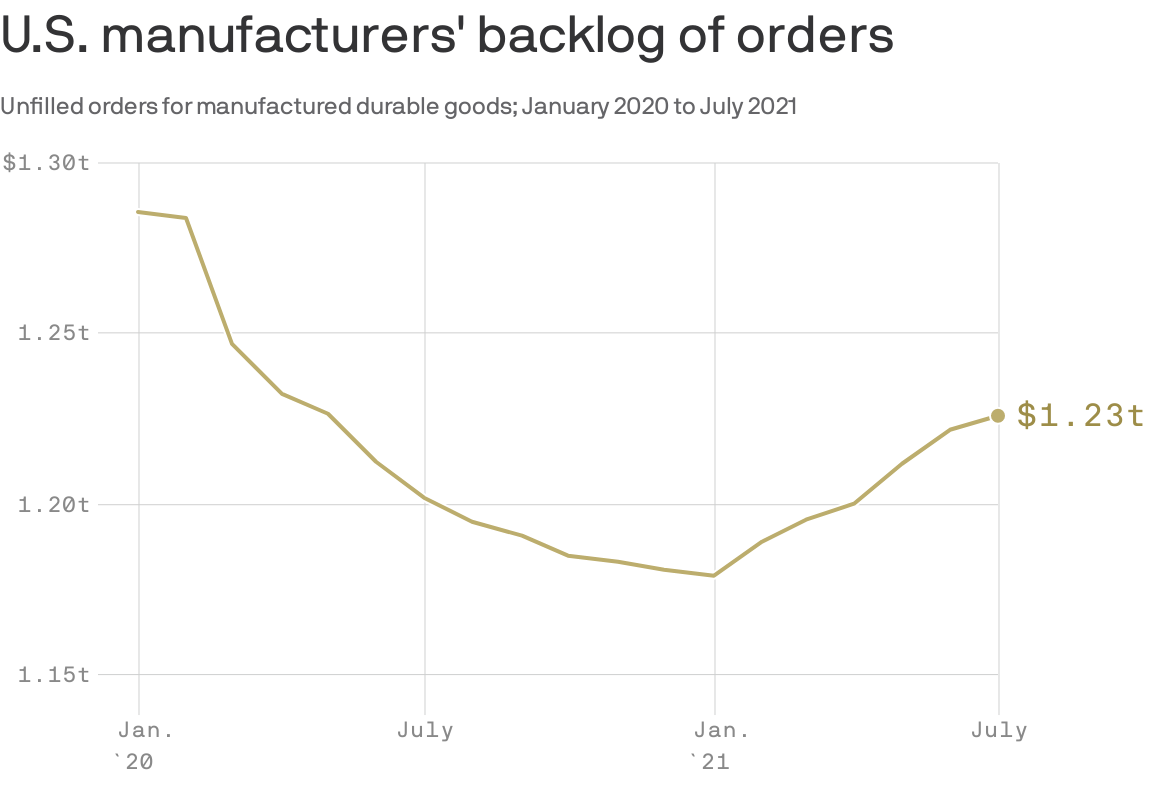
Orders for durable goods stalled unexpectedly in July. But manufacturers have plenty of backlogs to work through.
Why it matters: There are a lot of businesses across the economy with empty shelves as they wait for manufacturers to ship the goods. This has been crimping sales while also driving inflation.
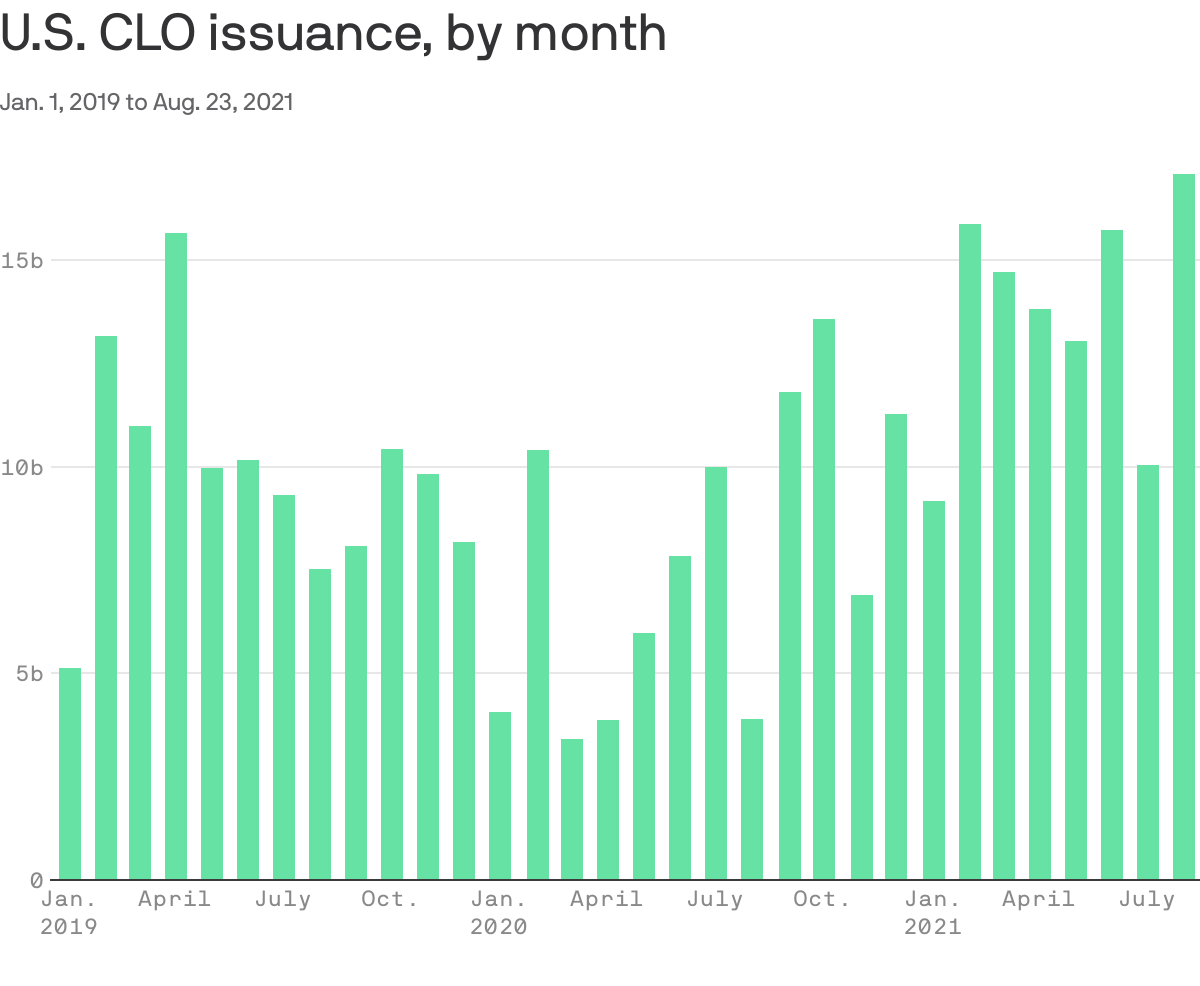
August isn’t usually a record month for fundraising or deal-making. Tell that to the CLO market, which is having its most active month ever.
Driving the news: New CLOs, or collateralized loan obligations, have closed at a pace not touched in the last decade, according to data from LCD, an offering of S&P Global Market Intelligence. And August isn’t even over yet.
Federal Reservechair Jerome Powell will speak on Friday. But anyone expecting an announcement on when the Fed will taper its QE asset purchase will likely be disappointed.
Why it matters: Powell has the power to move markets with his words. And so regardless of whether he addresses the timing of the taper, markets will be interested in what he has to say.
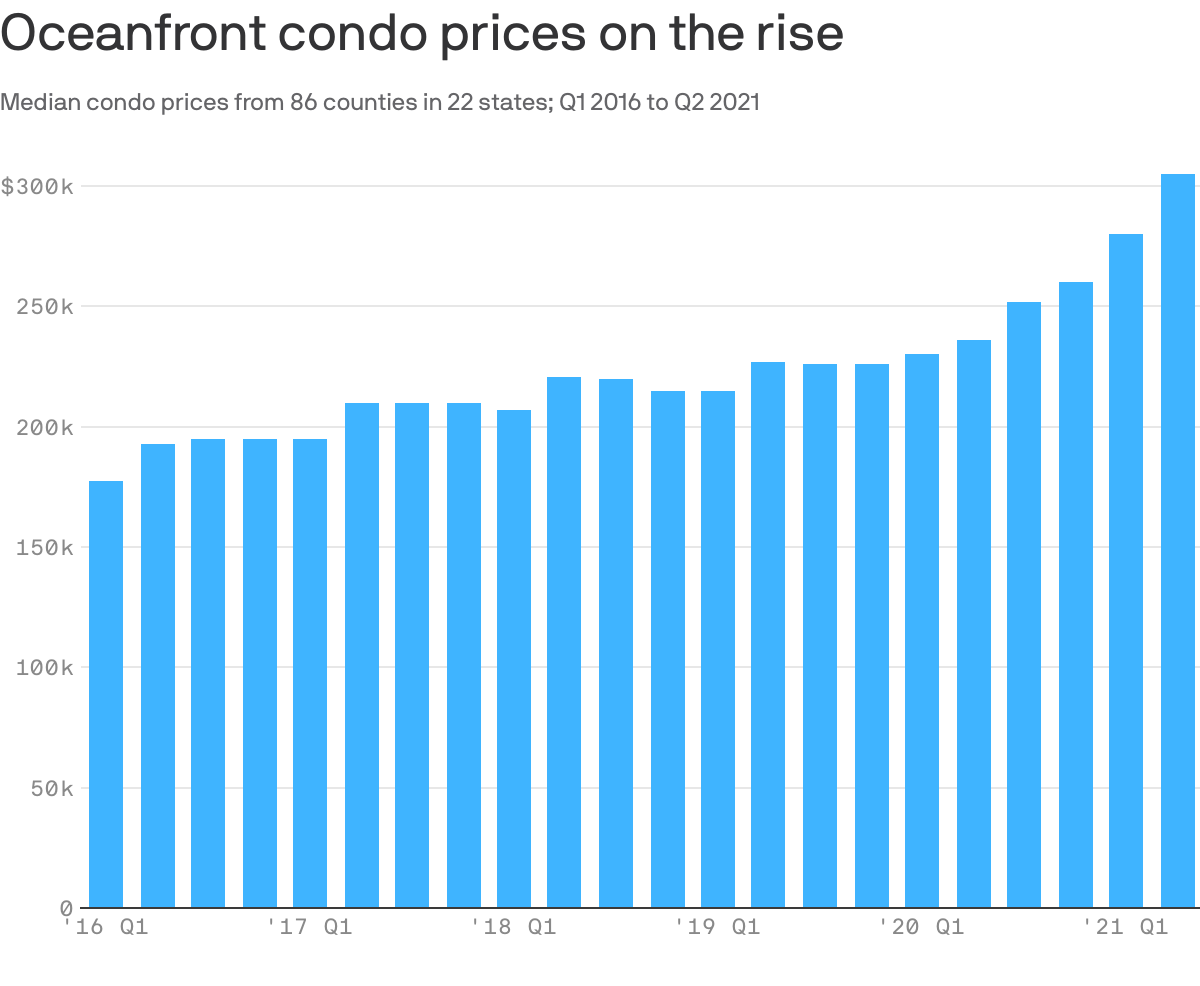
Despite the horrific condominium collapse in Surfside, Florida — which led us to worry that structural flaws in beachside buildings could be more pervasive than we know — prices continue to climb for oceanfront condos around the U.S., according to ATTOM, a property database company.
Driving the news: The national median condo value in 86 oceanfront counties was $305,000 in the second quarter of 2021, up from $236,000 in the same quarter last year, per data that ATTOM released Thursday.
Prices rose by at least 20% year-over-year in slightly more than half of the 86 oceanfront counties ATTOM included in its report.
"Less-expensive oceanfront condo markets, concentrated in the South, generally showed bigger year-over-year gains, while the most expensive counties, located mainly in the West, showed the smallest," ATTOM said.
Details: Four of the five highest median prices were in California — San Francisco County ($1,175,000); San Mateo County ($915,500); Kings County (Brooklyn, New York) ($876,250); Marin County ($723,000) and Santa Cruz County ($693,500).
The lowest median prices were in Atlantic County (Atlantic City), New Jersey ($124,000); Jefferson Parish, Louisiana (west of New Orleans) ($135,000); Citrus County, Florida (north of Tampa) ($145,000); Mobile County, Alabama ($148,000) and Onslow County (Jacksonville, Florida), North Carolina ($155,000).
Context: Given the national housing boom, it's entirely in keeping that prices should be ticking up for oceanfront condos. ATTOM reports that median single-family home and condo prices are rising annually by more than 15% across much of the U.S.
What's next: “We will keep an eye on this trend to see if it changes following the Florida incident,” says Todd Teta, chief product officer with ATTOM.
Electric, self-driving taxis might not be the answer to our climate problems that many people think, a new study finds.
Why it matters: Transportation is the largest contributor to U.S. greenhouse gas emissions, which is one reason that the Biden administration is pushing for a rapid shift to electrification.
But instead of reducing energy consumption and emissions that contribute to climate change, widespread deployment of electric robotaxis could exacerbate those problems, the joint Harvard-MIT study found.