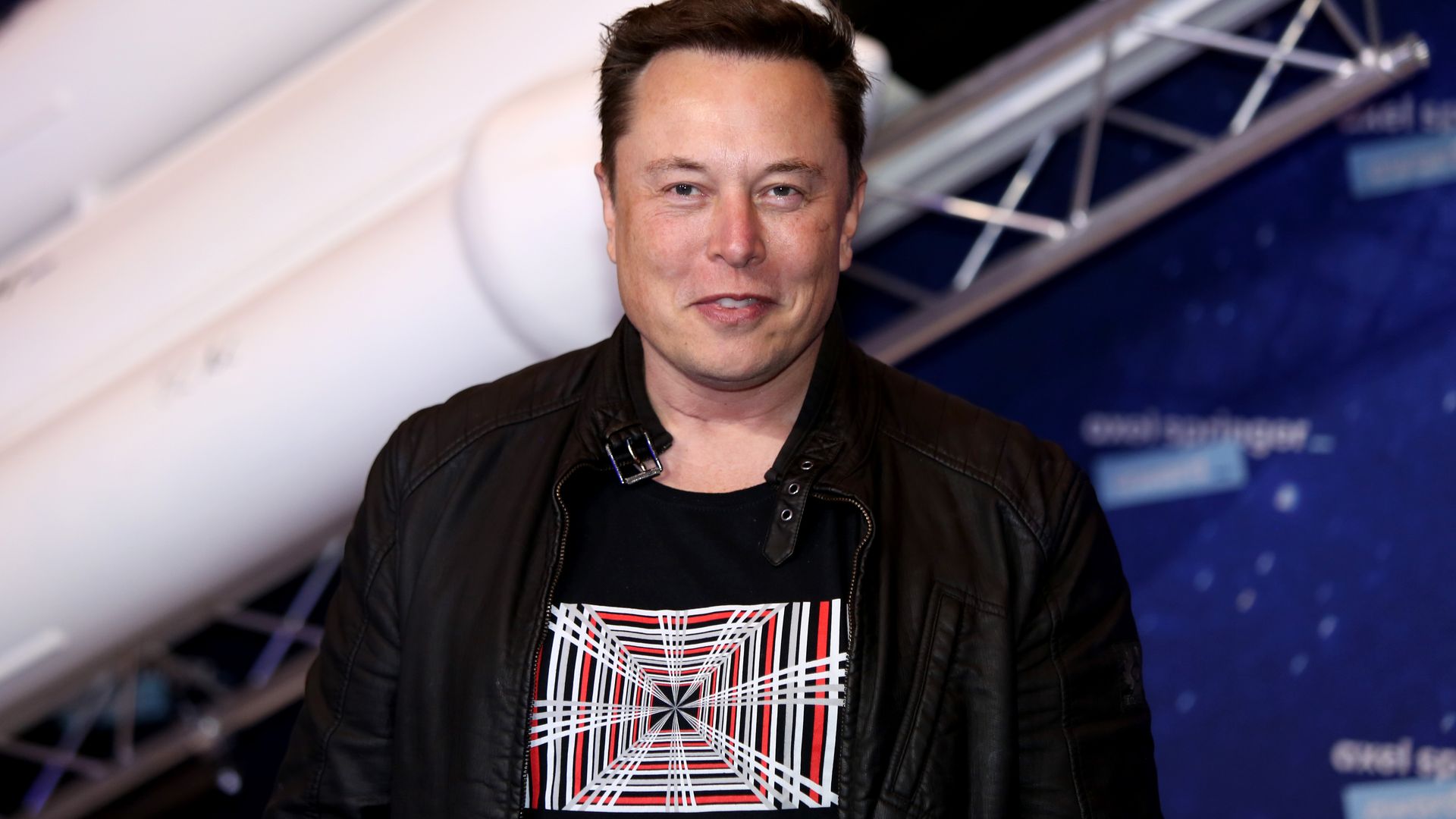
NASA announced Friday it has awarded Elon Musk's SpaceX a $2.89 billion contract to build a spacecraft that will carry astronauts to the Moon's surface.
Why it matters: NASA hopes to land astronauts on the Moon by 2024, which if successful, would be the first time since the last Apollo mission. SpaceX beat out Jeff Bezos' Blue Origin and defense contractor Dynetics for the contract.
Malls are becoming ghosts of retail past. But the left-behind real estate is being reimagined for a post-pandemic world.
Why it matters: As many as 17% of malls in the U.S. "may no longer be viable as shopping centers and need to be redeveloped into other uses," per Barclays.
It's not quite the GameStop trade, but the value of a company that owns a single asset — a deli in New Jersey — is catching the eye of famed hedge fund manager (and Jersey-born) David Einhorn.
Catch up quick: In a letter to his clients on Thursday, Greenlight Capital’s Einhorn wrote about Hometown International as an example of a company that regulators should be paying attention to but appear to be ignoring.
Bernie Madoff, architect of the largest Ponzi scheme in American history, died on Wednesday in federal prison, 11 years into his 150-year sentence.
Axios Re:Cap digs into Madoff’s crimes, what they revealed about America's financial system and what changed after the scheme came crashing down with Diana B. Henriques, author of the The Wizard of Lies: Bernie Madoff and the Death of Trust.
Limited partners in private investment funds are sitting on extra cash, leaving room for "new ideas," according to a surveyconducted by placement agent Eaton Partners between March 23 and April 7.
By the numbers: 58% of respondents say they've already identified the managers with whom they'll re-up in 2021, but still have available budget to invest in new managers or strategies.
Luckin Coffee, the scandal-plagued Chinese coffee shop chain, secured a $260 million investment from existing shareholders Centurium Capital and Joy Capital. It also replaced its independent auditor.
Why it matters: This will help Luckin satisfy a $180 million settlement struck last year with the SEC, which had accused Luckin of faking retail sales figures. The company went public on the Nasdaq less than two years ago at a $4.3 billion valuation, but was later delisted because of the accounting fraud.
Wall Street titans and the regulators overseeing them are increasingly important actors in the fight against global warming, and this week underscored that trend.
Driving the news: Two banking giants — JPMorgan Chase and Citigroup — yesterday vowed to steer trillions of dollars into sustainability efforts that include a focus on clean energy and climate.
The Block, a cryptocurrency-focused media startup, tells Axios that it has bought out its non-employee shareholders, including its investors and co-founders (who have left the company).
Why it matters: The company says it wants flexibility to better compensate existing and future employees in an increasingly competitive talent market, and to be independent from outside investors and interests.
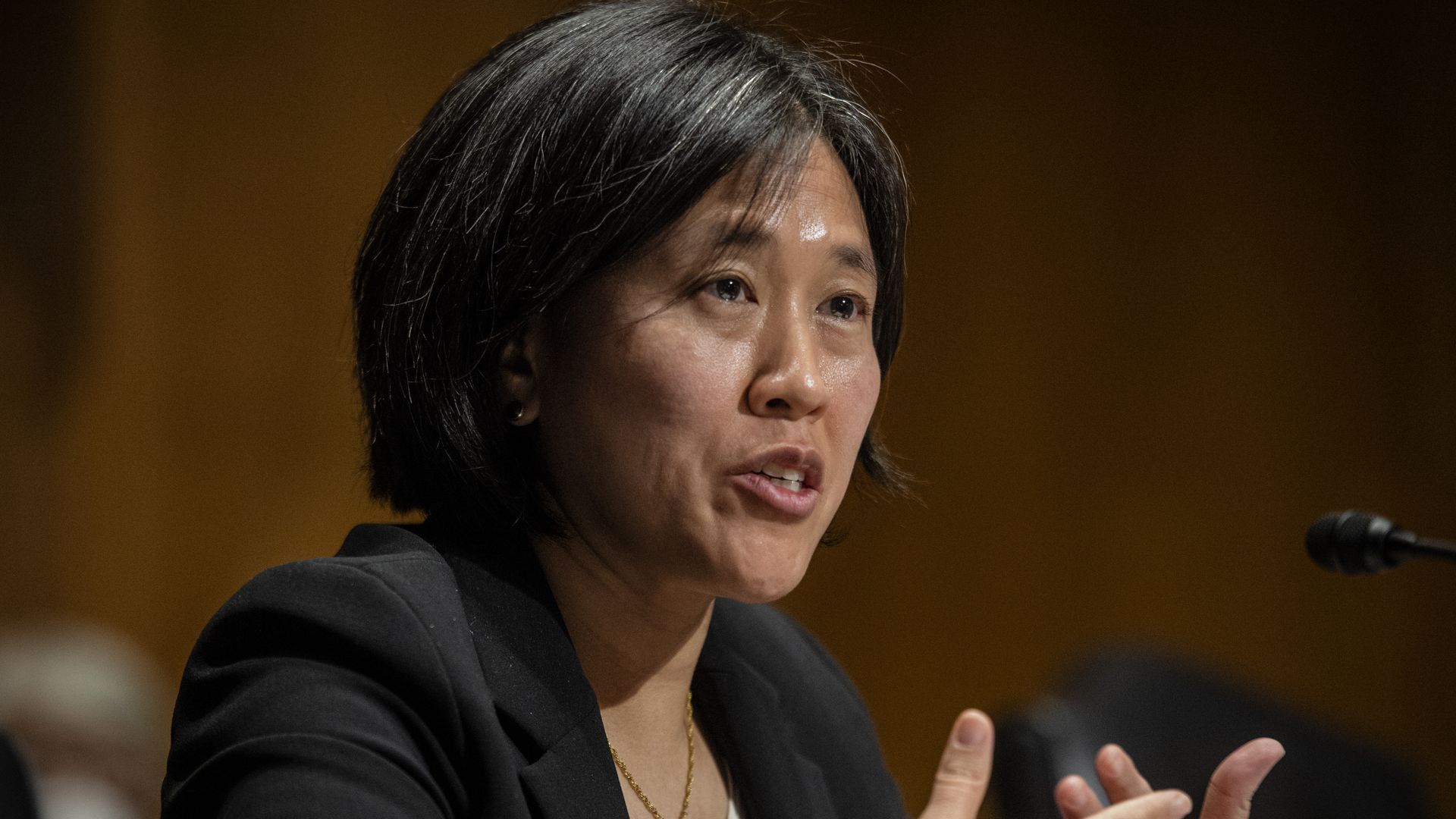
President Biden's top trade negotiator is pledging to employ trade policy levers to fight climate change and ecological degradation, warning of a "closing window to prevent a catastrophic environmental chain reaction."
Why it matters: U.S. Trade Representative Katherine Tai on Thursday made climate change the focus of her first speech in the role. The decision underscores how the White House hopes to marshal a wide-ranging, government-wide approach to the topic.
A slew of new companies are launching platforms for local newsletters, a shift that could help finally bring the local news industry into the digital era.
Driving the news: Substack, the email publishing platform for independent journalists, on Thursday announced a new local news platform.
It's been 40 years since America last saw a damaging level of inflation. Yet despite that — or perhaps because of it — inflation fears are widespread, and could even become self-fulfilling.
Why it matters: The government's strategy for bringing back employment and widespread prosperity involves a necessary — yet temporary — increase in inflation. When an entire generation has never experienced such a thing, that can be disconcerting. And for the time being, Americans are not buying what the government is selling.