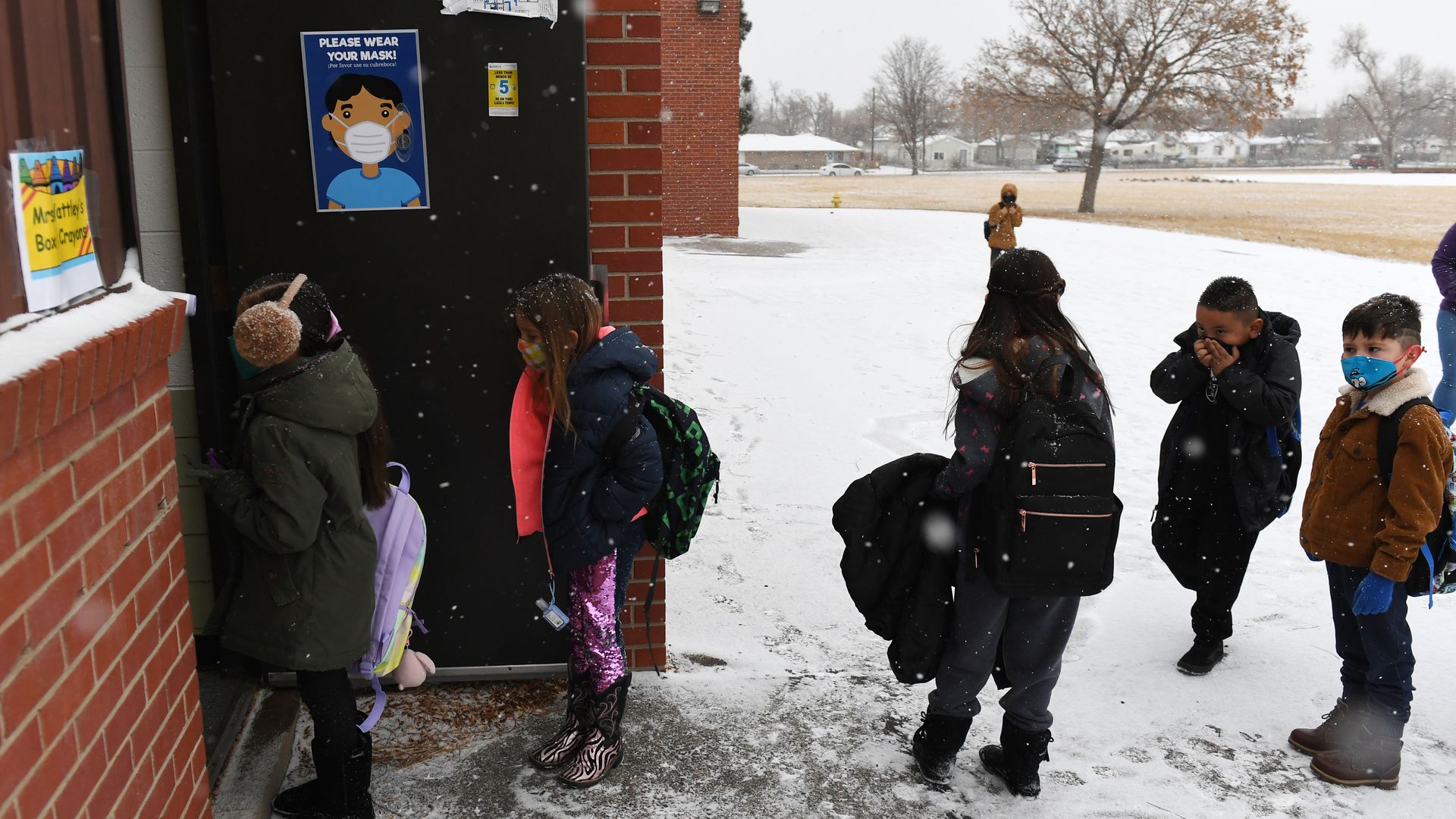
Daily school attendance in some districts across the U.S. has dropped by an average of 2.3% this academic year compared to 2019, according to data from PowerSchool, a company that helps track grades and attendance, reviewed by the Wall Street Journal.
Why it matters: The attendance drop contributes to fears that the pandemic may worsen pre-pandemic academic achievement goals and the long-term well-being of the U.S. economy.
The drone startup Zipline announced this week that it is planning to deliver COVID-19 vaccines wherever it operates — including in the U.S.
Why it matters: Aerial drones could be a useful solution to the challenge of getting vaccines to people in sparsely populated rural areas, while laying the groundwork for a new era of drone delivery.
The big game, happening for the first time in history without many fans in the stadium, will feature spots with socially-distanced characters, and people staying home.
Why it matters: While some ads will try to be light, the gravity of the pandemic will still be felt.
Fox News has cancelled its business network's “Lou Dobbs Tonight" and will air the program's final show on Friday night, the LA Times first reported.
Why it matters: Dobbs, former President Trump’s favorite TV host, helped promote the baseless assertions of widespread voter fraud in the 2020 election. Conservative-leaning media companies, including Fox, are in the throes of navigating a post-Trump landscape.
Oscar Health, the health insurance company co-founded by Jared Kushner's brother, Joshua, has filed for an IPO and announced that Barack Obama's former campaign manager, David Plouffe, will join its board of directors.
Why it matters: Oscar Health is one of the highest-profile attempts at disrupting the health insurance sector.
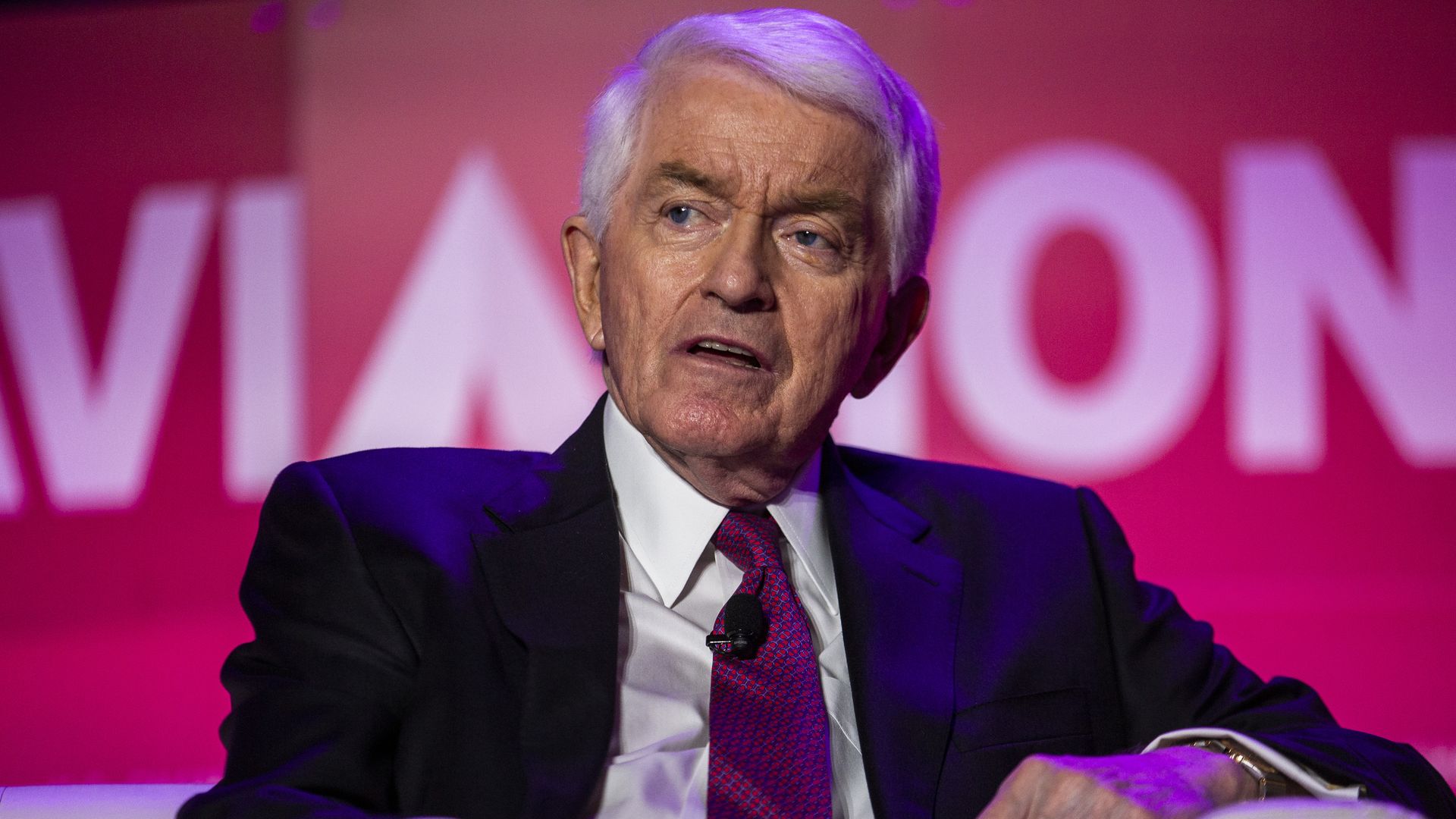
Board leadership at the U.S. Chamber of Commerce is close to naming Thomas Donohue's successor, and is expected to appoint Suzanne Clark as its next leader, people familiar with the matter tell Axios.
Why it matters: As CEO, Donohue, 83, built the chamber into a political powerhouse that supports pro-business policies, contributes huge sums largely to Republicans and promises to give its international and domestic members a voice in Washington.
New restrictions on international border-crossings, combined with faltering COVID-19 immunization efforts, have dashed hopes for a significant rebound in air travel in 2021.
Why it matters: For global aviation, which suffered its worst year in history in 2020, the misery is likely to continue, holding back a broader economic recovery.
Tampa Bay defensive lineman Ndamukong Suh will be on the field this Sunday, trying to win his Buccaneers a championship. Off the field, Suh has been quietly building a business empire that has nothing to do with sacks or touchdown dances.
Axios Re:Cap speaks to Suh about the trend of pro athletes forming non-sports careers well before retirement, his thoughts about the big game and his favorite NFL quarterback to hit.
President Biden seized on January's anemic jobs report Friday to argue for his $1.9 trillion relief package, while also bracing the public for the long road to a full economic recovery and robust job growth.
The latest: Biden insisted in a speech from the White House that he would not be cutting the size of the $1,400 per person stimulus checks included in his proposal.
This week I'm driving the Volvo XC60 T5 AWD Momentum, a midsized SUV that made me smile just by opening the door.
Inside is something you don't see every day: awesome plaid cloth upholstery.
Why it matters: For years cloth seats have been relegated to the cheapest models, while anyone who could afford it would upgrade to the mysterious "leatherette" or real leather interior.
Argo AI says its autonomous test vehicles are now driving on highways, too, at least near Pittsburgh, with other markets coming soon. Waymo is the only other AV company that is operating in urban, suburban and highway environments.
Why it matters: It's another step closer to commercialization of self-driving technology by opening up new business opportunities like driverless airport runs or on-demand delivery from warehouses to residential homes.
Kuaishou, a Chinese short-video and livestreaming app, raised $5.4 billion in its IPO. Its shares then nearly tripled in Friday trading, pumping the company’s valuation to $159 billion.
Why it matters: It's the largest global IPO in over a year, and the largest global tech IPO since Uber in May 2019. Plus, it means Kuaishou is now valued just a TikTok short of rival ByteDance.
Private equity's assets under management hit new record highs in 2020, despite a fundraising slowdown.
Between the lines: Neither snow nor rain nor global pandemic can erode the mountain of dry powder — PE jargon for capital committed to funds that hasn't yet been invested.
Ford plans to invest $22 billion in vehicle electrification through 2025, an amount that's nearly double its prior plans, the company said.
Why it matters: The announcement is the latest sign of how the world's biggest carmakers are pouring more resources into tech that's still a tiny slice of the auto market.
The electric bike company Rad Power Bikes has landed $150 million in new funding to expand its operations, including plans to widen its retail and service network.
Driving the news: Funders include Morgan Stanley, Fidelity, the Rise Fund, existing investor Vulcan Capital and others.
The last major economic datapointof the Trump era is out.
Driving the news: The economy ended the Trump years with an unemployment rate of 6.3%. That's a lot lower than the pandemic-induced high point of 14.8% in April, but still well above the 4.7% unemployment that Barack Obama left behind.
More than 1 million Americans filed first-time unemployment claims for the 46th consecutive week last week, the Labor Department reported.
Why it matters: There is no historical precedent for the ongoing rate of job losses in the U.S.
The country is now just six weeks from going a full year with more than a million people filing for unemployment every week.
Prior to the coronavirus pandemic, the U.S. had seen 1 million unemployment claims reported just once in the history of the Labor Department's data — the week ending Jan. 9, 1982, when 1,073,500 claims were filed.
The intrigue: While the unemployment rate has continued to decline since the middle of 2020, the number of companies reporting layoffs has been increasing in recent months as has the number of people filing for unemployment benefits.
Job cuts in January increased from December, which saw an increase from November, according to the latest report from outplacement firm Challenger, Gray & Christmas.
The firm counted 2.3 million job cuts in 2020, but only about half were due to the coronavirus pandemic.
The last word: "It's hard to understate the extreme disruption that is still ongoing in the labor market," MacroPolicy Perspectives president Julia Coronado tells Axios.
"For almost a year initial claims for unemployment benefits have exceeded the highest levels seen in the Great Recession."
"Net job creation has slowed ... and it is way too soon to settle into a slower pace of job creation given the deep hole we are still in. At this rate, it will take many years just to restore what was lost let alone add new jobs for a growing population."
Total U.S. bankruptcy filings fell to their lowest level since February 2006 last month as massive liquidity and eager bond investors helped prop up businesses throughout the country.
By the numbers: January saw just 32,298 filings, a 6% decline from December, and a 44% decrease from January 2020, according to data from legal services company Epiq.
China appears to have taken another major step in its quest to move the world away from the dollar and position itself as a major power in the world's financial markets.
What happened: China's central bank has set up a partnership with SWIFT, the global system for cross-border payments, through its digital currency research institute and clearing center.
The New York Times added nearly 5 million digital-only subscribers in the past four years, helping to firmly transition its business from a 170-year-old newspaper company to a modern digital behemoth. The paper has roughly 6.7 million digital-only subscribers in total.
Why it matters: No other U.S. news publisher comes even close to that number. The Washington Post and The Wall Street Journal have 3 million and 2.46 million digital subscribers, respectively.
A global chip shortage has forced virtually every major automaker to halt some car production and furlough workers — just as the industry was showing signs of recovery from the pandemic-related shutdowns last spring.
Why it matters: Fewer chips, fewer cars. Semiconductors are crucial components that make computer-controlled systems in cars work — everything from engines to power windows, as well as driver-assistance and navigation features.
The stock market has failed at its most important function.
Why it matters: It is supposed to be able to put a reliable price on companies, and efficiently allocate capital to the places where it can do the most good. That certainly hasn't been the case with GameStop, AMC, and other meme stocks.
















/2021/02/05/1612538135657.gif?w=3840)