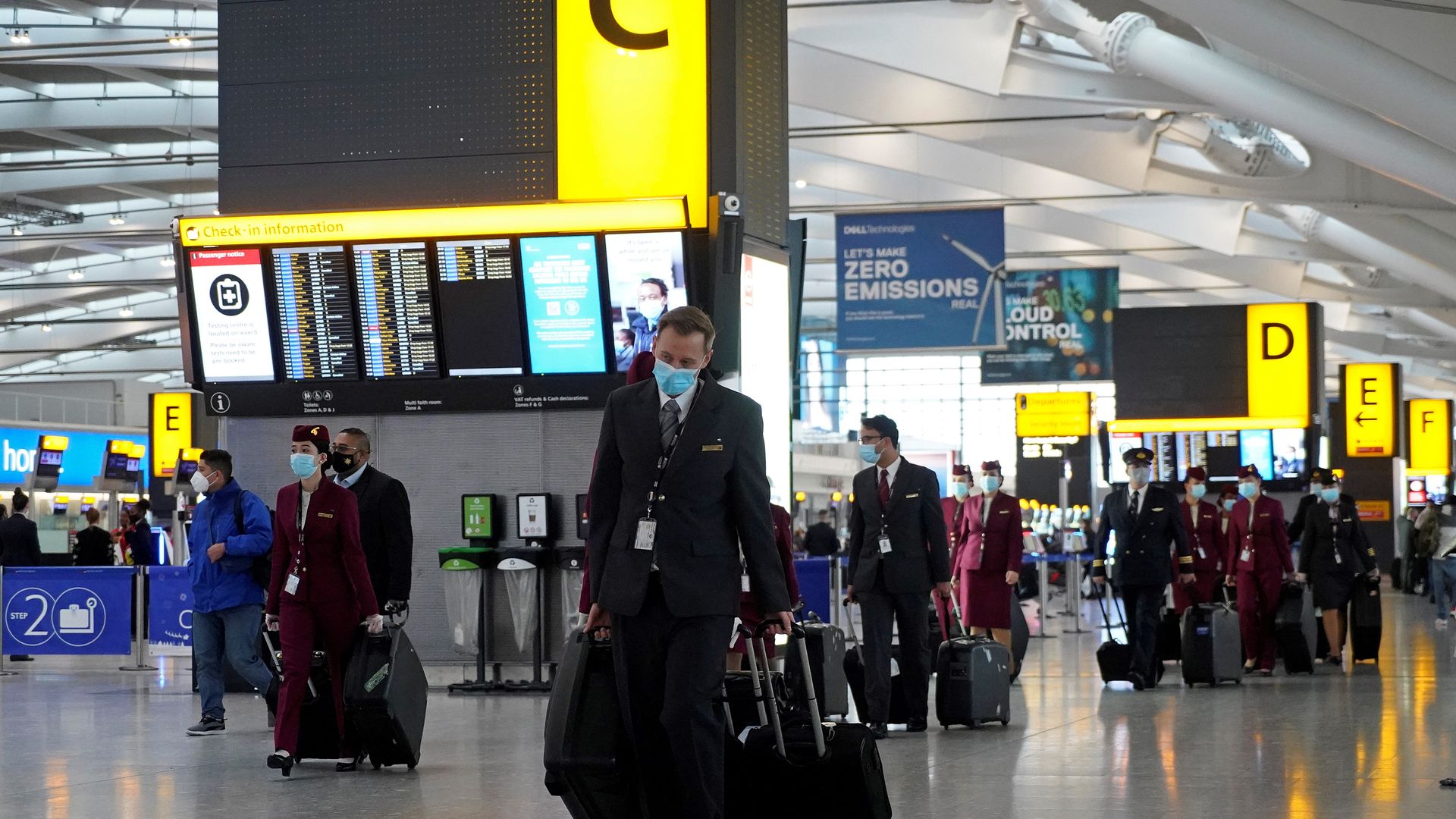
Anyone flying to the United States must test negative for the coronavirus before boarding their flight under a policy announced Tuesday by the Centers for Disease Control and Prevention.
Why it matters: With cases surging in the U.S., and new, more contagious variants emerging in other countries, the CDC says pre-flight testing will help slow the spread of the virus until the American public is fully vaccinated.
Visa has terminated its proposed $5.3 billion purchase of Plaid, a San Francisco-based provider of analytics software that connects fintech startups to users' bank accounts, the Justice Department said in a statement.
Why it matters: The DOJ alleged in its civil antitrust lawsuit filed in November to block the merger that Visa is a "monopolist in online debit" and would eliminate Plaid's potential ability to compete in the online debit market.
U.K.-based health tech company Bioniq will announce on Wednesday a $7.8 million Series A investment led by venture capital firm OKS Group for a U.S. and Middle East expansion.
The big picture: Bioniq, a supplement subscriptions and at-home testing services company, is among the many health-tech companies that have seen a boom in demand during the pandemic.
Parler, the social media platform for conservatives and far-right extremists, is currently offline after being booted from Amazon's cloud hosting service. The move came just days after Parler was also removed from the Apple and Android app stores, for allegedly violating terms of service related to violent threats its platform.
Axios Re:Cap digs into what happened at Parler, including how most of its public posts and metadata were scraped and archived, with New York Times cybersecurity reporter Nicole Perlroth.
A group of ride-hailing drivers and the Service Employees International Union have filed a lawsuit to challenge the constitutionality of Proposition 22, the ballot measure recently passed in California that enshrines drivers as independent contractors (with some benefits).
Why it matters: Prop. 22 was a response from gig companies to AB5, a state law that went into effect last January, and put in place stricter requirements for classifying workers as contractors. Having drivers as contractors instead of employees (with full benefits) is central to these companies' business models, prompting their aggressive action to eschew AB5.
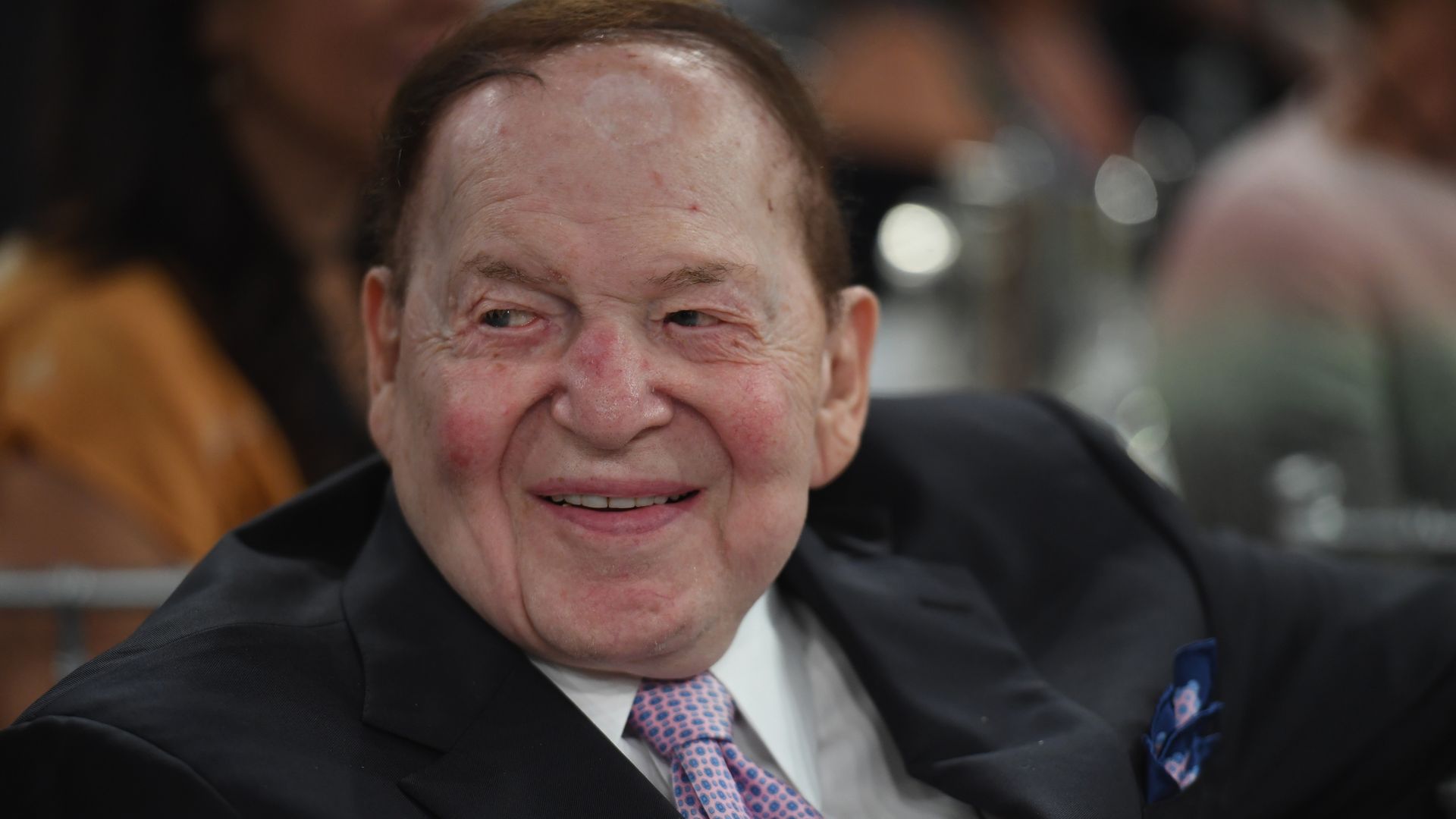
Billionaire casino owner and Republican megadonor Sheldon Adelson died at age 87 on Monday night from complications related to treatment for non-Hodgkin's Lymphoma, his company Las Vegas Sands announced Tuesday.
The big picture: Adelson and his wife, Miriam, were President Trump's largest donors. The couple have donated more than $525 million to federal political campaigns and committees since the 2010 cycle, per OpenSecrets.
Chalkbeat, a nonprofit news organization that covers education at the local level, plans to expand its pop-up newsroom, called Votebeat, to cover voting at the local level through the 2022 midterm elections.
Why it matters: It's Chalkbeat's first real foray into a beat other than education.
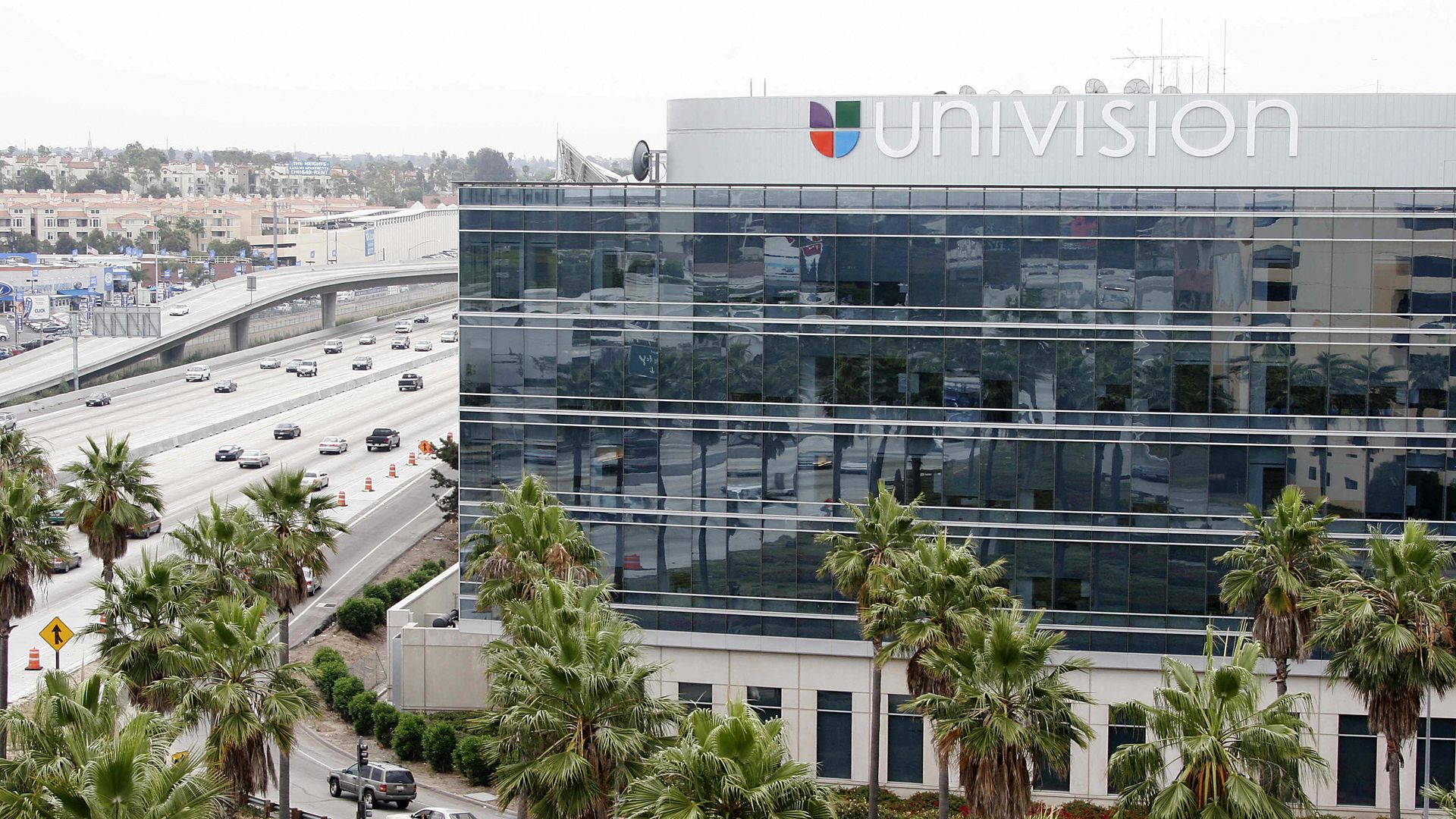
Univision, the largest Spanish-language broadcaster in the U.S., will announce today the launch of "PrendeTV," a free, ad-supported streaming service, sources tell Axios.
Electric bus company Proterra on Tuesday became the latest EV player to announce it's going public via a merger with a special purpose acquisition company.
Driving the news: The deal with ArcLight Clean Transition Corp. values Proterra at $1.6 billion. Proterra builds buses and also provides battery systems and other products for heavy electric vehicles.
General Motors is launching a new business unit devoted to electrifying the goods delivery market and says package giant FedEx will be the first customer.
Why it matters: Big automakers and startups alike see a huge opportunity.
The dollar index rose for the fourth straight session on Monday, worrying investors that the recent rally that has sent the dollar lower as stocks have risen higher could be coming undone.
What they're saying: "The appreciation of the dollar is coming at a time of not only rising yields but a risk-off period created by heightened uncertainty about political developments in the U.S.," Paresh Upadhyaya, director of currency strategy and portfolio manager for Amundi Pioneer Asset Management, told Reuters.
Twitter shares fell by as much as 12% on Monday after the company announced it had permanently banned President Trump's account.
Between the lines: While many were quick to say the decline was blowback for the company's decision, the performance of other social media companies' stock prices suggests there's more to the story.
Warnings that the U.S. equity market looks to be in a bubble are coming from a slew of Wall Street asset managers and strategists as stocks continue to reach new record highs and markets display abnormal behavior. But data show that while investors are hedging their bets, there is hardly a mad dash to sell out of equity positions.
What's happening: As the 10-year Treasury yield rises solidly above 1% — its highest level in nearly a year — a growing contingent of investors fear that a crash is imminent without the ballast of rock-bottom interest rates.
The surge in Texas health care company Signal Advance continued on Monday as the stock rose by 438%, after previously gaining 1800% during one 24-hour period.
The catalyst: A Thursday tweet from Tesla CEO Elon Musk that said simply, “Use Signal.” Musk was recommending the encrypted messaging service (an independent 501c3) that competes with Facebook's WhatsApp, but a frenzy ensued in Signal Advance (SIGL) nonetheless that has continued for days.
America needs law and order — but emphatically not the kind that President Trump has in mind when he uses the phrase. That's the message being sent by a broad coalition of CEOs who are silencing Trump and punishing his acolytes in Congress.
Why it matters: Private-sector CEOs managed to act as a faster and more effective check on the power of the president than Congress could. They have money, they have power, and they have more of the public's trust than politicians do. And they're using all of it in an attempt to preserve America's system of governance.
Following the Capitol siege, the right-wing media landscape is beginning to split between entities that want to double down on pro-Trump rhetoric and those that want to stick with the establishment.
Why it matters: The future of the Republican Party, in part, hangs on whether fringe conservative media or traditional conservative commentary will dominate with audiences.
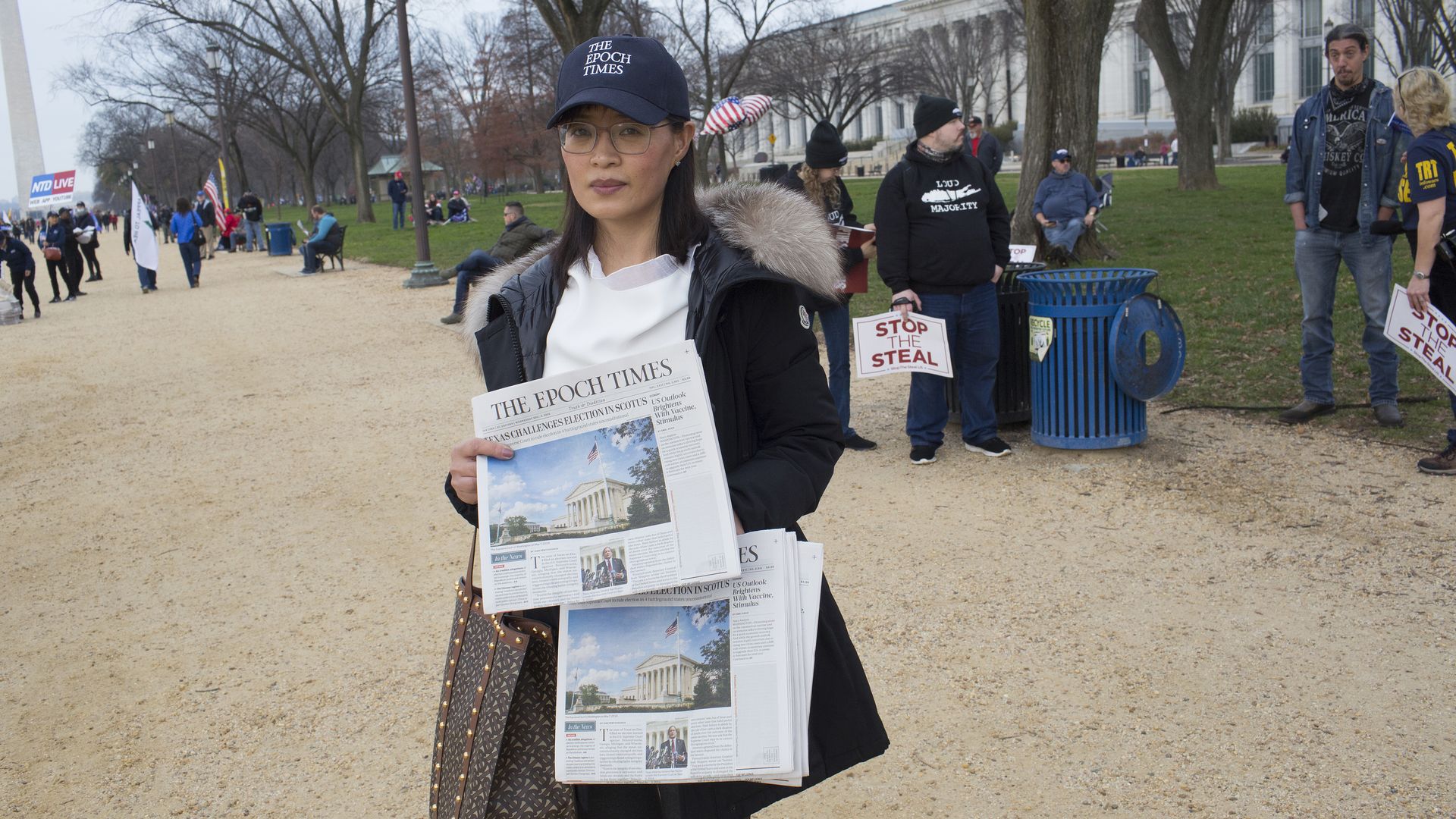
The publisher of The Epoch Times, a stridently pro-Trump publication with a flair for conspiracy theories and links to Chinese dissidents, nearly quadrupled its revenue during the first three years of the administration.
Why it matters: The nonprofit Epoch Times Association’s 2019 revenue of $15.5 million, up from $3.9 million in 2016, shows how lucrative news coverage catering to the president's most fervent supporters could be — and will likely remain even after he leaves office.