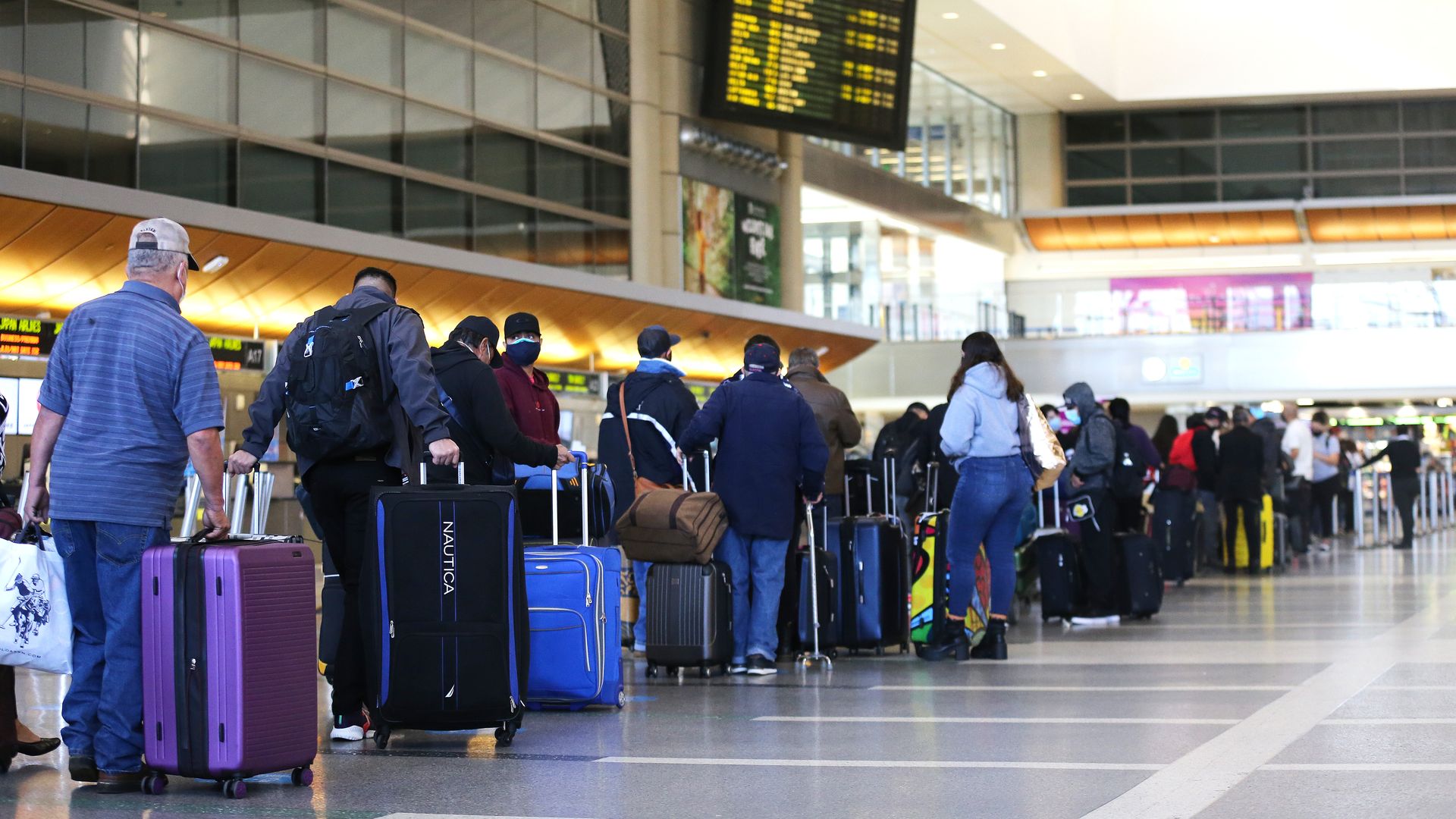
The Transportation Security Administration screened 1,191,123 people at airport checkpoints around the United States on Wednesday, according to Lisa Farbstein, a TSA spokesperson.
Why it matters: It's the largest recorded number since before the COVID-19 pandemic and signals that more people are traveling for the holidays despite CDC warnings to stay home to prevent the spread of the coronavirus.
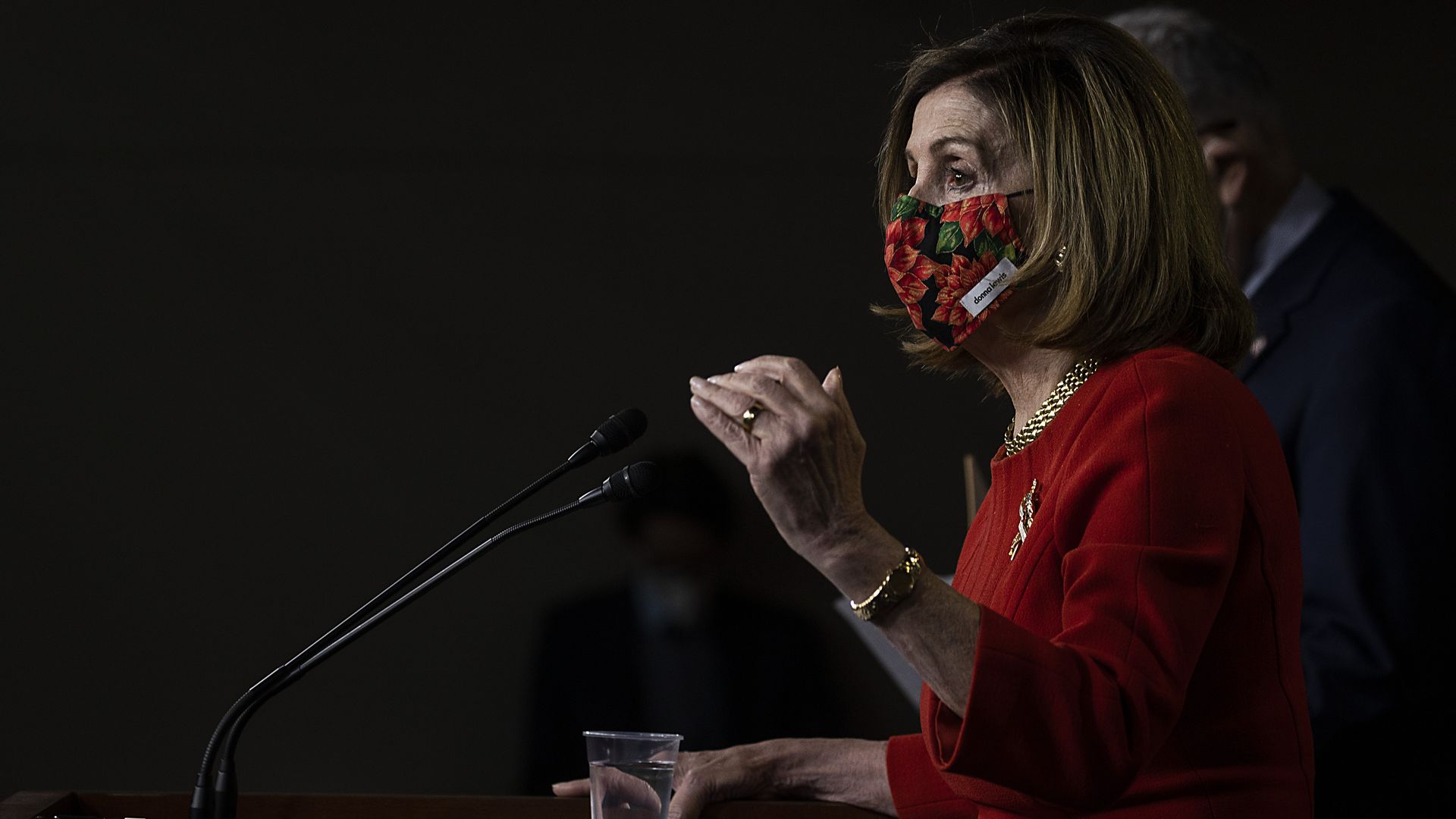
House Speaker Nancy Pelosi (D-Calif.) is bringing Congress back to the Capitol on Monday to vote on a proposal to hike coronavirus relief payments to $2,000, after Republicans rejected a move to approve the measure by unanimous consent.
Why it matters: The long-shot attempt came after President Trump suggested he wouldn't sign the coronavirus relief bill — which includes a trillion-dollar government funding measure to avoid a government shutdown on Monday — unless Congress increased the direct payments from $600 to $2,000.
Self-driving tech company Nuro says it will begin charging customers for robot delivery services early next year after obtaining a critical permit from the California Department of Motor Vehicles.
Why it matters: While many companies are allowed to test autonomous vehicles in California, Nuro is the first company to receive a permit to commercially deploy them on public streets.
The White House on Wednesday released its initial assessment of regulatory considerations for stablecoins, a form of cryptocurrencies designed to have less pricing volatility than do more traditional cryptocurrencies like Bitcoin.
Why it matters: The document covers all U.S. stablecoin arrangements, including Facebook's Libra project, which is slated to launch next month.
Software firms that help other companies communicate are booming this year thanks to pandemic-driven remote-work.
Why it matters: Even when a vaccine is rolled out and lockdown provisions are lifted, most companies will likely maintain at least some work-from-home flexibility, which will bode well for software firms like Zoom, DocuSign, Twilio, Microsoft, Slack and others.
The U.S. Department of Labor reported 803,000 initial unemployment claims last week, a drop of 89,000 from the week prior.
Why it matters: The number of Americans on unemployment benefits remains high, though the figures released Wednesday were lower than the 888,000 that economists had expected.
Momentumin the housing market is slowing, just as consumer confidence is also showing weakness.
Why it matters: Year-end economic data tells a familiar 2020 tale of the haves and the have nots staking out their positions in the final months of the year.
This is what it looks like when a snake eats its own tail: Group Nine Acquisition Corp., a blank-check acquisition company, is being created by an entity called Group Nine SPAC LLC, which is a subsidiary of Group Nine Media, which in turn is going to be bought by Group Nine Acquisition Corp.
Why it matters: The gloriously convoluted structure manages to allow Group Nine Media to go public without having the normal scrutiny associated with a formal IPO — and also allows it to collect the hefty 20% sponsorship fee that a SPAC would normally charge.
The U.S. Securities and Exchange Commission finally approved on Tuesday a rule change that will allow companies doing direct listings on the New York Stock Exchange to simultaneously raise primary capital.
The move follows pushback from an industry group that complained the change would decrease investor protections and make it harder to sue over mistakes.
You've received a coronavirus vaccination — but can you prove it? The answer to that question will help determine how the global economy functions for the next few years.
Why it matters: The federal government will probably neither mandate nor encourage digital immunity passports or other proofs of vaccination. But privately-operated digital certificates are already being developed — and U.S. law means that anybody who gets vaccinated here should be able to obtain the proof they need.
With nearly $3 trillion in lending from the Fed this year, and Congress approving $900 billion in debt-financed spending on top of the $3.1 trillion budget deficit in fiscal year 2020, inflation hawks are sounding the alarm.
Why it matters: “Inflation staying low and well-behaved is the foundation on which everything in markets is currently priced,” Karen Ward, chief market strategist for Europe at JPMorgan Asset Management, told FT.
An often underrated side of the auto industry — used car sales — is the hot new thing for some automakers who sense they are losing lucrative business to online newcomers.
Why it matters: While feasting for years on profits from expensive SUVs and trucks, many automakers have forfeited the lower end of the market at precisely the time many COVID-wary consumers are looking for an affordable alternative to public transportation.